
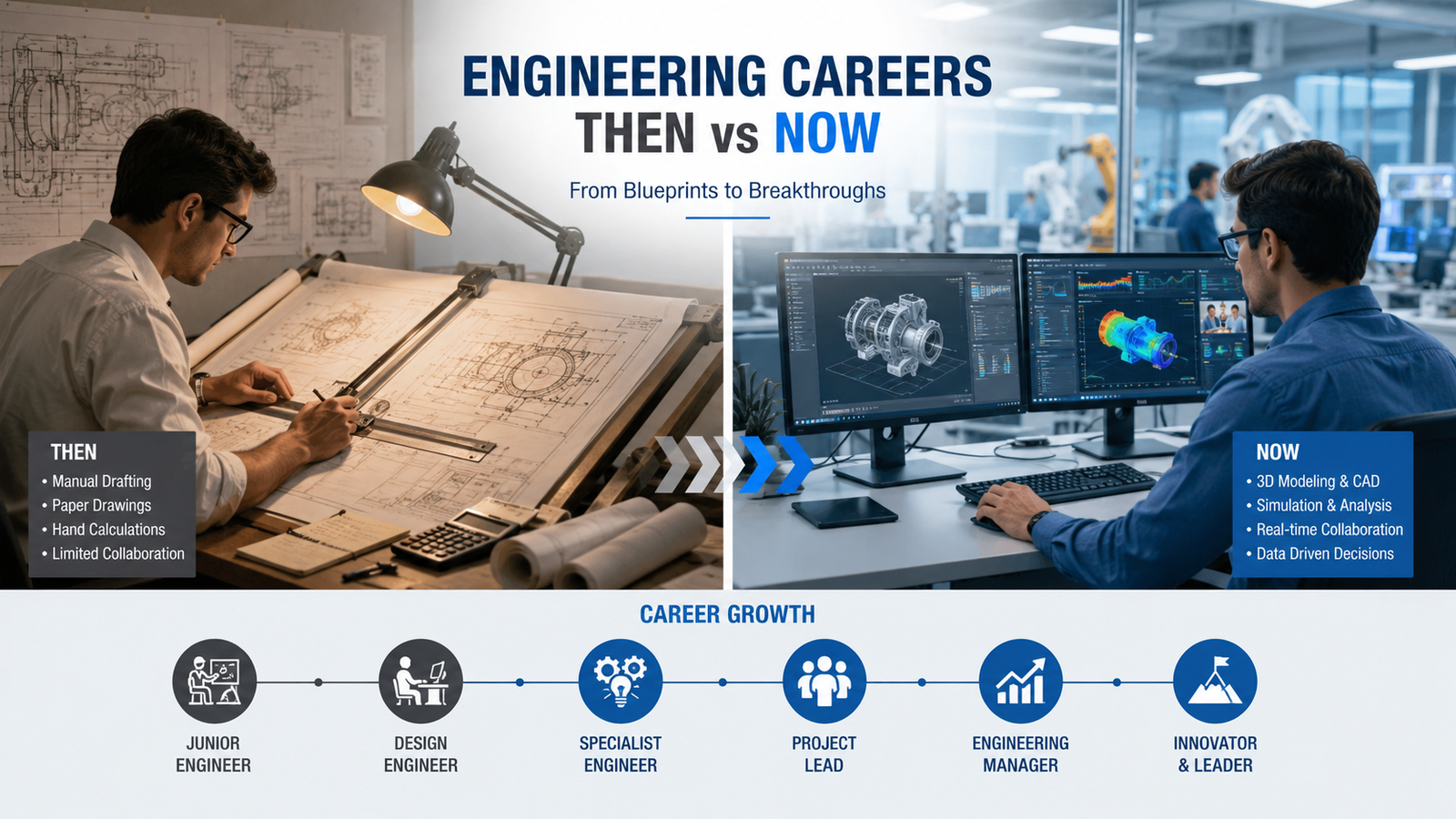
Ten years ago, engineers spent hours creating technical drawings, performing manual calculations, and building physical prototypes before testing a design.
Today, many of those tasks can be completed in minutes using advanced engineering software.
CAD tools create complex models, simulation software predicts failures before manufacturing, and digital collaboration platforms allow teams to work together across different locations.
This rapid transformation has changed what companies expect from engineers.
Technology is not replacing engineers. Instead, it is changing how engineers work, the skills they need, and the value they bring to projects.
Understanding How Technology is Reshaping Engineering Roles is essential for students and professionals who want to stay relevant in a rapidly evolving industry.
Engineering has undergone one of the biggest transformations in its history.
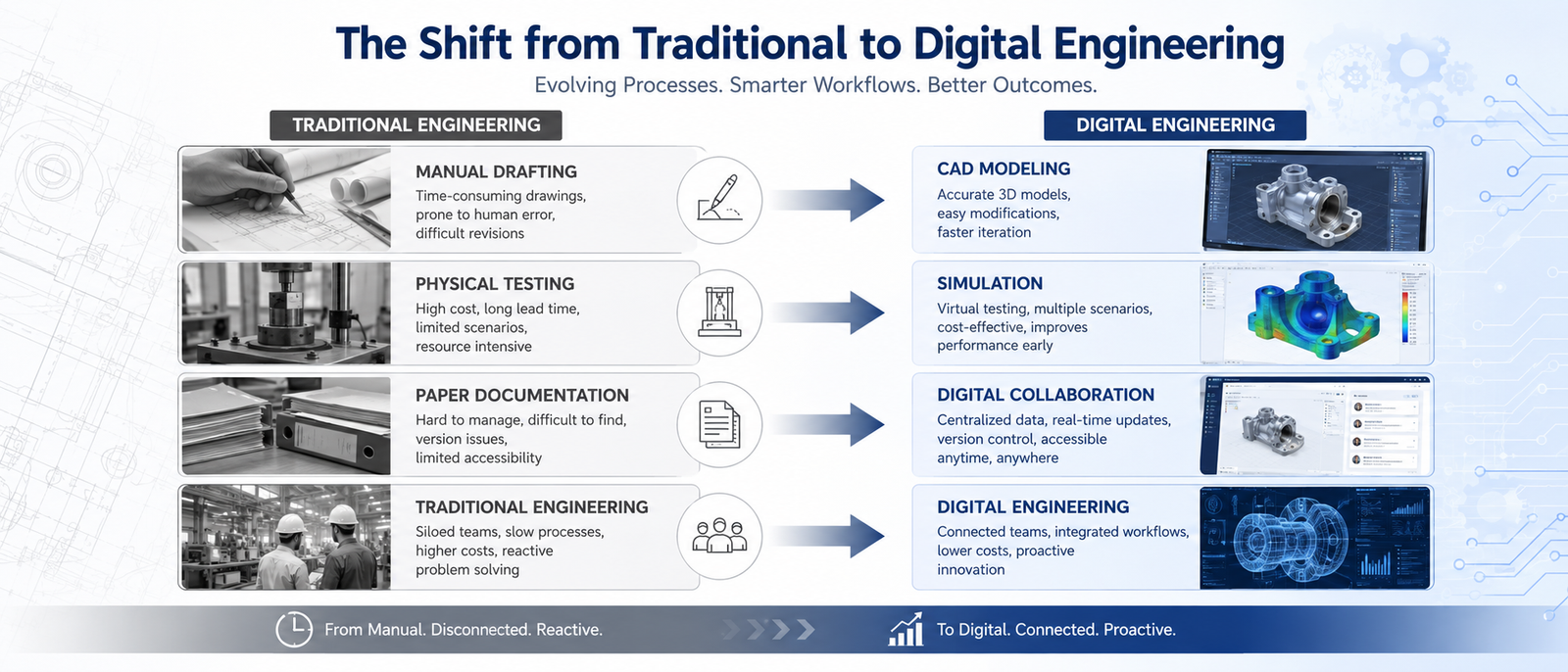
In the past, engineers relied heavily on manual drafting, physical testing, paper-based documentation, and repetitive calculations.
Today, digital tools perform many of these tasks faster and with greater accuracy.
As a result, engineers spend less time on repetitive work and more time solving problems, optimizing designs, and making strategic decisions.
This transformation is clearly visible in How CAD Is Used in Real Companies: Industry Workflow Explained.
The engineer’s role is no longer limited to creating designs. Modern engineers are expected to analyze, validate, optimize, and collaborate throughout the product lifecycle.
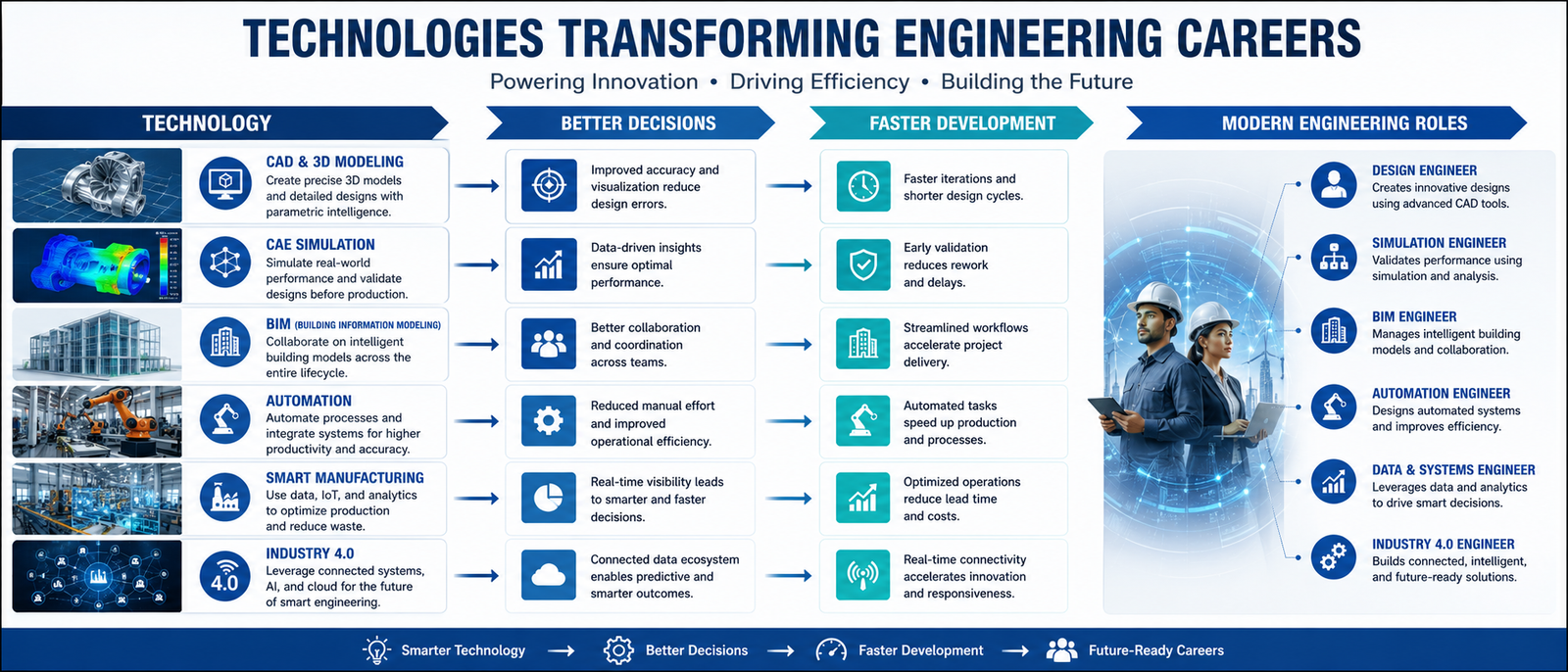
Modern engineers create digital models that allow teams to visualize, modify, and validate designs before manufacturing begins.
Instead of relying entirely on physical prototypes, engineers now use simulation tools to predict performance, stress, deformation, vibration, and failure risks.
This process is part of CAE-Based Engineering Analysis.
Modern factories use automation, robotics, and connected systems to improve productivity and quality.
This aligns with Industry 4.0 Engineering Practices.
In civil engineering, BIM has transformed planning, coordination, and project execution.
This is explained in The Role of BIM in Modern Construction Projects.
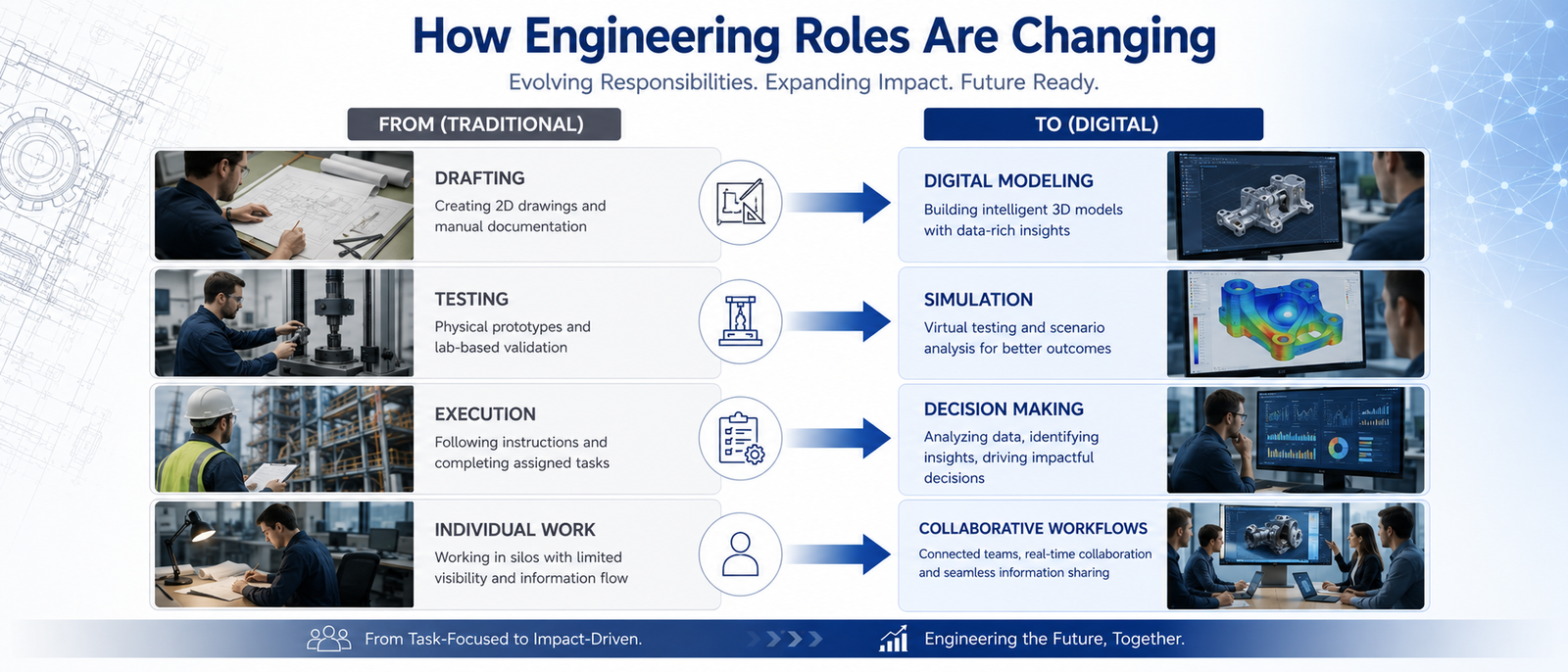
Technology has shifted engineering work away from repetitive execution and toward problem-solving, analysis, and decision-making.
Modern engineers spend less time creating drawings and more time evaluating data, optimizing systems, and improving performance.
They also work more closely with multidisciplinary teams using digital collaboration platforms and integrated workflows.
As technology continues to evolve, engineers are becoming strategic contributors rather than simply technical executors.
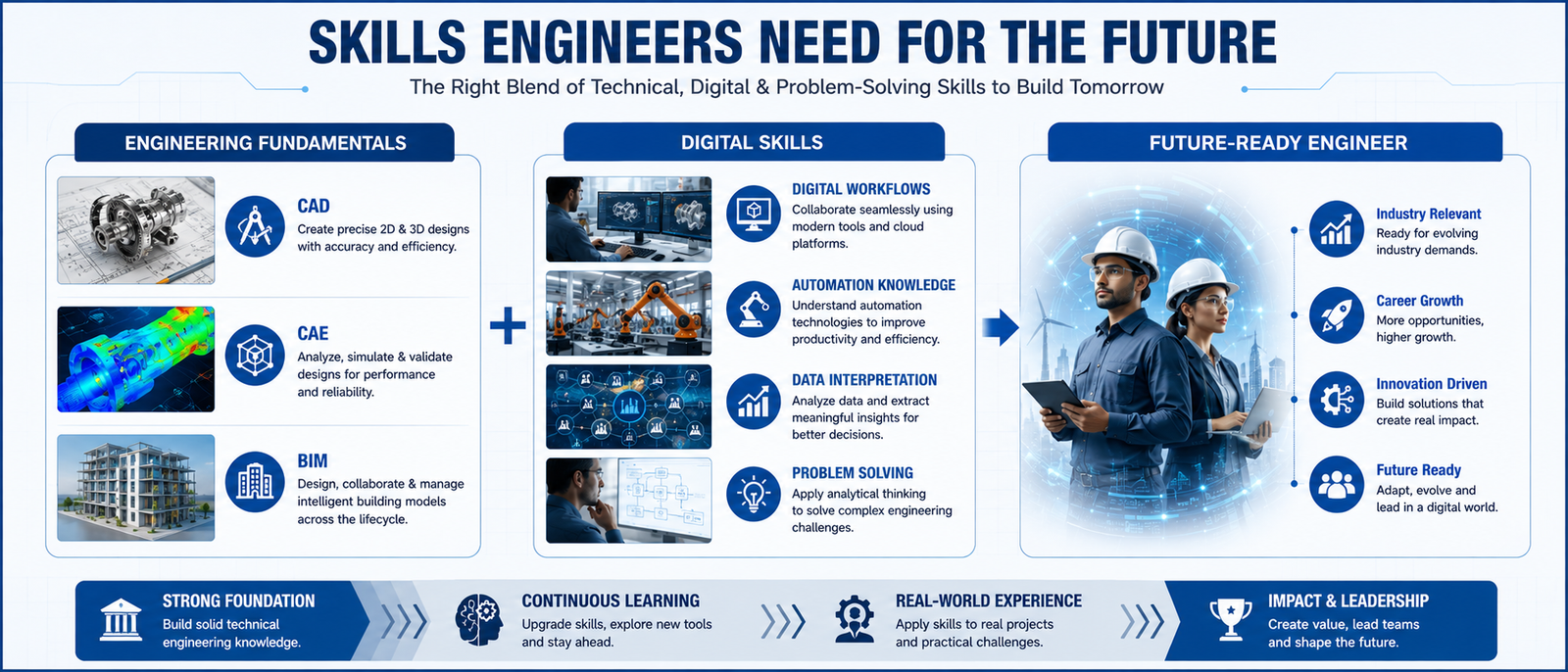
While technology creates new opportunities, it also requires continuous learning.
Engineers must regularly update their skills, learn new software platforms, and adapt to changing industry practices.
Those who embrace learning often gain a significant advantage over those who resist change.
Technology is reshaping engineering roles across every industry, from manufacturing and product development to construction and infrastructure.
It is changing how engineers design, analyze, communicate, and make decisions.
Engineers who combine strong fundamentals with digital skills will be best positioned for future career growth and success.
At 4Dimensions Infotech Pune, students gain hands-on experience with industry-standard software and modern engineering workflows.
Our training covers AutoCAD, SolidWorks, CATIA, Creo, Revit, Civil 3D, and other technologies used by leading companies.
Whether you are searching for CAD Courses in Pune, a CAD Training Institute, a SolidWorks Course, a CATIA Course, or a complete Mechanical Design Course, staying ahead of technology is essential for long-term success.
👉 Upgrade your skills and become a future-ready engineer in a technology-driven world.
1. How is technology changing engineering roles?
Technology is shifting engineering work from manual processes to digital design, simulation, and data-driven decision-making.
2. Are engineers being replaced by technology?
No. Technology enhances engineering roles by improving productivity and enabling higher-level problem-solving.
3. What technologies are most important in engineering today?
CAD, CAE, BIM, automation, Industry 4.0 systems, and digital collaboration platforms.
4. Do engineers need to learn new skills regularly?
Yes. Continuous learning is essential because engineering technologies evolve rapidly.
5. Is software knowledge important for engineering jobs?
Yes. Software proficiency has become a basic requirement across most engineering disciplines.
6. How can students prepare for future engineering roles?
By learning modern tools, working on projects, understanding digital workflows, and continuously improving their skills.
© 2025 4Dimensions Infotech. All rights reserved. | Best Design Engineering Training Institute in Pune
Start your journey with the best design engineering training institute in Pune.