
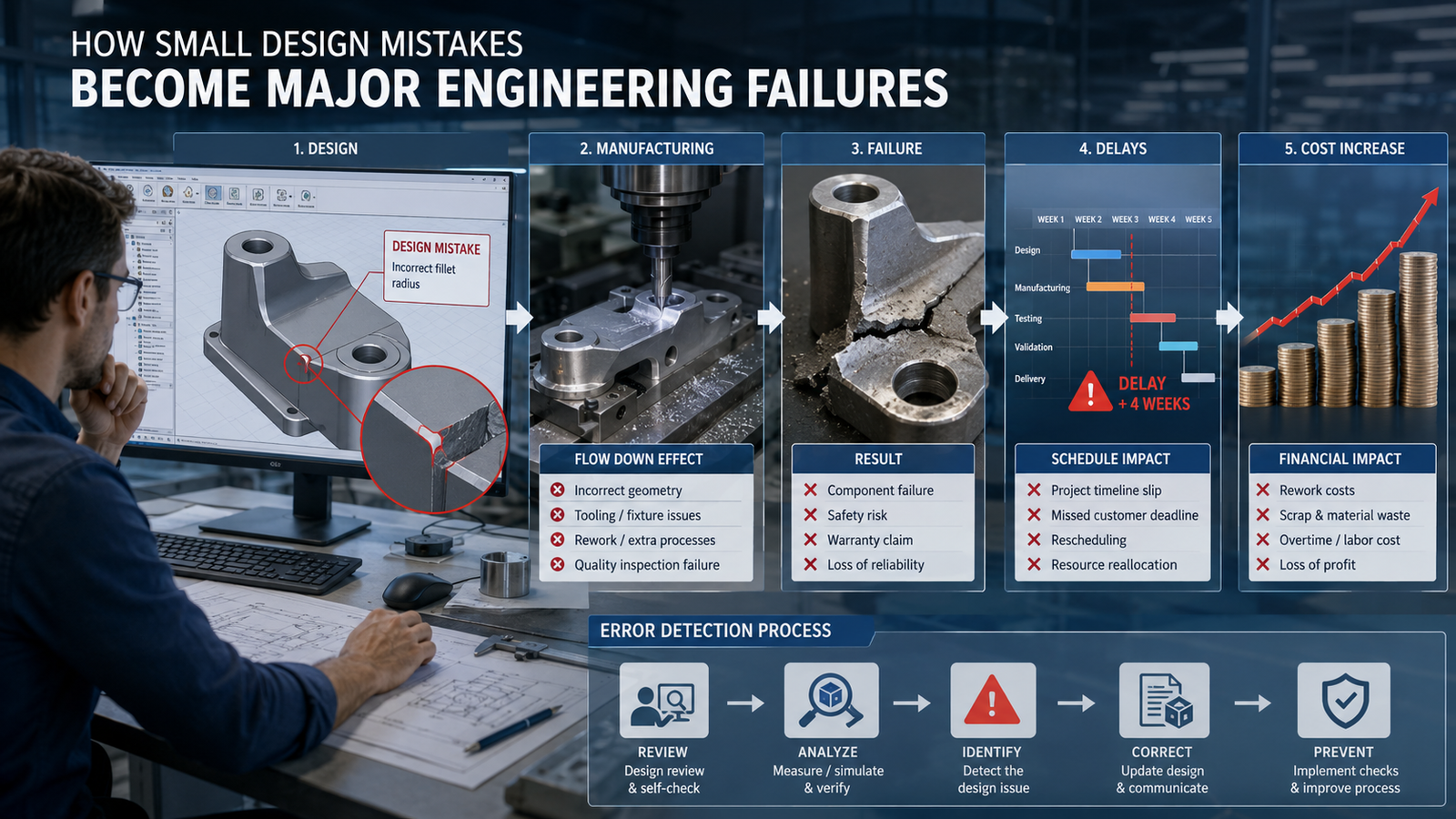
Most engineering failures do not begin on the shop floor. They begin much earlier during the design stage.
A single incorrect dimension, an overlooked load condition, a wrong material assumption, or a missed clearance issue can remain hidden for weeks. By the time the mistake is discovered, valuable time, money, and resources may already have been spent on manufacturing, testing, and project execution.
This is why experienced engineers focus less on correcting mistakes and more on preventing them from happening in the first place.
Modern engineering is not simply about creating CAD models. It is about developing reliable products while minimizing risk throughout the design process.
Whether engineers are working in AutoCAD, SolidWorks, CATIA, Creo, Revit, or Civil 3D, strong error prevention practices help improve quality, reduce rework, and increase project success.
Understanding Error Prevention Techniques in Engineering Design is an essential skill for every design engineer, CAD engineer, and product development professional.
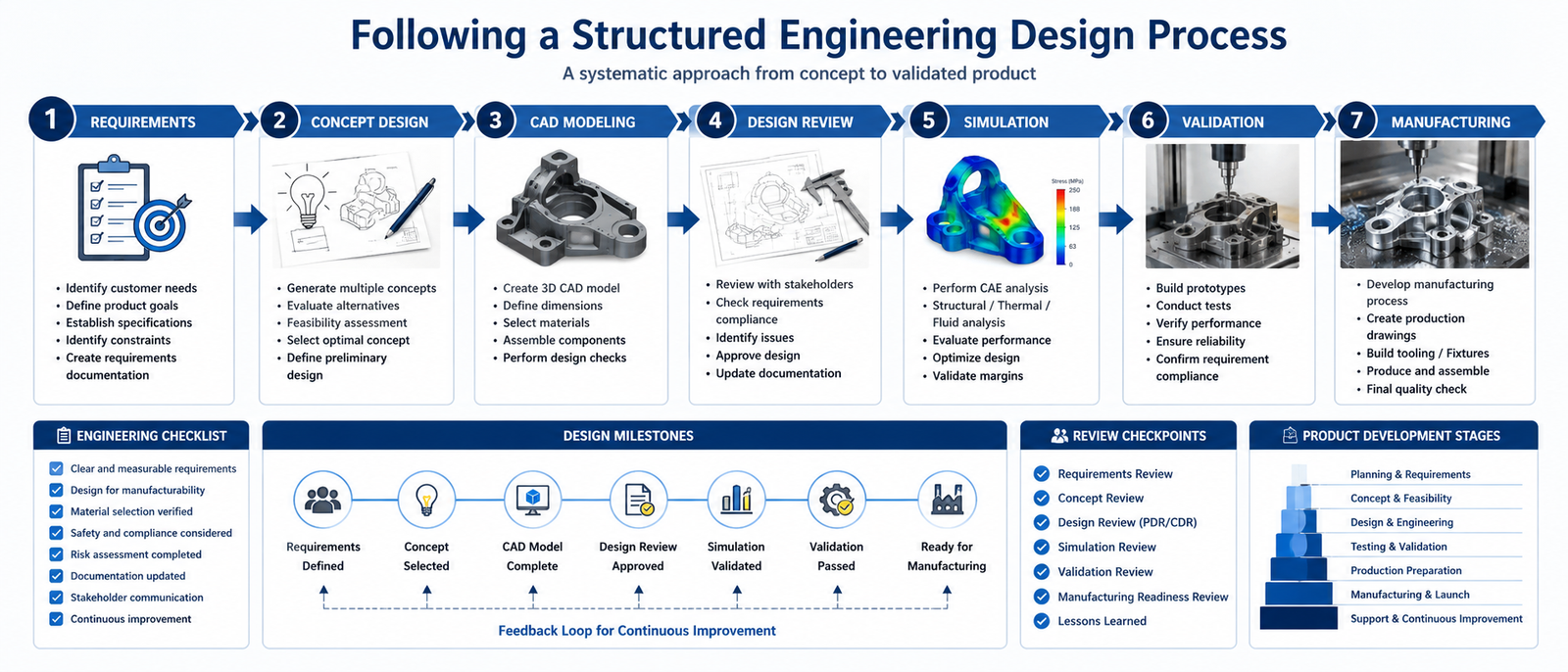
One of the most effective ways to prevent engineering errors is by following a structured design workflow.
When engineers move directly from an idea to a final design without clear review stages, important details are often missed. Small mistakes that could have been detected early may remain hidden until manufacturing or testing begins.
A structured process ensures that requirements, calculations, CAD models, simulations, drawings, and validations are reviewed systematically before moving to the next stage.
This approach is closely related to Product Design Engineering Workflow, where every phase serves as a quality checkpoint.
Companies prefer engineers who understand structured workflows because they consistently produce more reliable and manufacturable designs.
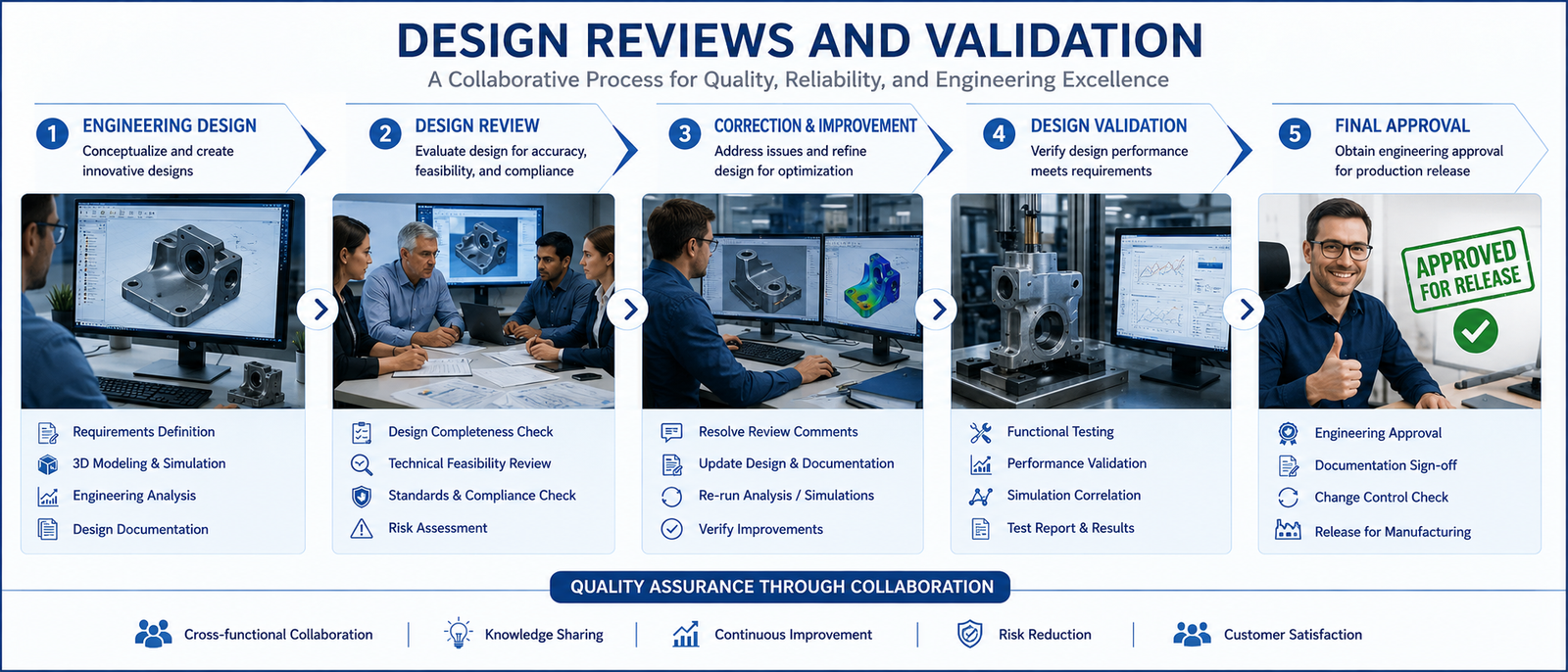
Many engineering errors can be detected simply by reviewing designs at multiple stages of development.
Instead of waiting until the design is complete, successful engineering teams conduct reviews throughout the project lifecycle.
These reviews help verify dimensions, tolerances, material choices, assembly requirements, safety considerations, and manufacturing feasibility.
Design reviews also encourage collaboration between team members. A fresh perspective often reveals issues that designers may overlook while focusing on technical details.
As a result, teams can identify problems early when they are still inexpensive and easy to fix.
Modern engineering relies heavily on simulation because it allows engineers to test designs before physical prototypes are built.
Using simulation software, engineers can study stress, deformation, vibration, thermal performance, and failure risks under real operating conditions.
This process is part of CAE in Modern Engineering Design Process.
Instead of discovering weaknesses after production begins, engineers can improve the design during development.
Simulation significantly reduces development costs, shortens testing cycles, and improves product reliability.
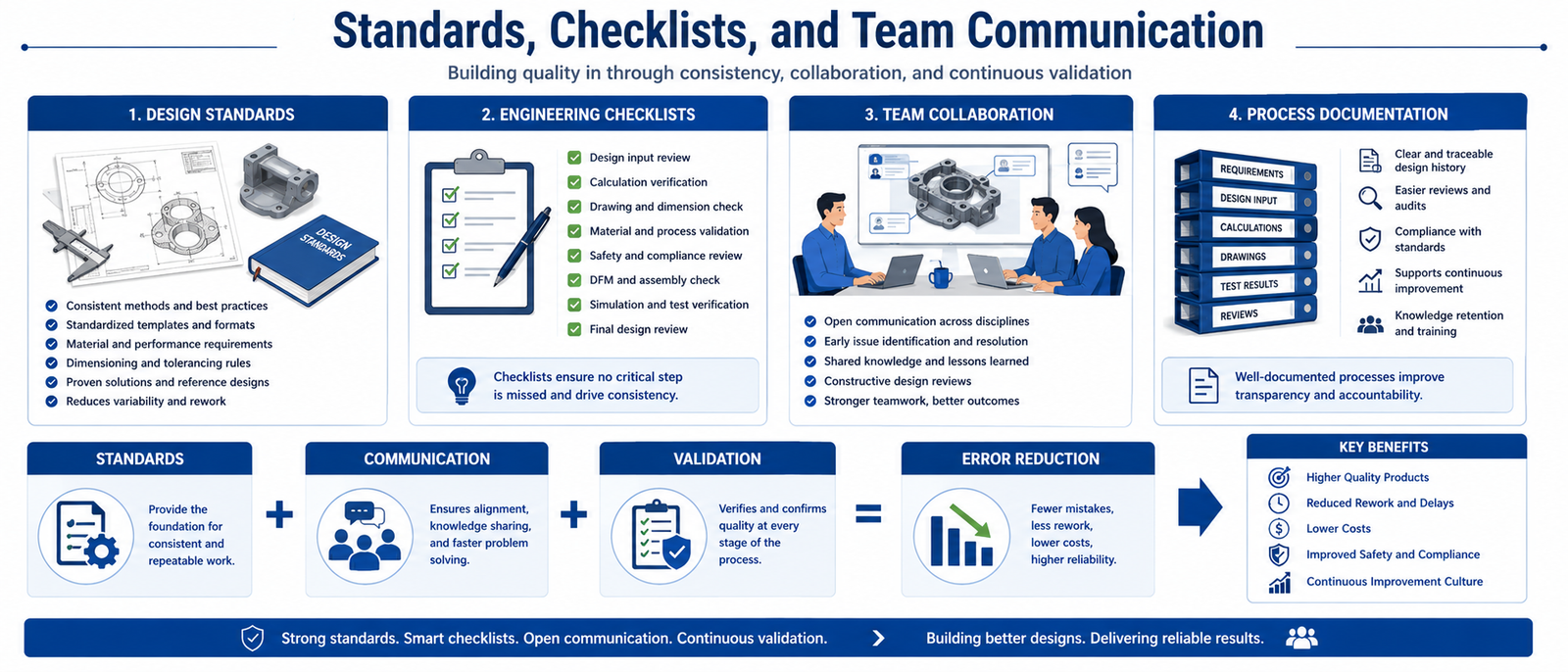
Engineering standards exist for a reason. They help ensure consistency, reliability, and safety across projects.
When engineers ignore established standards, the likelihood of design errors increases significantly.
This is why Standardization in Engineering Design plays a major role in error prevention.
Following proven standards allows engineers to reduce uncertainty and create more predictable outcomes.
Many design failures occur because important information is not shared effectively between departments.
Design teams, manufacturing teams, quality engineers, and analysts often work on the same project. If communication breaks down, critical details can be lost.
Effective collaboration helps prevent misunderstandings, reduces project risks, and improves overall design quality.
Checklists help engineers ensure that important steps are not overlooked.
They are especially useful for complex assemblies, large projects, and safety-critical components where even small mistakes can have serious consequences.
Consistent use of checklists improves accuracy and helps maintain quality across projects.
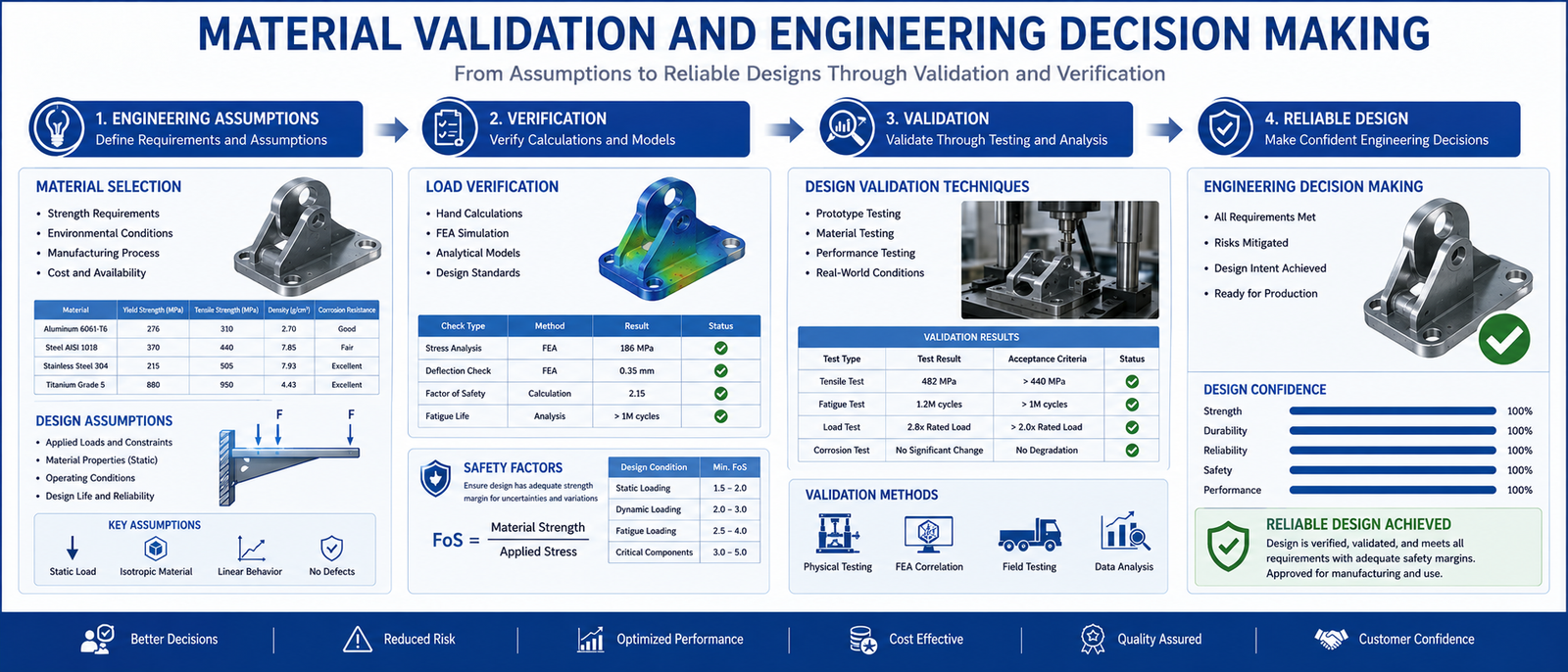
Incorrect assumptions about materials and loads remain one of the most common causes of engineering failures.
Even a well-designed component can fail if the selected material cannot withstand operating conditions or if the actual loads exceed design assumptions.
Engineers must always verify material properties, loading conditions, environmental factors, and safety requirements before approving a design.
This step directly connects with Importance of Material Selection in Mechanical Design.
Proper validation helps ensure that designs perform as expected throughout their service life.
Error prevention is not a single activity. It is a mindset that guides every stage of engineering design.
By combining structured workflows, design reviews, simulation, standards, communication, and validation, engineers can eliminate many problems before manufacturing even begins.
The ability to identify risks early is one of the most valuable skills a modern engineer can develop because it improves product quality, reduces costs, and increases reliability.
At 4Dimensions Infotech Pune, students learn practical engineering workflows used in real industries.
Our programs combine AutoCAD, SolidWorks, CATIA, CAD design principles, and real-world validation techniques through hands-on projects.
Whether you are searching for CAD Courses in Pune, a CAD Training Institute, a SolidWorks Course, a CATIA Course, or a complete Mechanical Design Course, learning how to prevent engineering errors will make you a stronger and more employable engineer.
1. What is error prevention in engineering design?
Error prevention in engineering design refers to identifying and eliminating mistakes during the design stage before manufacturing begins.
2. Why is error prevention important?
It reduces costs, improves product quality, and helps prevent failures later in the development process.
3. What are common error prevention techniques?
Design reviews, simulation, standardization, checklists, and validation of material and load assumptions.
4. How does simulation help prevent errors?
Simulation allows engineers to test design behavior under real operating conditions and identify weaknesses before production.
5. Is error prevention part of CAD and CAE workflows?
Yes. Modern CAD and CAE tools help engineers detect, analyze, and reduce design errors throughout product development.
6. Can beginners learn error prevention techniques?
Yes. Through structured training, practical projects, and real engineering workflows, beginners can learn how to prevent common design mistakes effectively.
© 2025 4Dimensions Infotech. All rights reserved. | Best Design Engineering Training Institute in Pune
Start your journey with the best design engineering training institute in Pune.