
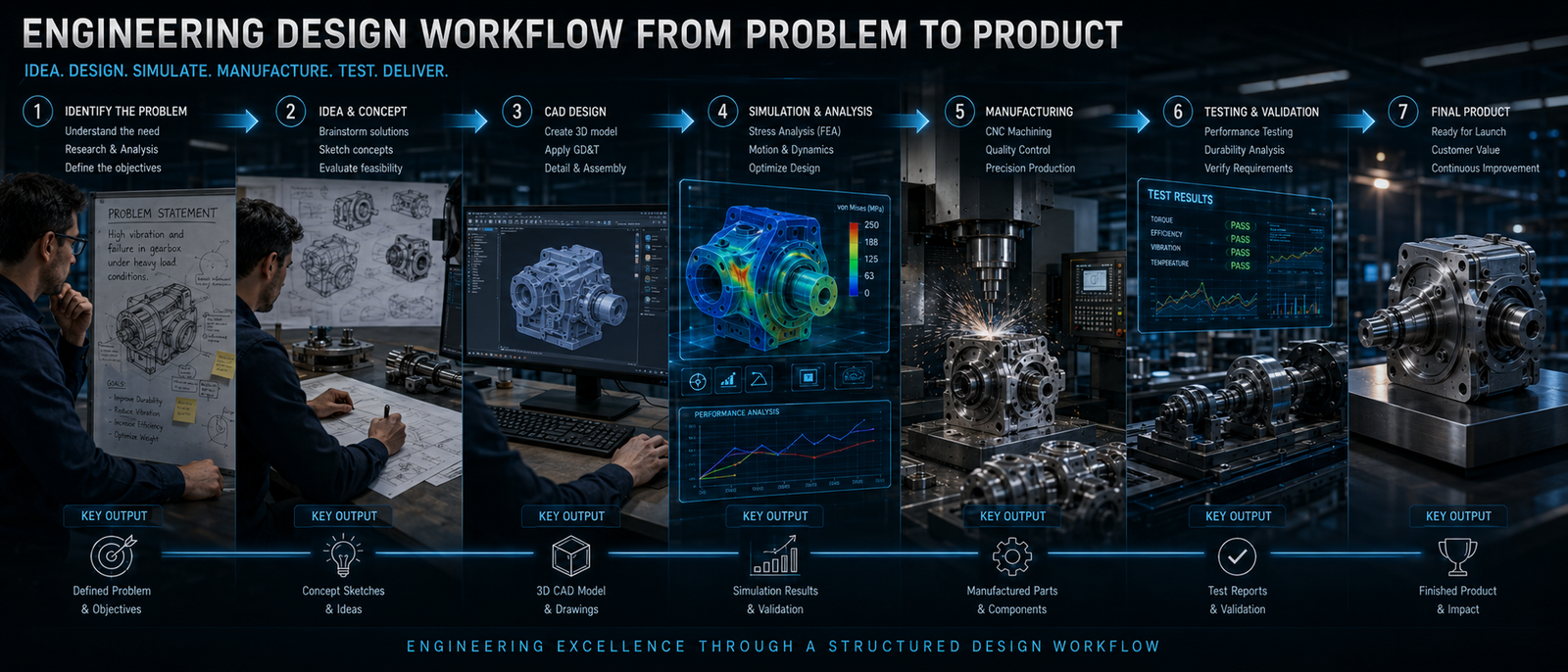
At 4Dimensions Infotech, students learning modern mechanical design workflows quickly understand one important truth — successful engineering is not just about creating 3D models.
Real engineering is a structured problem-solving process that transforms an idea into a functional, manufacturable, and reliable product.
Every product you see around you — from automotive components to industrial machinery — starts with a problem that engineers must solve.
Sometimes the goal is improving efficiency. In other cases, companies want to reduce cost, improve durability, enhance safety, or solve a user inconvenience.
However, turning that problem into a successful product requires a complete engineering design workflow.
This workflow combines CAD design, engineering analysis, manufacturing planning, simulation, testing, and continuous improvement.
Because of this, students learning through a CAD course, SolidWorks course, CATIA course, or engineering software course must understand how modern engineering products are actually developed in industries.
Understanding this process also helps students connect theoretical knowledge with real industrial workflows used in manufacturing companies today.
The first stage of every engineering project begins with understanding the problem clearly.
Before creating designs, engineers study:
Without proper problem definition, even technically advanced designs may fail to solve the actual issue.
Because of this, engineering companies spend significant time analyzing the root problem before beginning product development.
This stage also connects closely with workflows explained in the complete product design lifecycle.
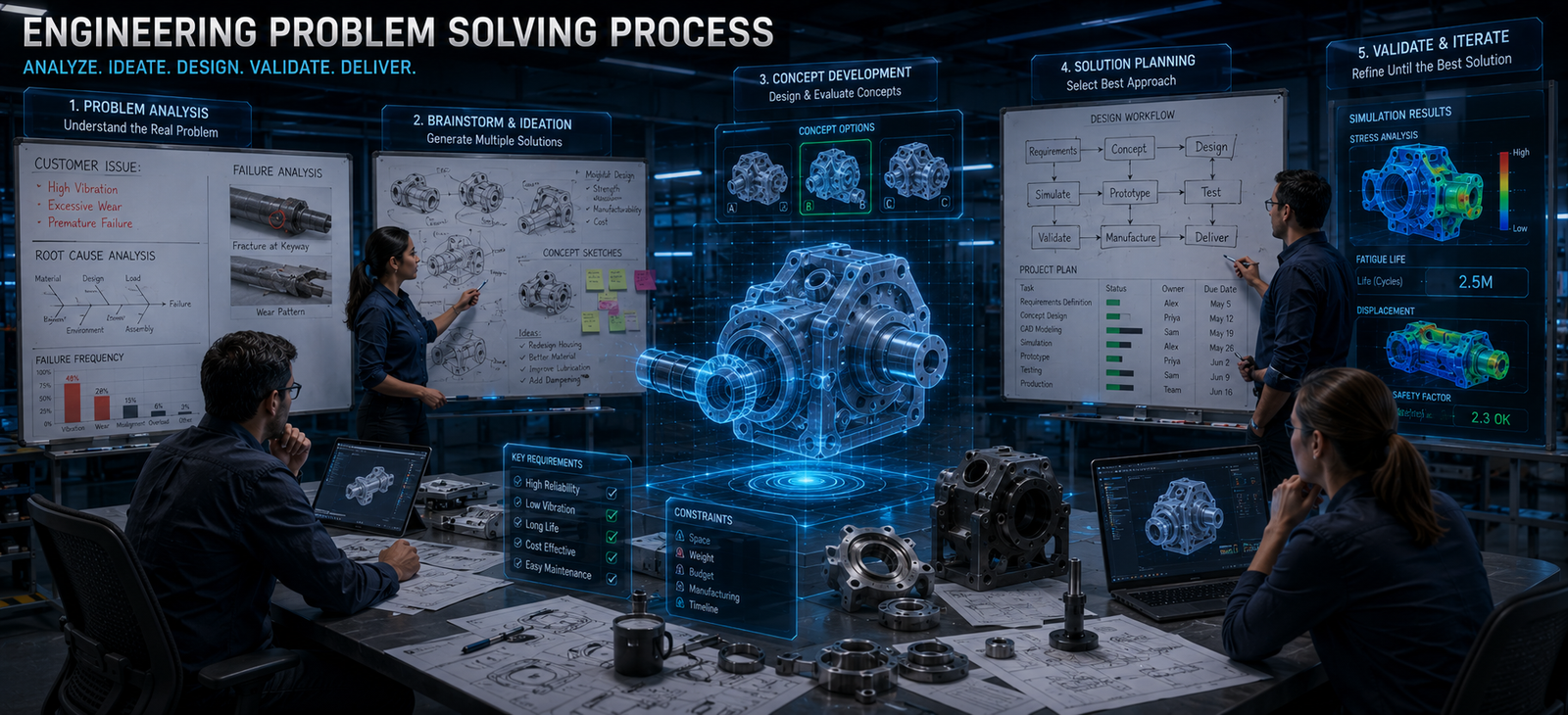
After defining the engineering problem, engineers begin generating possible solutions.
At this stage, creativity and engineering logic work together.
Engineers explore multiple design concepts, compare alternatives, evaluate feasibility, and select the most practical solution.
Instead of immediately choosing the first idea, modern engineering teams often create several concepts before selecting the final direction.
This process helps improve innovation while reducing design risks later in development.
Many engineering companies use digital sketching, concept modeling, and early CAD visualization during this stage.
This concept-development workflow is also strongly connected with real CAD workflows used inside engineering companies.
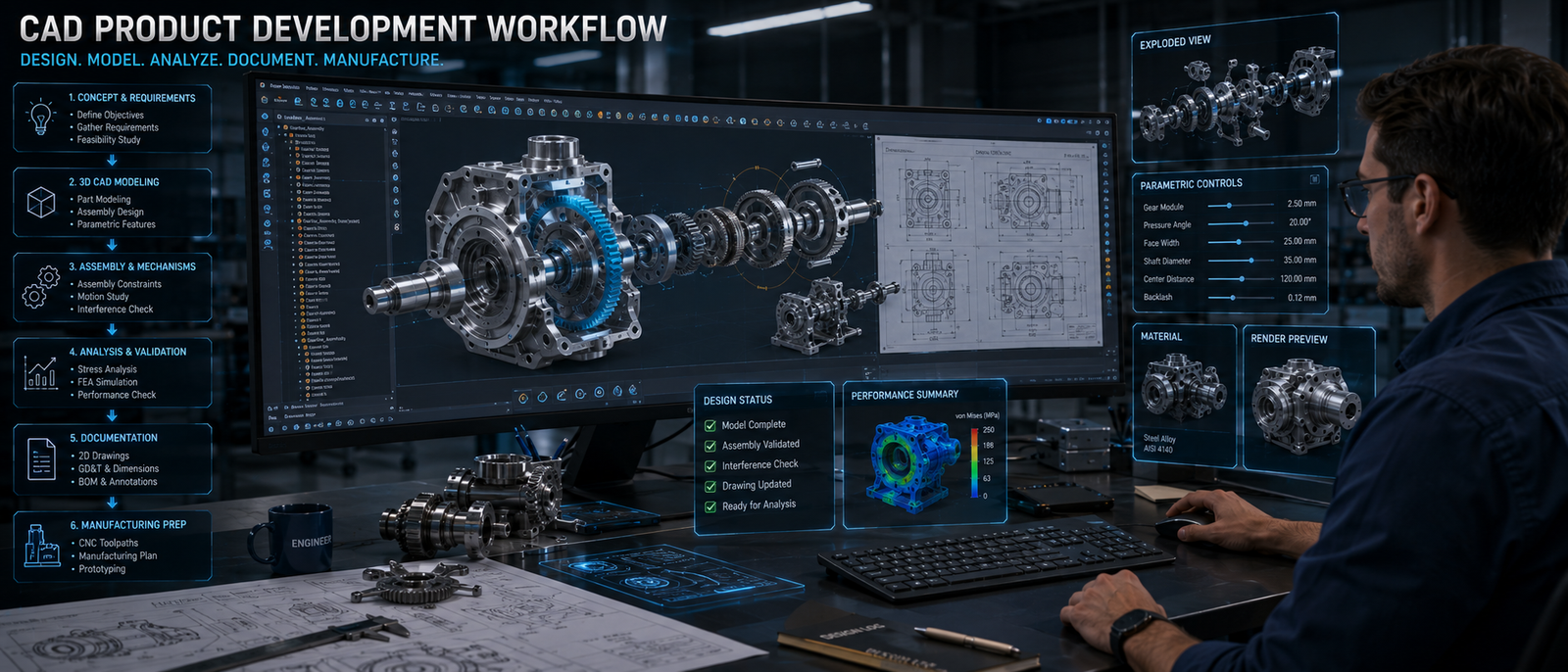
Once engineers finalize the product concept, they begin creating digital models using CAD software.
Modern CAD tools allow engineers to build highly accurate 3D models that represent the final product digitally.
Software taught in a:
helps engineers create detailed assemblies, components, and engineering drawings.
CAD modeling improves visualization and allows engineers to identify problems early before manufacturing begins.
This stage also connects directly with CAD-CAM workflows in modern manufacturing.
Creating a CAD model alone is not enough.
Engineers must also ensure that the product can survive real-world operating conditions safely and efficiently.
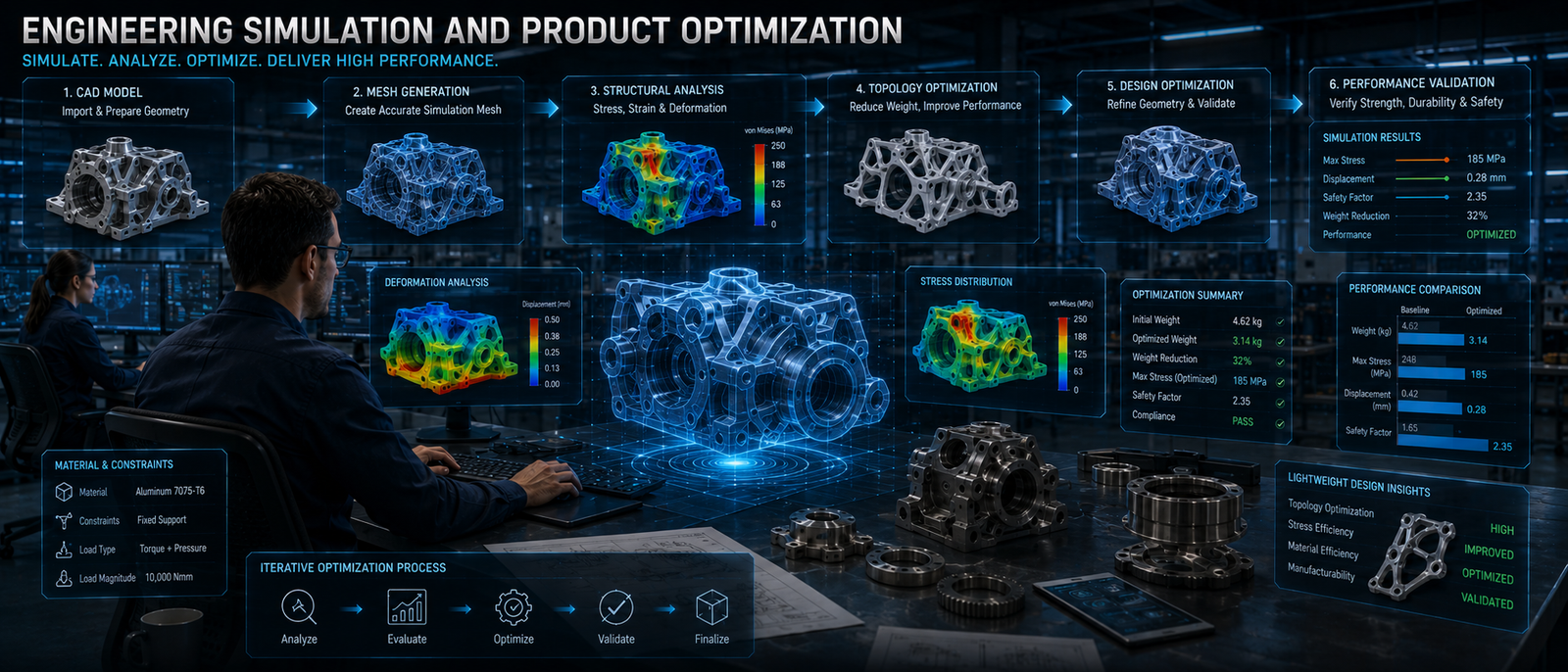
Because of this, engineers perform engineering analysis and simulation before manufacturing begins.
During this stage, engineers study:
Concepts explained in static vs dynamic loading and stress concentration in mechanical design become extremely important during this stage.
Modern simulation software allows engineers to identify weak points early and optimize the product before physical production.
Many industries also apply lightweight design strategies to improve efficiency while maintaining structural reliability.
After analysis and optimization, engineers prepare the design for manufacturing.
This process is called Design for Manufacturing (DFM).
Instead of creating designs that are difficult or expensive to produce, engineers modify products to improve manufacturability.
This includes optimizing:
This workflow closely connects with design for manufacturing principles.
Before final production begins, engineers validate the design thoroughly.
This stage ensures that the product performs safely and reliably under expected operating conditions.
Engineers perform:
This process is explained in detail in design validation before manufacturing.
If validation is skipped, products may fail after production, leading to major financial and safety risks.
Modern engineering design does not end after product launch.
Companies continuously collect feedback, analyze performance data, and improve products over time.
This helps industries:
This continuous optimization process is closely connected with how engineering companies improve existing products.
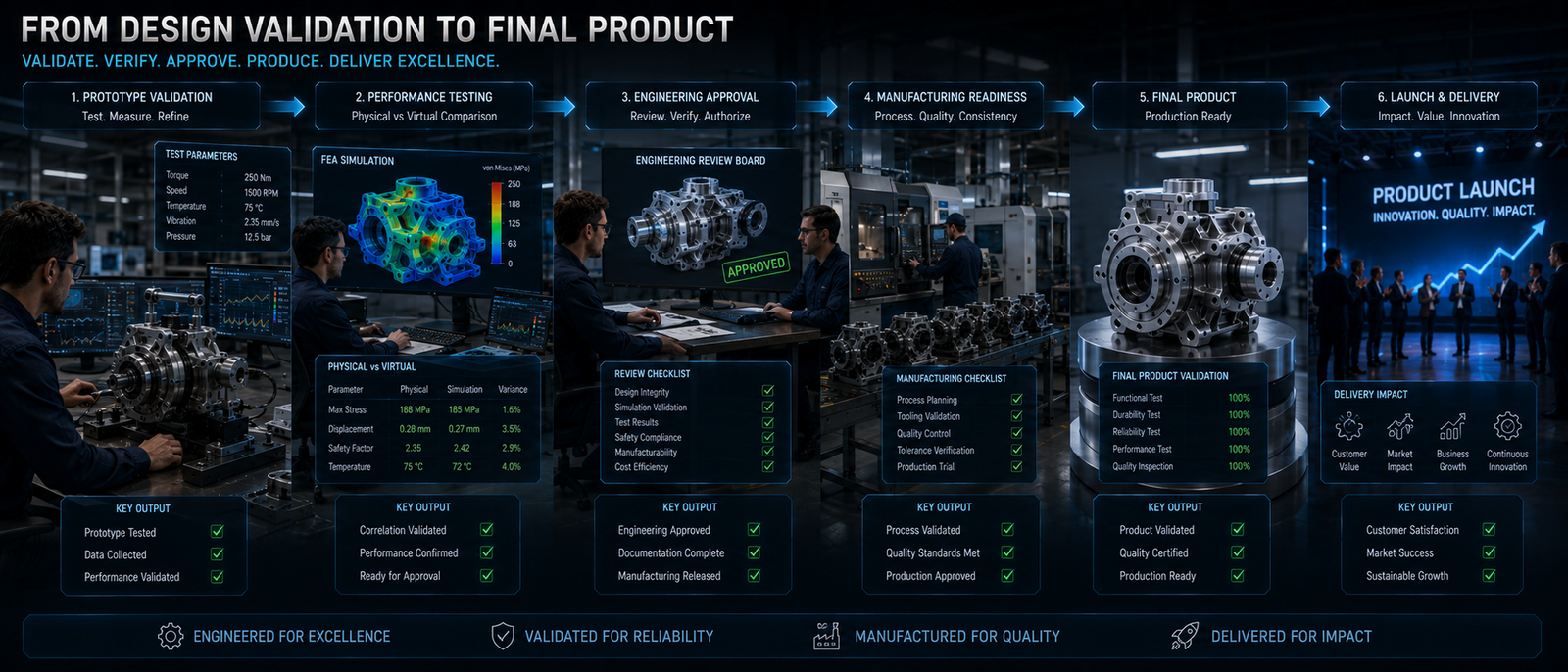
The engineering design workflow is a structured process that transforms problems into real-world engineering solutions.
From understanding the initial problem to CAD modeling, simulation, manufacturing planning, validation, and product improvement — every stage plays a critical role in successful engineering development.
Modern industries now expect engineers to understand complete workflows instead of only individual software tools.
Engineers who complete a professional CAD course in Pune and combine CAD skills, simulation knowledge, manufacturing understanding, and product-thinking gain a major advantage in modern engineering careers.
Understanding engineering workflows becomes much easier when students work on real projects using industry-standard tools.
At 4Dimensions Infotech, our CAD course in Pune covers the complete engineering design process through practical CAD projects, simulation workflows, manufacturing concepts, and real product development systems.
The goal is to develop engineers who understand not only how to design products — but also how real engineering industries actually build them. Enroll in our CAD course in Pune to master these workflows through hands-on, project-based training.
1. What is the engineering design workflow?
It is the complete step-by-step process used to convert engineering problems into functional products.
2. Why is problem definition important in engineering?
Because it ensures the final product solves the correct real-world problem effectively.
3. Which software tools are used in engineering workflows?
AutoCAD, SolidWorks, CATIA, simulation software, and CAD-CAM systems are commonly used — with CATIA widely used for advanced surfacing and complex assembly workflows in industries like aerospace and automotive.
4. What is design validation?
It is the process of testing and verifying product performance before manufacturing begins.
5. Why is product optimization important?
It improves efficiency, reliability, manufacturability, and overall engineering performance.
© 2025 4Dimensions Infotech. All rights reserved. | Best Design Engineering Training Institute in Pune
Start your journey with the best design engineering training institute in Pune.