
At 4Dimensions Infotech Pune, students learning mechanical designing skills quickly realize that understanding forces is far more important than simply learning CAD software.
Many engineering failures happen not because a component was poorly modeled, but because engineers misunderstood how real-world forces would act on the product.
In mechanical engineering, every machine part, structure, automotive component, or industrial system experiences loading conditions during operation.
However, not all loads behave in the same way.
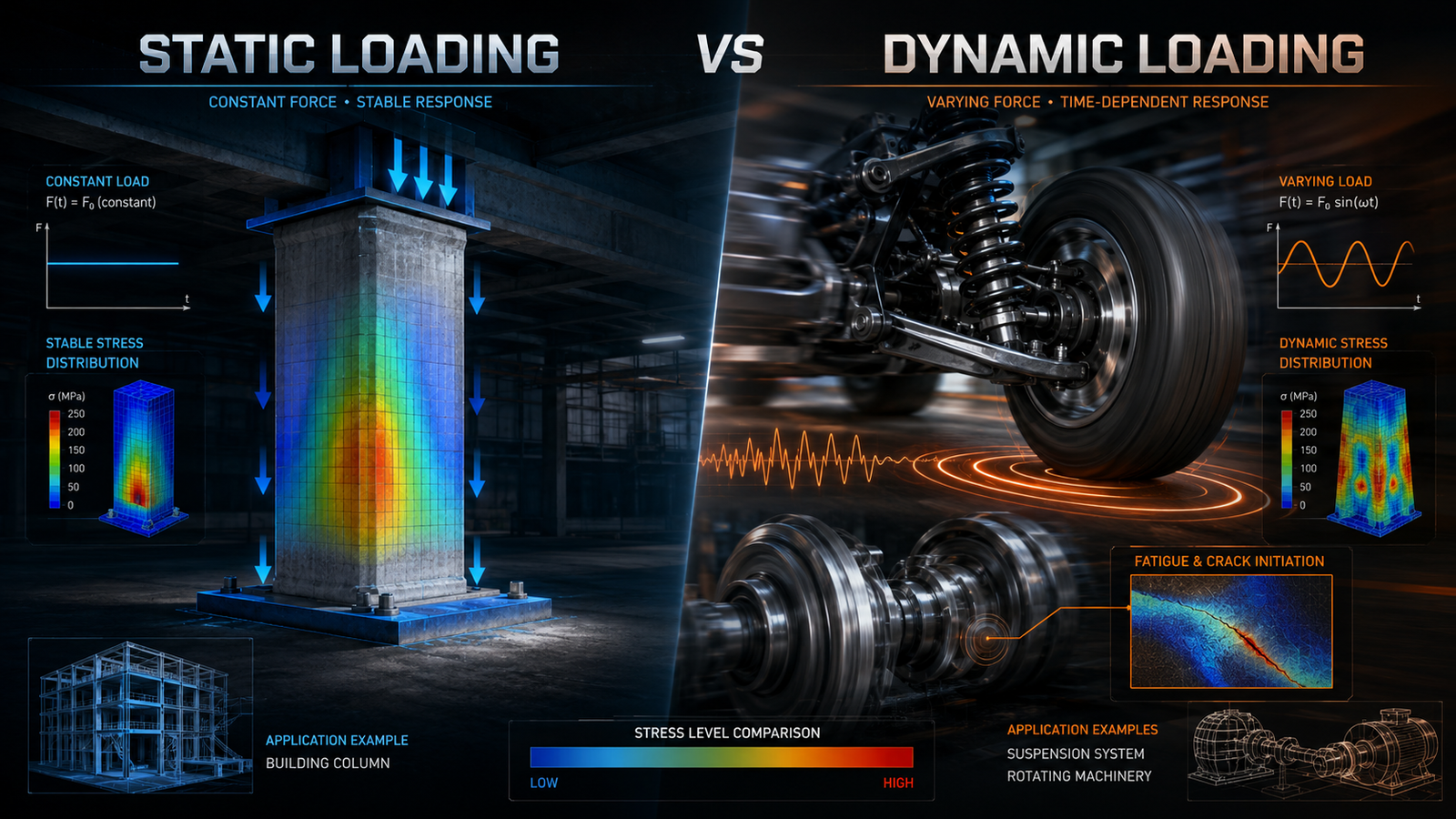
Some forces remain steady and predictable, while others constantly change with motion, vibration, impact, or repeated cycles.
This difference between static loading and dynamic loading is one of the most important concepts in engineering analysis, product design, simulation, and structural reliability.
Understanding this concept is essential for students learning mechanical design courses, stress analysis, SolidWorks simulation, CATIA analysis, and modern CAE workflows.
It is also one of the most commonly discussed concepts during engineering interviews and real industrial design projects.
Every engineering product is designed to handle forces safely.
However, the behavior of a product depends heavily on how those forces act during operation.
For example, a bridge supporting vehicles experiences different loading conditions compared to a rotating turbine blade inside an aircraft engine.
A stationary building column behaves very differently from a vibrating automotive suspension system.
Because of this, engineers must first identify the type of loading before finalizing any design.
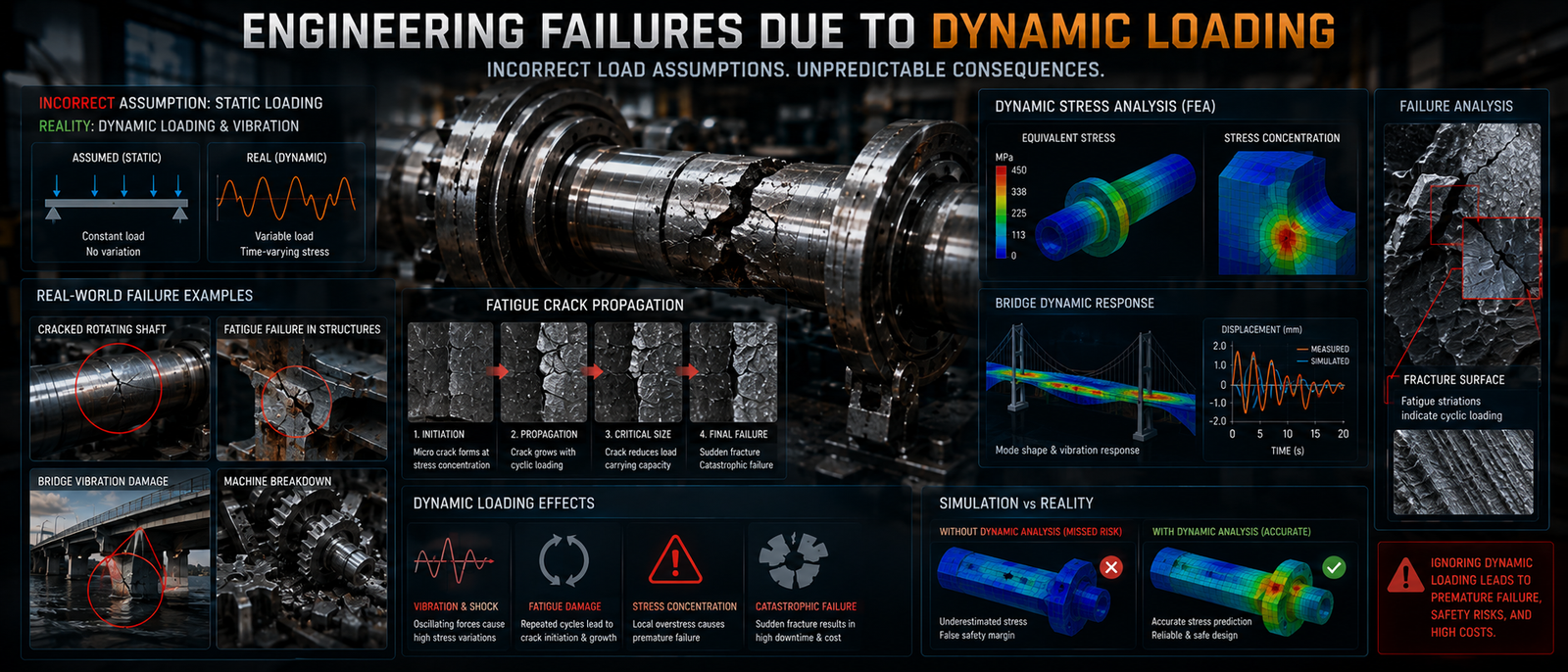
If the wrong loading assumption is used during analysis, even a strong-looking design may fail unexpectedly in real-world conditions.
This is why load analysis is considered one of the foundations of modern mechanical engineering and simulation-based product development.
Real engineering workflows explained in industry CAD design workflows show how engineers constantly analyze loading conditions before manufacturing begins.
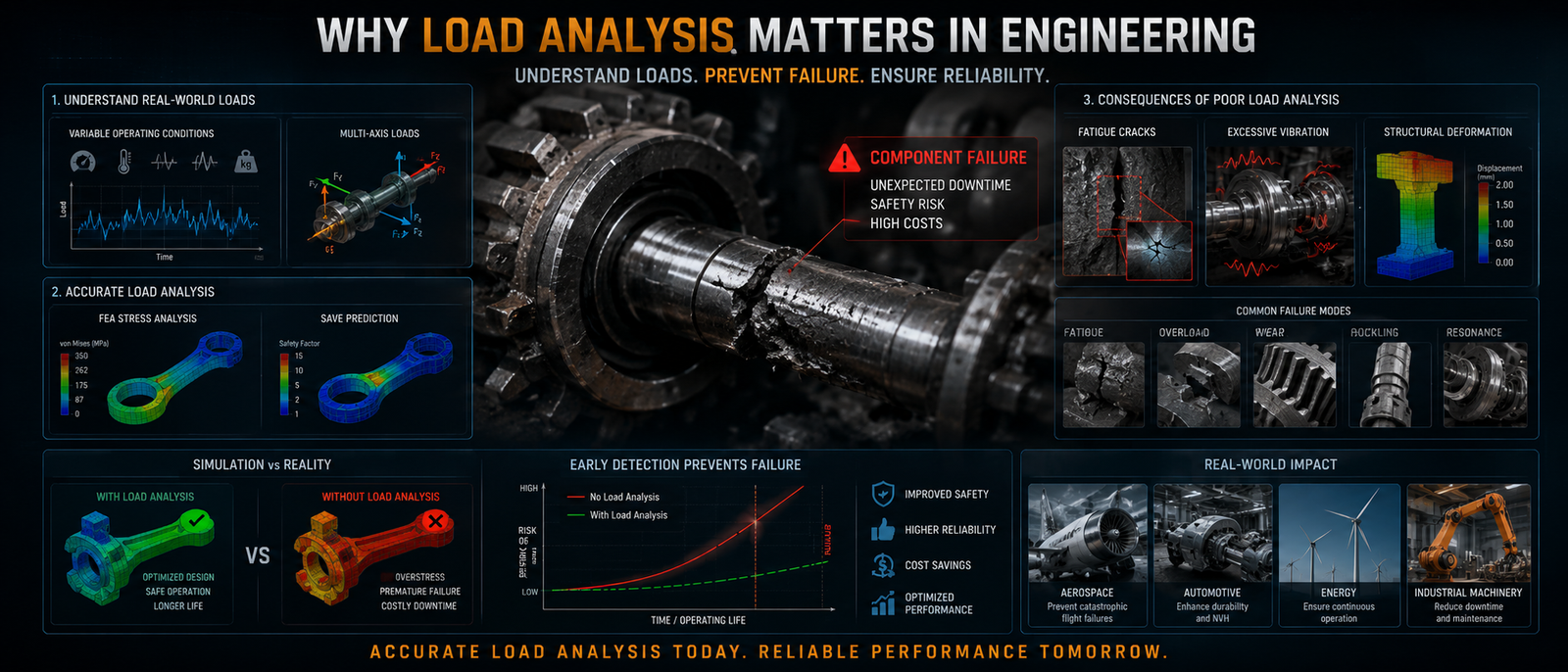
Students often focus heavily on learning CAD software but ignore engineering behavior behind the design.
However, companies today expect engineers to understand how products behave under real-world operating conditions.
This is why concepts like static loading, dynamic loading, stress analysis, and fatigue behavior are becoming increasingly important during placements and technical interviews.
Modern engineering industries no longer want software operators.
They want engineers who can think critically, analyze product behavior, and solve practical design problems.
This industry shift is also strongly connected with modern automation and simulation-based engineering careers.
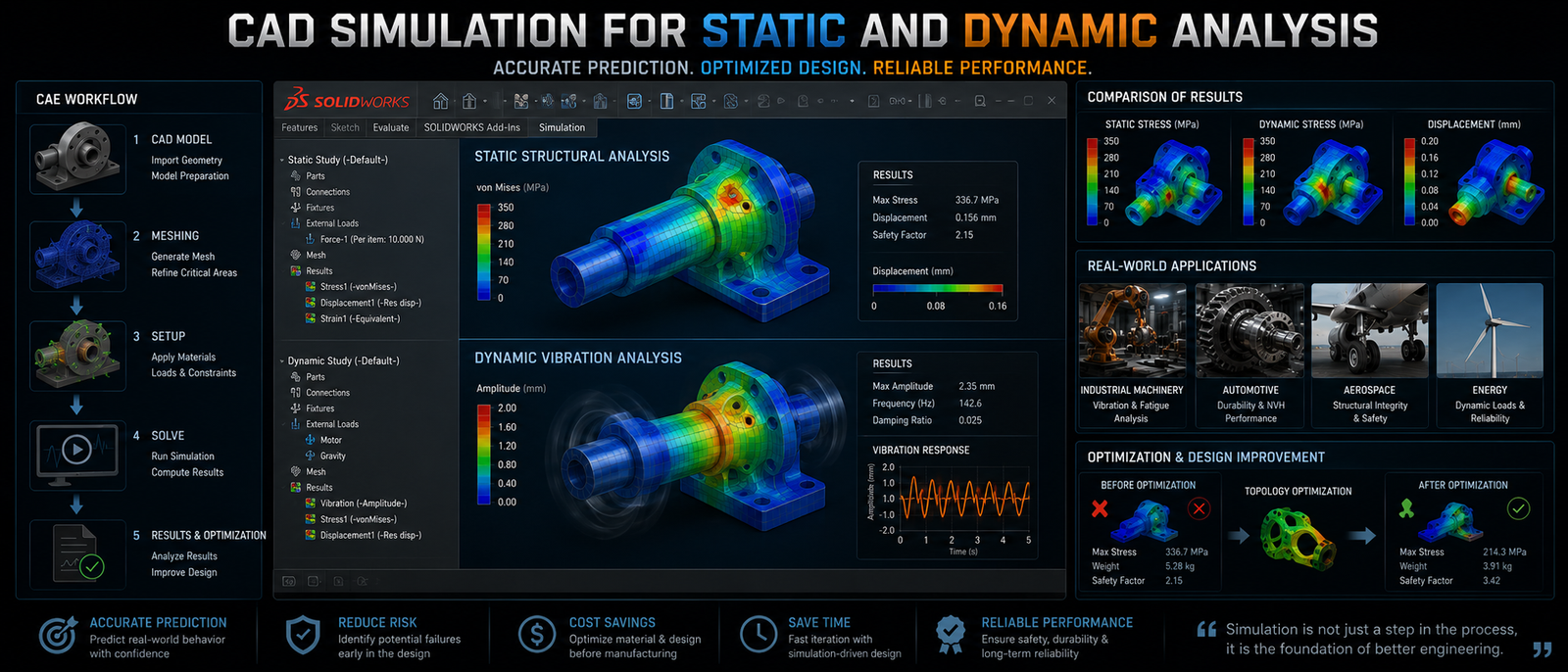
Static and dynamic loading are among the most important concepts in mechanical engineering design.
Understanding the difference between them helps engineers create safer, stronger, and more reliable products.
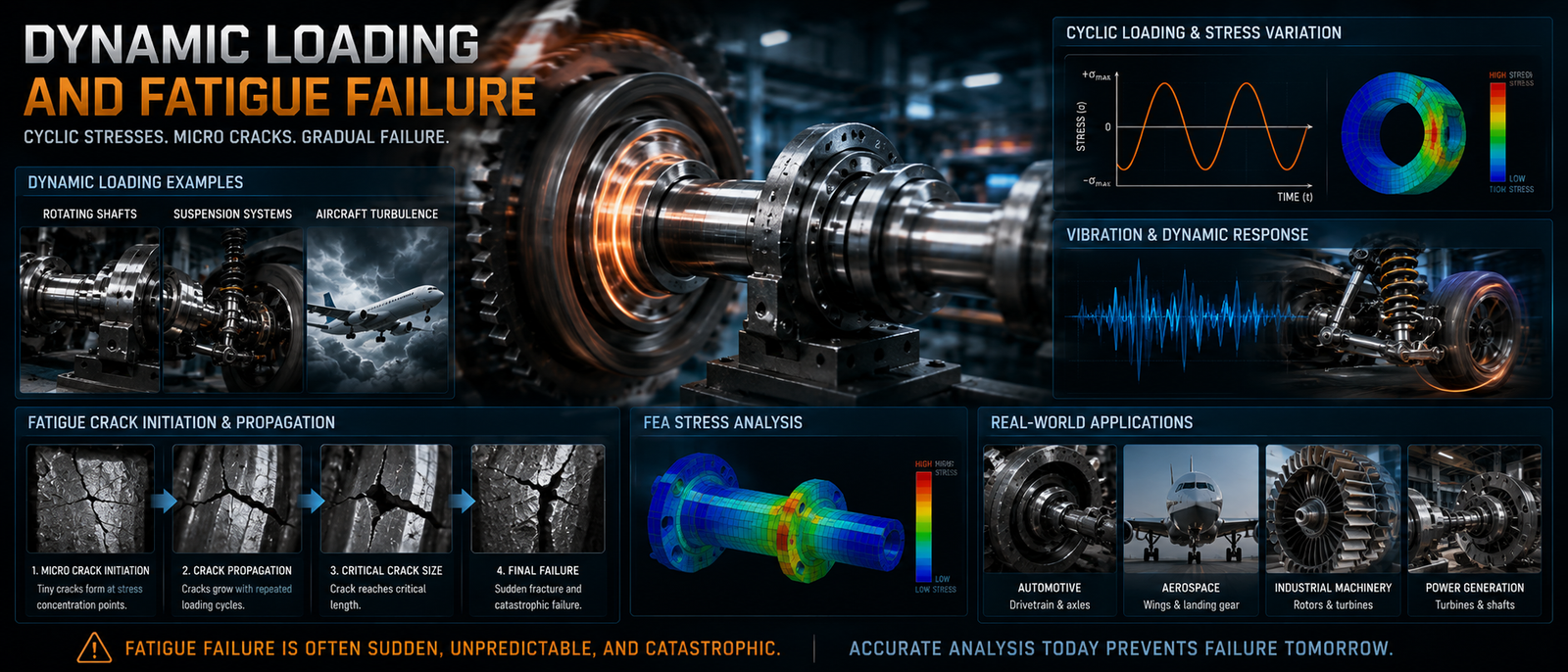
While static loading involves stable forces, dynamic loading introduces vibration, fatigue, cyclic stress, and motion-related effects that are far more complex.
Because of this, modern engineering relies heavily on CAD simulation and CAE analysis tools to study loading conditions before manufacturing begins.
Engineers who understand these concepts gain a major advantage in mechanical design, product development, automotive engineering, aerospace systems, and simulation-based industries.
Understanding engineering theory becomes far more valuable when students apply concepts through practical projects and simulation workflows.
The goal is not just learning software it is learning how real engineering products behave under real operating conditions.
1. What is static loading in mechanical engineering?
Static loading is a force that remains relatively constant over time without major changes in direction or magnitude.
2. What is dynamic loading?
Dynamic loading involves forces that change with time due to motion, vibration, impact, or cyclic effects.
3. Why is dynamic loading more dangerous?
Dynamic loading can create fatigue, vibration, resonance, and repeated stress cycles that eventually lead to failure.
4. Which tools help analyze loading conditions?
SolidWorks Simulation, CATIA analysis tools, and CAE software help engineers study stress and deformation behavior.
5. Why is loading analysis important in engineering?
Loading analysis helps engineers design safer, stronger, and more reliable products for real-world conditions.
© 2025 4Dimensions Infotech. All rights reserved. | Best Design Engineering Training Institute in Pune
Start your journey with the best design engineering training institute in Pune.