
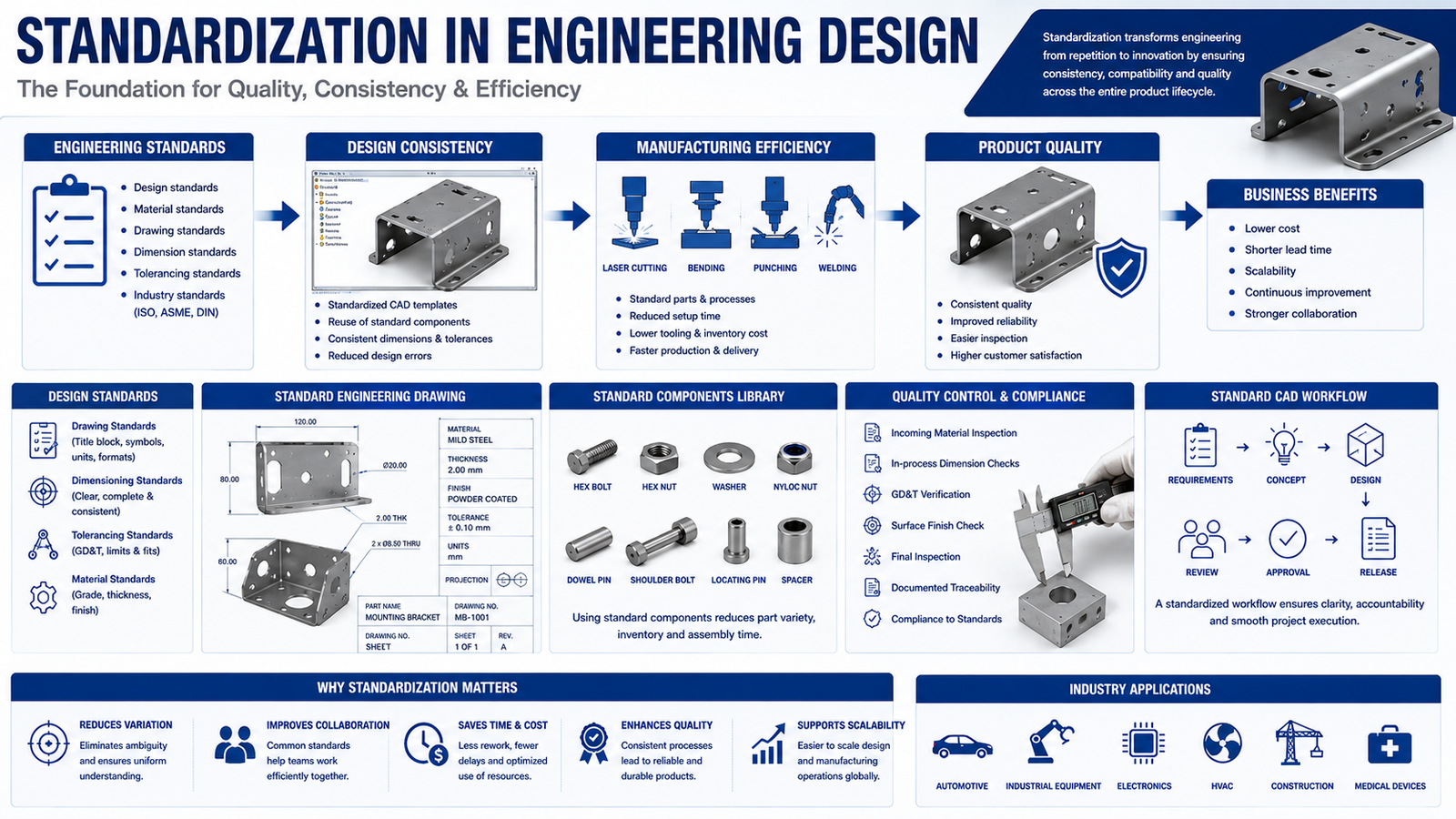
Engineering companies today depend heavily on standardized processes to ensure quality, consistency, and efficiency. Whether engineers are creating CAD models, manufacturing components, or developing complex products, following engineering standards helps teams work together without errors.
At 4Dimensions Infotech Pune, students enrolled in an AutoCAD Course in Pune, CAD Course in Pune, SolidWorks Course in Pune, CATIA Course in Pune, and Solid Edge Course in Pune learn that successful engineering projects are built on standardized workflows used by real industries.
This is where Standardization in Engineering Design becomes important. Standardization provides a common framework for creating drawings, developing CAD models, selecting materials, preparing manufacturing documentation, and maintaining product quality throughout the engineering lifecycle.
Modern industries rely on engineering standards because they reduce design errors, improve communication between departments, simplify manufacturing processes, and ensure compatibility between components. Whether an engineer works in automotive manufacturing, industrial machinery, aerospace, product design, or construction, standardization plays a critical role in project success.
Without engineering standards, companies would face inconsistent designs, production delays, quality issues, increased costs, and communication problems between teams.
As industries continue adopting advanced CAD software and digital engineering workflows, understanding Standardization in Engineering Design has become an essential skill for modern design engineers and engineering students preparing for industry careers.
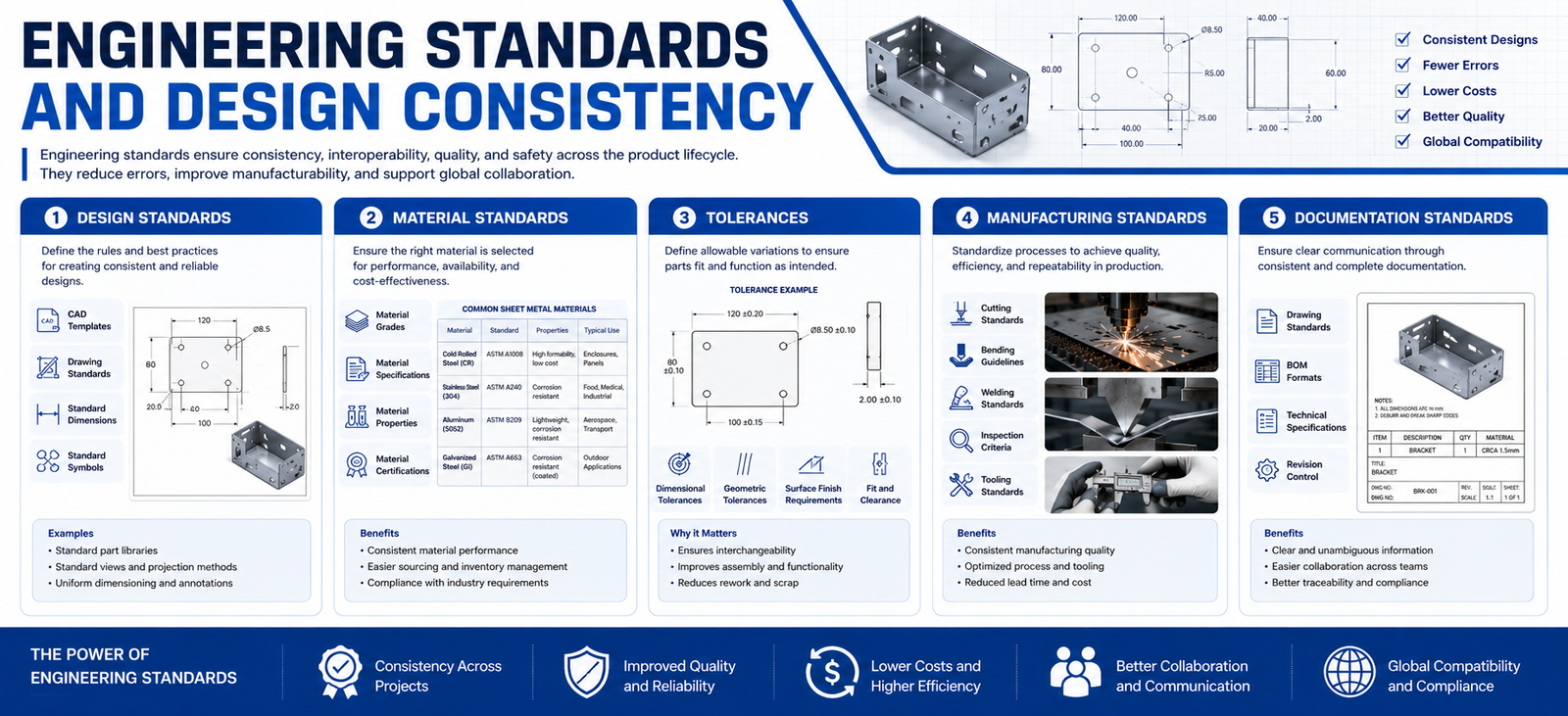
Standardization in Engineering Design refers to the use of established engineering rules, specifications, and guidelines during product development. These standards help engineers maintain consistency across designs, manufacturing processes, and documentation.
Engineering standards may define dimensions, tolerances, material specifications, drawing conventions, testing procedures, and quality requirements.
By following standardized methods, engineers create products that are easier to understand, manufacture, inspect, and maintain. This reduces confusion between departments and ensures that every team works using the same engineering language.
One of the most important examples of engineering standardization is GD&T in Engineering Design, which provides a globally accepted system for defining dimensional accuracy and tolerances.
As engineering projects become more complex, standardization provides the structure needed to maintain quality and reliability throughout the product lifecycle.
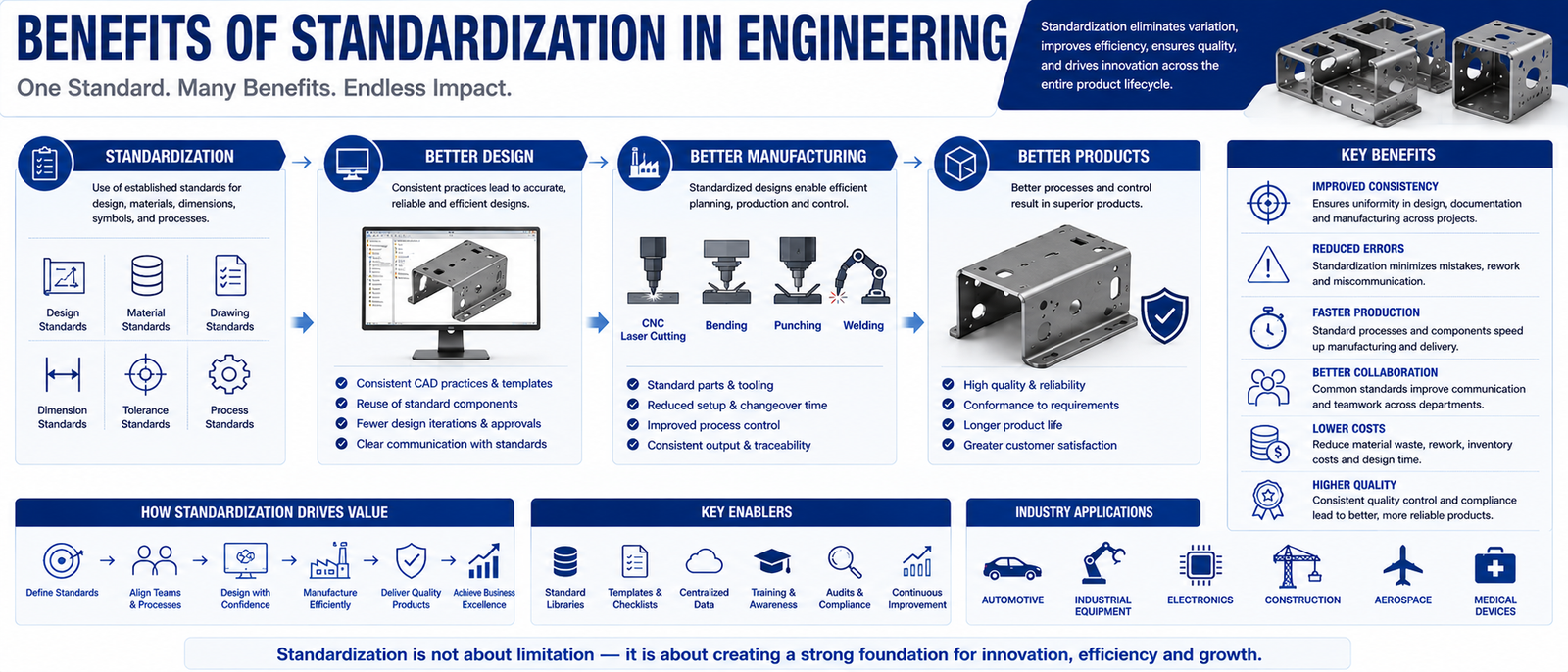
One of the biggest advantages of standardization is consistency. Engineers working on different projects can follow the same procedures and design rules, resulting in predictable and reliable outcomes.
When teams use approved standards and templates, the likelihood of design mistakes decreases significantly. This reduces redesign efforts and saves valuable engineering time.
Standardization directly supports Design Validation Before Manufacturing, where engineers verify that products meet requirements before production begins.
Manufacturing teams can work more efficiently when designs follow known standards. Standardized components, dimensions, and documentation reduce production complexity and improve workflow efficiency.
Engineering projects often involve multiple departments. Standardization creates a common framework that improves communication between design, manufacturing, quality, and maintenance teams.
Reduced errors, faster production, and improved efficiency all contribute to lower manufacturing costs and higher profitability.
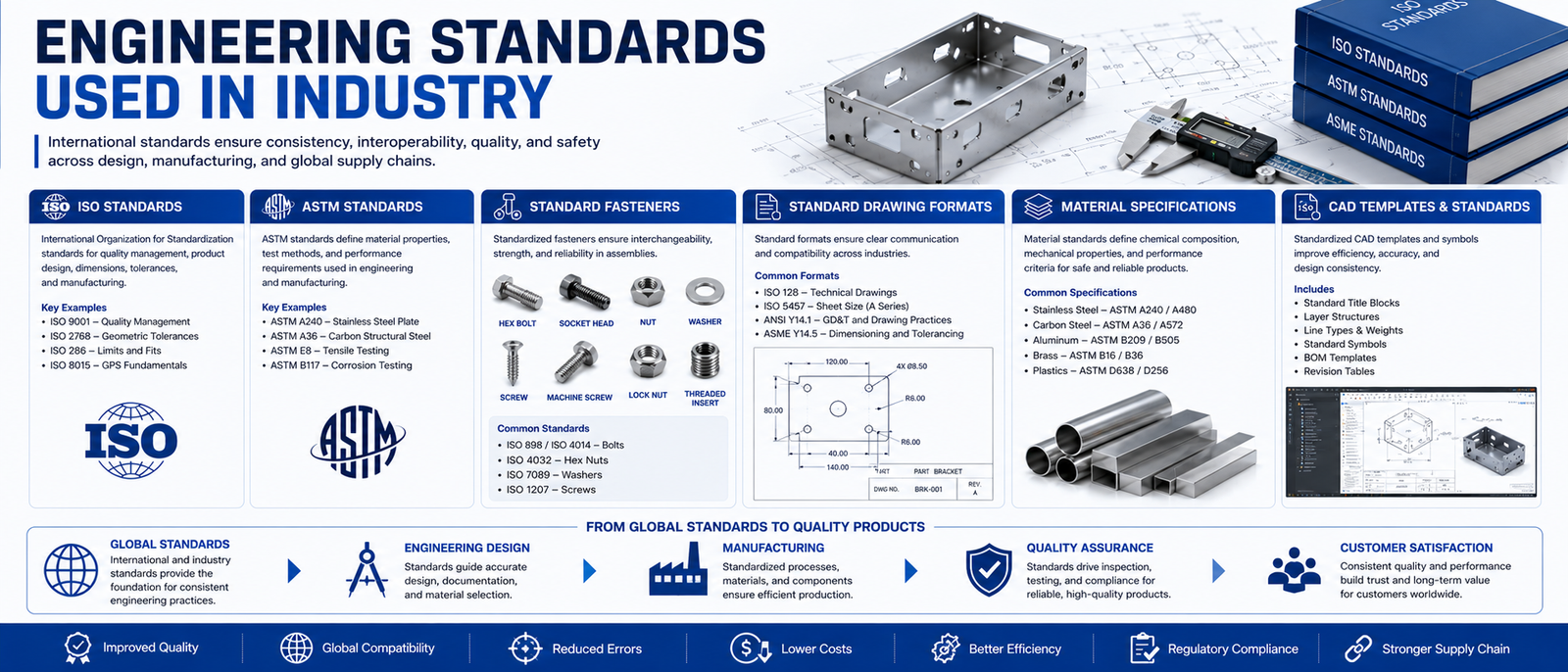
Standardization exists in nearly every area of engineering design and manufacturing.
These standards help engineers avoid unnecessary complexity and ensure compatibility between products and systems.
Organizations such as ISO, ASTM, ANSI, and ASME establish engineering standards used worldwide. These organizations create guidelines that improve safety, quality, interoperability, and manufacturing efficiency.
Because engineers across different countries follow the same standards, products can be designed, manufactured, and maintained consistently around the world.
This global standardization is one reason modern engineering industries can operate efficiently at large scale.
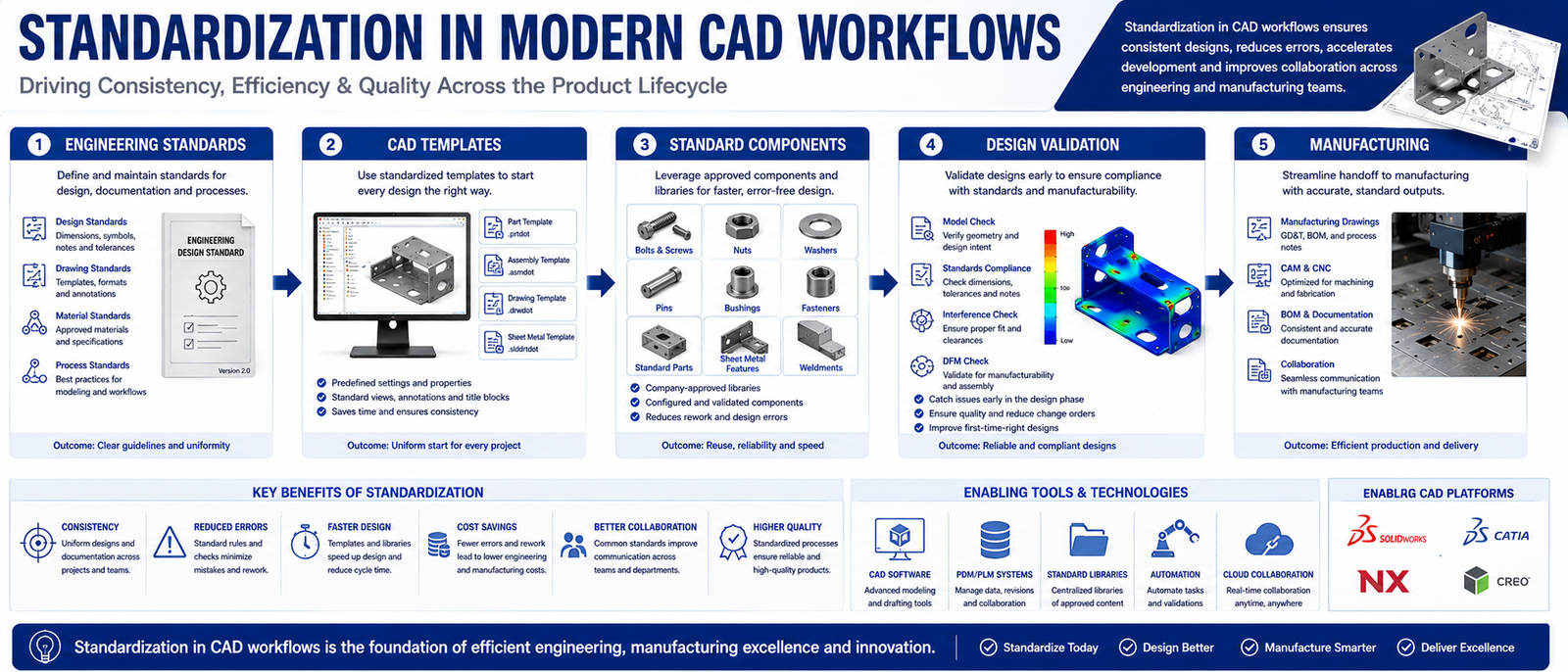
Standardization in Engineering Design is one of the most important foundations of modern engineering and product development. It improves quality, reduces design errors, accelerates manufacturing, enhances collaboration, and ensures consistency across projects.
From CAD modeling and engineering drawings to manufacturing documentation and product development workflows, standardization helps organizations deliver reliable products while reducing cost and development time.
As industries increasingly adopt digital engineering and advanced CAD software, engineers who understand industry standards, design practices, and structured workflows will have a significant advantage in their careers.
Understanding engineering standards becomes much easier when combined with practical software training and real-world projects.
At 4Dimensions Infotech Pune, students gain hands-on experience with industry-standard workflows through our AutoCAD Course in Pune, CAD Course in Pune, SolidWorks Course in Pune, CATIA Course in Pune, and Solid Edge Course in Pune.
Students learn CAD modeling, engineering drawings, GD&T, design documentation, assembly design, manufacturing workflows, and practical industry standards followed by leading engineering companies.
Whether you are searching for an AutoCAD Course Near Me, a CAD Course Near Me, or professional mechanical design training in Pune, practical project-based learning can help you become job-ready faster.
1. What is standardization in engineering design?
Standardization is the use of established engineering rules, specifications, processes, and best practices to ensure consistency, quality, and efficiency.
2. Why is standardization important in engineering?
It reduces design errors, improves communication, increases productivity, and helps maintain product quality across projects.
3. What are examples of engineering standardization?
Standard dimensions, CAD templates, drawing formats, materials, fasteners, GD&T practices, and manufacturing procedures.
4. Which organizations develop engineering standards?
Organizations such as ISO, ASME, ASTM, ANSI, and BIS develop widely used engineering standards.
5. How does CAD software support standardization?
Software such as AutoCAD, SolidWorks, CATIA, and Solid Edge provide templates, standard libraries, reusable components, and predefined workflows.
6. Where can I learn industry-standard CAD workflows in Pune?
Students looking for an AutoCAD Course in Pune, CAD Course in Pune, SolidWorks Course in Pune, CATIA Course in Pune, or Solid Edge Course in Pune can gain practical project-based training at 4Dimensions Infotech Pune.
© 2025 4Dimensions Infotech. All rights reserved. | Best Design Engineering Training Institute in Pune
Start your journey with the best design engineering training institute in Pune.