
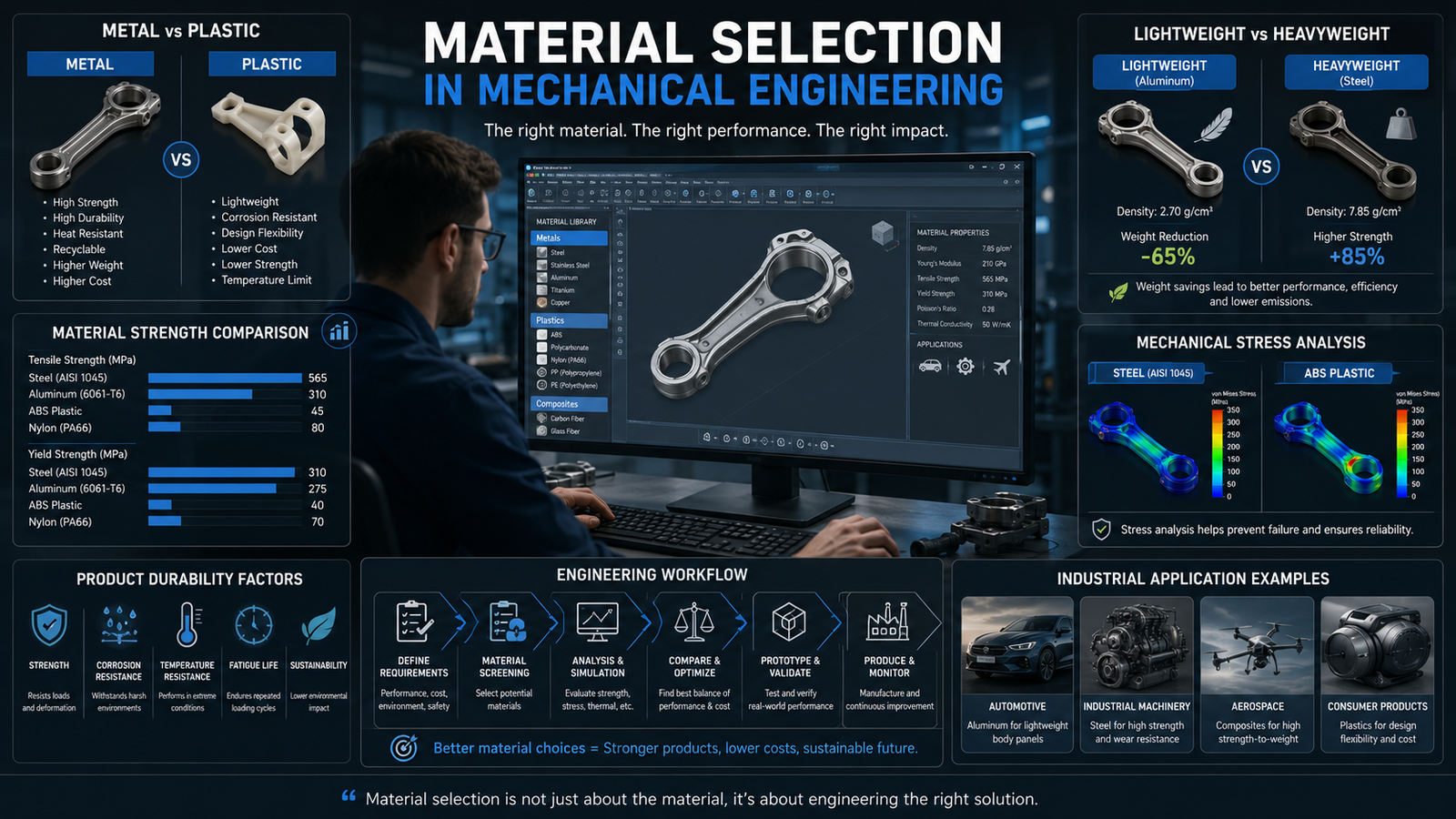
At 4Dimensions Infotech, students learning mechanical design quickly discover that even the best CAD model can fail if the wrong material is selected.
Every mechanical product depends heavily on one critical engineering decision — material selection.
Even if a product is designed perfectly, poor material choice can lead to product failure, reduced durability, overheating, corrosion, or manufacturing problems.
Because of this, engineers treat material selection as one of the most important stages in modern product development.
Industries today expect engineers to understand not only CAD software but also how materials behave under real-world conditions.
This is why modern cad design course, solidworks course, and engineering software course programs focus heavily on practical material analysis and engineering decision-making.
Materials directly affect how a product performs during operation.
For example, a machine component may experience stress, vibration, heat, pressure, corrosion, or friction while functioning.
If engineers select the wrong material, the component may crack, deform, wear out quickly, or fail completely under load.
Therefore, material selection directly impacts:
Modern CAD workflows explained in real engineering industry workflows show how material decisions directly affect final product quality and performance.
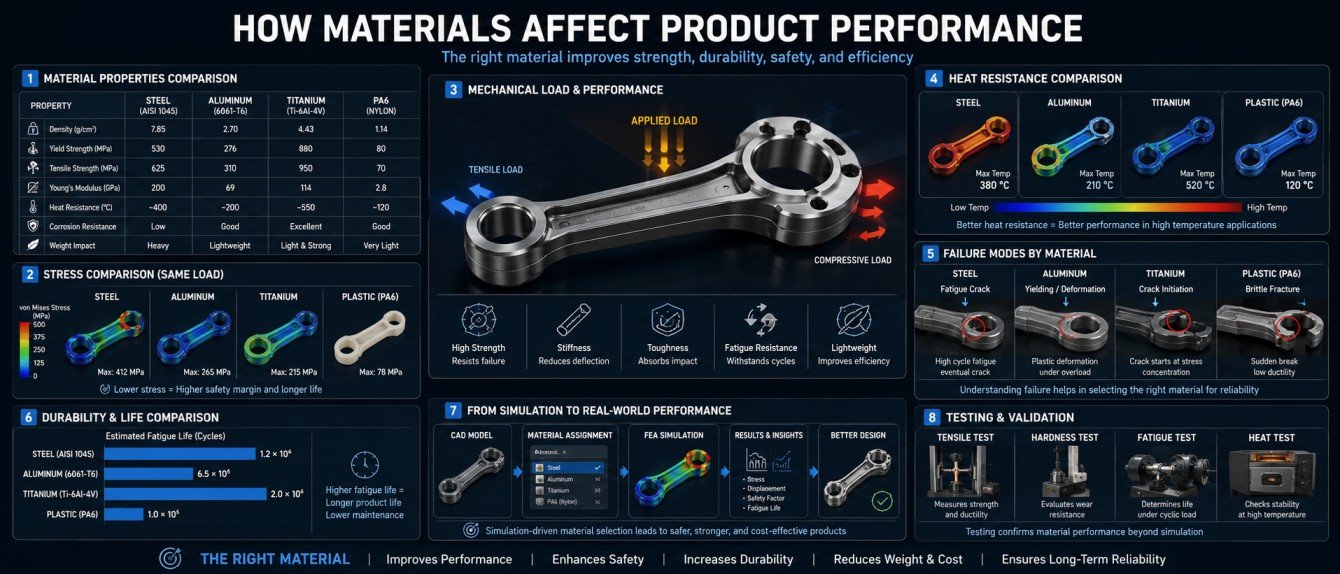
Engineers never select materials randomly. Instead, they evaluate multiple engineering and manufacturing factors before making a final decision.
The first factor is mechanical strength. The material must safely handle the forces and loads applied during operation.
Next comes weight. In industries like automotive and aerospace engineering, lightweight materials improve fuel efficiency and overall performance.
Cost is another important factor because products must remain practical and affordable for manufacturing.
Engineers also consider:
Modern engineering companies balance all these factors to create products that are strong, efficient, affordable, and reliable.
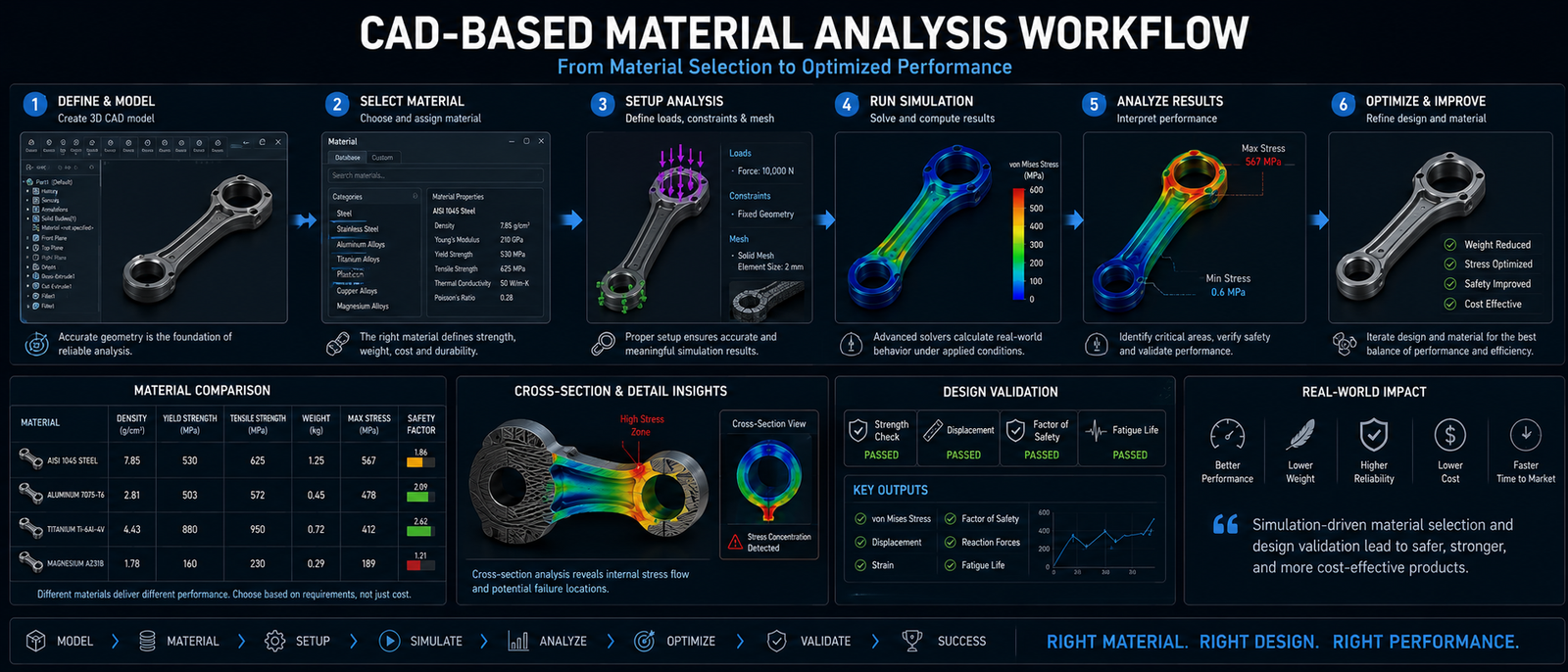
Modern engineers use advanced CAD and simulation tools to analyze material performance before manufacturing begins.
Software taught in modern CAD design workflows allows engineers to simulate stress, deformation, heat transfer, and load behavior digitally.
As a result, engineers can compare multiple material options quickly and select the best solution without building multiple physical prototypes.
Tools like SolidWorks, CATIA, and Creo help engineers visualize how products behave under real-world conditions.
This practical understanding is becoming increasingly valuable in modern mechanical engineering careers.
Different industries require different material strategies depending on product performance requirements.
In automotive engineering, lightweight metals and composite materials are used to improve efficiency and vehicle performance.
In aerospace engineering, materials must remain lightweight while handling extremely high stress and temperature conditions.
Consumer product companies often use plastics because they are lightweight, affordable, and easy to manufacture.
Medical industries focus heavily on biocompatible materials that remain safe for human use.
Therefore, material selection always depends on the application, operating environment, manufacturing process, and product goals.
This engineering mindset also connects closely with concepts explained in functional vs aesthetic product design workflows.
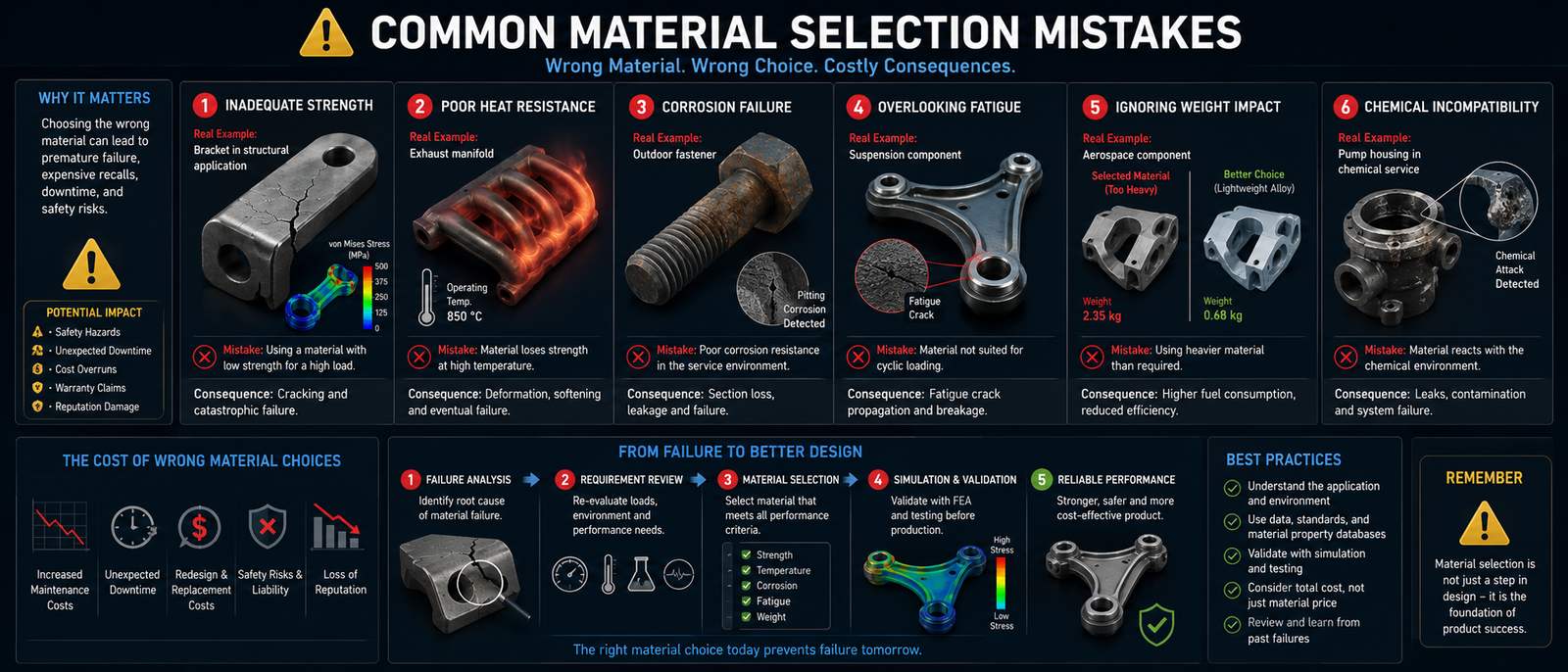
Many beginner engineers focus only on strength and ignore other important engineering factors.
Some designers select materials based only on appearance without understanding real performance limitations.
Others fail to consider manufacturability, environmental conditions, or long-term durability.
Because of this, products often fail during testing or real-world operation.
Therefore, engineers must balance performance, cost, usability, and manufacturing requirements together.
Material selection is not just one step inside the engineering process it is one of the foundations of successful product design.
Even a perfectly designed CAD model can fail if the material choice is poor.
Therefore, engineers must carefully analyze performance requirements, environmental conditions, manufacturing constraints, and cost before selecting materials.
Modern CAD tools and simulation software now allow engineers to make these decisions more efficiently than ever before.
This is why material analysis has become an essential skill for modern mechanical engineers.
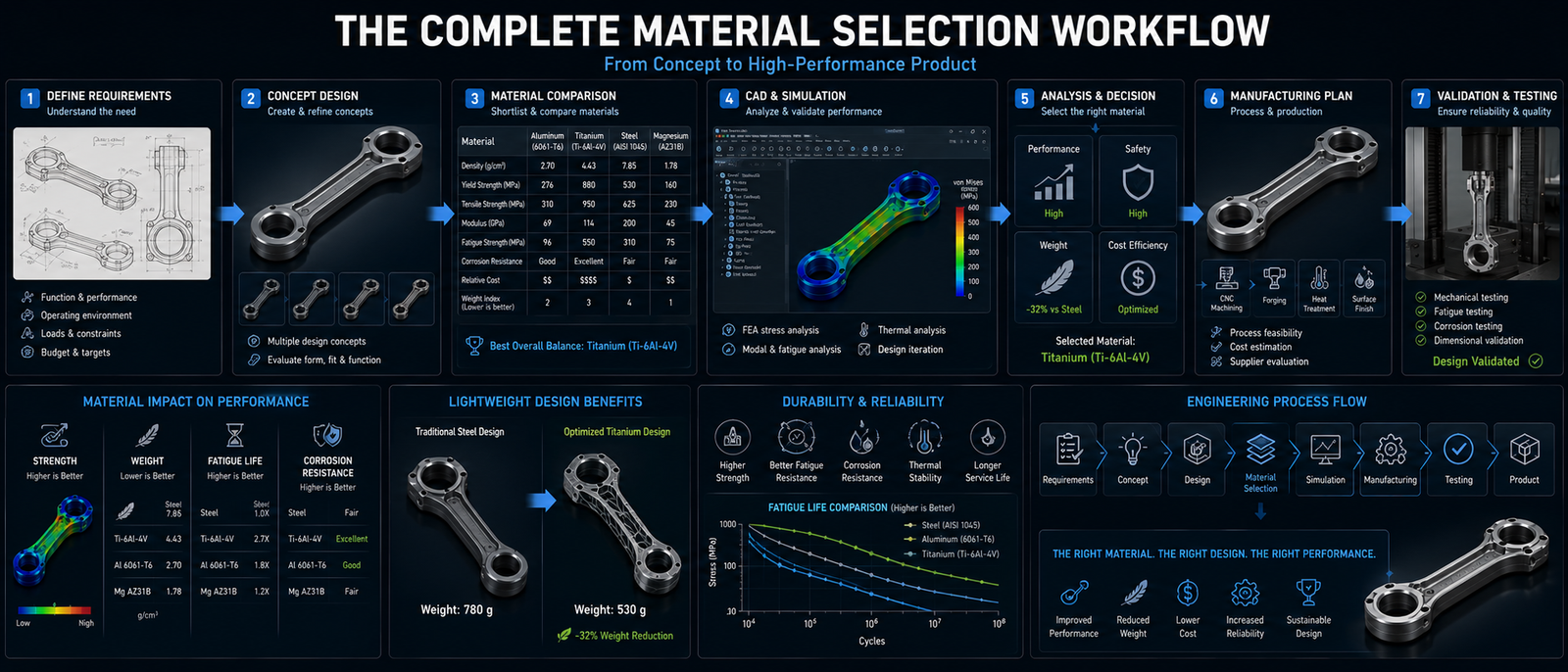
Understanding materials becomes easier when students apply concepts to real engineering designs and practical CAD workflows.
This hands-on approach helps students build stronger design thinking, product optimization skills, and industry-ready engineering confidence.
If you want to build a career in product design, CAD engineering, or mechanical design, learning material behavior is one of the most valuable skills you can develop.
1. What is material selection in mechanical design?
Material selection is the process of choosing the best material for a product based on strength, durability, cost, and application requirements.
2. Why is material selection important?
It ensures product safety, durability, efficiency, and long-term performance.
3. Which tools help engineers in material selection?
CAD software like SolidWorks, CATIA, Creo, and simulation tools help engineers analyze material performance.
4. What factors affect material selection?
Strength, weight, cost, temperature resistance, corrosion resistance, and manufacturability are major factors.
5. Is material selection important for engineering students?
Yes, it is one of the most important concepts in mechanical design and product engineering workflows.
© 2025 4Dimensions Infotech. All rights reserved. | Best Design Engineering Training Institute in Pune
Start your journey with the best design engineering training institute in Pune.