
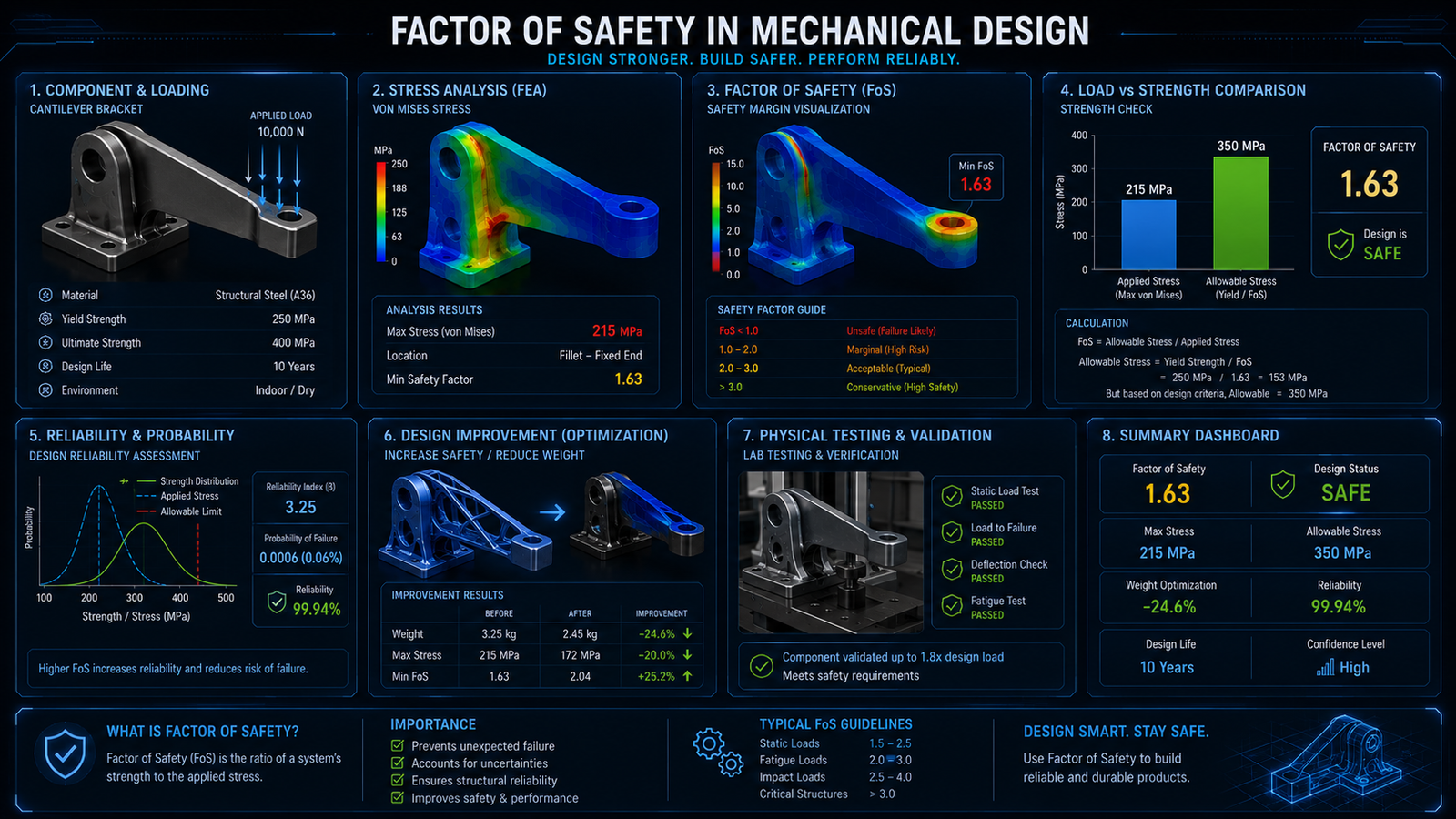
At 4Dimensions Infotech in Pune, students learning modern machine designing courses quickly understand one important reality — in engineering design, safety is never optional.
Every mechanical component must perform reliably under real-world conditions where loads, temperatures, vibrations, and operating environments are often unpredictable.
Because of this, engineers use one of the most important concepts in engineering design called the Factor of Safety (FoS).
The factor of safety helps engineers ensure that mechanical systems remain safe, durable, and reliable even when unexpected conditions occur.
Whether engineers are designing automotive components, industrial machinery, aerospace systems, or structural products, the factor of safety plays a critical role in preventing failure.
This is why students learning through a cad course, engineering software course, SolidWorks course, or simulation-based CAD training must understand how safety margins are applied in real engineering workflows.
Modern engineering industries now rely heavily on simulation, stress analysis, and optimization systems to calculate appropriate safety factors before manufacturing begins.
The Factor of Safety in Mechanical Design is the ratio between the maximum load a component can withstand and the actual load it is expected to experience during operation.
In simple terms, it shows how much stronger a component is compared to the minimum required strength.
For example, if a component is designed to withstand twice the expected load, then the factor of safety is 2.
This extra safety margin helps engineers handle uncertainties such as:
Without an appropriate safety factor, even small design errors can lead to serious engineering failures.
This concept also connects closely with practical workflows explained in real CAD industry engineering processes.
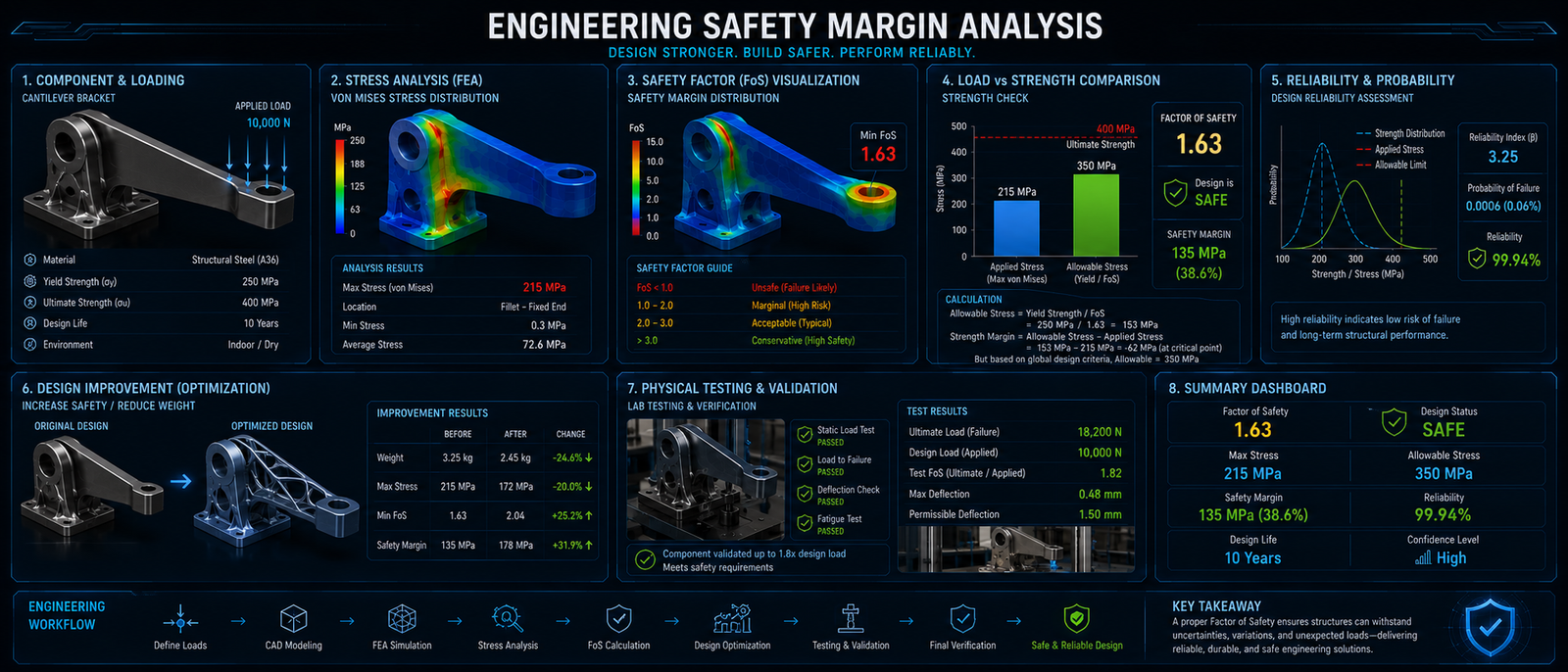
Real-world engineering systems rarely operate under perfectly controlled conditions.
Loads may fluctuate unexpectedly, materials may behave differently over time, and environmental conditions may affect structural performance.
Because of this uncertainty, engineers cannot design components only for ideal conditions.
Instead, they include a safety margin that helps prevent catastrophic failure during operation.
The factor of safety becomes especially important in industries such as:
In these industries, failure of a single component can create major safety risks and financial losses.
This is why modern engineering companies invest heavily in simulation, validation, and stress analysis workflows.
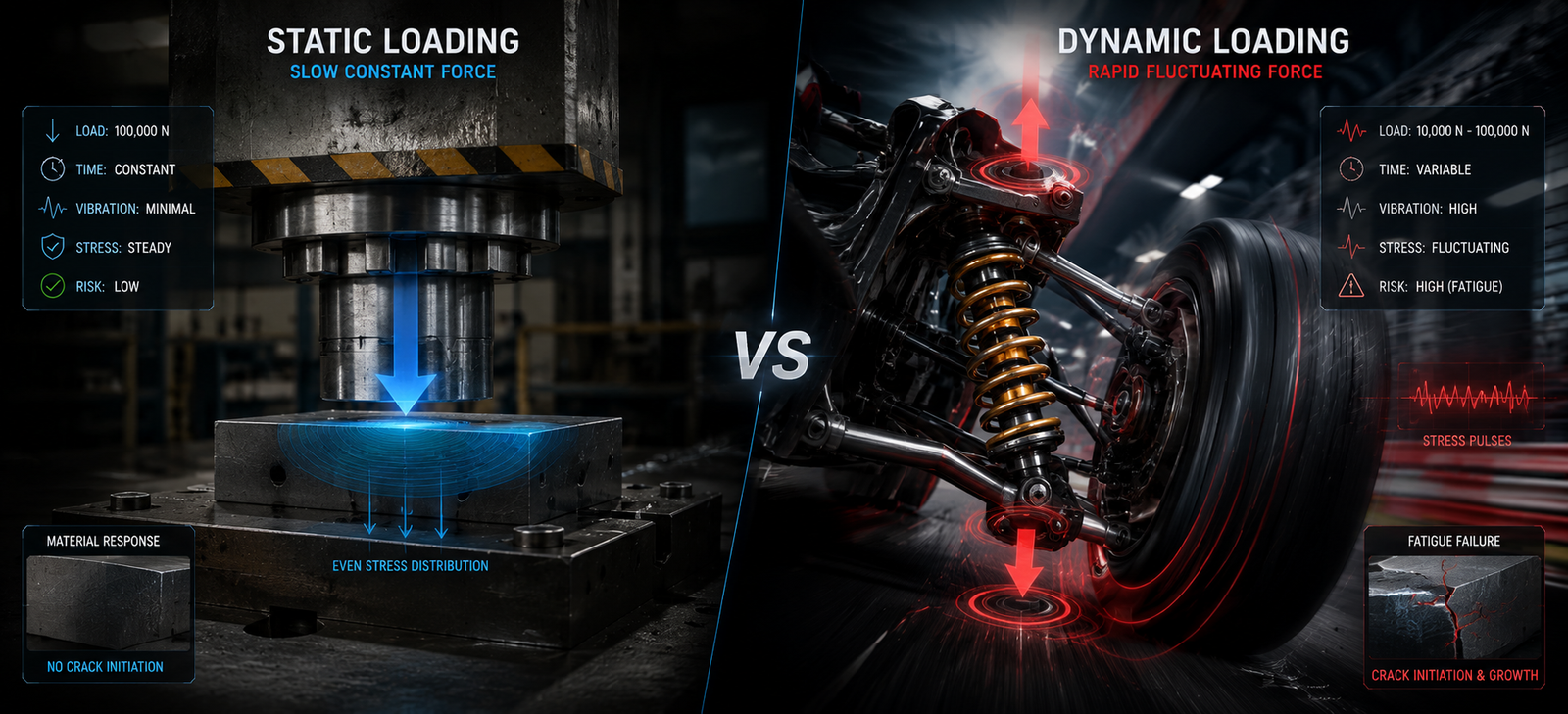
The required factor of safety depends strongly on the type of loading acting on a component.
Some components experience static loads that remain relatively constant over time.
Others experience dynamic loads that continuously change during operation.
Dynamic loading conditions are far more dangerous because they can create fatigue failure over time.
This concept is explained in detail in static vs dynamic loading in engineering design.
Components exposed to dynamic loading generally require higher safety factors because repeated stress cycles increase the chances of structural failure.
In many engineering components, stress does not distribute evenly across the structure.
Instead, stress increases significantly around sharp corners, holes, grooves, and sudden geometry changes.
This phenomenon is called stress concentration.
Modern engineers carefully analyze these high-stress regions before selecting an appropriate factor of safety.
This concept is deeply connected with stress concentration in mechanical design.
If stress concentration areas are ignored, components may fail even when the overall structure appears strong.
Because of this, engineers often redesign geometries using fillets, smooth transitions, and optimized structural layouts to reduce localized stress buildup.
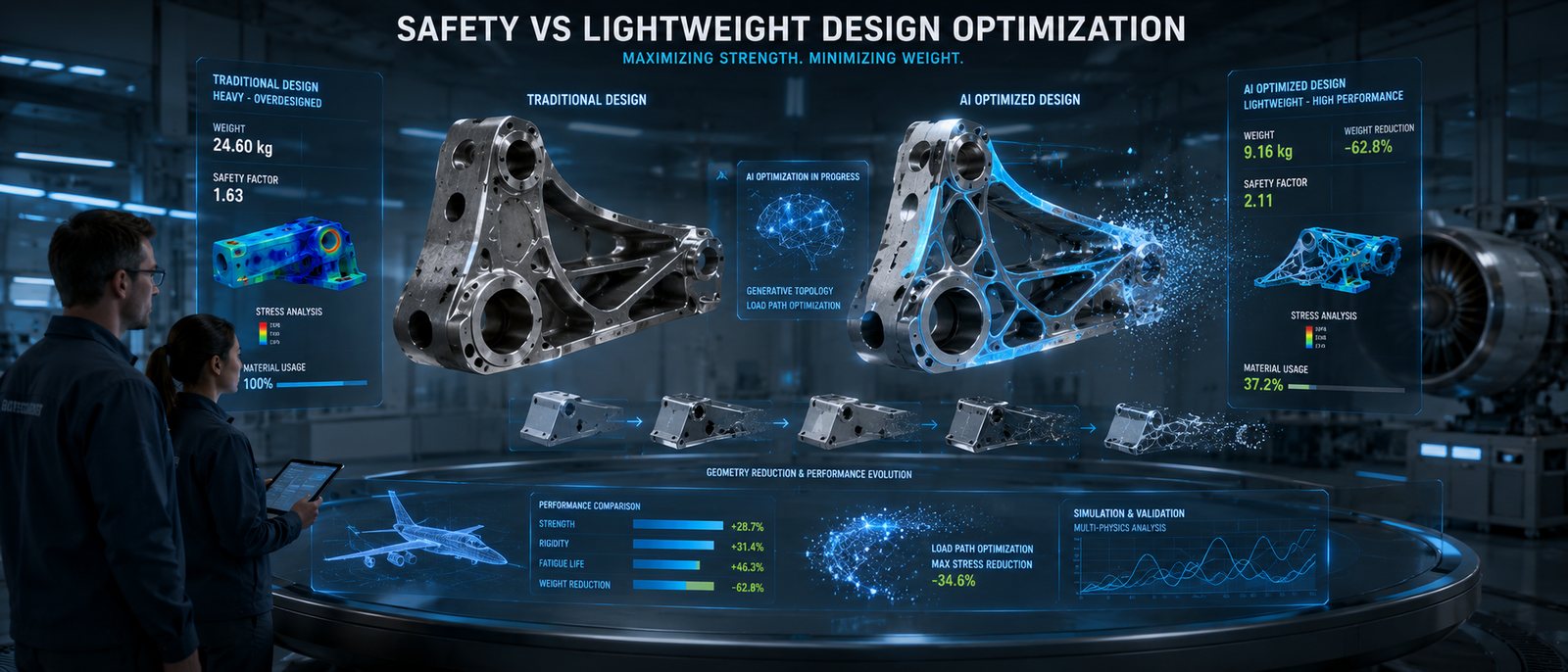
Although a higher factor of safety improves reliability, it also creates engineering trade-offs.
Using excessively high safety factors can increase:
Because of this, engineers aim to find the optimal balance between safety, efficiency, and cost.
Modern optimization strategies explained in lightweight engineering design workflows help engineers reduce weight while maintaining structural reliability.
This balance is one of the most important challenges in modern mechanical engineering.
Modern engineering companies rely heavily on CAD and simulation software to determine the correct factor of safety before manufacturing begins.
Tools used in an AutoCAD course, SolidWorks course, or CATIA course help engineers analyze:
Simulation allows engineers to test designs virtually under real-world operating conditions.
Because of this, engineers can identify weak points early and optimize the design before physical production begins.
Students who join a CAD training institute often gain practical exposure to these industry-level simulation workflows.
Modern engineering simulation systems also connect closely with concepts explained in CAE-based engineering analysis.
Consider a crane designed to lift heavy industrial loads.
Even when the expected lifting load is known, engineers design the crane structure to handle significantly higher loads during unexpected conditions.
This extra strength ensures that the crane remains safe even if:
This additional design strength is achieved using an appropriate factor of safety.
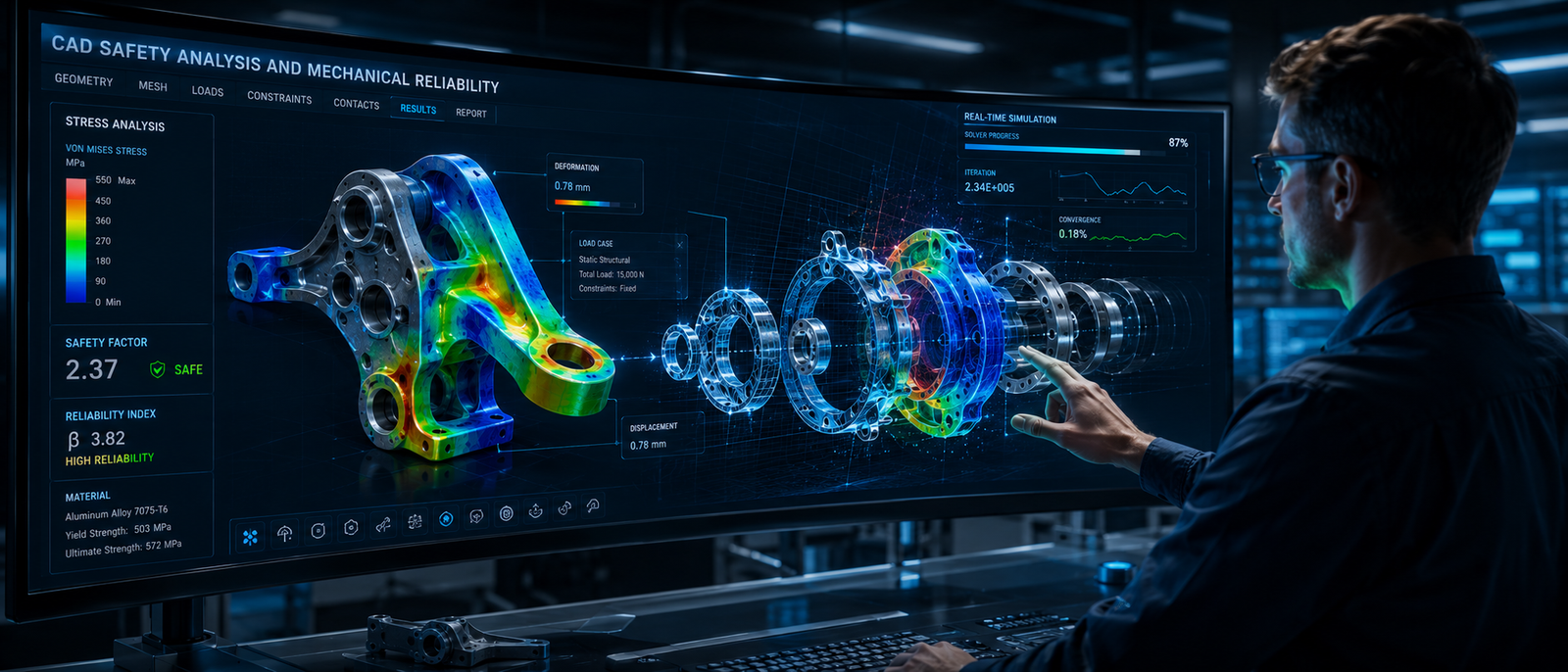
Factor of Safety in Mechanical Design is far more than a mathematical calculation—it is one of the fundamental principles that keeps engineering products safe, reliable, and durable throughout their service life.
By selecting appropriate safety margins, engineers can account for uncertainties in materials, loading conditions, manufacturing variations, and real-world operating environments. This helps prevent failures while balancing safety, performance, weight, and production cost.
Modern industries rely on CAD modeling, CAE simulations, stress analysis, and design optimization to evaluate the Factor of Safety before manufacturing begins. Engineers who understand these concepts are better prepared to design products that meet industry standards and perform reliably in demanding applications.
Understanding engineering concepts like the Factor of Safety becomes much easier when you apply them through real engineering projects using professional CAD and CAE software.
At 4Dimensions Infotech Pune, students develop practical mechanical design skills by working on industry-oriented projects involving stress analysis, design validation, simulation, and engineering optimization.
Whether you’re searching for an AutoCAD Course in Pune, a CAD Course in Pune, a SolidWorks Course in Pune, or a complete Mechanical Design Course in Pune, project-based learning helps you understand not only how to create engineering models but also how to evaluate their strength, safety, and manufacturability.
Students gain hands-on experience with AutoCAD, SolidWorks, CATIA, Creo, and CAE tools while following the same engineering workflows used in modern manufacturing industries.
1. What is the Factor of Safety in Mechanical Design?
The Factor of Safety is the ratio between a component’s maximum strength and its expected working load, ensuring safe and reliable operation.
2. Why is the Factor of Safety important?
It helps engineers prevent failures by accounting for uncertainties in material properties, loading conditions, manufacturing processes, and environmental factors.
3. Does a higher Factor of Safety always mean a better design?
No. An excessively high Factor of Safety can increase weight, material consumption, and manufacturing costs without improving overall design efficiency.
4. Which industries use the Factor of Safety?
Mechanical, automotive, aerospace, civil, industrial equipment, and manufacturing industries all use Factor of Safety calculations during product development.
5. Where can I learn Mechanical Design and CAD skills in Pune?
Students looking for an AutoCAD Course in Pune, CAD Course in Pune, SolidWorks Course in Pune, or a Mechanical Design Course in Pune should choose project-based training that combines engineering theory with practical CAD and CAE experience.
© 2025 4Dimensions Infotech. All rights reserved. | Best Design Engineering Training Institute in Pune
Start your journey with the best design engineering training institute in Pune.