
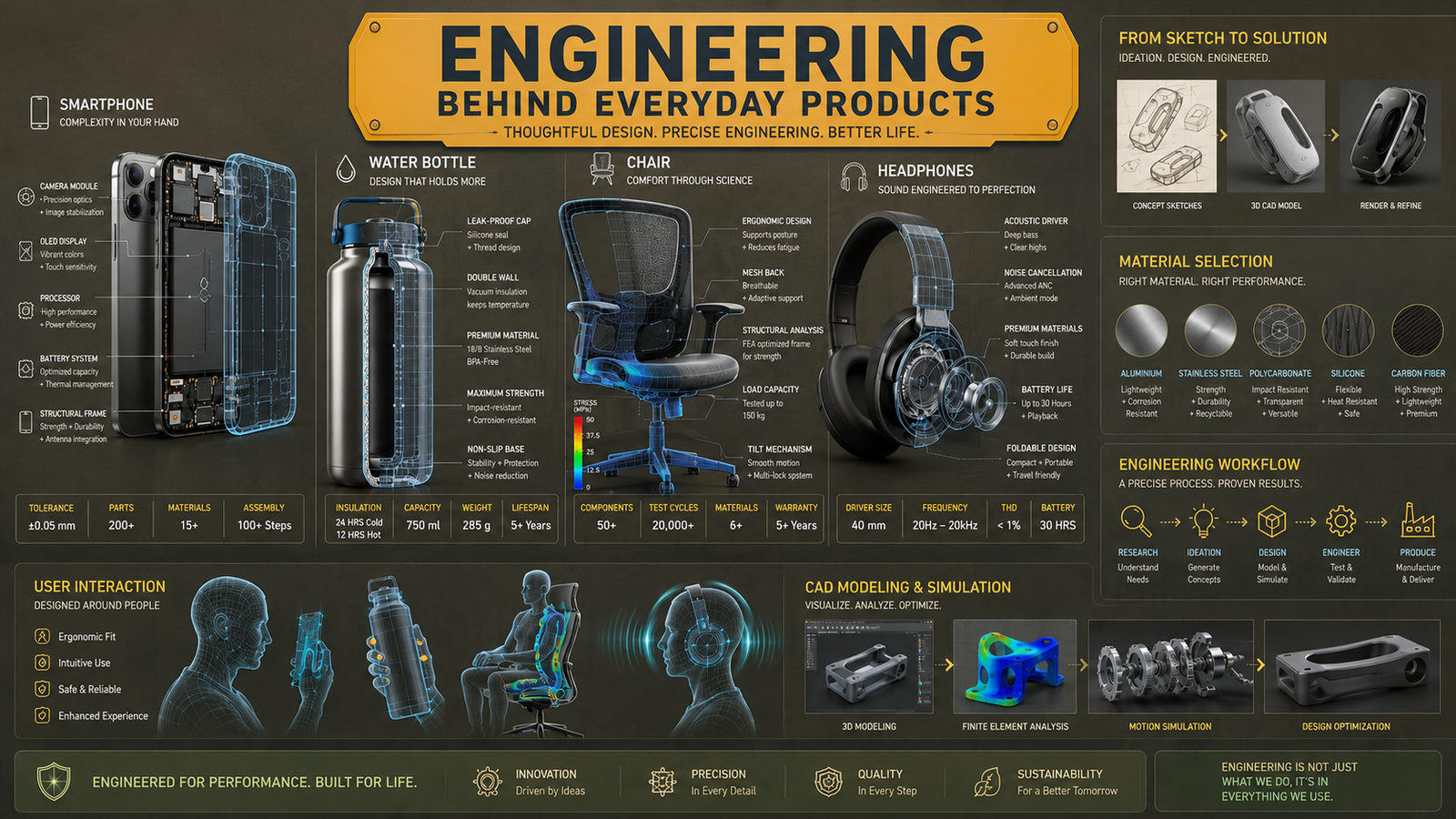
Take a moment and look around you. Your phone, your chair, your water bottle — almost every object you use daily has gone through a complex engineering process before reaching your hands.
However, most people never think about the amount of design, testing, optimization, and engineering logic hidden behind these everyday products.
Behind every simple-looking object, engineers solve problems related to usability, materials, manufacturing, durability, cost, safety, and product performance.
Modern engineering is no longer only about creating machines. It is about designing products that are functional, reliable, efficient, and easy for people to use.
Because of this, industries now expect engineers to understand both technical design and user-focused product development workflows.
This is also why modern cad design course, solidworks course, and engineering software course programs focus heavily on practical product design and real-world engineering thinking.
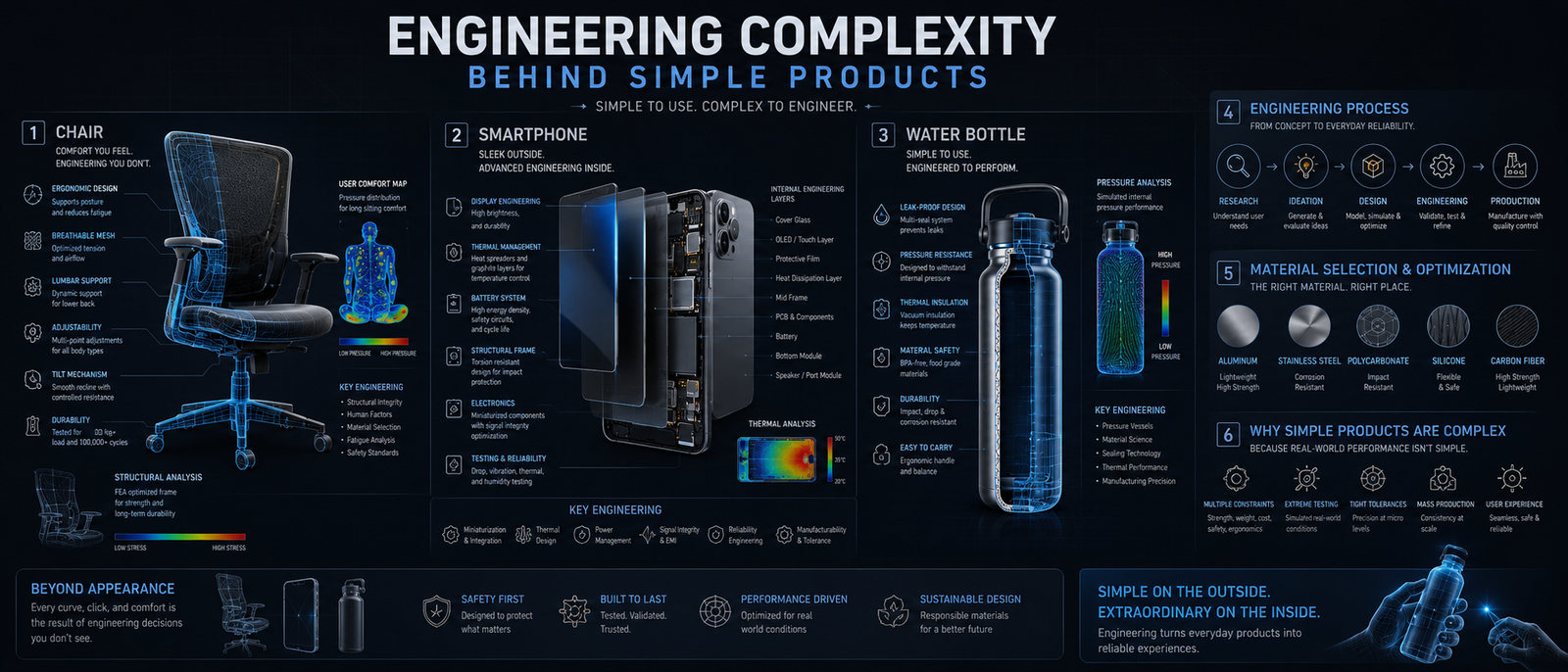
At first glance, everyday products may appear simple. However, designing them requires deep engineering knowledge and careful decision-making.
For example, a chair must support weight properly, maintain balance, provide comfort, and remain durable over long periods of use.
At the same time, it should also be lightweight, cost-effective, visually appealing, and easy to manufacture.
Similarly, even a simple water bottle must handle pressure, temperature variation, leakage prevention, portability, and material safety requirements.
Therefore, engineers must balance multiple factors simultaneously to create products that perform effectively in real-world conditions.
This balance between function, usability, and manufacturing is one of the most important concepts in modern engineering product design workflows.
Most products begin with an idea, a problem to solve, or a user need.
Engineers first create concept sketches and digital models using CAD software.
Software taught in a cad course or solidworks course allows engineers to build detailed 3D models and explore multiple design variations quickly.
Once the initial design is created, engineers test the product for performance, usability, manufacturability, and structural reliability.
If problems appear, the design is modified and optimized repeatedly until the final product meets all requirements.
This process of continuous improvement is one of the reasons why modern products are becoming smarter, safer, and more user-friendly every year.
It also closely connects with real-world CAD workflows used inside engineering companies.
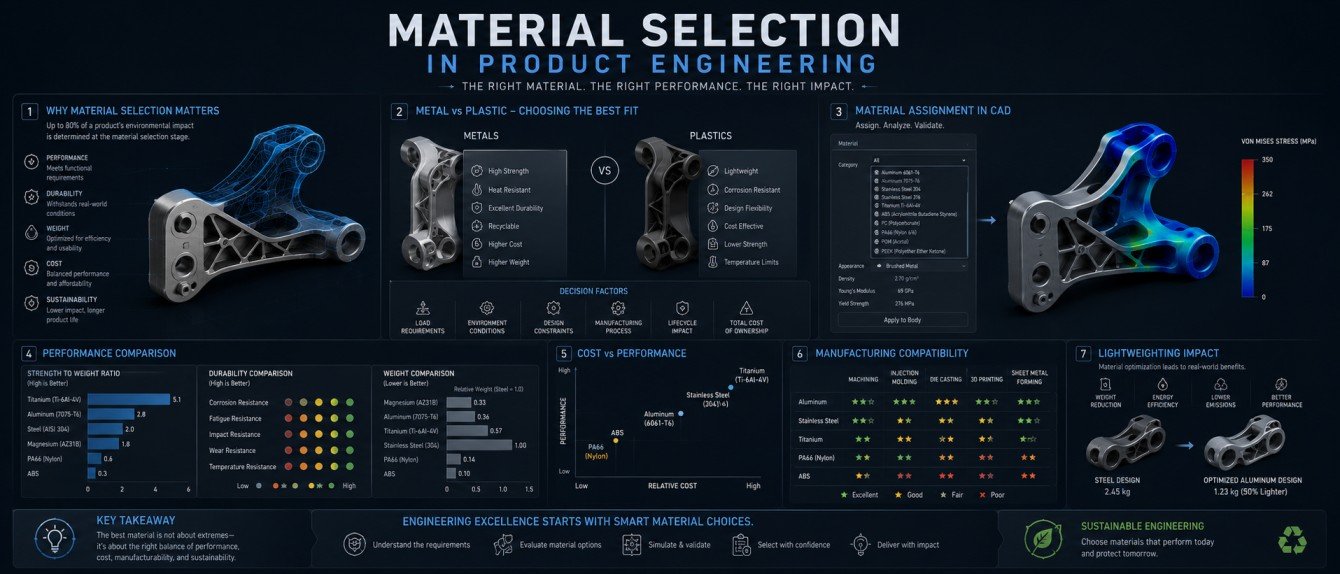
Material selection is one of the most important decisions in product engineering.
The wrong material can reduce product life, increase cost, or create safety problems.
Engineers carefully select materials based on:
For example, plastics may be selected for lightweight consumer products, while metals are often used where higher strength and durability are required.
Advanced industries also use composite materials and lightweight alloys to improve performance and efficiency.
This combination of material science and engineering design is essential in modern product development.
Engineering is no longer only about making products functional. It is also about creating products that feel comfortable, intuitive, and easy to use.
This is where user experience becomes extremely important.
For example, the shape of a smartphone is carefully designed for grip comfort, while button placement is optimized for easy access.
Similarly, automotive dashboards are designed so drivers can access controls without distraction.
Therefore, engineers must think from the user’s perspective while designing products.
This user-focused thinking is becoming increasingly important in modern industries and is strongly connected with design thinking and engineering workflows.
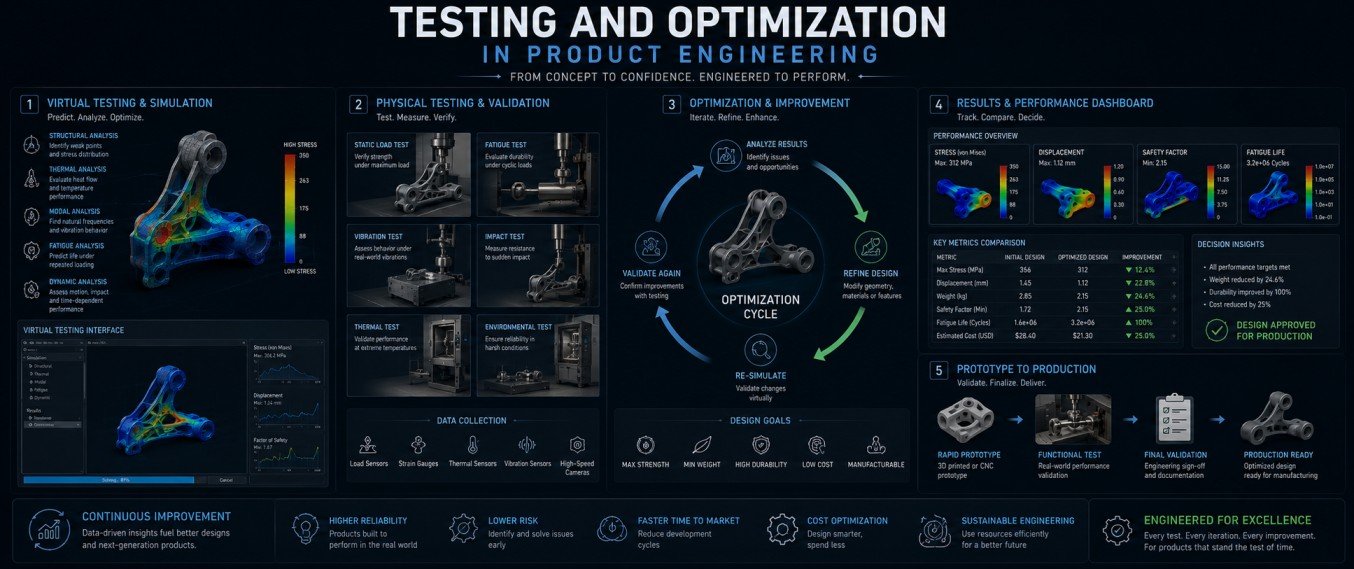
Before any product reaches the market, engineers test it under different operating conditions.
They use both virtual simulations and physical testing methods to evaluate safety, performance, and reliability.
If issues appear during testing, engineers improve the design and repeat the process again.
This cycle of testing and optimization ensures that the final product performs effectively in real-world environments.
Modern CAD tools and simulation software have made this process much faster and more efficient than traditional product development methods.
This also connects closely with concepts explained in engineering stress analysis and product optimization workflows.
Every product you use daily is the result of thoughtful engineering, product optimization, material selection, testing, and user-focused design.
Even the simplest objects involve complex decisions related to structure, manufacturing, usability, durability, and performance.
Therefore, understanding product engineering helps students appreciate how real-world engineering works beyond classroom theory.
This practical understanding is becoming increasingly valuable for future engineers entering CAD design, manufacturing, product development, and mechanical engineering industries.
Understanding how products are engineered is important. However, learning how to apply these concepts practically is even more valuable.
At 4Dimensions Infotech, students work on practical CAD projects that help them understand real-world product design, material selection, simulation workflows, and usability-focused engineering systems.
Through structured training and hands-on projects, students develop the ability to design products that are both functional and user-friendly.
The next time you pick up any product, try to understand how it is designed and why it works the way it does.
This habit improves engineering observation skills and strengthens your understanding of design logic.
Great engineers do not simply create products — they observe, analyze, optimize, and improve everything around them.
This mindset is what separates software learners from real engineers.
1. What is product engineering?
Product engineering is the process of designing, testing, and developing products for real-world use.
2. Do simple products require engineering?
Yes, even simple products involve engineering decisions related to materials, usability, structure, and manufacturing.
3. Which tools do engineers use?
Engineers commonly use CAD tools like SolidWorks, AutoCAD, and CATIA.
4. Why is testing important in product design?
Testing helps ensure product safety, reliability, durability, and performance before manufacturing.
5. Can students learn product engineering?
Yes, students can learn product engineering through practical CAD training and project-based engineering workflows.
© 2025 4Dimensions Infotech. All rights reserved. | Best Design Engineering Training Institute in Pune
Start your journey with the best design engineering training institute in Pune.