
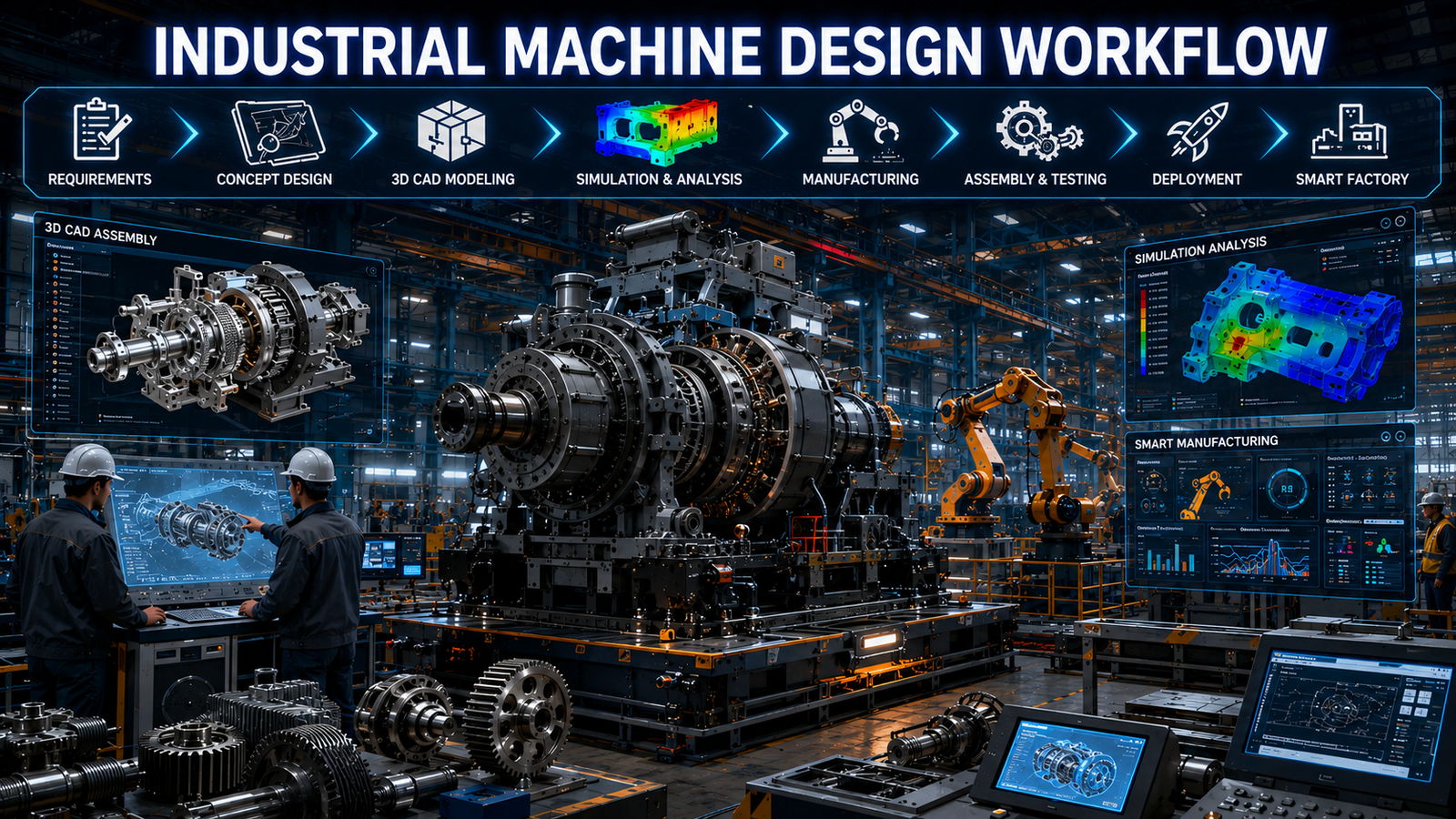
At 4Dimensions Infotech, students learning modern mechanical design courses quickly discover that industrial machine design is far more than simply creating mechanical drawings.
Modern industries depend heavily on machines that can operate efficiently, continuously, and reliably under demanding production conditions.
Industrial machines improve productivity, reduce manual effort, increase manufacturing accuracy, and support large-scale production systems across industries.
However, designing these machines requires a structured engineering process involving CAD design, simulation, manufacturing planning, automation integration, and performance optimization.
Because of this, engineers working in industrial machine design must combine technical knowledge with practical engineering workflows used in real manufacturing industries.
Students learning through a CAD course, SolidWorks course, CATIA course, or engineering software course must understand how modern industrial machines are actually developed and optimized.
Industrial machine design also connects closely with modern manufacturing systems explained in Industry 4.0 and the role of design engineers.
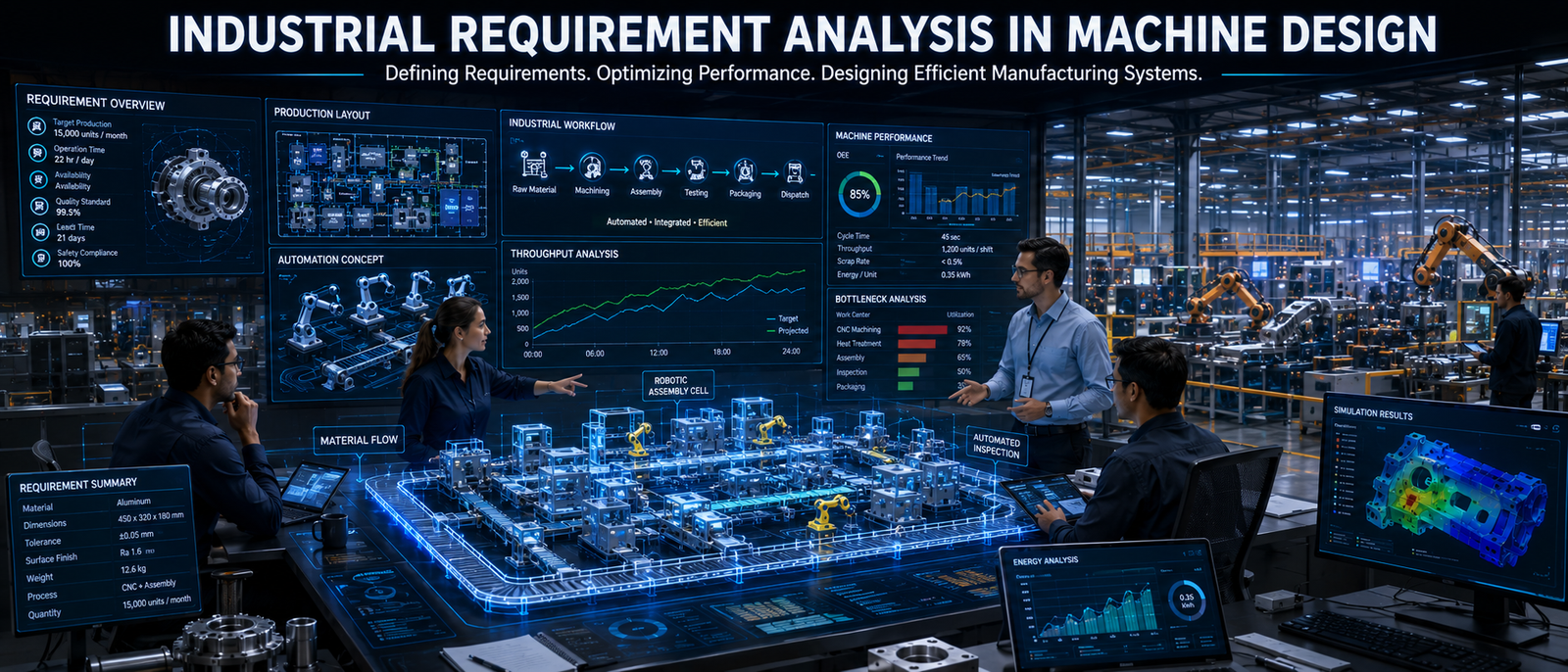
The first stage of industrial machine design begins with understanding the exact production requirement.
Before designing any component, engineers study:
Without this stage, the machine may fail to meet actual industrial needs.
Modern engineering companies spend significant time analyzing operational requirements because machine performance directly affects productivity and manufacturing efficiency.
After defining machine requirements, engineers begin developing concepts and selecting suitable mechanisms.
At this stage, engineers explore multiple machine layouts, motion systems, and transmission mechanisms.
They compare different engineering solutions based on:
Engineers also refine concepts using principles explained in how design engineers drive innovation in manufacturing.
This stage combines engineering logic with creativity because machine designers must create systems capable of solving real industrial problems efficiently.
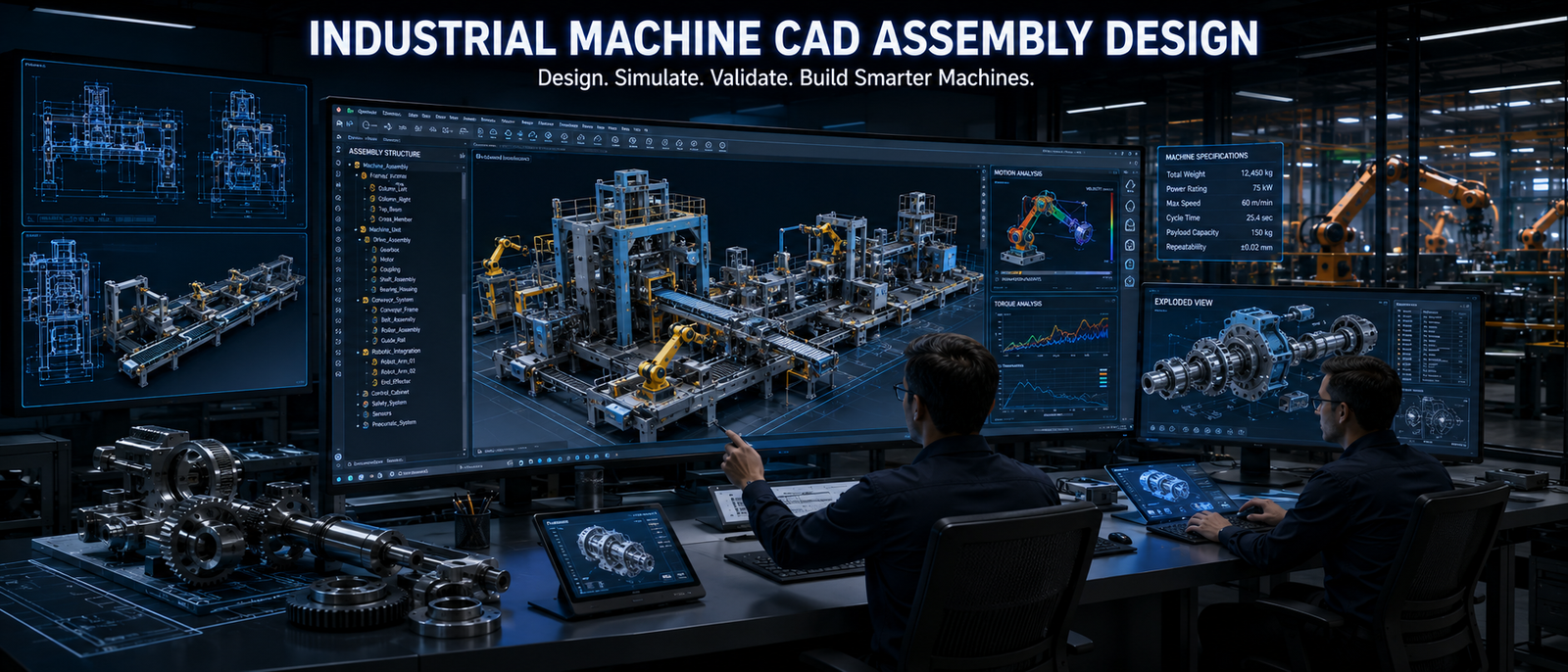
Once engineers finalize the machine concept, they begin creating detailed 3D models using CAD software.
Modern CAD tools help engineers design:
Software taught in a SolidWorks course, CATIA course, or AutoCAD course allows engineers to build highly accurate industrial machine assemblies.
These digital models help engineers visualize machine motion, identify interference issues, and optimize layouts before manufacturing begins.
This stage also connects closely with real CAD workflows used in manufacturing industries.
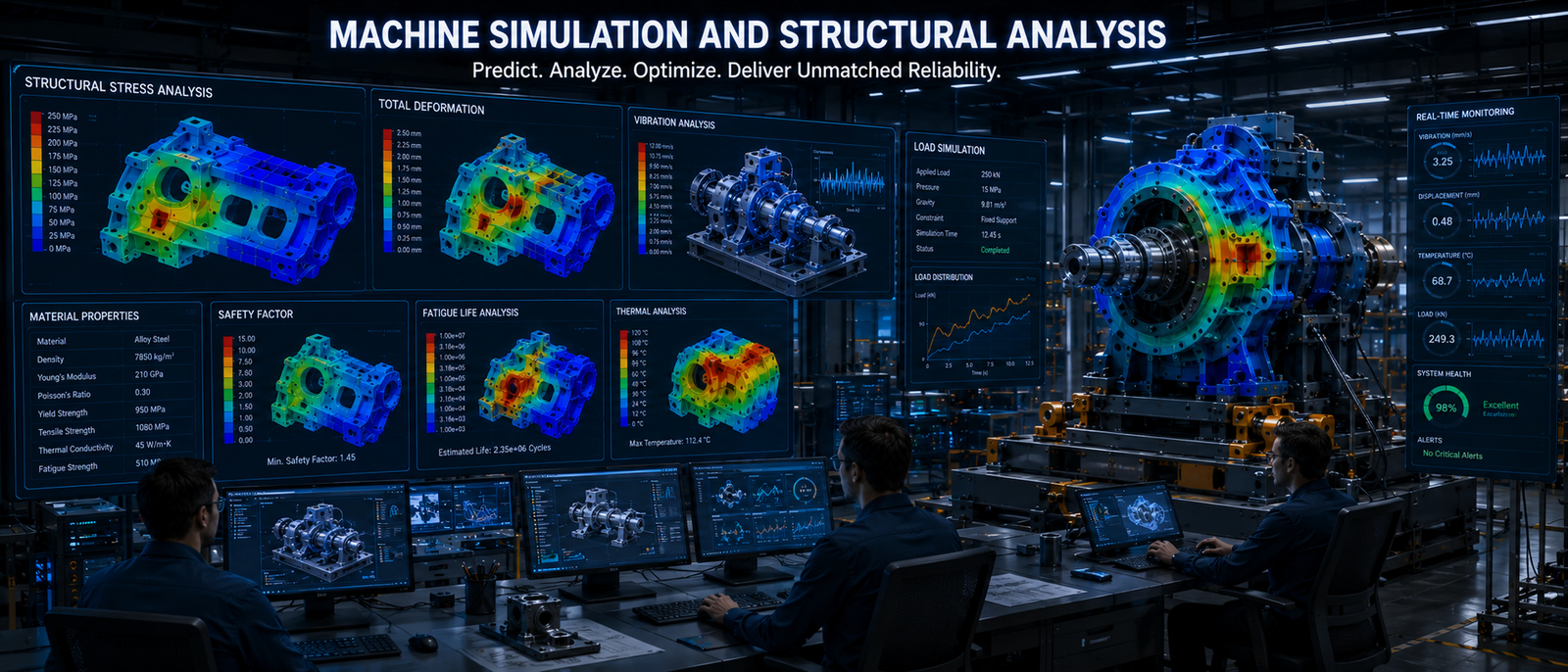
Modern industrial machine design depends heavily on simulation and engineering analysis.
Before manufacturing begins, engineers analyze how the machine behaves under real operating conditions.
Using CAE tools, engineers study:
This process strongly connects with concepts explained in the role of CAE in engineering design.
Simulation helps engineers identify weak points early, reducing manufacturing failures and improving machine reliability.
Modern industries now rely heavily on simulation-driven engineering because physical testing alone increases development cost and time.
Material selection plays a major role in industrial machine performance.
Engineers must choose materials capable of handling:
Material selection workflows are strongly connected with concepts explained in material selection in mechanical design.
Choosing the wrong material can reduce durability, increase maintenance, and create safety risks.
Modern industrial machines must integrate with automation and smart manufacturing systems.
Today, industries expect machines to support:
This transition toward intelligent manufacturing is explained in smart manufacturing and product design systems.
Because of this shift, modern machine designers must understand both mechanical systems and automation workflows.
After design validation and manufacturing, engineers install the machine inside real production environments.
At this stage, they test:
Over time, engineers improve machines using real-world operational data and production feedback.
Machine design careers connected with automation and manufacturing are also explained in automation design engineering jobs.
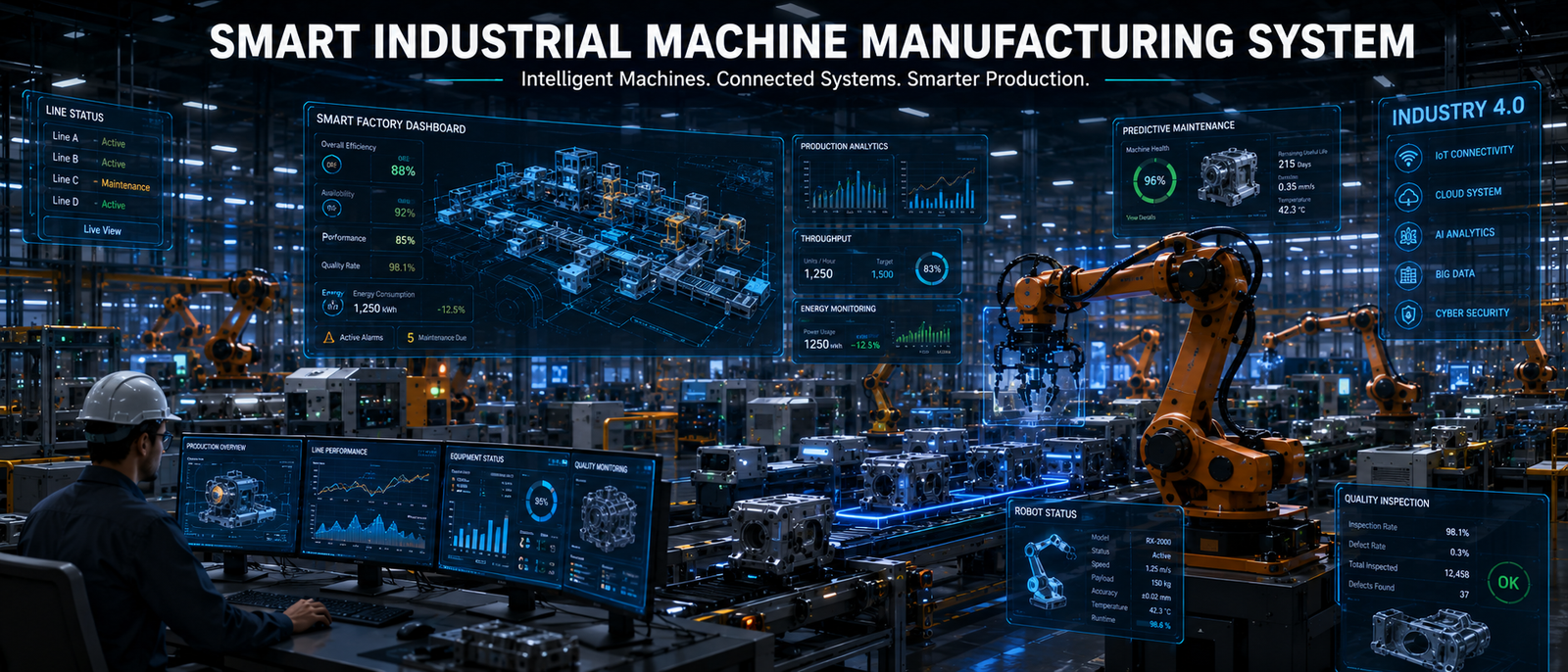
Industrial machine design is a structured engineering process that combines CAD design, simulation, manufacturing planning, material selection, automation integration, and performance optimization.
Modern industries now expect engineers to create machines that are efficient, reliable, scalable, and compatible with smart manufacturing systems.
Because of this, machine designers must understand both technical engineering concepts and real industrial workflows.
Engineers who complete a professional CATIA course in Pune and combine CAD skills, simulation knowledge, automation understanding, and manufacturing experience gain a strong advantage in modern engineering careers.
Understanding machine design becomes much easier when students work on real industrial engineering projects using professional CAD tools and simulation systems.
At 4Dimensions Infotech, our CATIA course in Pune teaches industrial machine design through practical CAD projects, assembly workflows, simulation analysis, manufacturing concepts, and automation-oriented engineering training programs.
The goal is to develop engineers who understand not only software tools — but also how real industrial machines are actually designed and optimized. Enroll in our CATIA course in Pune to build these skills through hands-on, project-based training.
1. What is industrial machine design?
It is the engineering process used to design machines for manufacturing and industrial production systems.
2. Which CAD tools are commonly used in machine design?
SolidWorks, CATIA, AutoCAD, and simulation software are widely used — with CATIA especially preferred for complex assemblies and large-scale industrial machine design.
3. Why is simulation important in industrial machine design?
Simulation helps engineers predict performance, reduce failures, and improve machine reliability before manufacturing.
4. What is smart manufacturing?
Smart manufacturing combines automation, sensors, data systems, and intelligent production technologies.
5. Can students learn industrial machine design?
Yes. Through a practical CATIA course in Pune and real engineering projects, students can build strong industrial machine design skills.
© 2025 4Dimensions Infotech. All rights reserved. | Best Design Engineering Training Institute in Pune
Start your journey with the best design engineering training institute in Pune.