
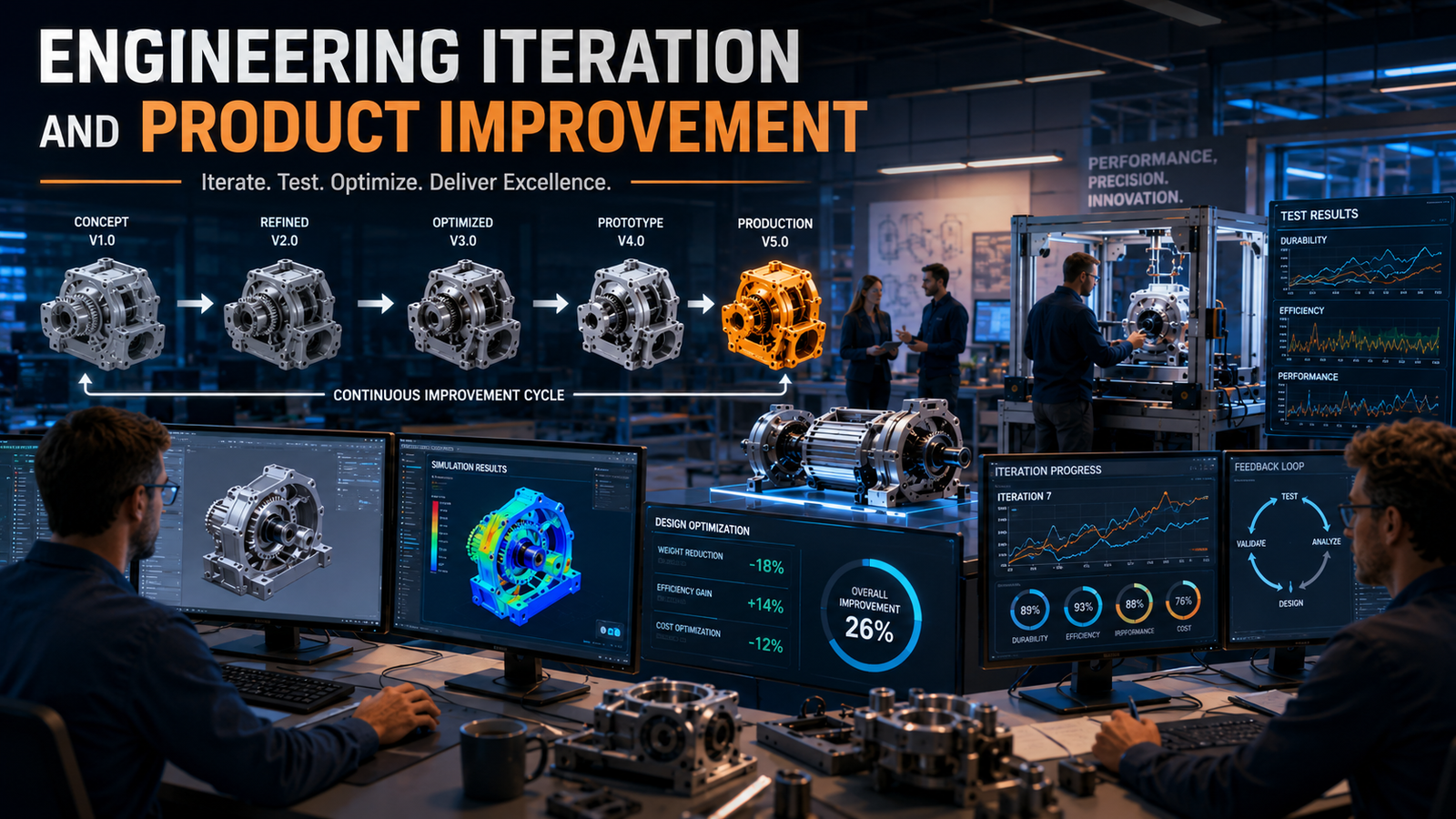
At 4Dimensions Infotech Pune, students learning mechanical and product design quickly understand that engineering design is never completed perfectly in the first attempt.
Modern engineering products evolve through repeated improvement cycles where engineers continuously test, analyze, refine, and optimize designs before final production begins.
This repeated improvement process is known as iteration in engineering design.
Iteration plays a major role in improving product quality, reducing engineering failures, increasing performance, and supporting innovation in modern industries.
Instead of treating engineering design as a one-step process, modern companies use iterative workflows to gradually develop better and more reliable products over time.
Today, industries such as automotive, aerospace, industrial manufacturing, consumer electronics, and mechanical product development heavily rely on iterative engineering processes.
Students learning through a CAD course in Pune, SolidWorks course, CATIA course, or engineering software course must understand how iterative workflows improve real-world engineering products.
Modern iterative design systems also connect strongly with design for manufacturing (DFM), where engineering decisions directly affect manufacturing efficiency and product quality.
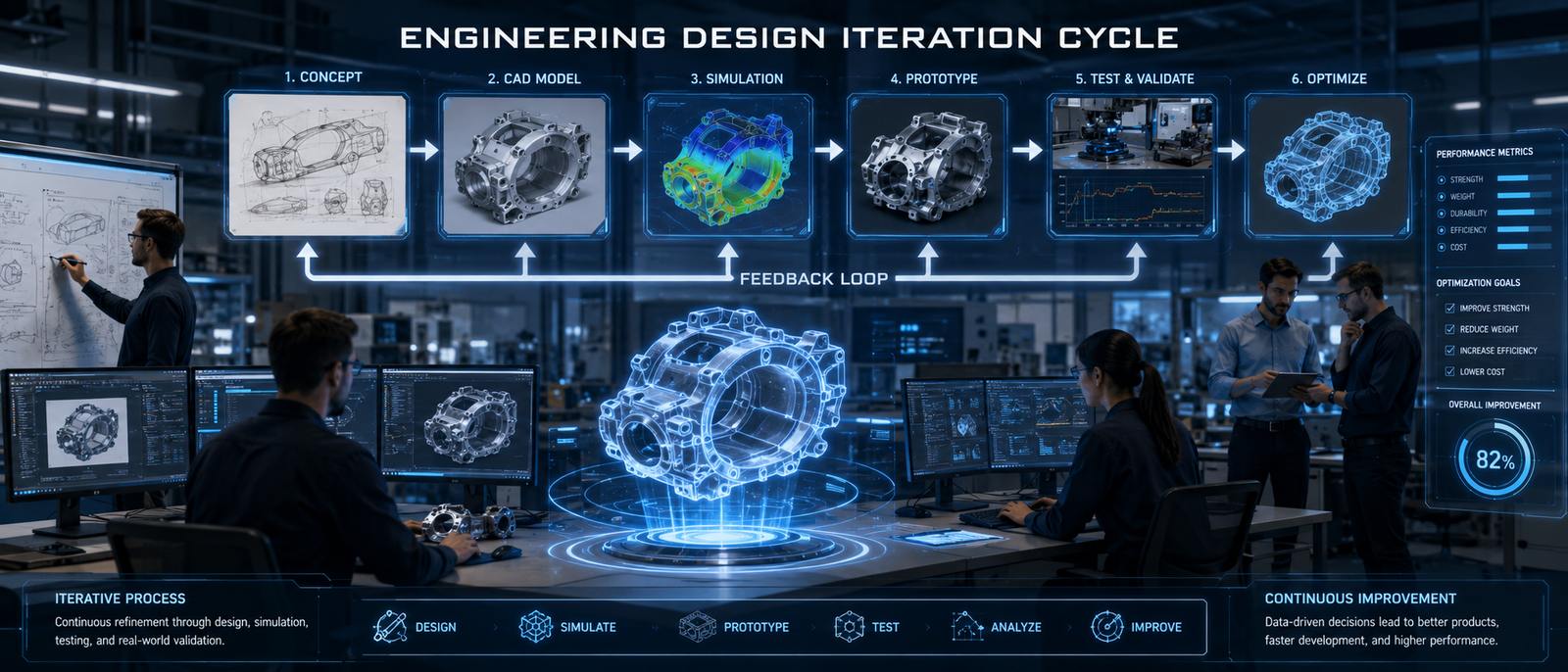
Iteration is the process of repeatedly improving a design through testing, analysis, feedback, and refinement.
Engineers first create an initial design concept or prototype.
Then, they evaluate its performance using simulations, physical testing, user feedback, or engineering analysis.
If any problems are identified, engineers modify the design and test it again.
This cycle continues repeatedly until the product reaches the required performance, safety, usability, and reliability standards.
Because of this process, each design version becomes better than the previous one.
One of the biggest advantages of iteration is early problem detection.
Instead of discovering major issues after manufacturing begins, engineers identify weaknesses during the design stage itself.
This reduces development risk significantly.
Modern engineering products are highly complex, and even small design mistakes can create serious performance or safety problems later.
Because of this, iterative workflows allow engineers to continuously improve products before final production begins.
This process reduces engineering errors, improves manufacturing efficiency, and minimizes long-term operational failures.
Iteration also strongly supports concepts explained in CAE in engineering design, where simulation tools help engineers optimize products much faster.
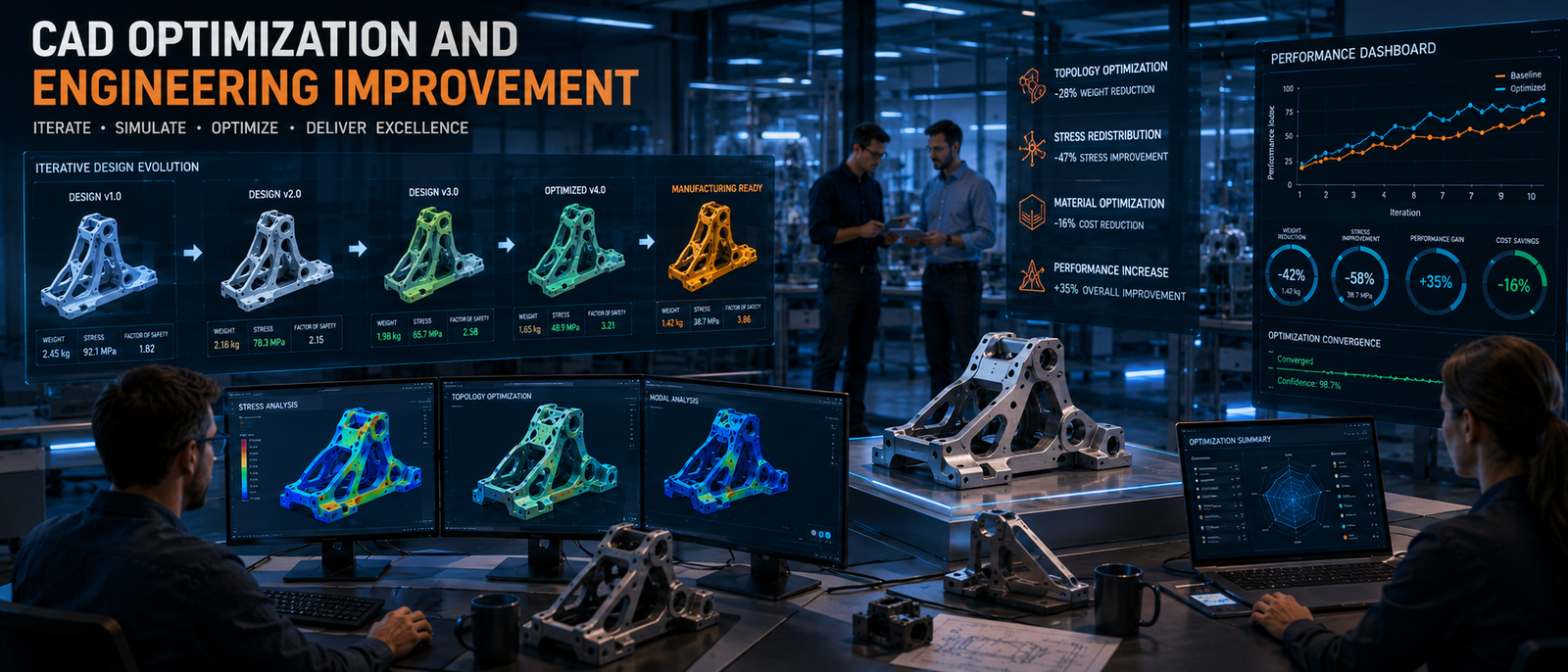
Each design iteration gives engineers an opportunity to improve product performance step by step.
Modern engineering teams continuously optimize:
By analyzing simulation data and real testing results, engineers can make data-driven improvements instead of relying on assumptions.
As a result, products become more efficient, reliable, and optimized for real-world operation.
Iteration also plays a major role in reducing engineering failures and improving safety.
Modern engineers test products repeatedly under different operating conditions before approving final production.
This repeated evaluation helps identify weak regions, stress concentration areas, durability issues, and operational risks.
Because of this, engineers can improve reliability long before products reach the market.
This engineering approach strongly connects with factor of safety in mechanical design, where engineers carefully evaluate safety margins to prevent failure.
Modern industries now depend heavily on iterative validation systems because product reliability directly affects safety, operational efficiency, and brand reputation.
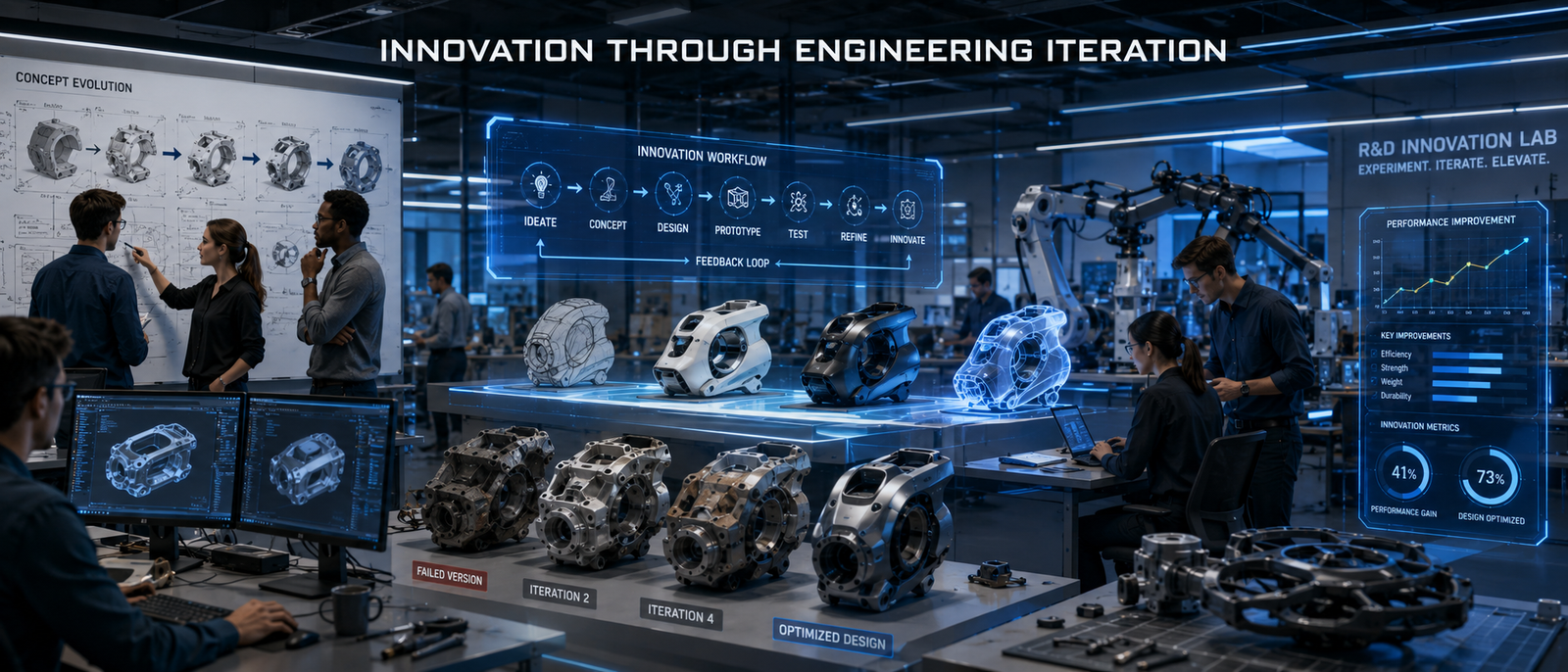
Iteration encourages engineers to experiment with new ideas and explore better solutions.
Instead of fearing mistakes, engineering teams use iteration to learn from failures and improve continuously.
This process creates an environment where innovation becomes practical and manageable.
Engineers can test new concepts, analyze their performance, and refine them systematically.
Because of this, many advanced engineering breakthroughs emerge through repeated refinement instead of one perfect initial idea.
This innovation-focused workflow strongly connects with how design engineers drive innovation in manufacturing industries.
Feedback is one of the most important parts of iterative engineering workflows.
Modern engineers collect feedback from:
This data helps engineers refine products more accurately.
Modern industries increasingly use smart manufacturing systems and connected engineering workflows to improve this feedback process.
This approach strongly connects with smart manufacturing in product design, where real-time data improves engineering decisions continuously.
Consider the development of a modern smartphone.
Engineers do not directly manufacture the final version immediately.
Instead, they create multiple prototypes and continuously refine:
Each iteration improves performance, usability, and reliability.
Because of this iterative process, the final product becomes far more optimized and user-friendly.
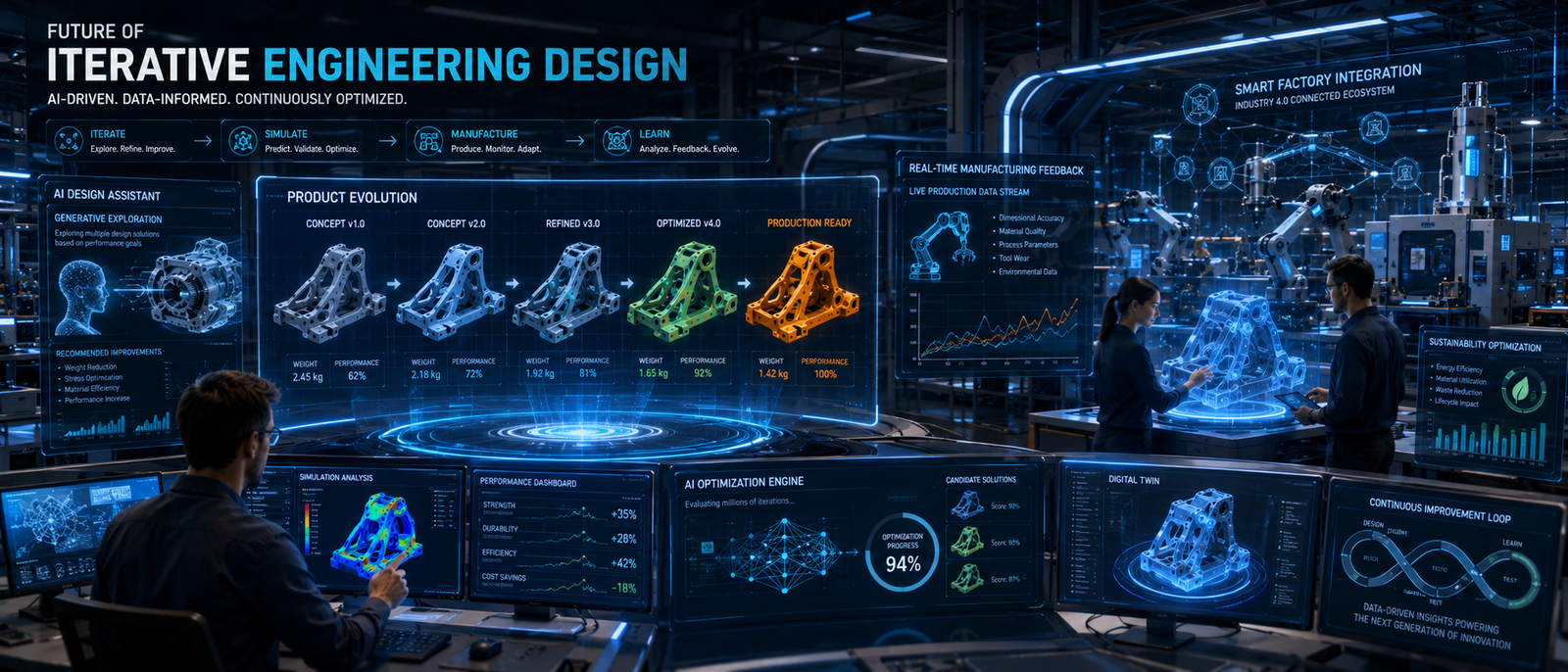
Iteration in engineering design is one of the most important processes behind successful product development.
It allows engineers to improve products continuously through testing, analysis, simulations, and feedback-driven optimization.
Modern industries now rely heavily on iterative workflows because they improve product quality, reduce engineering failures, increase efficiency, and support innovation.
Engineers who understand iterative design methods gain a major advantage in mechanical engineering, product development, manufacturing, and industrial design careers.
Understanding iteration becomes valuable when students apply it through real-world engineering projects using modern CAD tools and simulation systems.
Students gain hands-on exposure to tools like SolidWorks, CATIA, AutoCAD, Revit, and Civil 3D while developing real engineering thinking and practical design skills.
1. What is iteration in engineering design?
Iteration is the process of improving a design repeatedly through testing, analysis, and refinement.
2. Why is iteration important?
It helps improve performance, reduce errors, increase safety, and support innovation.
3. How do engineers iterate products?
Engineers test products, analyze results, identify problems, and refine designs repeatedly.
4. Does iteration increase engineering cost?
No. Iteration usually reduces long-term costs by preventing failures and improving product efficiency early.
5. Can students learn iterative engineering workflows?
Yes. Through practical CAD projects, simulations, and engineering training programs, students can develop strong iterative design skills.
© 2025 4Dimensions Infotech. All rights reserved. | Best Design Engineering Training Institute in Pune
Start your journey with the best design engineering training institute in Pune.