
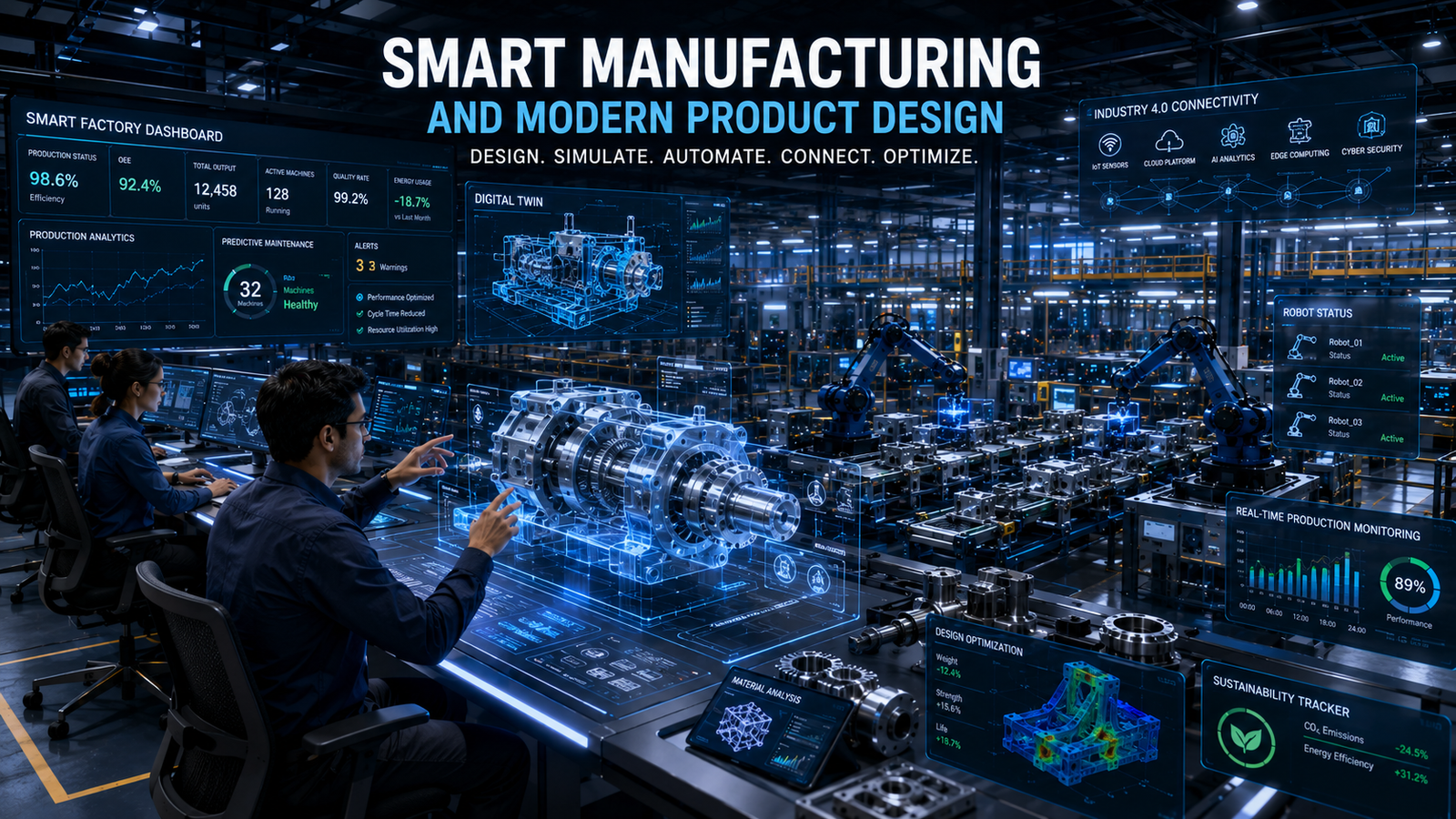
At 4Dimensions Infotech, students learning modern CAD workflows quickly realize that manufacturing is no longer only about machines, assembly lines, and production systems.
Today, industries rely heavily on intelligent technologies, connected systems, automation, and real-time engineering data to improve productivity and product quality.
This transformation is known as smart manufacturing, and it is changing how engineers design products from the very beginning.
Modern product design now depends on digital workflows where CAD software, automation systems, simulation tools, and manufacturing analytics work together inside a connected engineering environment.
Because of this shift, engineers must understand not only mechanical design but also how modern manufacturing systems influence product development.
Students learning through a CAD course, SolidWorks course, CATIA training program, or engineering software course must now understand how smart manufacturing impacts real industrial workflows.
Smart manufacturing is also closely connected with technologies explained in digital twin technology in engineering design, where real-world systems are continuously monitored and optimized using intelligent digital models.
Smart manufacturing refers to the use of advanced digital technologies such as automation, sensors, industrial data systems, AI-driven analytics, robotics, and connected manufacturing platforms.
Unlike traditional manufacturing systems, smart manufacturing environments continuously collect and analyze real-time production data.
As a result, engineers can make faster and more accurate decisions regarding machine performance, product quality, manufacturing efficiency, and design optimization.
Modern factories now operate using interconnected engineering systems capable of monitoring production conditions automatically.
This creates highly efficient production environments where machines, engineers, and software systems work together intelligently.
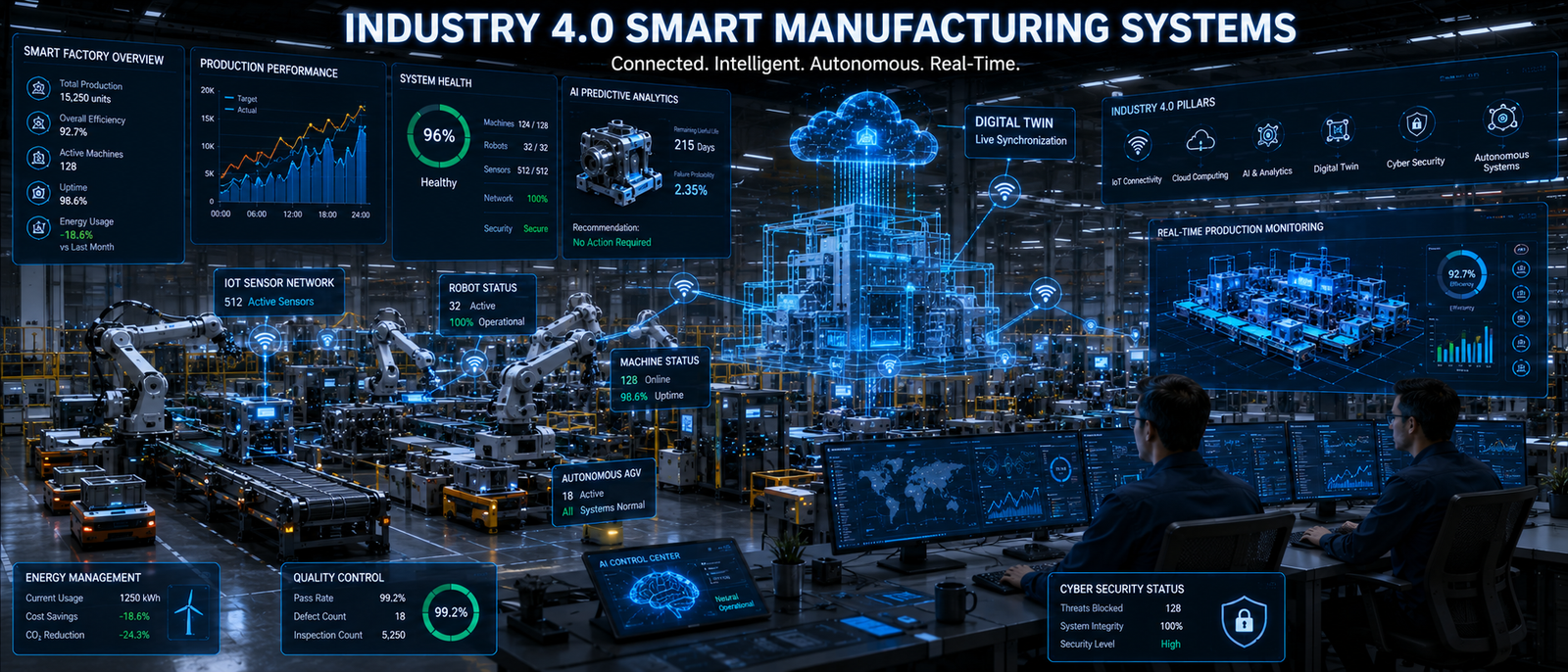
Traditional engineering design often depended heavily on assumptions, fixed calculations, and isolated testing methods.
However, smart manufacturing has completely changed this approach.
Today, engineers use real-world production data and connected manufacturing systems to improve product design continuously.
Because of this, products are now designed with greater accuracy, efficiency, and reliability.
Modern engineers no longer create products in isolation. Instead, product design is directly connected with manufacturing performance, machine behavior, operational efficiency, and customer usage data.
This allows engineers to identify problems earlier and optimize products much faster than before.
As a result, companies can reduce manufacturing waste, improve product quality, and shorten development cycles significantly.
One of the biggest advantages of smart manufacturing is access to real-time engineering data.
Modern industrial systems constantly collect information related to:
Engineers use this information to improve designs based on actual industrial performance rather than assumptions.
This process strongly connects with workflows explained in how companies improve existing products using engineering design.
Continuous data analysis allows companies to improve products even after production begins.
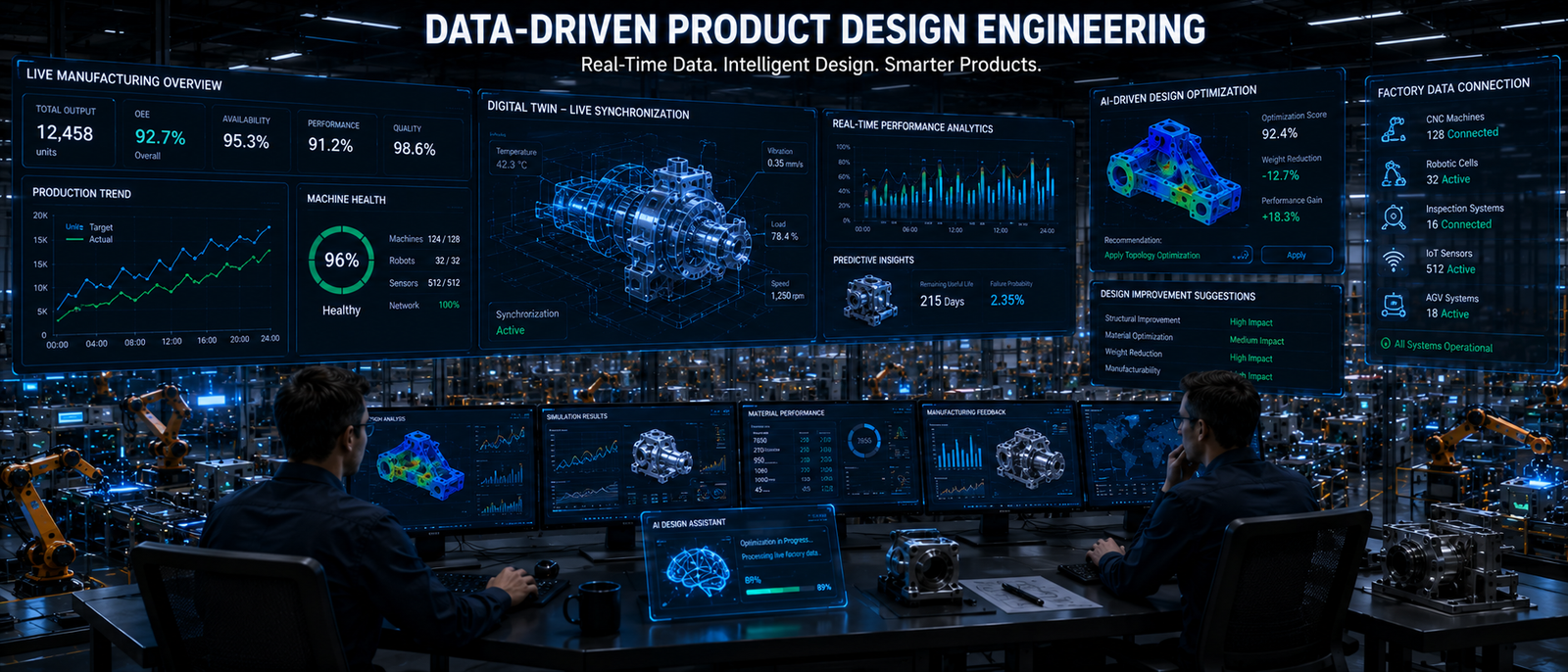
Smart manufacturing also improves product testing and validation processes.
Engineers now combine CAD software, simulation tools, automation systems, and production analytics to identify design problems early.
Instead of building multiple expensive physical prototypes, companies use virtual testing environments to optimize products digitally before manufacturing.
This workflow is strongly connected with concepts explained in virtual testing vs physical testing in engineering design.
Simulation-driven product validation significantly reduces development cost and speeds up production timelines.
As a result, companies can launch products faster while improving reliability and quality.
Modern products must now integrate smoothly with automated manufacturing systems.
Because of this, engineers design products while considering:
This transition toward automation-focused engineering also connects with career paths explained in automation design engineering jobs.
Modern design engineers are now expected to understand both mechanical systems and intelligent manufacturing technologies.
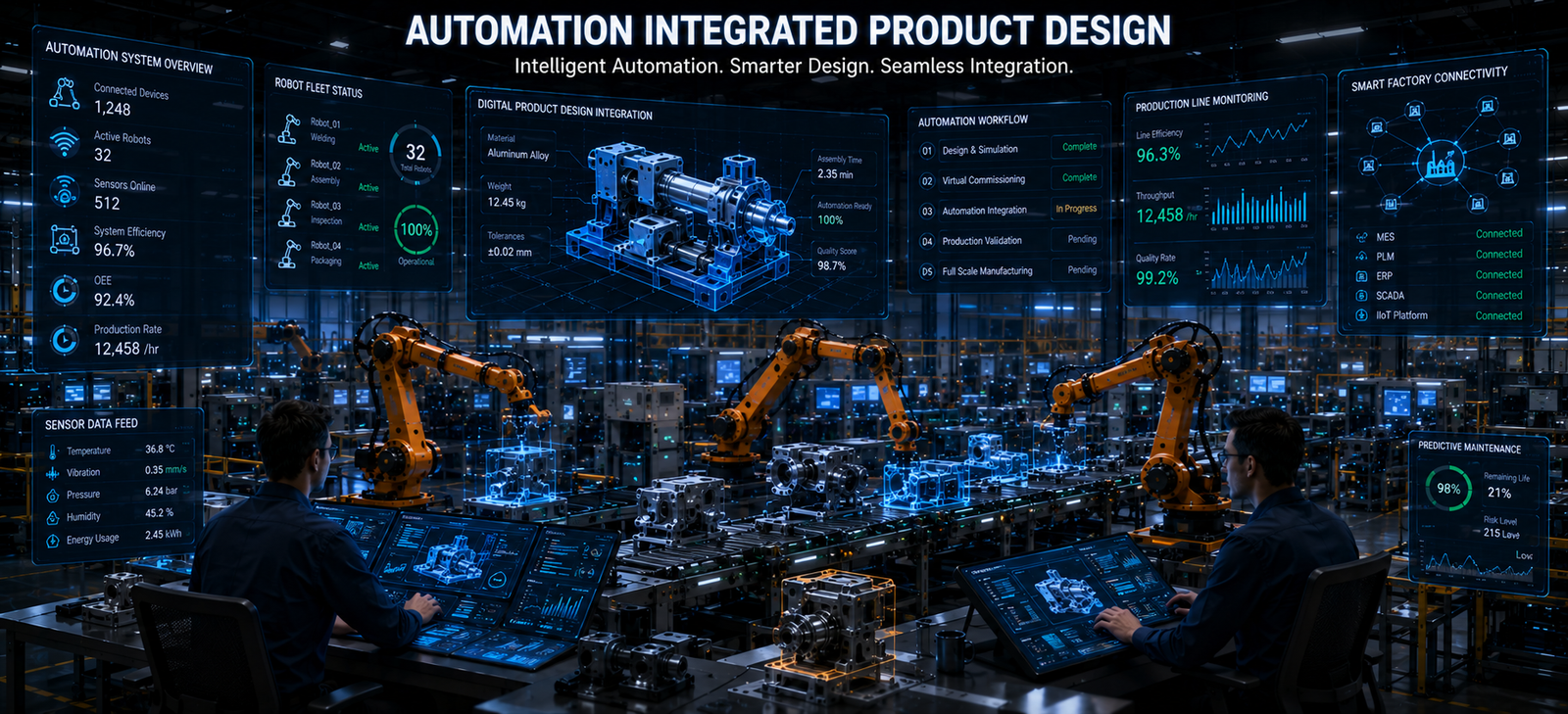
One of the biggest advantages of smart manufacturing is improved engineering accuracy.
Connected systems allow engineers to monitor production quality continuously and identify potential failures before they become serious problems.
Modern manufacturing platforms help engineers:
This process strongly connects with design validation before manufacturing, where products are optimized before full-scale production begins.
As manufacturing systems become smarter, engineers can now improve products continuously using real-world operational feedback.
Consider a modern automotive manufacturing plant.
Industrial sensors continuously monitor machine performance, production speed, vibration conditions, and assembly quality.
At the same time, intelligent software systems analyze this information in real time.
Engineers then use this data to improve vehicle design, manufacturing workflows, safety systems, and production efficiency.
Because of this integration between manufacturing and engineering, vehicles become safer, more reliable, and more efficient.
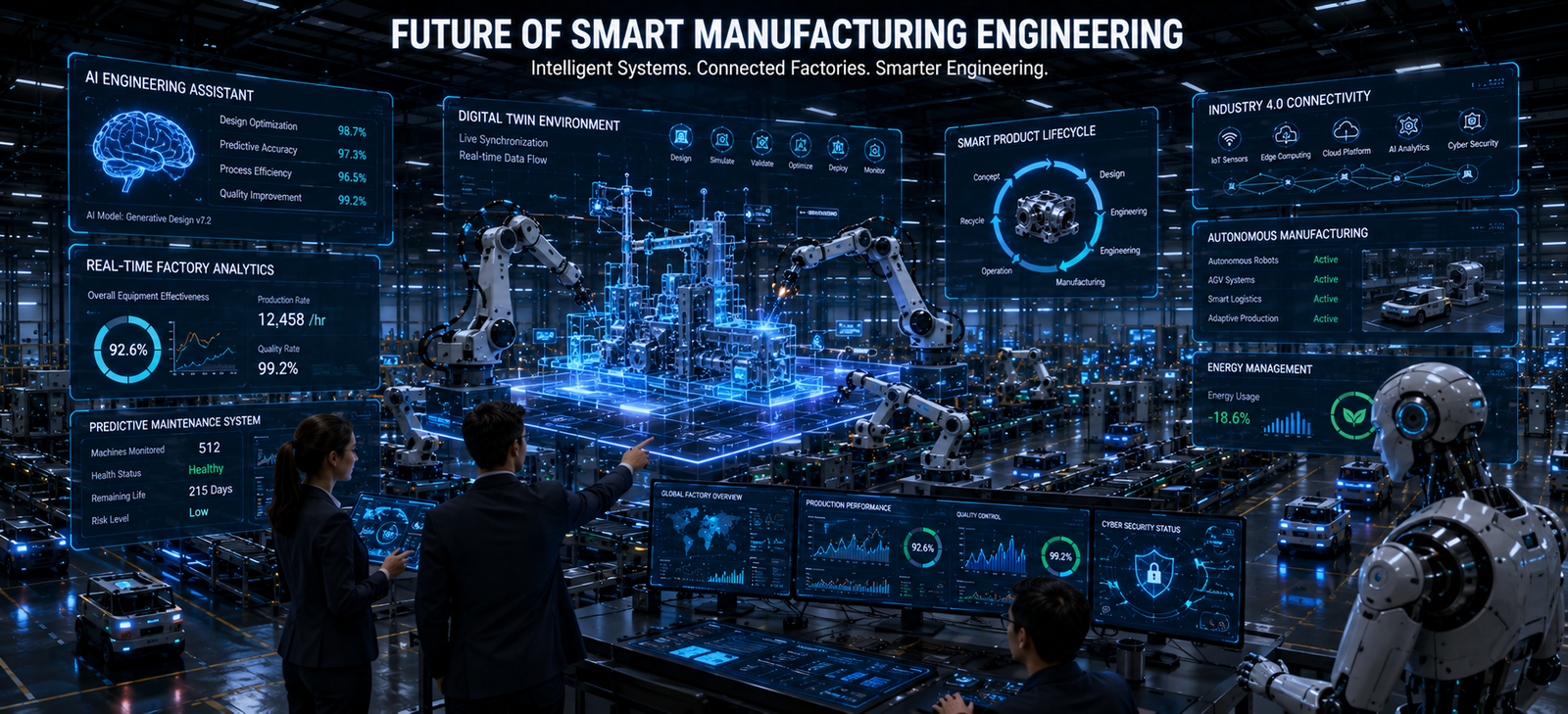
Smart Manufacturing and Product Design are transforming the way engineering companies develop products. Instead of relying only on traditional manufacturing methods, modern industries use automation, digital twins, CAD software, simulation, artificial intelligence, and real-time production data to improve quality, reduce costs, and shorten product development cycles.
As Industry 4.0 continues to evolve, engineers who understand digital design workflows, manufacturing automation, and engineering analysis will be better prepared for high-demand careers in mechanical design, product development, and advanced manufacturing.
Developing these skills today allows engineers to contribute more effectively to tomorrow’s intelligent factories and digitally connected production environments.
Understanding smart manufacturing becomes far more valuable when combined with practical experience using professional CAD software and real engineering projects.
At 4Dimensions Infotech Pune, students learn industry-focused design workflows through project-based training in CAD modeling, simulation, engineering analysis, automation concepts, and modern manufacturing practices used by leading engineering companies.
Whether you’re searching for a CAD Course in Pune, a CATIA Course Pune, a SolidWorks Course in Pune, or an AutoCAD Course in Pune, practical learning helps you develop the technical knowledge and engineering mindset required in today’s digital manufacturing industry.
By working on real engineering projects, students gain experience with AutoCAD, SolidWorks, CATIA, Creo, and modern CAD workflows while building the practical skills employers value during technical interviews and product development roles.
1. What is smart manufacturing?
Smart manufacturing combines automation, digital technologies, sensors, data analytics, and connected systems to improve production efficiency, product quality, and engineering decision-making.
2. How does smart manufacturing improve product design?
It allows engineers to use CAD software, simulations, digital twins, and real-time production data to optimize designs before manufacturing begins.
3. Which software is used in smart manufacturing?
AutoCAD, SolidWorks, CATIA, Creo, CAE software, PLM systems, and digital twin technologies are widely used in modern engineering industries.
4. Which course is best for learning smart manufacturing skills?
A project-based CAD Course in Pune or CATIA Course Pune that includes CAD modeling, simulation, automation, and Industry 4.0 concepts provides the strongest foundation.
5. Where can I learn Industry 4.0 and CAD skills in Pune?
Students looking for a CAD Course in Pune, SolidWorks Course in Pune, CATIA Course Pune, or AutoCAD Course in Pune should choose practical training that combines engineering theory with real industrial projects and modern design workflows.
© 2025 4Dimensions Infotech. All rights reserved. | Best Design Engineering Training Institute in Pune
Start your journey with the best design engineering training institute in Pune.