
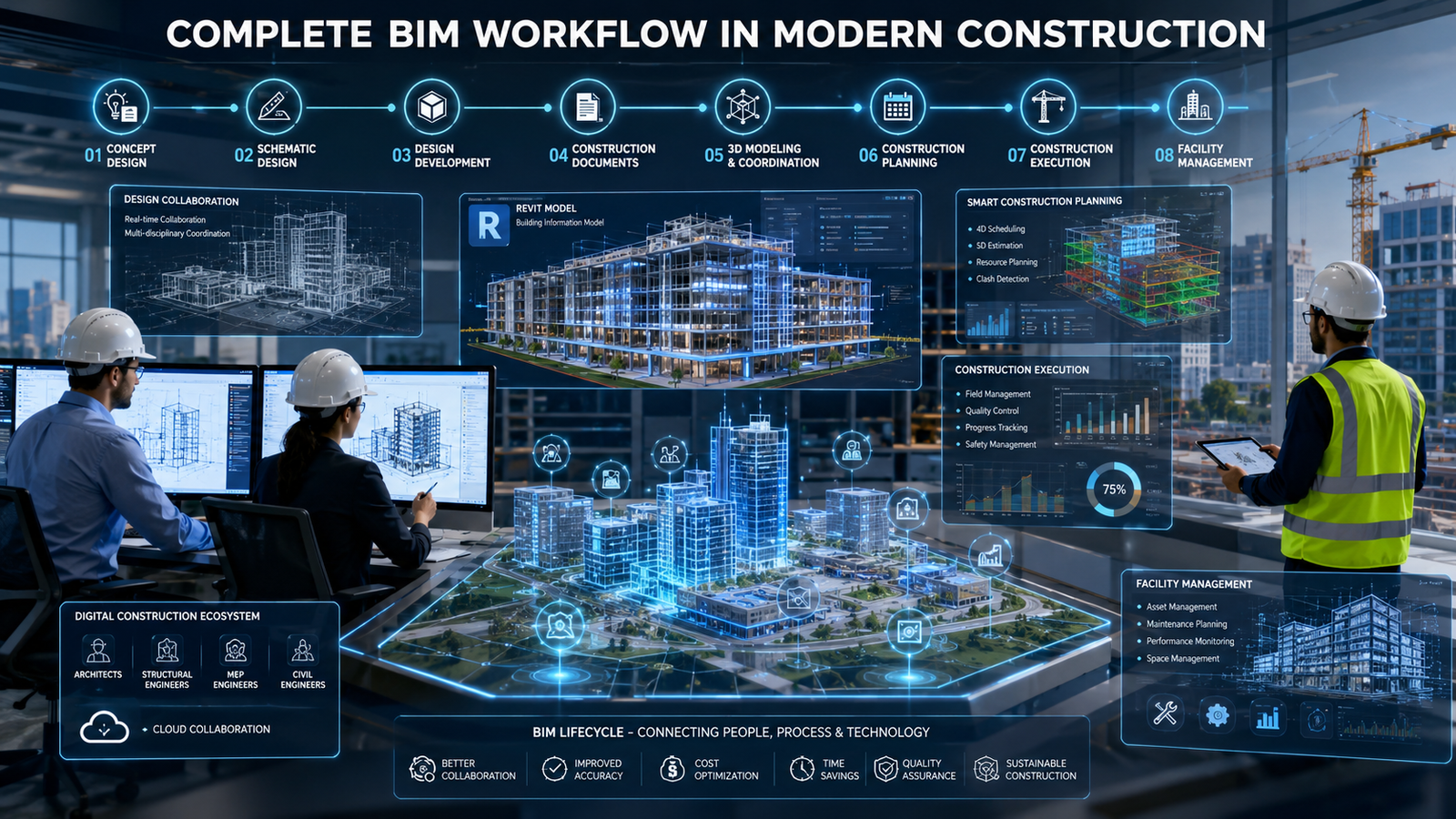
At 4Dimensions Infotech Pune, students learning modern civil engineering and BIM workflows quickly realize that today’s construction industry depends heavily on digital collaboration and intelligent project planning.
Modern construction projects are no longer managed using isolated drawings and disconnected workflows.
Instead, industries now rely on integrated BIM systems that improve coordination, reduce errors, and streamline project execution.
This is exactly where the BIM workflow becomes important.
The BIM workflow helps engineers, architects, contractors, and project managers collaborate using a shared digital building model throughout the entire construction lifecycle.
Today, companies working in infrastructure development, commercial construction, smart buildings, and urban planning increasingly prefer engineers who understand Revit BIM workflows, Civil 3D workflows, and modern construction project coordination systems.
Students learning through a Revit course in Pune, BIM course, Civil 3D course, or civil CAD training must understand how BIM workflows operate inside real construction projects.
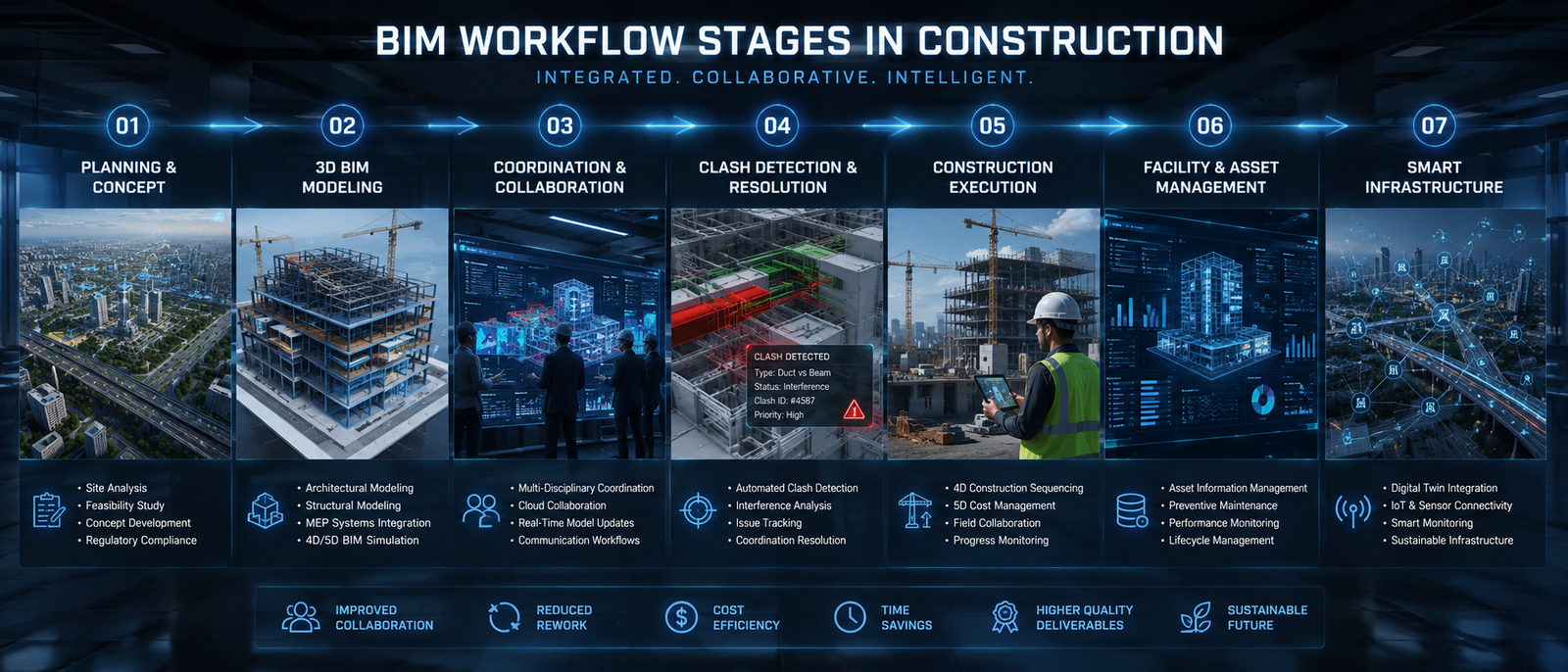
BIM workflow is the step-by-step process of creating, managing, updating, and using building information digitally throughout the entire project lifecycle.
Unlike traditional construction workflows where teams work separately, BIM allows all stakeholders to collaborate using a shared intelligent building model.
Because of this, project coordination becomes far more accurate and efficient.
The BIM workflow typically includes:
This digital construction workflow strongly connects with the complete design lifecycle in engineering, where ideas gradually evolve into fully developed real-world projects.
The BIM workflow begins with project planning and concept development.
At this stage, engineers and architects define project requirements, space planning, infrastructure needs, and design objectives.
Modern BIM software such as Revit allows teams to visualize concepts digitally before detailed modeling begins.
Because of this, project teams can identify design challenges early and improve planning accuracy.

Once the concept is finalized, engineers create detailed 3D BIM models.
These models contain architectural systems, structural components, MEP layouts, material information, and construction data.
Because BIM models are highly detailed, project teams can visualize the building before actual construction starts.
This significantly improves project understanding and reduces design confusion.
One of the biggest advantages of BIM workflows is real-time collaboration.
Architects, structural engineers, civil engineers, and MEP teams all work on the same building model.
Because of this integrated workflow, communication becomes more efficient and project coordination improves significantly.
This collaborative engineering process aligns closely with smart workflows in modern engineering systems, where data-driven collaboration improves efficiency and project accuracy.
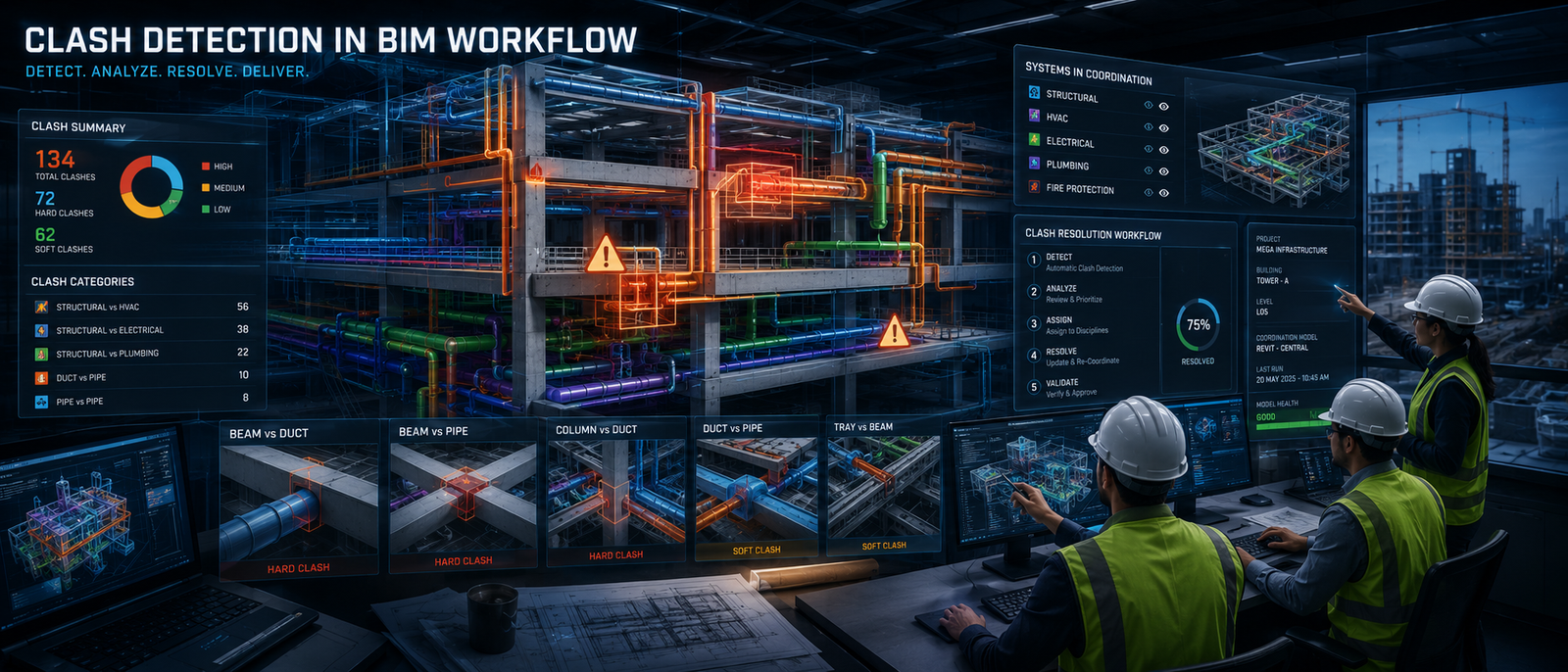
After coordination, engineers perform clash detection analysis.
This process identifies conflicts between systems such as:
Because BIM software identifies these issues digitally, teams can solve problems before construction begins.
As a result, projects experience fewer delays, reduced material waste, and lower rework costs.
Once the BIM model is finalized, construction drawings and documentation are automatically generated.
These include:
Because all drawings are connected directly to the BIM model, updates happen automatically whenever changes are made.
This improves drawing accuracy and reduces documentation errors significantly.
During construction, engineers and contractors use BIM models to guide execution and site coordination.
The BIM workflow helps teams manage scheduling, sequencing, material planning, and construction activities more efficiently.
This construction execution process strongly connects with real-world design execution workflows, where planning directly affects implementation quality.
BIM workflows continue to provide value even after project completion.
The BIM model stores all building information digitally, helping facility managers handle maintenance, renovations, upgrades, and operational management efficiently.
Because of this lifecycle-based approach, BIM improves long-term building management and operational efficiency.
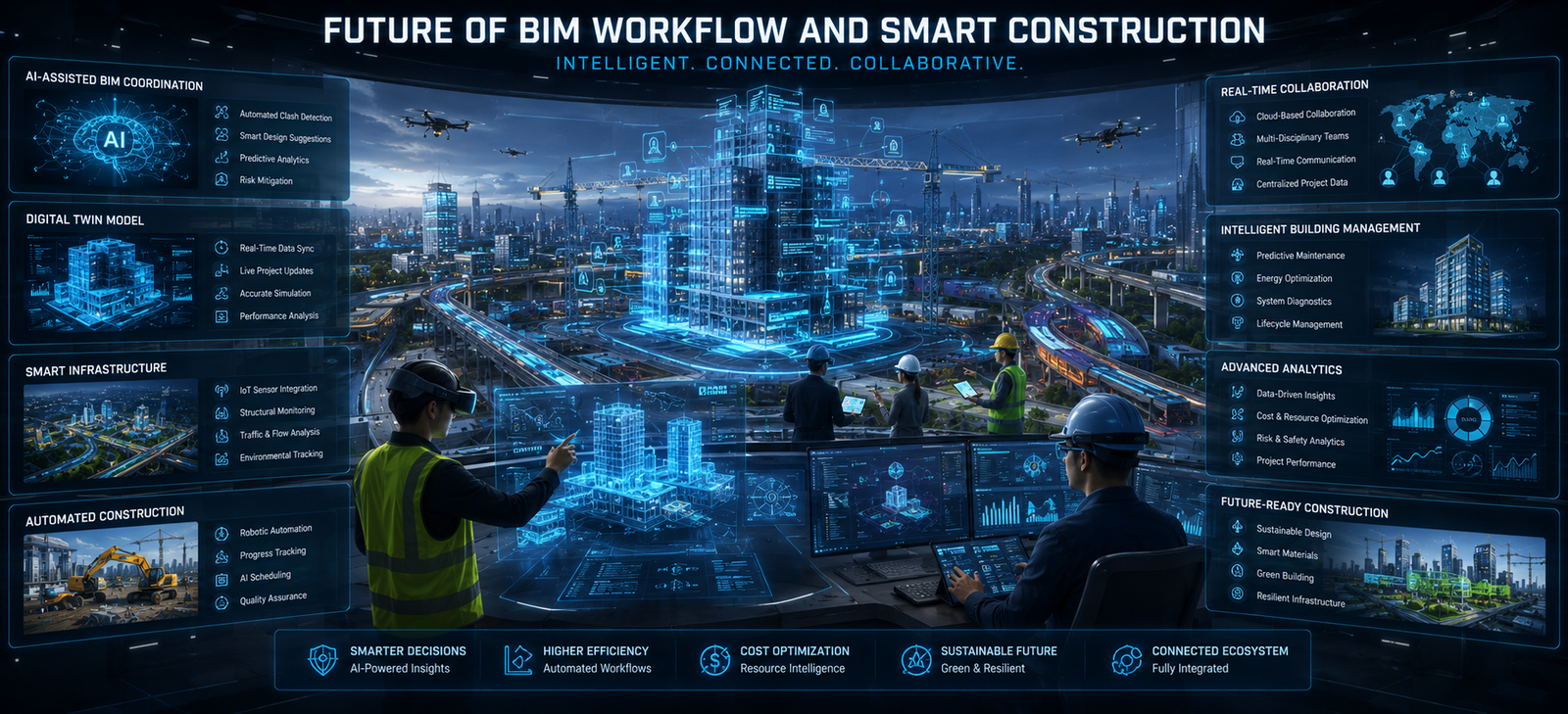
The BIM workflow improves project coordination, construction accuracy, and engineering efficiency.
It helps teams reduce design errors, improve communication, and make data-driven decisions throughout the project lifecycle.
Modern construction industries increasingly depend on engineers who understand BIM coordination systems, Revit workflows, and smart construction technologies.
Because of this, BIM skills have become highly valuable for civil engineers, architects, BIM coordinators, and construction professionals.
Understanding the BIM workflow is essential for anyone working in modern construction and civil engineering industries.
BIM transforms how projects are planned, designed, coordinated, and executed.
Because of this, engineers who understand BIM systems gain a major advantage in today’s construction industry.
The best way to understand BIM workflows is by applying them through real-world construction projects and practical engineering systems.
Students gain practical exposure to Revit, AutoCAD, Civil 3D, and BIM-based construction workflows while developing industry-ready civil engineering skills.
1. What is BIM workflow?
BIM workflow is the step-by-step process of managing building design and project data using BIM tools.
2. Why is BIM important in construction?
BIM improves coordination, reduces design errors, and increases construction efficiency.
3. Which software is commonly used for BIM?
Revit is one of the most widely used BIM software tools in construction industries.
4. Does BIM help during construction execution?
Yes. BIM improves planning, coordination, scheduling, and construction management.
5. Can beginners learn BIM workflows?
Yes. With proper Revit and BIM training, beginners can learn modern construction workflows effectively.
© 2025 4Dimensions Infotech. All rights reserved. | Best Design Engineering Training Institute in Pune
Start your journey with the best design engineering training institute in Pune.