
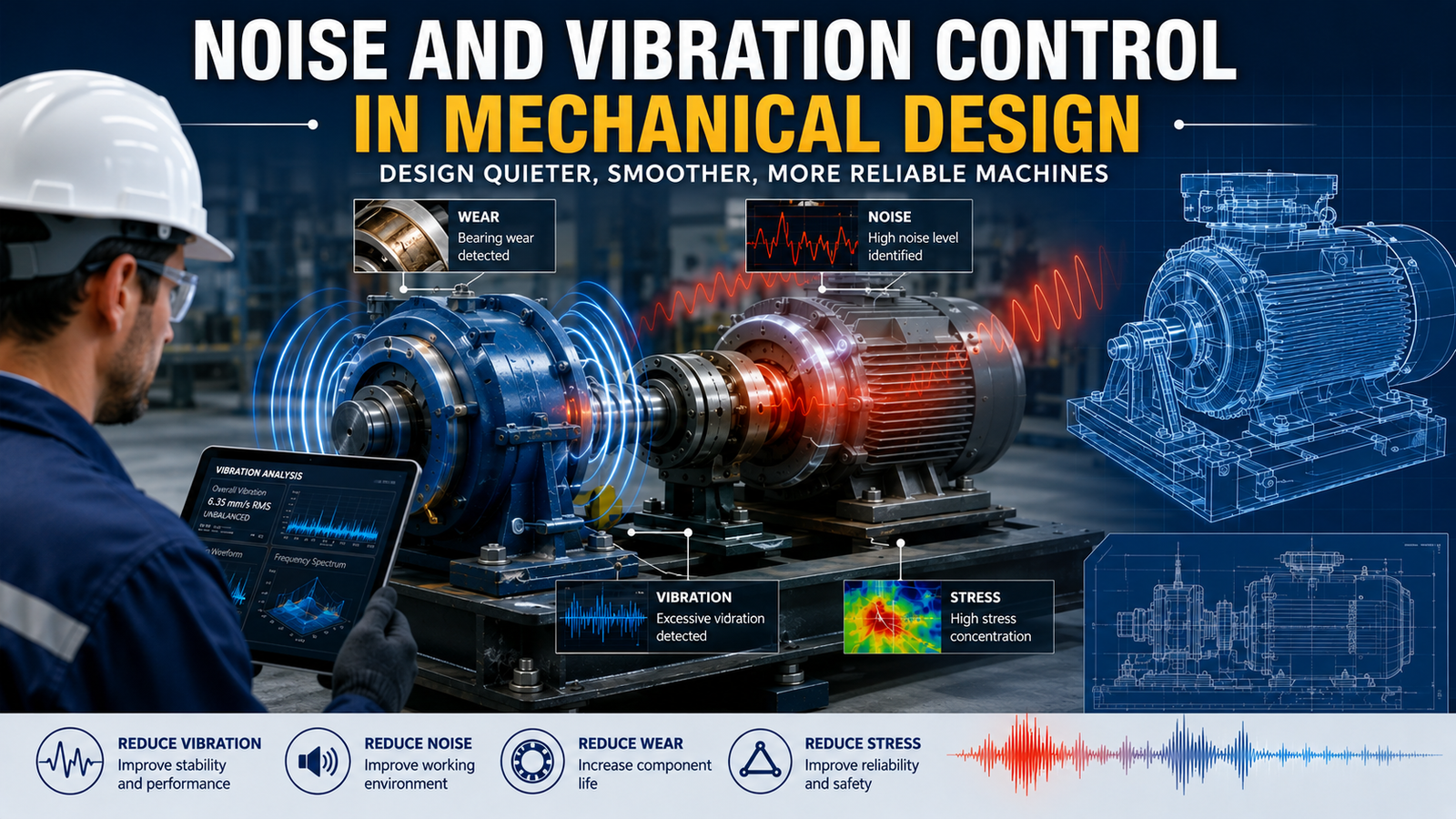
A machine can have high-strength materials, a powerful motor, and a perfectly manufactured structure, yet still experience unexpected failures.
In many cases, engineers initially suspect poor material quality, improper manufacturing, or excessive loading. However, the real cause is often something much less obvious — vibration.
Small vibrations may appear harmless during the early stages of operation. Over time, however, they can loosen fasteners, damage bearings, increase noise levels, reduce machining accuracy, and create fatigue cracks in critical components.
Many mechanical failures that seem like material or manufacturing problems actually originate from uncontrolled vibration. This is why modern mechanical design engineers study vibration behavior carefully during product development and machine design.
At 4Dimensions Infotech Pune, students enrolled in an AutoCAD Course in Pune, CAD Course in Pune, SolidWorks Course in Pune, CATIA Course in Pune, and Solid Edge Course in Pune learn how engineering concepts such as vibration analysis, structural behavior, and design optimization influence real-world product performance.
Noise and Vibration Control in Mechanical Design is not simply about making products quieter. It is about improving reliability, extending component life, reducing maintenance costs, increasing operational safety, and enhancing overall product quality.
Before engineers can control vibration effectively, they must first understand where it originates, how it travels through mechanical systems, and why it becomes dangerous under certain operating conditions.
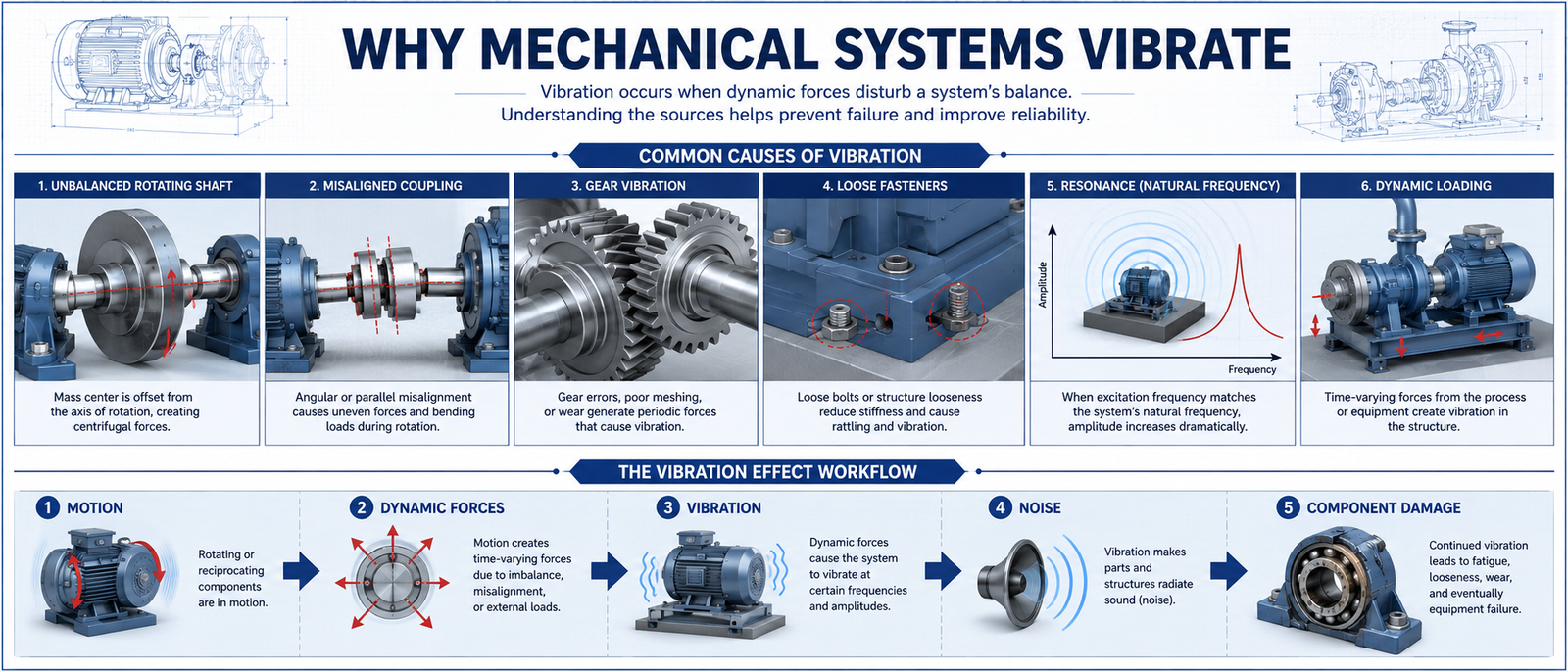
No mechanical system is completely free from vibration because every moving component generates forces during operation.
Motors, shafts, bearings, gears, pulleys, turbines, and machine frames all experience motion. When these forces remain balanced, the machine operates smoothly. However, when the balance is disturbed, vibration increases.
One of the most common causes of vibration is imbalance. A rotating component with uneven mass distribution generates repeated forces every time it rotates. Even a small imbalance can create noticeable vibration at high speeds.
Misalignment is another major source of vibration. If shafts, bearings, or couplings are not aligned correctly, additional forces are introduced into the system. These forces create vibration, heat, and premature wear.
Engineers must also consider resonance. Resonance occurs when an external vibration frequency matches the natural frequency of a structure. At this point, vibration levels can increase dramatically and cause serious damage.
Changing loads and operating conditions further increase vibration. This is closely connected to Static vs Dynamic Loading in Engineering Design, where forces constantly change during operation.
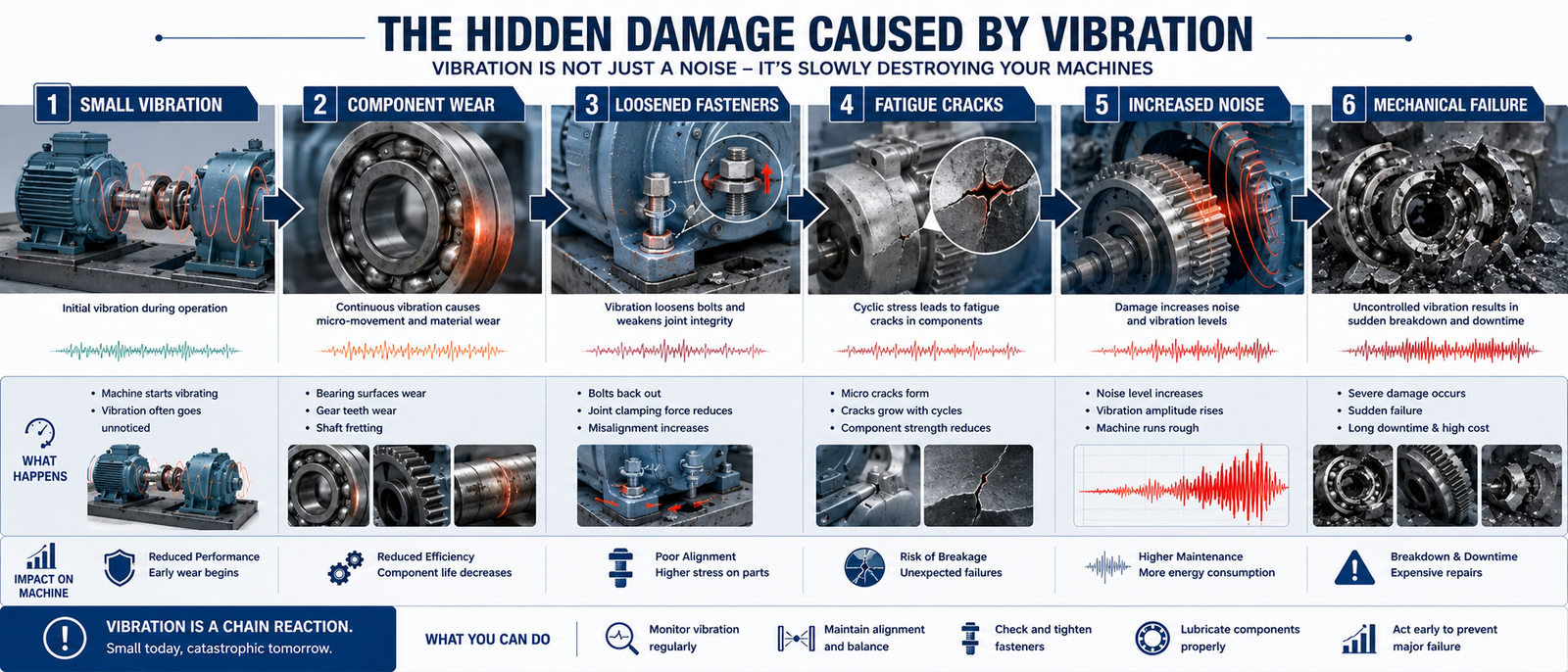
One of the biggest challenges with vibration is that the damage usually develops slowly.
A machine may appear to be working normally while vibration gradually weakens its components. Over weeks, months, or years, the effects become more serious.
Fasteners begin to loosen, bearings experience excessive wear, shafts lose alignment, and machine frames develop microscopic cracks.
Repeated vibration creates repeated stress cycles inside materials. Eventually, these cycles cause fatigue failure.
This is closely related to Material Fatigue and Life Prediction, where repeated loading gradually weakens a structure until failure occurs.
Vibration also affects user experience. A machine that produces excessive noise may be viewed as poor quality even if it performs its intended function correctly.
For manufacturers, vibration can increase maintenance costs, reduce product life, and create unexpected downtime.
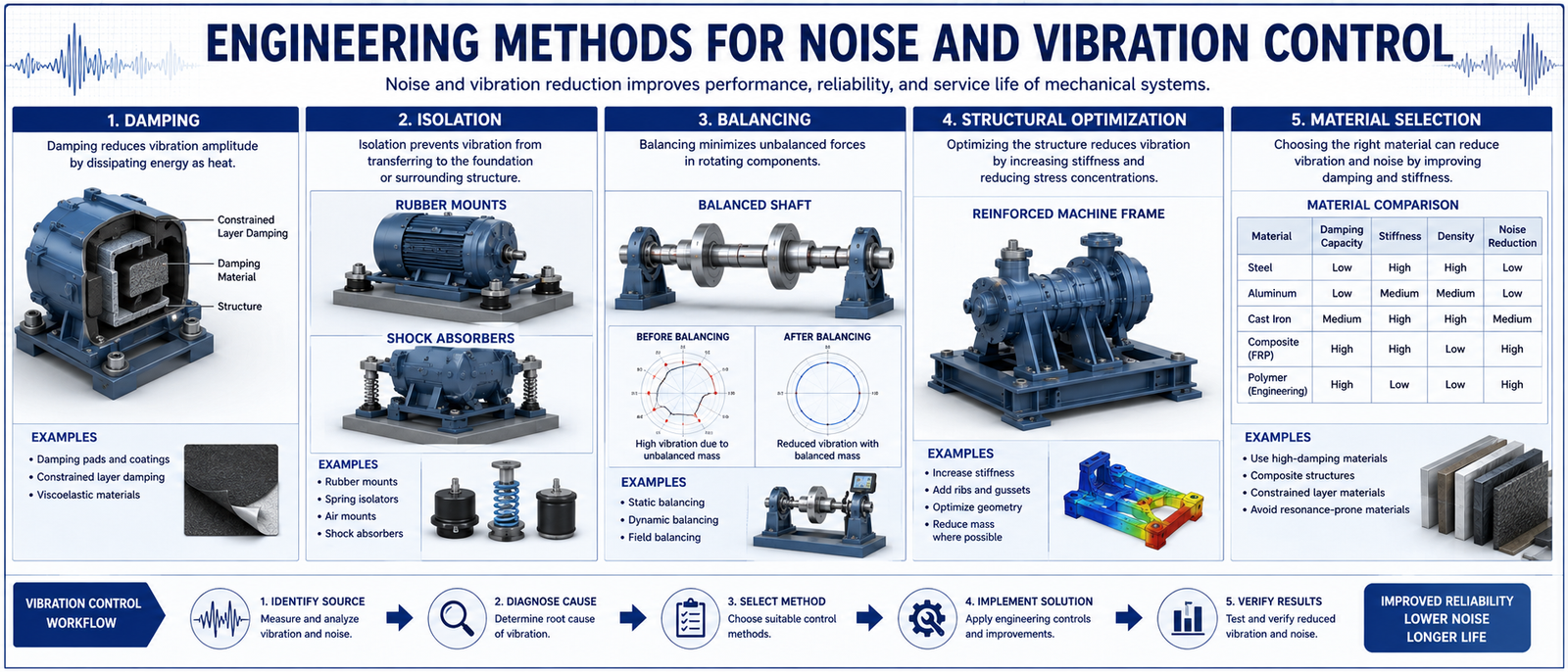
Once engineers identify the source of vibration, they can apply different methods to reduce its effects.
Damping absorbs vibration energy before it spreads through the structure. Rubber mounts, damping materials, and shock absorbers are commonly used to reduce vibration intensity.
Isolation prevents vibration from travelling between components. Machines are often mounted on vibration isolators to protect surrounding structures.
Balancing is essential for rotating components such as shafts, fans, turbines, and wheels. Proper balancing reduces unwanted forces during operation.
Engineers may increase stiffness, add reinforcing ribs, modify geometry, or change support locations to reduce vibration.
This aligns with Design Optimization Techniques in Engineering.
The choice of material affects stiffness, damping characteristics, strength, and weight. Selecting the right material can significantly reduce vibration-related problems.
This connects with Material Selection in Mechanical Design.
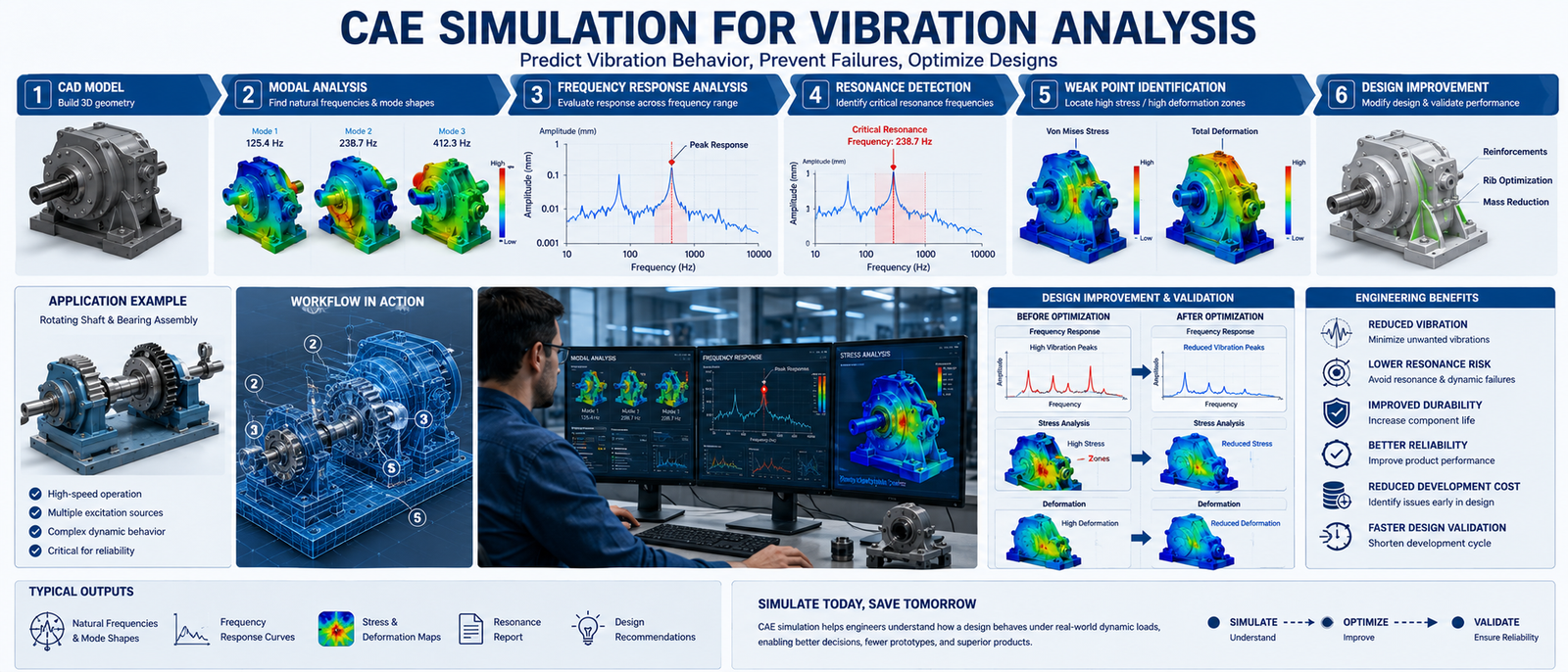
Noise and Vibration Control in Mechanical Design is a critical part of modern engineering. Even small vibration issues can reduce product performance, increase maintenance costs, shorten component life, and eventually lead to unexpected failures.
Modern engineers use balancing, damping, isolation techniques, structural optimization, material selection, and CAE simulation tools to identify and control vibration before products reach manufacturing.
As industries continue developing faster, lighter, and more advanced products, understanding vibration behavior has become an essential skill for mechanical design engineers, product designers, and manufacturing professionals.
Understanding concepts such as vibration analysis, structural behavior, CAD modeling, and engineering simulation becomes much easier through practical project experience.
At 4Dimensions Infotech Pune, students gain hands-on training through our AutoCAD Course in Pune, CAD Course in Pune, SolidWorks Course in Pune, CATIA Course in Pune, and Solid Edge Course in Pune.
Students learn industry-standard CAD workflows, mechanical design principles, CAE simulation techniques, engineering analysis, and real-world project methodologies used by leading engineering companies.
Whether you are searching for an AutoCAD Course Near Me, a CAD Course Near Me, or advanced mechanical design training in Pune, practical project-based learning can help you become job-ready faster.
1. What causes vibration in mechanical systems?
Imbalance, misalignment, resonance, dynamic loading, loose components, and structural flexibility are among the most common causes.
2. Why is vibration control important?
It improves reliability, reduces wear, prevents premature failures, enhances safety, and improves user comfort.
3. What is damping in vibration control?
Damping is the process of absorbing vibration energy to reduce vibration intensity and system response.
4. How do engineers analyze vibration?
Engineers use vibration testing, modal analysis, harmonic response analysis, frequency response analysis, and CAE simulation tools.
5. Which industries rely on vibration analysis?
Automotive, aerospace, manufacturing, industrial machinery, robotics, and consumer product industries all depend on vibration control.
6. Where can I learn CAD and mechanical design skills in Pune?
Students looking for an AutoCAD Course in Pune, CAD Course in Pune, SolidWorks Course in Pune, CATIA Course in Pune, or Solid Edge Course in Pune can gain practical project-based training at 4Dimensions Infotech Pune.
© 2025 4Dimensions Infotech. All rights reserved. | Best Design Engineering Training Institute in Pune
Start your journey with the best design engineering training institute in Pune.