
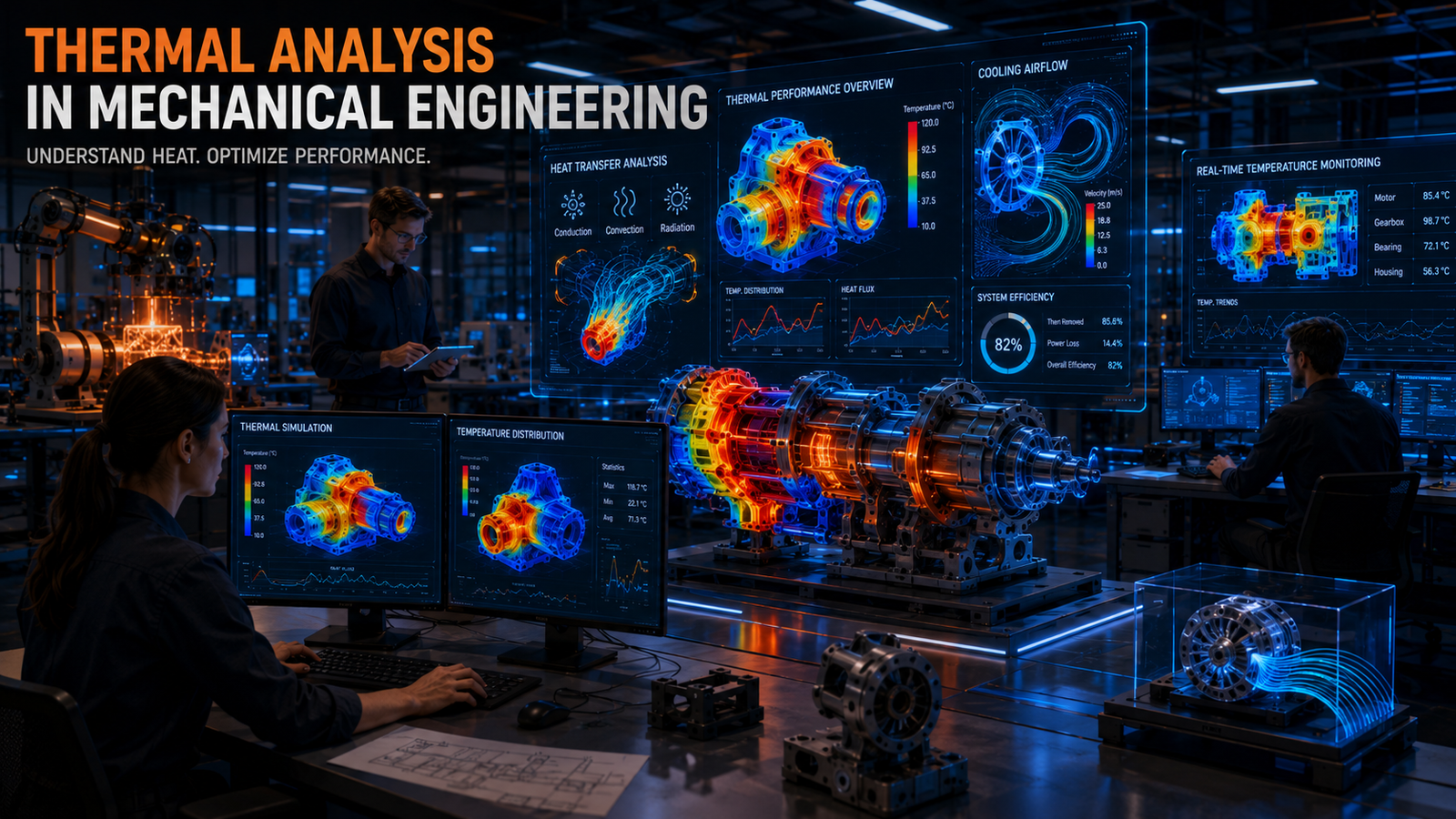
At 4Dimensions Infotech Pune, students learning modern mechanical engineering quickly discover that heat management is one of the most important factors in engineering design.
In real industrial systems, temperature directly affects performance, durability, efficiency, and safety.
If heat is not managed correctly, components may expand, weaken, deform, or fail completely.
Because of this, modern industries heavily rely on thermal analysis in mechanical engineering design to improve product reliability and operational efficiency.
Today, thermal analysis plays a critical role in industries such as automotive engineering, aerospace systems, industrial manufacturing, electronics, heavy machinery, and energy systems.
Students learning through a CAD course in Pune, SolidWorks course, CATIA course, or engineering software course must understand how thermal behavior affects real engineering products.
This thermal engineering approach also strongly connects with aerospace engineering design standards, where temperature control and heat resistance are extremely important for operational safety.
Thermal analysis is the process of studying how heat is generated, transferred, distributed, and dissipated inside a system or component.
Engineers analyze how temperature changes affect materials, structures, and system performance under real operating conditions.
This analysis helps engineers design products that remain safe and efficient even under high thermal loads.
Modern thermal analysis workflows involve:
Because of this process, engineers can identify thermal issues early before manufacturing begins.
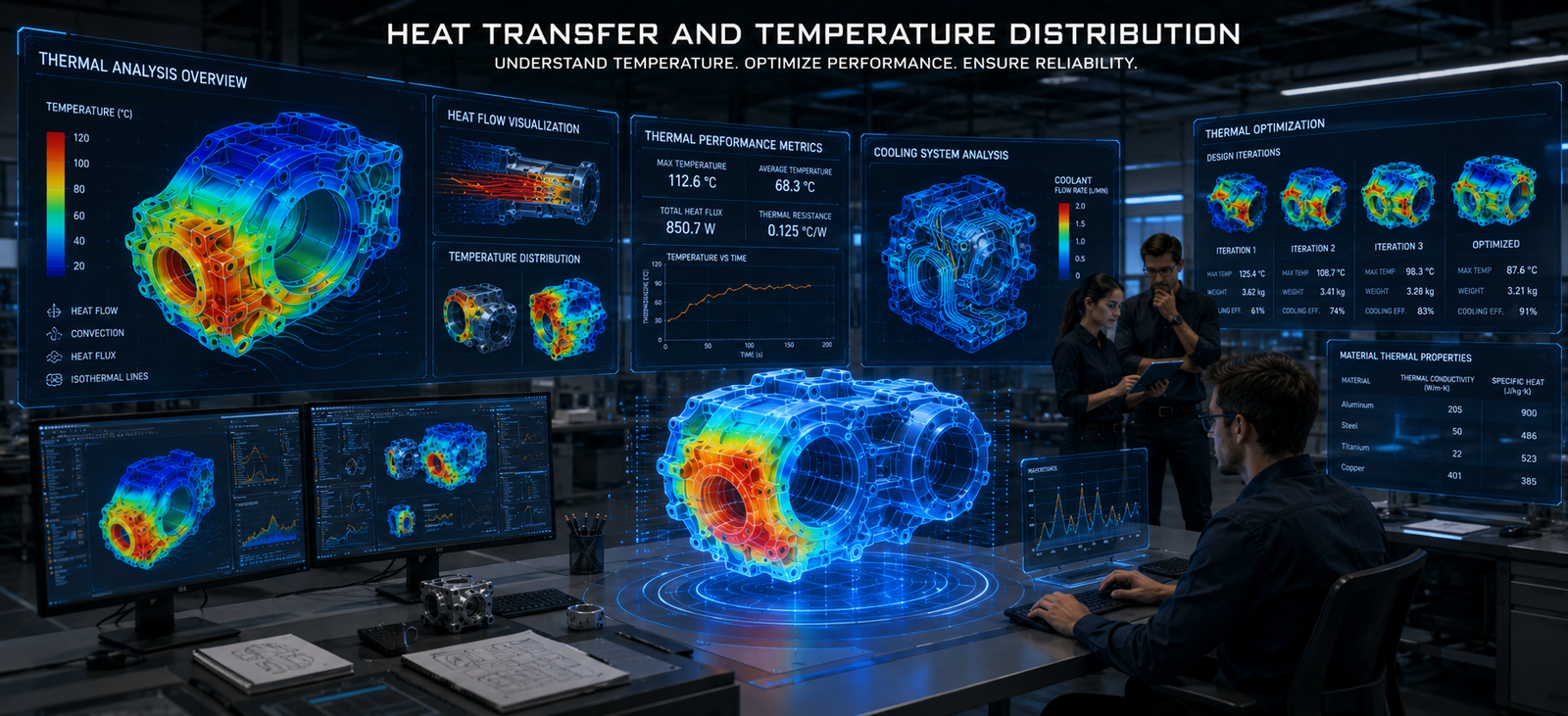
One of the biggest reasons thermal analysis is important is overheating prevention.
Excessive heat can damage internal structures, reduce efficiency, weaken materials, and shorten product lifespan.
Because of this, engineers must carefully evaluate thermal performance during product development.
Modern engineering systems generate large amounts of heat during operation, especially in:
Without proper thermal management, these systems may experience serious operational failures.
This is why industries increasingly depend on simulation-driven thermal analysis workflows during engineering design.
Proper heat management directly improves mechanical system performance.
When components operate within safe temperature ranges, they perform more efficiently and reliably.
Thermal optimization helps improve:
Modern industries use advanced simulation tools to optimize thermal performance before manufacturing begins.
This process strongly connects with how CAD is used in real companies and engineering workflows, where engineers use simulation-based systems to improve product performance.

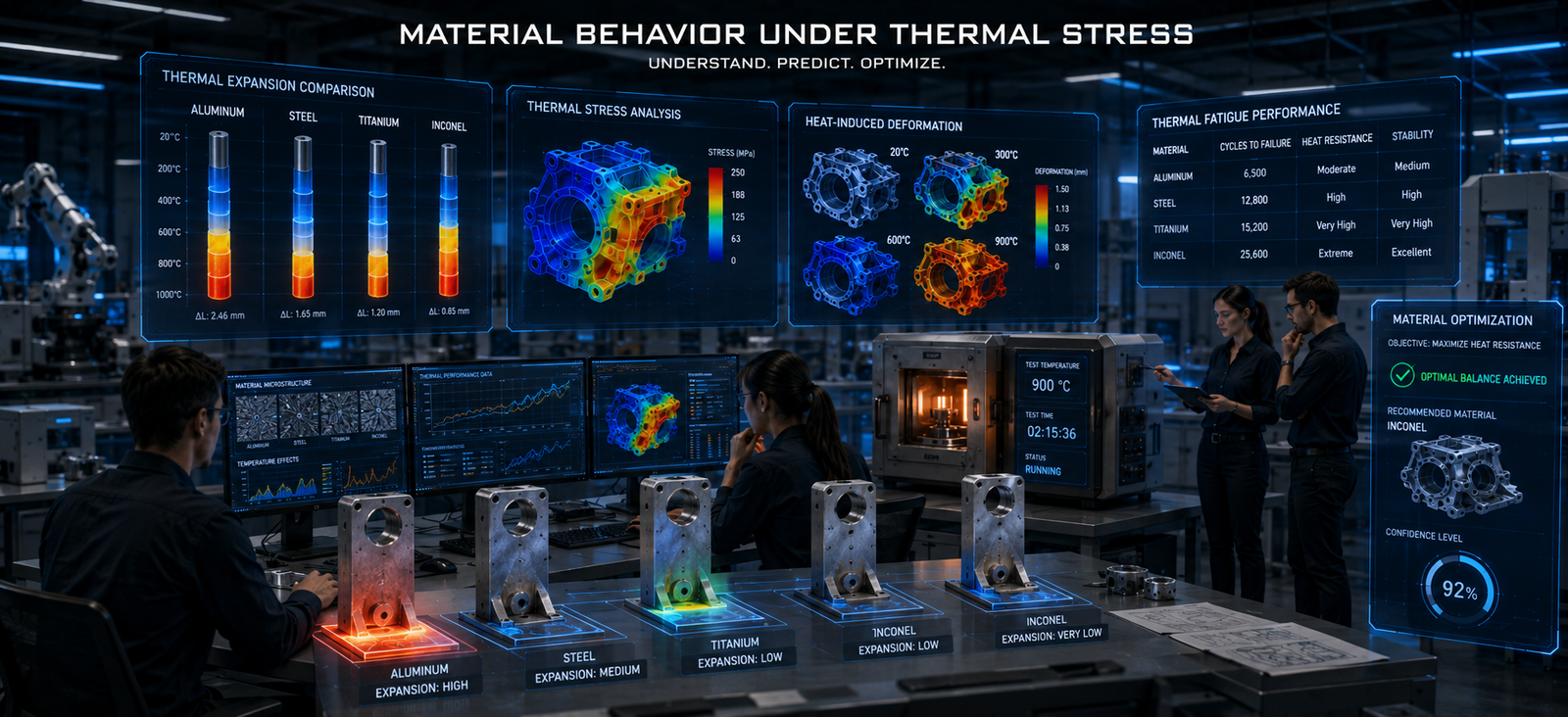
Different engineering materials behave differently under thermal conditions.
Some materials expand significantly when heated, while others lose strength or become structurally unstable.
Because of this, engineers must carefully select materials based on operating temperatures and thermal exposure.
Material thermal properties directly affect:
This engineering decision strongly connects with material selection in mechanical design, where engineers evaluate material behavior for real-world applications.
Modern thermal engineering depends heavily on simulation-based analysis.
Instead of relying only on physical testing, engineers now use CAD and simulation tools to predict thermal behavior digitally.
Using tools like SolidWorks, CATIA, and advanced engineering simulation systems, engineers can:
Because of this digital workflow, engineers can reduce design errors and improve efficiency before production begins.
This process strongly connects with prototyping in product development, where simulations improve engineering accuracy and product optimization.
Thermal analysis is used in almost every major engineering industry today.
For example, automotive engineers optimize engine cooling systems to prevent overheating and improve fuel efficiency.
Similarly, electronics engineers design cooling systems for processors, batteries, and circuit boards.
In aerospace engineering, thermal analysis becomes even more important because aircraft systems operate under extreme temperature conditions.
Modern industrial machinery also depends on thermal management to maintain stable long-term operation.
Because of this, thermal analysis has become a critical part of modern mechanical engineering workflows.

Thermal analysis in mechanical engineering design is essential for improving performance, reliability, efficiency, and safety.
Modern industries increasingly rely on simulation-driven thermal engineering workflows to optimize products before manufacturing begins.
Engineers who understand thermal behavior, heat transfer, material response, and cooling optimization gain a major advantage in modern engineering careers.
Because of this, thermal analysis has become a critical skill in mechanical engineering, product design, aerospace systems, automotive development, and industrial manufacturing.
Understanding thermal analysis becomes far more effective when students apply these concepts using real engineering projects and modern simulation tools.
Students gain practical exposure to tools like SolidWorks, CATIA, and advanced CAD simulation systems while developing real engineering problem-solving skills.
1. What is thermal analysis in engineering?
Thermal analysis studies how heat is generated, transferred, and distributed in engineering systems.
2. Why is thermal analysis important?
It helps prevent overheating, improve efficiency, and increase system reliability.
3. Which industries use thermal analysis?
Automotive, aerospace, manufacturing, electronics, and energy industries use it extensively.
4. Which software is used for thermal analysis?
SolidWorks, CATIA, ANSYS, and simulation-based CAD tools are commonly used.
5. Can students learn thermal analysis through CAD training?
Yes. Practical CAD and simulation training helps students understand real-world thermal engineering workflows.
© 2025 4Dimensions Infotech. All rights reserved. | Best Design Engineering Training Institute in Pune
Start your journey with the best design engineering training institute in Pune.