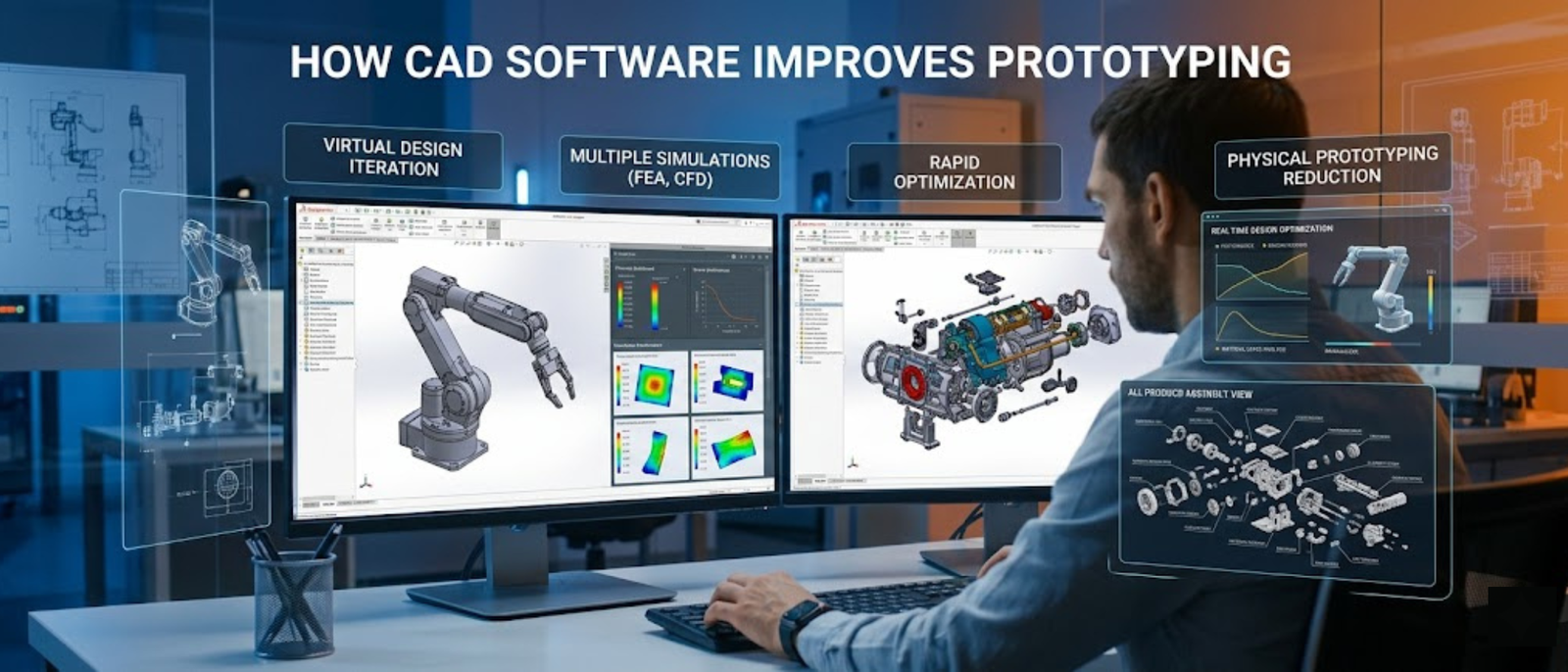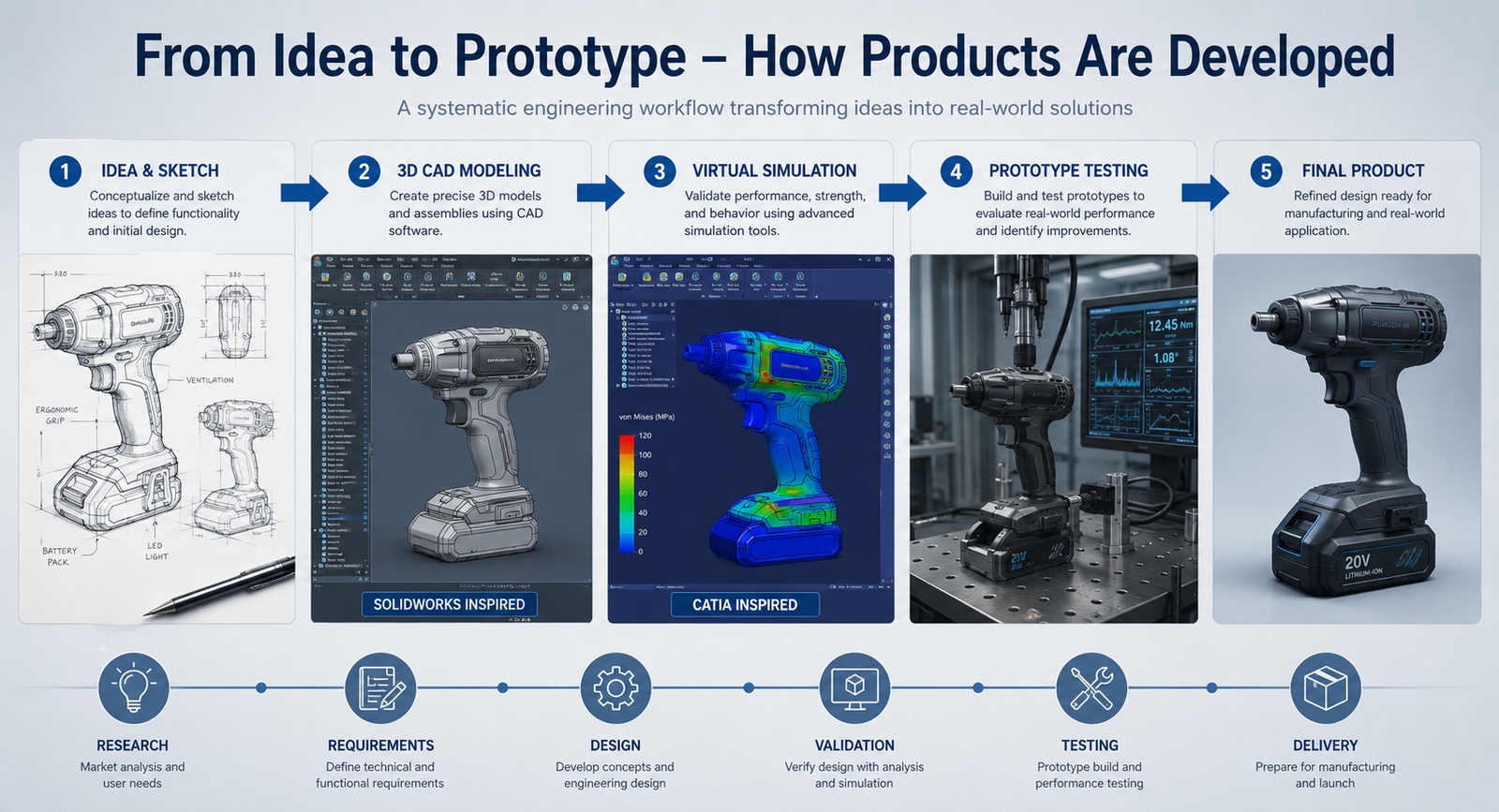
Engineering Product Development and Prototyping Workflow

Prototyping in Engineering – Importance of CAD and Product Design

Every successful product you see in the market today has gone through one extremely important stage before manufacturing — prototyping.

Whether it is a smartphone, automobile component, industrial machine, or consumer product, engineers first create and test prototypes before the final product reaches production.

In modern engineering industries, prototyping has become one of the most essential parts of product development because it helps companies reduce risk, improve quality, and optimize performance before investing in full-scale manufacturing.

Today, prototyping is deeply connected with modern CAD workflows, simulation technologies, and digital product development systems. Engineers working with tools like SolidWorks course, CATIA course, and CAD design course programs regularly use prototyping methods during product design and development.

For students searching for:

  • cad course
  • solidworks course
  • catia course
  • cad design course
  • engineering software course
  • cad training pune

understanding prototyping is extremely important because it is widely used in real engineering companies today.

What is Prototyping in Engineering?

Prototyping is the process of creating an early version or model of a product to test its functionality, appearance, performance, and feasibility before final production.

A prototype acts as a trial version that helps engineers identify design flaws, improve functionality, and validate engineering concepts before investing in manufacturing.

Instead of directly producing the final product, companies first build prototypes to ensure that the design actually works in real-world conditions.

This process helps reduce:

  • Manufacturing errors
  • Product failure risks
  • Material wastage
  • Development costs
  • Design inefficiencies

In modern engineering workflows, many prototypes are now created digitally using CAD software and simulation tools before physical models are built.
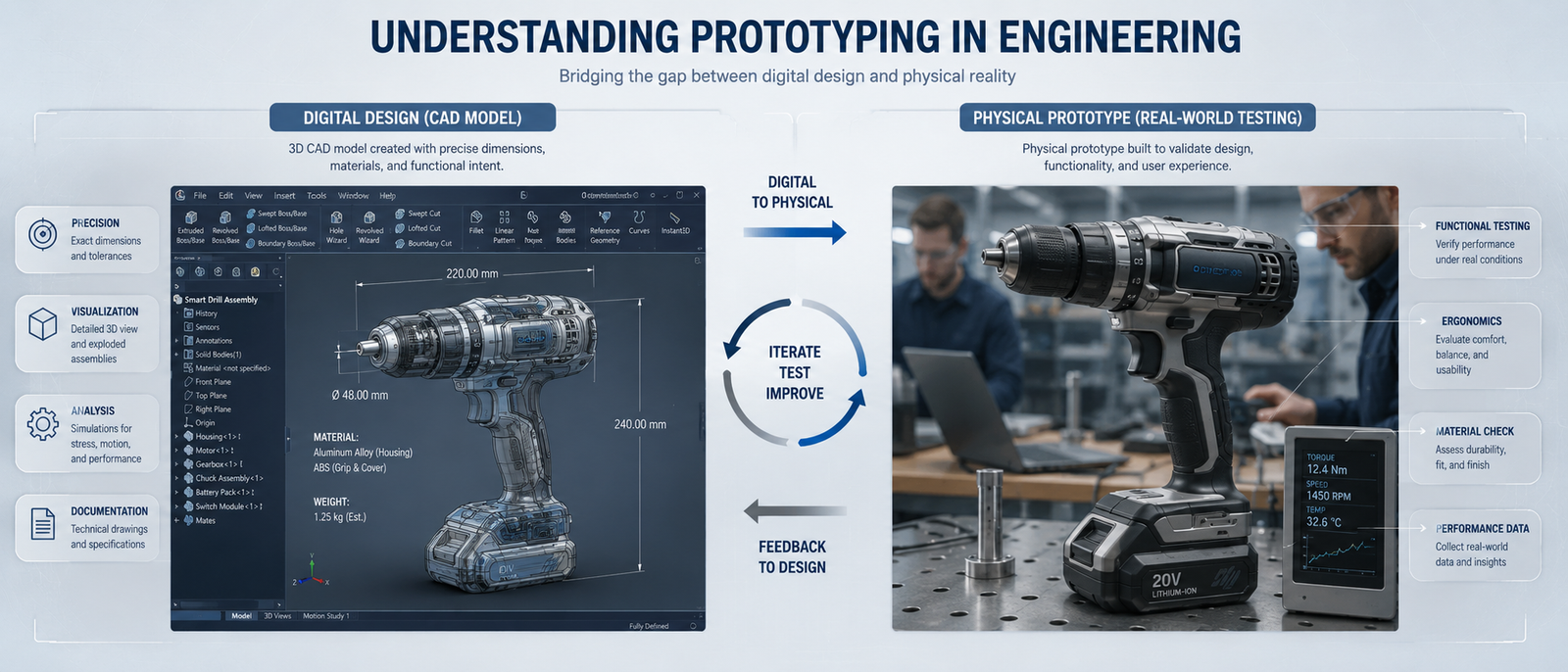
CAD Modeling and Physical Prototyping in Engineering

Why Prototyping is Important in Product Development

Prototyping plays a major role in transforming ideas into real products. Without prototyping, companies would directly manufacture products without properly testing them, which could lead to expensive failures and safety issues later. This is why modern industries heavily depend on design validation and prototype testing during engineering workflows. Prototyping helps engineers:
  • Test product functionality
  • Improve product performance
  • Validate engineering concepts
  • Reduce production risks
  • Identify weak areas early
  • Improve design efficiency
  • Save development costs
For example, automotive companies create multiple prototype versions of vehicle parts before final production. Aerospace companies also rely heavily on prototyping because even a small design error can cause major safety problems. This is why students learning through engineering software course training and CAD workflows are expected to understand practical prototyping methods.

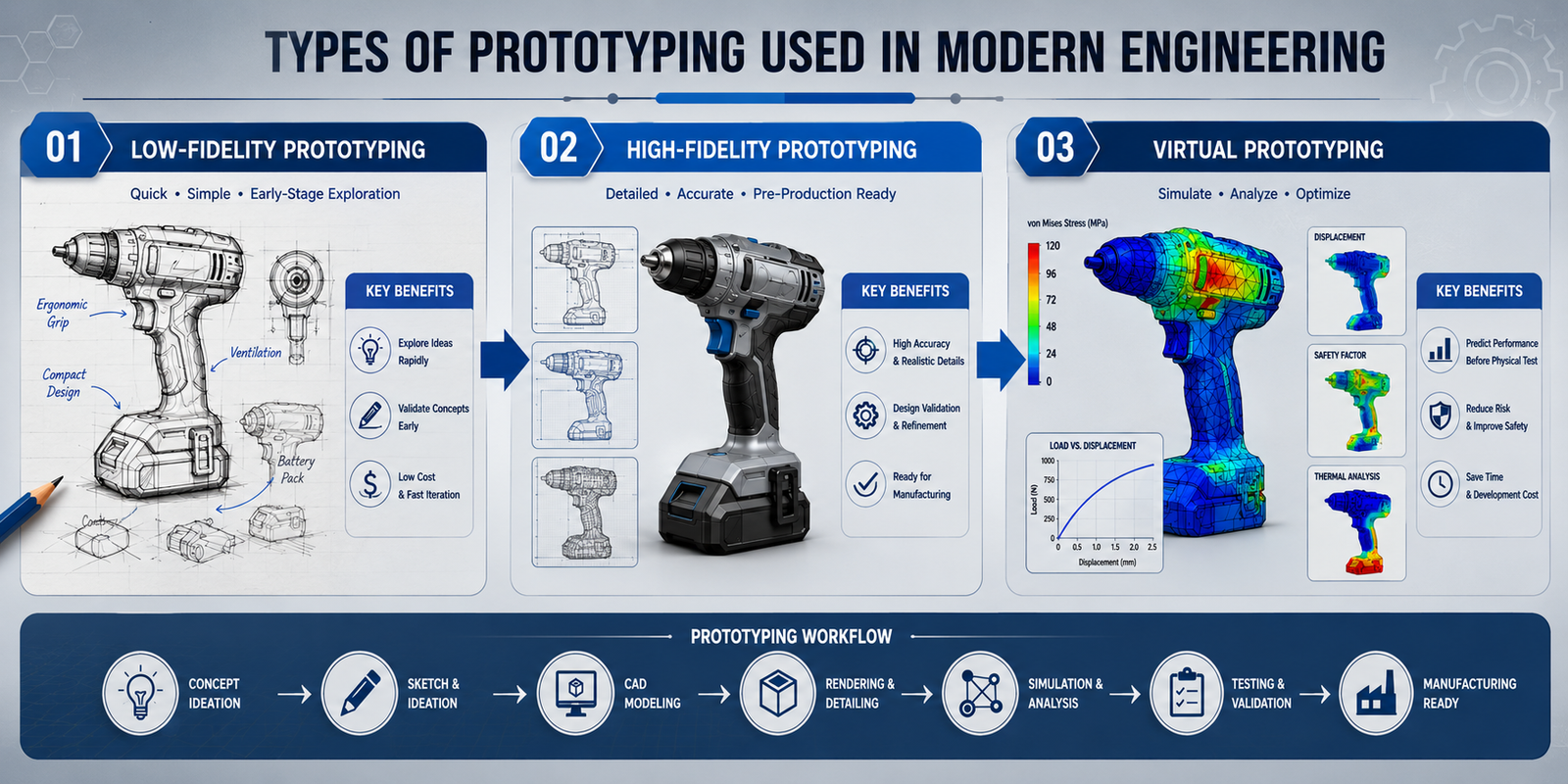
Types of Prototyping Used in Engineering

There are multiple types of prototyping used depending on the stage of product development and design complexity.

Low-Fidelity Prototyping

Low-fidelity prototypes are simple early-stage models used to test basic ideas and concepts. These may include:
  • Hand sketches
  • Basic CAD drawings
  • Simple mockups
  • Concept layouts
These prototypes are mainly used during the initial design stage when engineers are exploring ideas.

High-Fidelity Prototyping

High-fidelity prototypes are advanced models that closely resemble the final product in terms of appearance and functionality. These prototypes are usually developed using:
  • SolidWorks
  • CATIA
  • Creo
  • Advanced CAD systems
They are used for:
  • Performance testing
  • Design validation
  • Assembly verification
  • Product simulation
Students learning through CATIA course or Creo software course programs often work on these advanced product modeling workflows.

Virtual Prototyping

Virtual prototyping has become one of the biggest innovations in modern engineering. Instead of building physical prototypes every time, engineers now use digital simulation tools to test products virtually before manufacturing. Virtual prototyping helps companies:
  • Reduce development costs
  • Save time
  • Improve design accuracy
  • Test multiple conditions quickly
This approach is widely used in automotive, aerospace, industrial machinery, and consumer electronics industries.
Low-Fidelity, High-Fidelity, and Virtual Prototyping Explained

Role of CAD Software in Prototyping

Modern prototyping would not be possible without CAD software. Tools like:
  • AutoCAD
  • SolidWorks
  • CATIA
  • Creo
  • Revit
allow engineers to create detailed digital product models before manufacturing begins. With CAD software, engineers can:
  • Create 3D models
  • Run simulations
  • Analyze stress and performance
  • Test assemblies
  • Optimize designs
  • Generate manufacturing drawings
Students who complete an autocad course or solidworks course gain practical exposure to these real-world design workflows used inside industries. Modern CAD tools also allow rapid design modifications, which makes prototyping faster and more efficient than traditional manual methods.
CAD Software for Virtual Prototyping and Product Design

Real-World Example of Prototyping

Consider the development of a smartphone.

Before the final product reaches the market, engineers create multiple prototype versions to test:

  • Shape and design
  • Battery performance
  • Heat management
  • Durability
  • User experience
  • Structural strength

Each prototype goes through testing and improvement cycles until engineers achieve the final optimized product.

The same process is followed in automotive industries, machine design companies, aerospace engineering, and industrial product manufacturing.

Benefits of Prototyping in Engineering

Prototyping provides several advantages in product development and engineering design workflows.

Some major benefits include:

  • Early error detection
  • Improved product quality
  • Reduced manufacturing costs
  • Faster innovation cycles
  • Better design optimization
  • Improved collaboration between teams
  • Higher product reliability

Without prototyping, companies would face significantly higher risks during production.

This is why practical CAD training and product simulation workflows are becoming increasingly important in modern engineering careers.

Why Practical CAD Skills Matter

Many engineering students learn software theoretically but never understand how it is actually used in product development.

Real industries expect engineers who can:

This is why project-based CAD learning has become more valuable than simple certification completion.

Students who work on real-world CAD projects develop stronger technical confidence and industry readiness.

Why Choose 4Dimensions Infotech?

At 4Dimensions Infotech, students learn CAD software and product design workflows through practical engineering projects and industry-oriented training.

Programs include:

  • AutoCAD training
  • SolidWorks course
  • CATIA training
  • Creo software course
  • CAD design course
  • Engineering software course

Students also gain:

  • Hands-on project experience
  • Product modeling exposure
  • Simulation workflow understanding
  • Industry-oriented CAD training
  • Placement support

The focus is not just learning software it is building engineers who understand real product development workflows.

Conclusion

Prototyping is one of the most important stages in modern engineering and product development.

It helps engineers transform ideas into practical, functional, and reliable products before manufacturing begins.

With the help of modern CAD software, virtual simulations, and digital workflows, prototyping has become faster, smarter, and more efficient than ever before.

Engineers who understand CAD-based prototyping workflows gain a major advantage in product design and mechanical engineering careers.

Build Real Product Design Skills

Understanding prototyping is not just theoretical knowledge it is a practical engineering skill used in real industries every day.

👉 Join 4Dimensions Infotech and learn CAD design, simulation, and prototyping workflows through practical industry-oriented training programs in Pune.

Build skills that help you become industry-ready for real engineering careers.
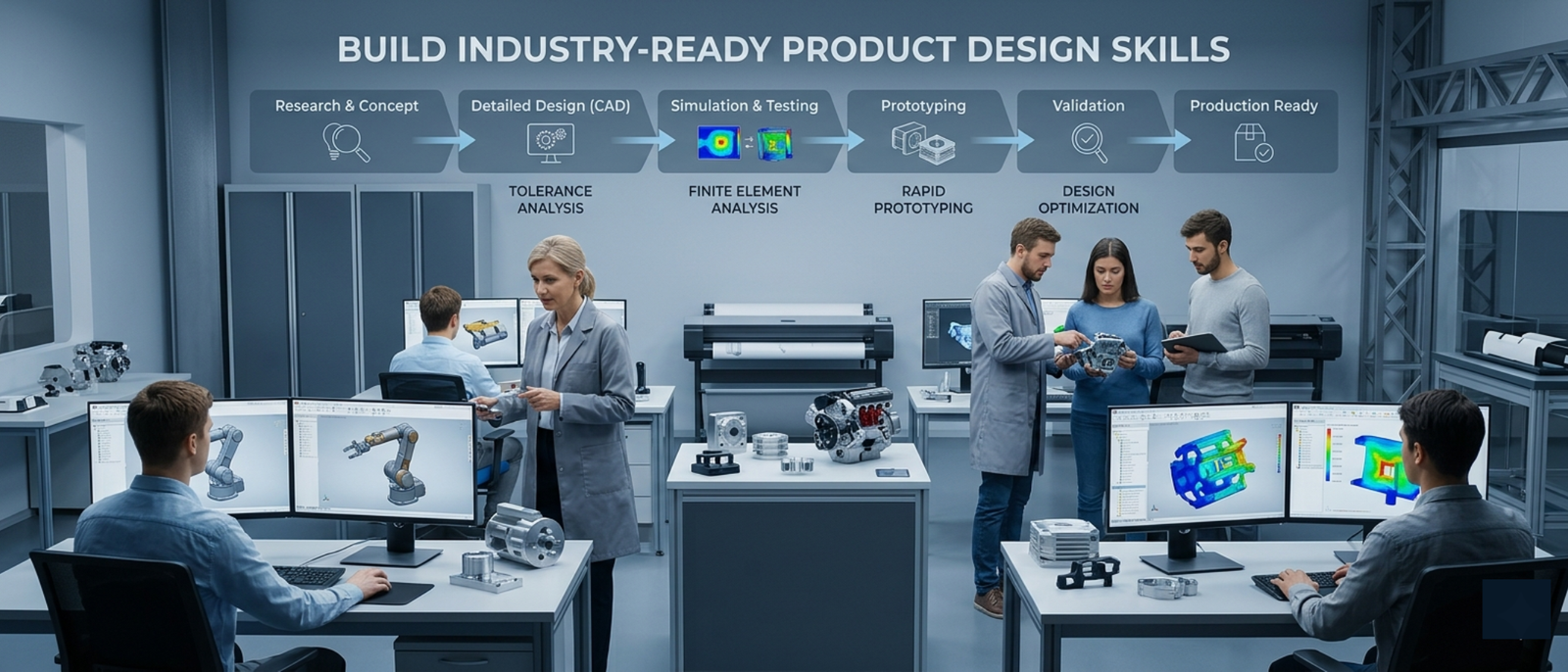
CAD Software for Virtual Prototyping and Product Design

Frequently Asked Questions (FAQ)

1. What is prototyping in engineering?
Prototyping is the process of creating a test version of a product before final manufacturing.

2. Why is prototyping important?
It helps identify design flaws early and improves product quality and performance.

3. What software is used for prototyping?
Software like AutoCAD, SolidWorks, CATIA, and Creo are commonly used.

4. What is virtual prototyping?
Virtual prototyping is the process of testing product designs digitally using simulation tools.

5. Is prototyping important for CAD engineers?
Yes, prototyping is one of the most important workflows in modern CAD and product design industries.

Got Questions? Let’s Talk!

Start your journey with the best design engineering training institute in Pune.