
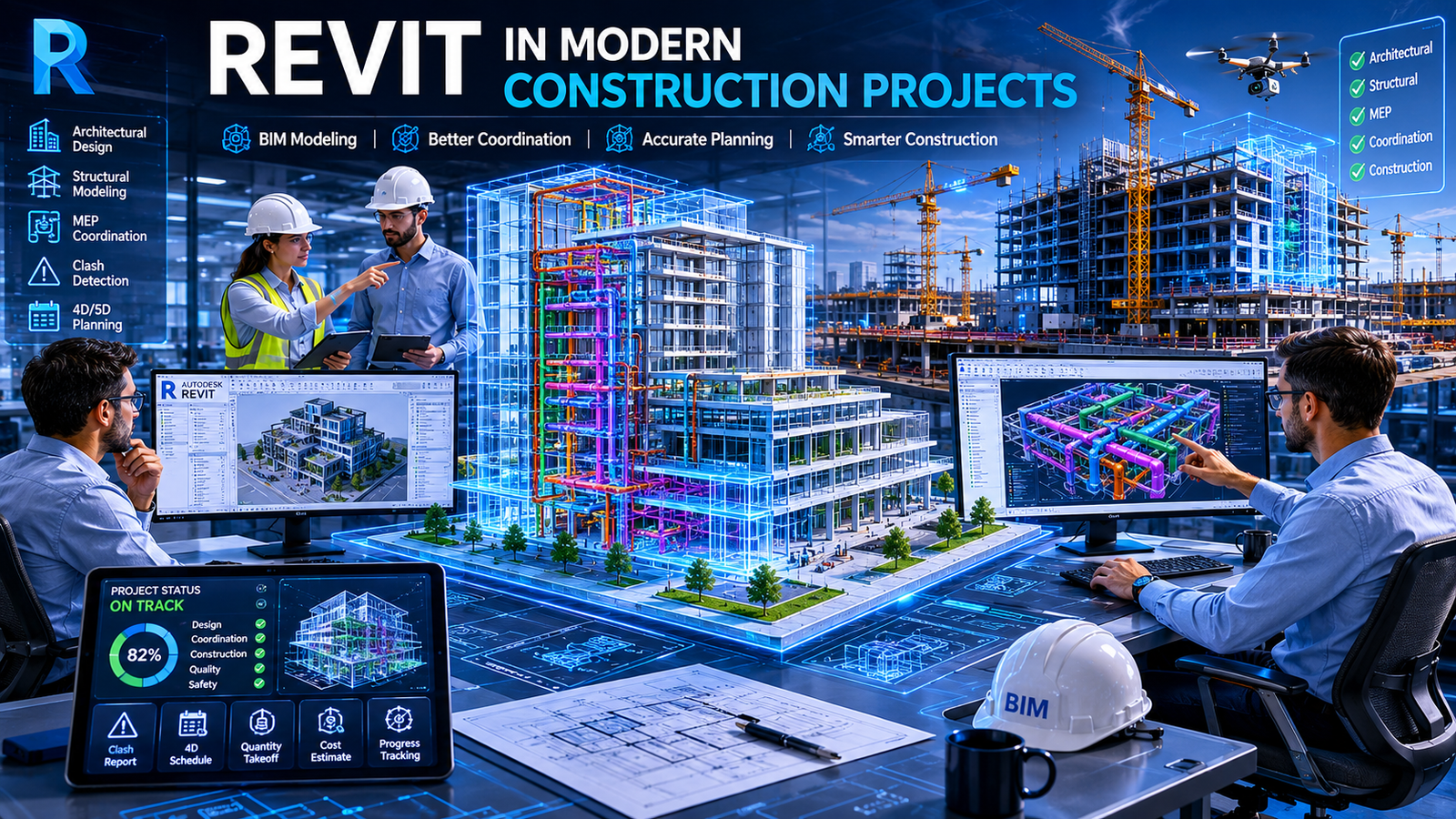
At 4Dimensions Infotech Pune, students learning modern civil engineering and BIM workflows quickly realize that construction industries no longer rely only on traditional 2D drawings.
Today’s infrastructure and building projects depend heavily on intelligent digital workflows that improve coordination, accuracy, visualization, and project management.
Because of this, Revit in real construction projects has become one of the most important topics in modern civil engineering and architectural design.
Modern construction companies increasingly use Revit BIM software to manage everything from building planning and structural coordination to quantity estimation and clash detection.
Industries involved in smart construction, commercial buildings, residential projects, infrastructure development, and BIM-based project execution now depend heavily on Revit workflows.
Students learning through a Revit course in Pune, civil CAD course, BIM course, or Civil 3D training must understand how Revit is used inside real construction environments.
This BIM-driven construction process strongly connects with the role of BIM in modern construction projects, where intelligent digital workflows improve efficiency and reduce project errors.
Revit is a Building Information Modeling (BIM) software widely used in architecture, civil engineering, and construction industries.
Unlike traditional drafting tools, Revit allows engineers and architects to create intelligent 3D building models that contain complete project information.
These models include:
Because of this integrated BIM workflow, all project teams can collaborate using one connected model instead of separate disconnected drawings.
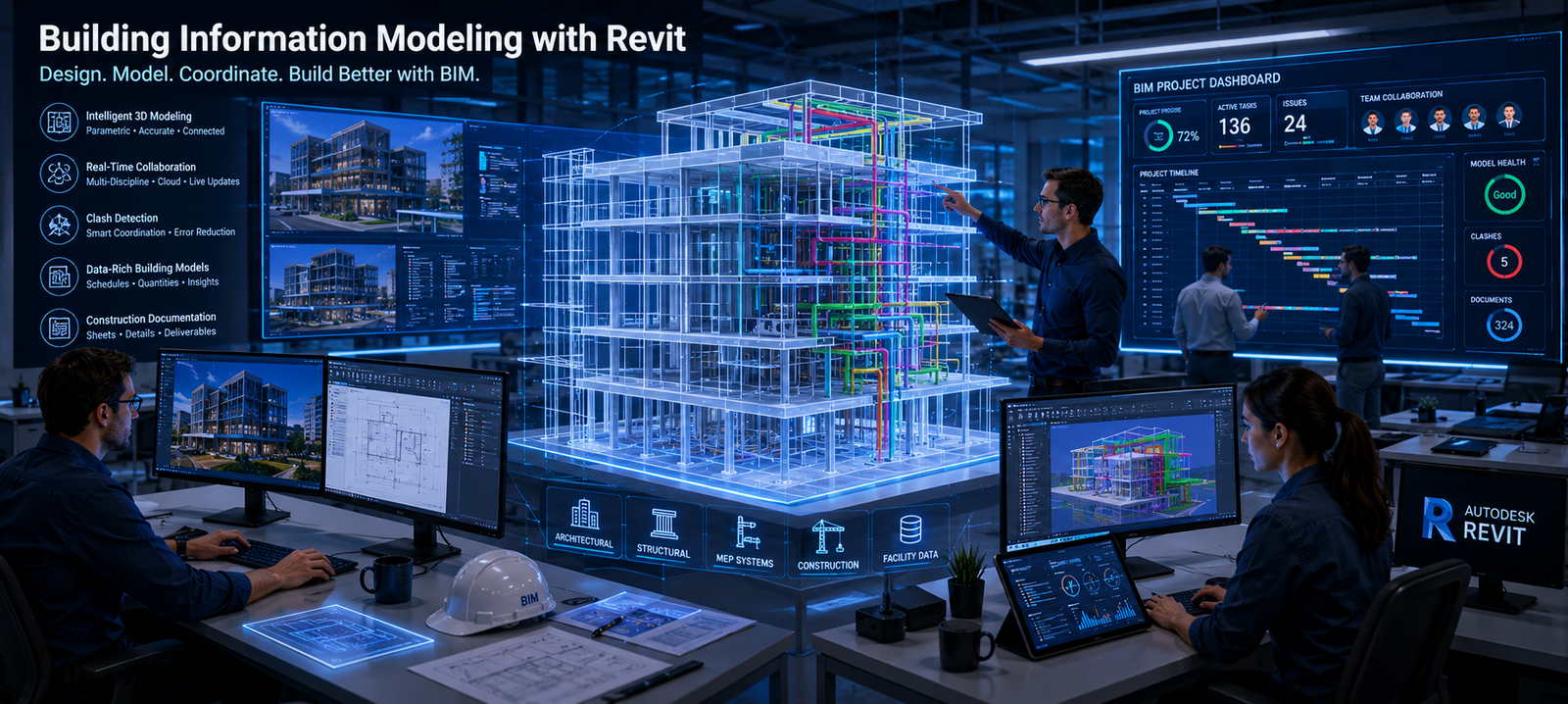
Modern construction projects involve multiple teams working together simultaneously.
Architects, structural engineers, MEP engineers, contractors, and project managers all need accurate coordination to avoid costly construction problems.
Because of this, Revit plays a major role throughout the entire construction lifecycle.
Revit helps teams:
Modern BIM workflows allow teams to identify issues early before construction begins, significantly reducing delays and rework.
This engineering workflow strongly connects with how CAD is used in real companies and construction industry workflows, where collaboration and data-driven planning are essential.
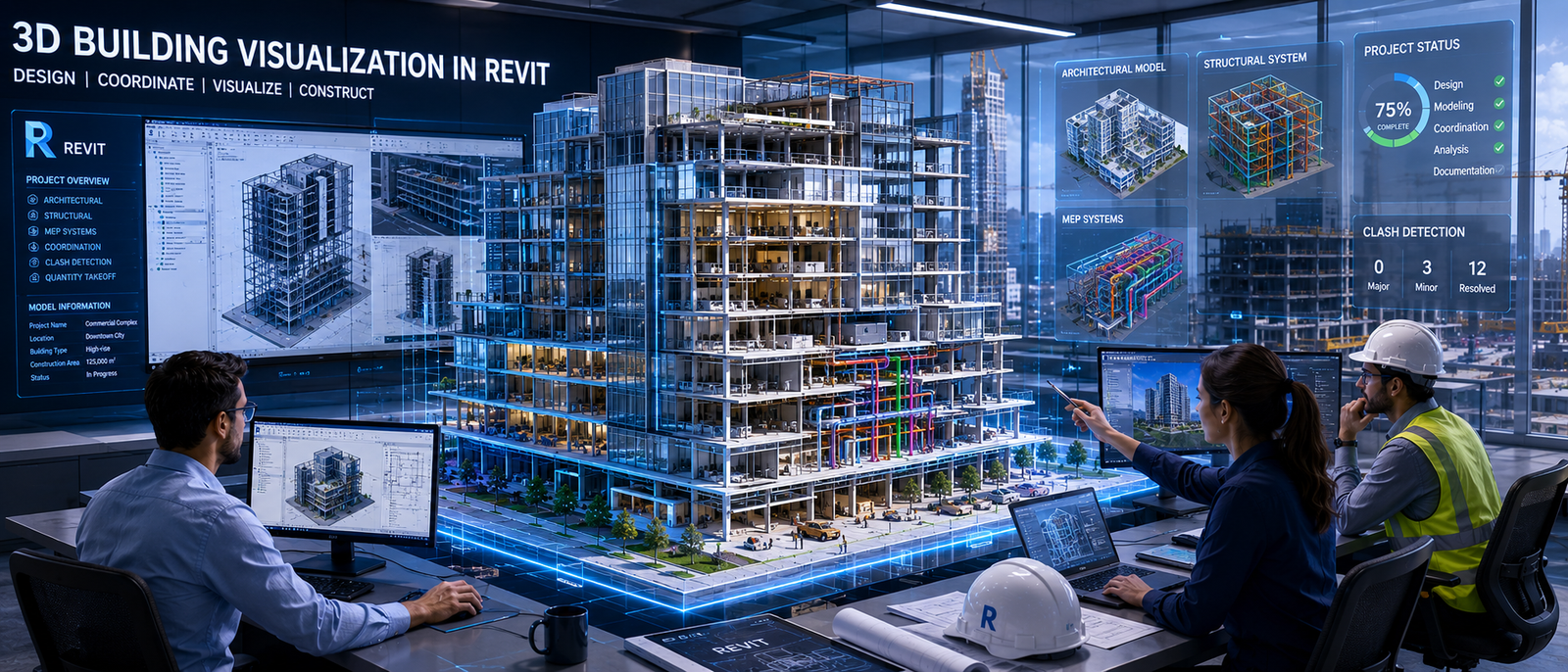
One of the biggest advantages of Revit is advanced 3D building visualization.
Instead of imagining projects from 2D drawings alone, engineers and clients can view realistic digital building models before construction starts.
This allows teams to:
Because of this visualization capability, Revit has become one of the most important tools in modern BIM-based construction workflows.
Construction projects often face delays and cost overruns because different engineering teams work separately.
Revit solves this problem by allowing architects, structural engineers, and MEP teams to work on the same BIM model.
Because of this shared workflow, teams can coordinate more effectively and reduce communication gaps.
Modern construction companies increasingly depend on BIM coordination systems to improve:
This coordinated BIM workflow significantly improves construction efficiency and reduces costly on-site modifications.
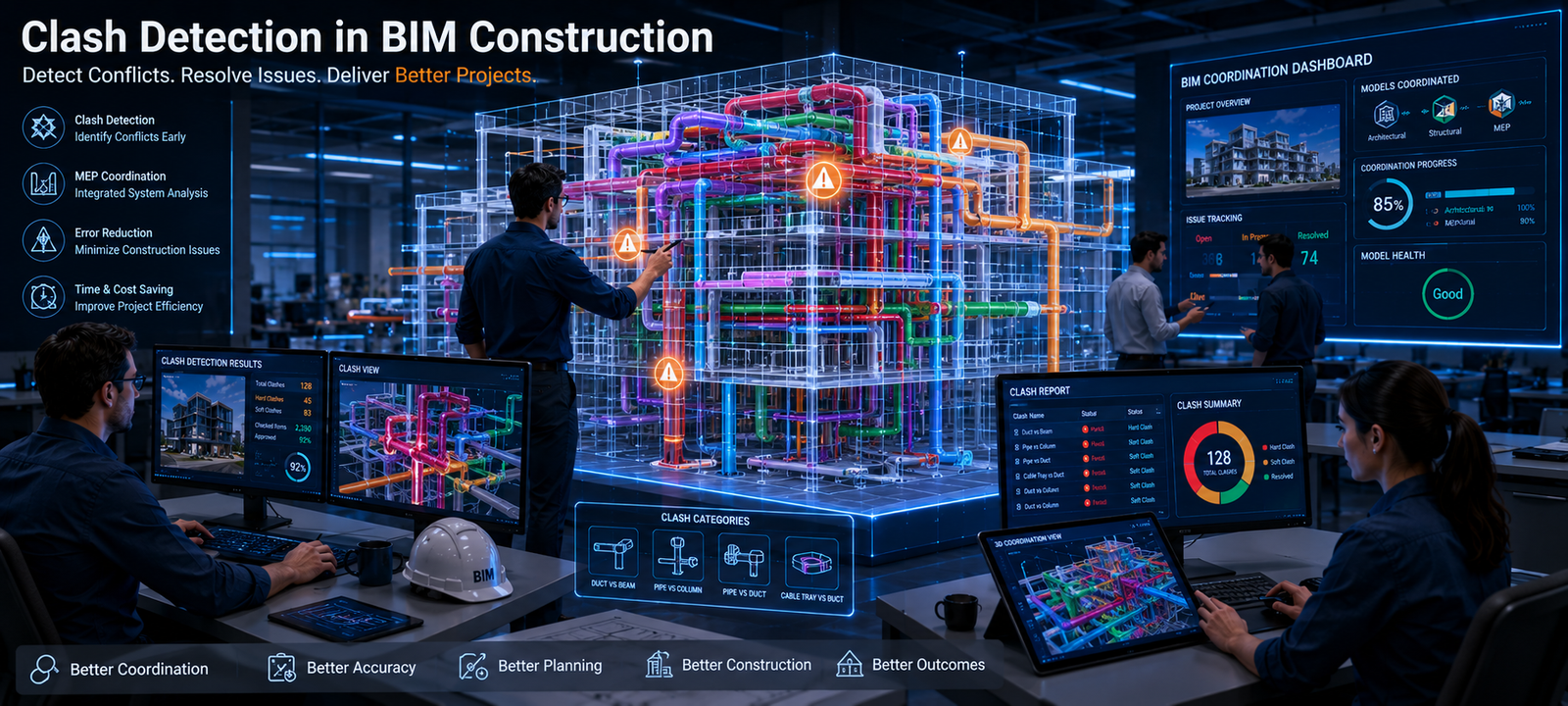
One of the most powerful features of Revit BIM workflows is clash detection.
During construction projects, structural systems, plumbing, HVAC systems, and electrical layouts often conflict with each other.
Revit helps engineers identify these clashes digitally before construction begins.
As a result, teams can solve problems early instead of fixing them during construction.
This reduces:
Because of this, clash detection has become a major advantage of BIM-driven construction workflows.
Revit also improves quantity estimation and construction planning accuracy.
Since all building information is connected to the BIM model, Revit can automatically generate:
Because of this automation, engineers and contractors can plan projects more accurately and reduce estimation errors.
Modern construction companies increasingly rely on BIM-based quantity estimation systems to improve project budgeting and workflow management.
Consider a large commercial building project.
Architects first create the building model in Revit.
Then, structural engineers add structural systems while MEP engineers integrate electrical, plumbing, and HVAC layouts into the same BIM environment.
Before construction starts, engineers perform clash detection, quantity estimation, and coordination analysis using the digital model.
Because of this process, the project becomes far more organized, efficient, and cost-effective.

Revit in real construction projects has transformed the way modern buildings and infrastructure systems are designed, coordinated, and executed.
Through BIM-based workflows, Revit improves collaboration, visualization, quantity estimation, clash detection, and overall project efficiency.
Modern construction industries increasingly depend on engineers who understand BIM systems, digital coordination workflows, and Revit-based project management.
Because of this, learning Revit has become extremely important for civil engineers, architects, and construction professionals.
Understanding Revit becomes far more effective when students apply BIM workflows through real construction projects and practical engineering systems.
Students gain practical exposure to Revit, AutoCAD, Civil 3D, and BIM-based construction workflows while developing skills that match modern construction industry requirements.
1. What is Revit used for in construction?
Revit is used for BIM modeling, project coordination, construction planning, and building visualization.
2. What is BIM in Revit?
BIM is a digital workflow where all project information is integrated into one intelligent building model.
3. Why is Revit important in civil engineering?
It improves coordination, reduces construction errors, and enhances project efficiency.
4. Which professionals use Revit?
Architects, civil engineers, structural engineers, MEP engineers, and construction professionals use Revit.
5. Can beginners learn Revit easily?
Yes. With proper practical training and BIM-based projects, beginners can learn Revit effectively.
© 2025 4Dimensions Infotech. All rights reserved. | Best Design Engineering Training Institute in Pune
Start your journey with the best design engineering training institute in Pune.