
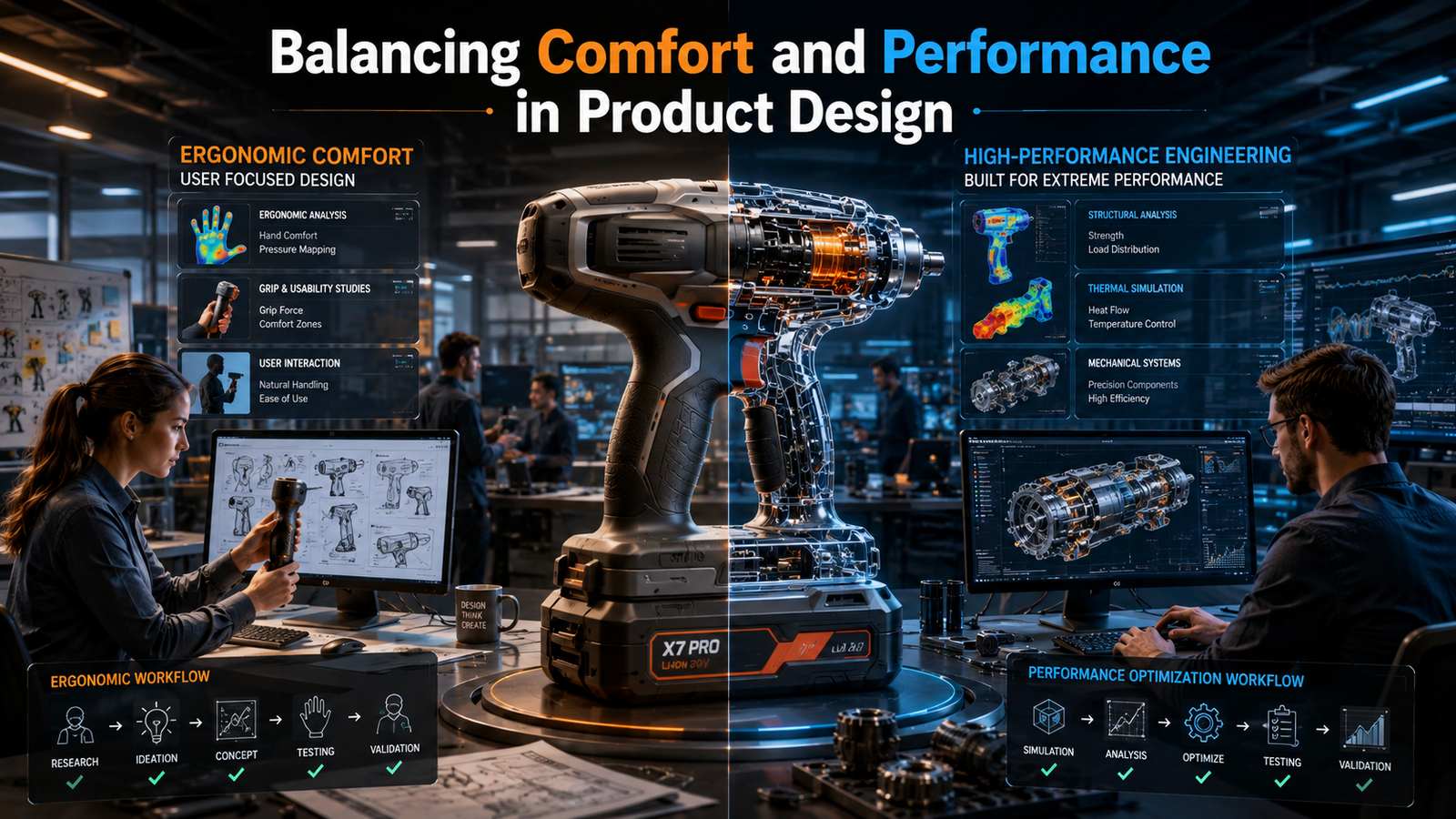
At 4Dimensions Infotech, in Pune students learning modern engineering workflows quickly realize that successful product design is not only about creating powerful machines or visually attractive products.
In real industrial engineering, products must achieve something far more challenging they must balance comfort and performance at the same time.
Modern industries expect products to operate efficiently while also remaining safe, user-friendly, and comfortable during long-term usage.
This creates one of the most important challenges in industrial product design.
On one side, engineers focus on improving speed, strength, durability, efficiency, and output performance. On the other side, they must ensure that products remain practical, ergonomic, and easy to use.
Because of this, balancing comfort and performance has become a major part of modern mechanical engineering and product development workflows.
Students learning through a CAD course, SolidWorks course, CATIA course, or engineering software course must understand how real engineering companies solve this challenge during product development.
This design philosophy is also strongly connected with human-centered product design in modern engineering, where user experience becomes an essential part of engineering decisions.
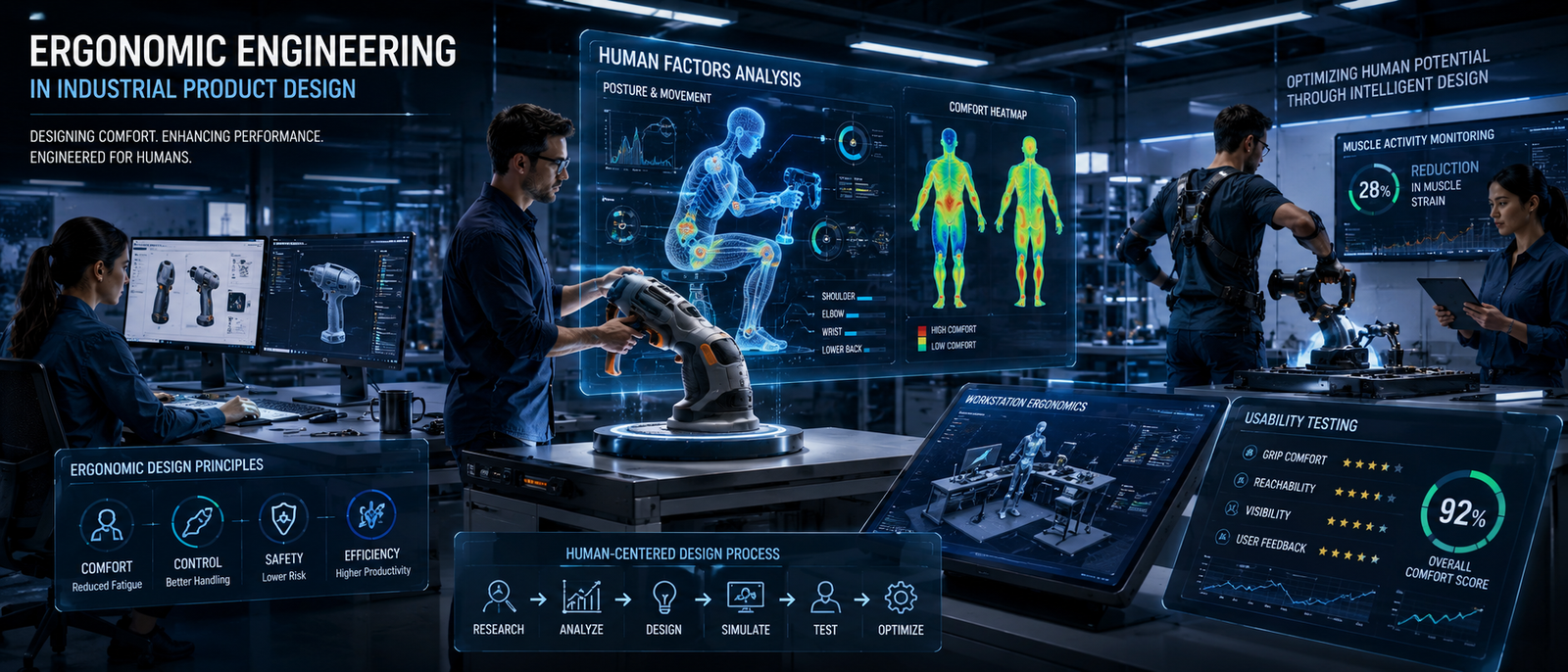
Comfort in industrial product design refers to how safely, naturally, and efficiently users can interact with a product.
Modern industrial products are often used for long durations inside manufacturing plants, workshops, construction environments, and industrial facilities.
Because of this, engineers must design products that reduce fatigue, improve usability, and support safe operation.
Comfort-focused engineering involves factors such as:
For example, industrial machine controls must remain easy to reach and intuitive to operate even during continuous use.
Similarly, heavy equipment must be designed in ways that reduce operator fatigue and improve long-term usability.
While comfort is important, industrial products must also deliver high engineering performance.
Performance refers to how efficiently and reliably a product performs its intended function under real operating conditions.
Engineers constantly work to improve:
Modern industries often demand machines and products capable of operating continuously under high stress and heavy workloads.
Because of this, performance optimization becomes a critical engineering objective.
Concepts explained in stress concentration in mechanical design play an important role during this stage because localized stress failures can significantly reduce product reliability.
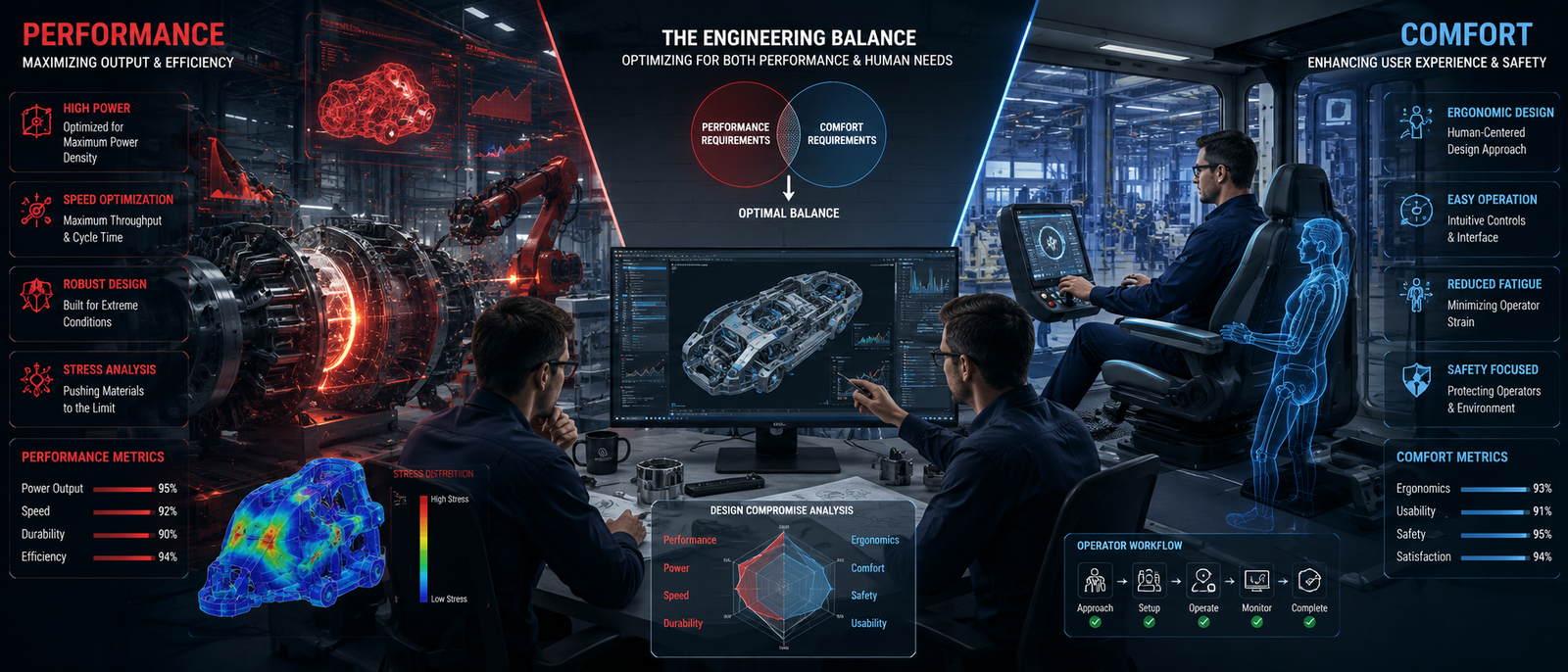
One of the biggest challenges in industrial product design is that improving one factor often affects the other.
For example, increasing machine speed may reduce user control and operational comfort.
Similarly, adding extra comfort features may increase product weight, manufacturing complexity, or operational cost.
Because of this, engineers cannot focus entirely on only one objective.
Instead, they must carefully balance engineering performance with human usability.
This balancing process requires simulation, testing, optimization, and real-world engineering analysis.
Modern engineers use multiple design strategies to achieve the right balance between comfort and performance.
Instead of relying on assumptions, they use engineering data, CAD simulations, ergonomic studies, and real-world testing workflows.
Some common engineering strategies include:
Modern CAD and simulation software allows engineers to test multiple design variations before manufacturing begins.
Techniques explained in lightweight design strategies in engineering also help engineers reduce product weight while maintaining structural reliability and performance.
By optimizing geometry and materials carefully, engineers can improve usability without compromising product efficiency.
Testing plays a major role in balancing comfort and engineering performance.
Engineers analyze both machine behavior and user interaction under real operating conditions.
Modern product development often combines:
This workflow strongly connects with virtual vs physical testing in engineering design, where engineers use both digital and physical testing methods to improve products.
Real-world testing helps engineers identify usability issues, performance weaknesses, and operational inefficiencies before final production begins.
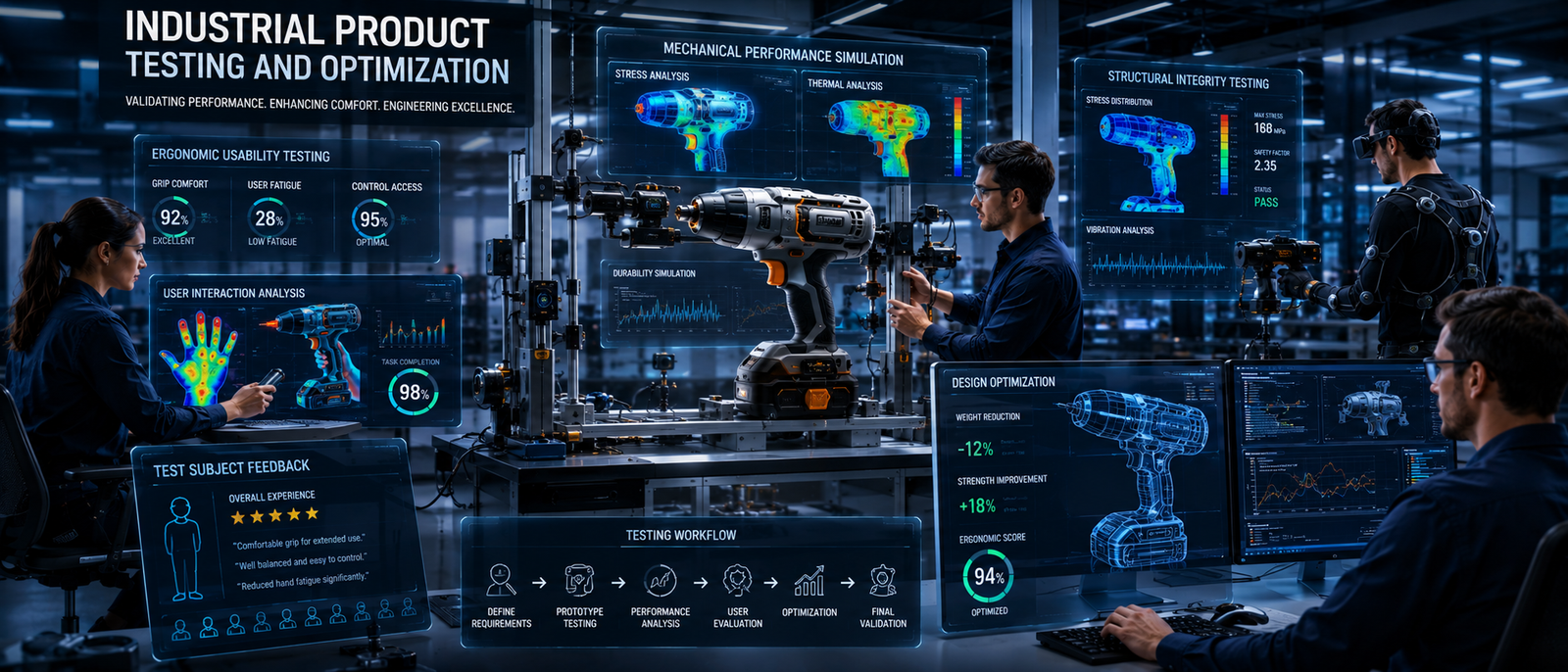
Consider an industrial drilling machine used inside manufacturing facilities.
If engineers focus only on increasing drilling power and rotational speed, the machine may become difficult to control and uncomfortable for operators during continuous use.
However, if engineers focus only on ergonomic comfort, the machine may lose efficiency and fail to deliver industrial-level performance.
Because of this, engineers carefully design:
Through this process, engineers create products capable of delivering both operational efficiency and comfortable usability.
Modern industries now understand that product success depends on both engineering performance and user experience.
Products that deliver high performance but create user discomfort often reduce productivity and operator efficiency.
Similarly, products that feel comfortable but fail technically cannot survive in competitive industrial environments.
Because of this, companies increasingly prefer engineers who understand both technical optimization and human-centered design thinking.
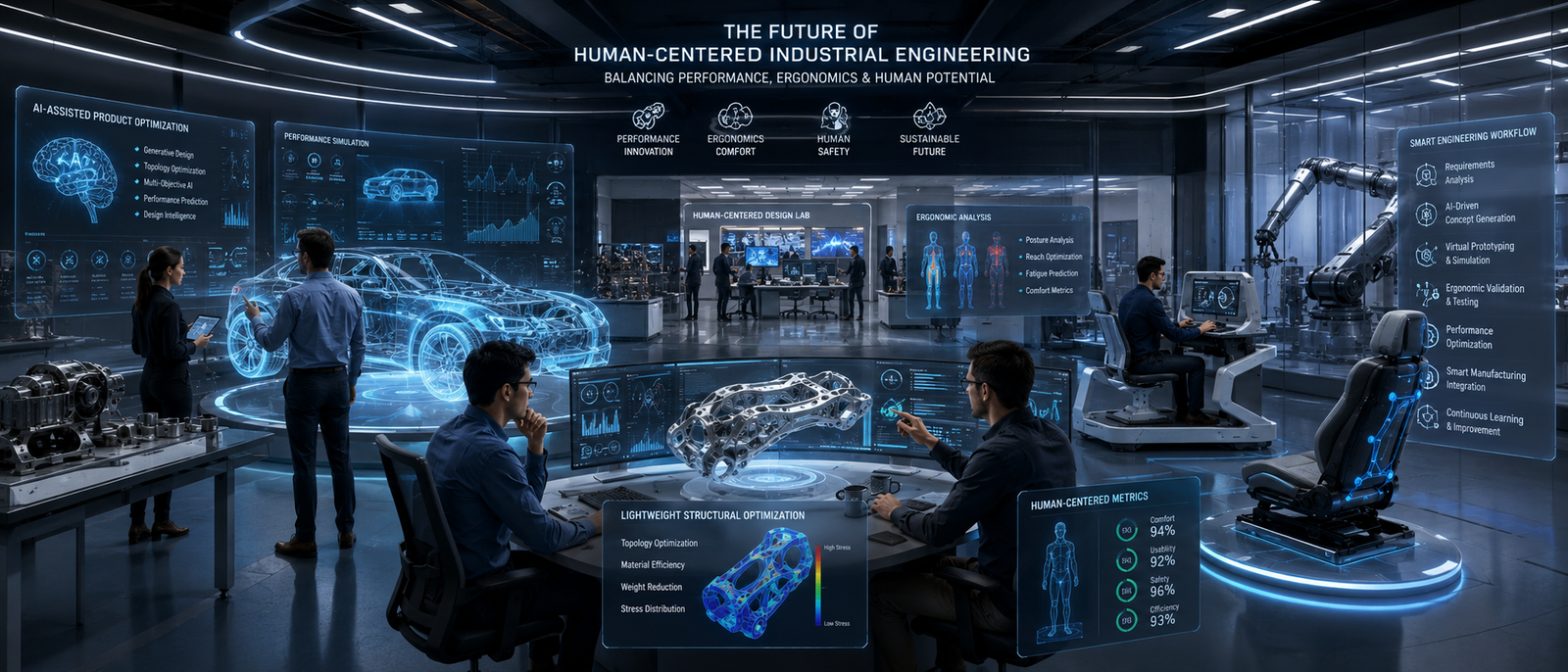
Comfort and performance in industrial product design are no longer separate design goals—they work together to create products that are efficient, reliable, safe, and enjoyable to use. Successful engineers understand that the best products deliver high performance without compromising ergonomics, usability, or user safety.
Modern product development combines CAD modeling, simulation, ergonomic analysis, material selection, and real-world testing to achieve the right balance between engineering performance and human comfort. Engineers who master these concepts are well prepared for careers in mechanical design, product development, automotive engineering, and manufacturing.
Learning industrial product design becomes much more effective when engineering concepts are applied through real projects using professional CAD software and simulation tools.
At 4Dimensions Infotech Pune, students gain practical experience in mechanical design, ergonomic product development, simulation workflows, and engineering optimization through industry-oriented training and project-based learning.
Whether you’re searching for a Mechanical Design Course Pune, a SolidWorks Course in Pune, a CATIA Course Pune, or a CAD Course in Pune, practical training helps you develop the technical skills needed to design products that perform efficiently while delivering an excellent user experience.
Students work with industry-standard software including SolidWorks, CATIA, AutoCAD, and Creo while learning the engineering workflows followed by modern product design and manufacturing companies.
1. Why is comfort important in product design?
Comfort improves usability, reduces user fatigue, enhances safety, and creates a better overall experience without compromising product functionality.
2. What does performance mean in engineering design?
Performance refers to how efficiently a product performs its intended function while maintaining strength, durability, reliability, and operational efficiency.
3. How do engineers balance comfort and performance?
Engineers use CAD software, ergonomic analysis, simulations, material optimization, prototyping, and user testing to create products that are both comfortable and high-performing.
4. Which CAD software is commonly used in product design?
SolidWorks, CATIA, AutoCAD, and Creo are widely used for industrial product design, mechanical engineering, and manufacturing applications.
5. Where can I learn product design and mechanical CAD skills in Pune?
Students looking for a Mechanical Design Course Pune, SolidWorks Course in Pune, CATIA Course Pune, or a CAD Course in Pune should choose project-based training that combines engineering concepts with practical CAD design experience.
© 2025 4Dimensions Infotech. All rights reserved. | Best Design Engineering Training Institute in Pune
Start your journey with the best design engineering training institute in Pune.