
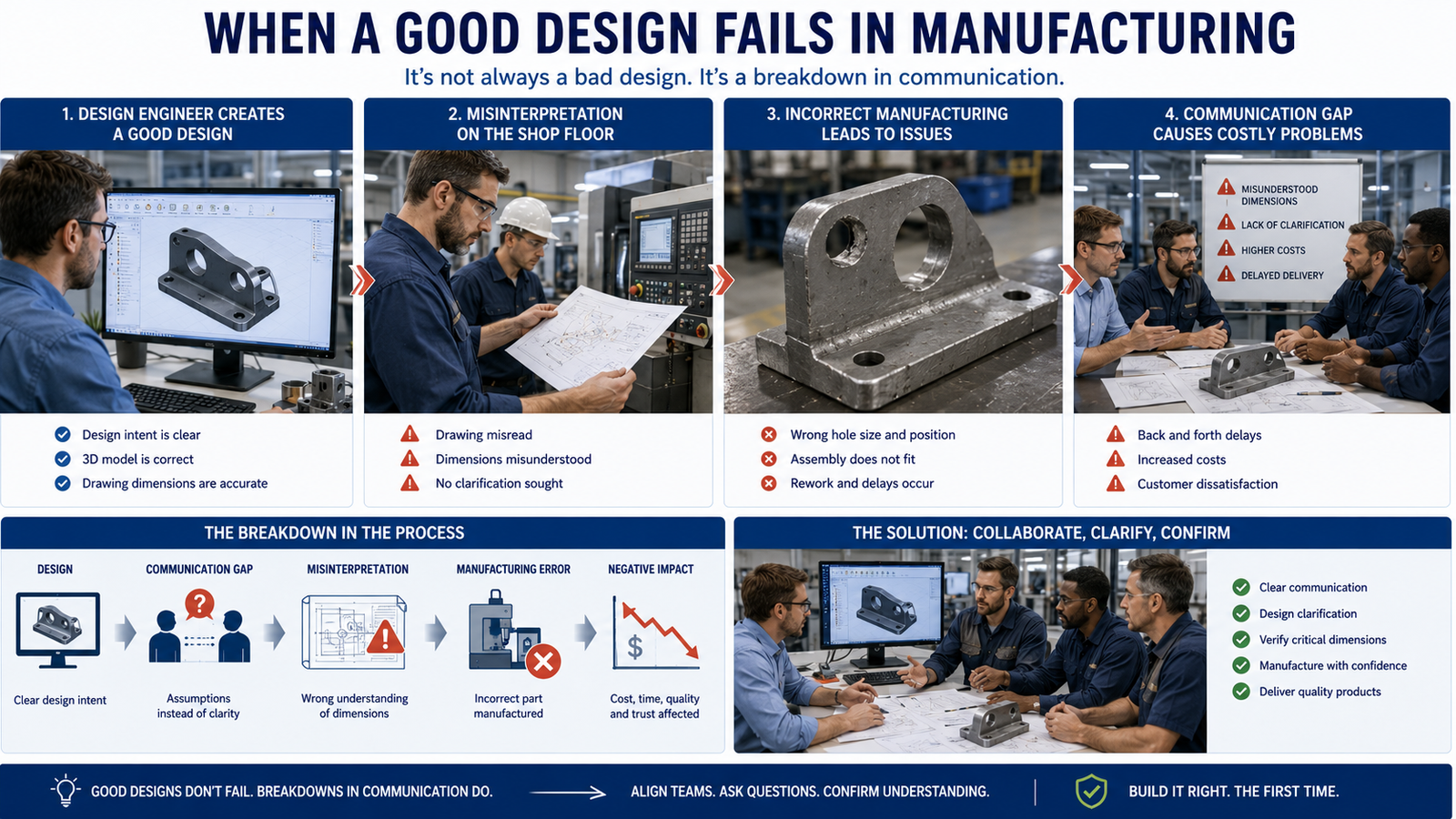
The design was perfect. The CAD model was complete. The dimensions were correct. Yet the final product still failed during manufacturing.
This situation is more common than many engineers realize.
In many engineering projects, problems do not occur because of poor design skills. They occur because information does not move correctly between design and production teams.
A missing note, an unclear drawing, an incorrect interpretation of a tolerance, or a misunderstood material specification can create delays, rework, and costly manufacturing mistakes.
This is why Communication Between Design and Production Teams is one of the most important skills in modern engineering.
Whether engineers use AutoCAD, SolidWorks, CATIA, Creo, Revit, or Civil 3D, their designs must be communicated clearly so production teams can turn ideas into real products without confusion.
Successful engineering projects are not built on good designs alone. They are built on good communication.
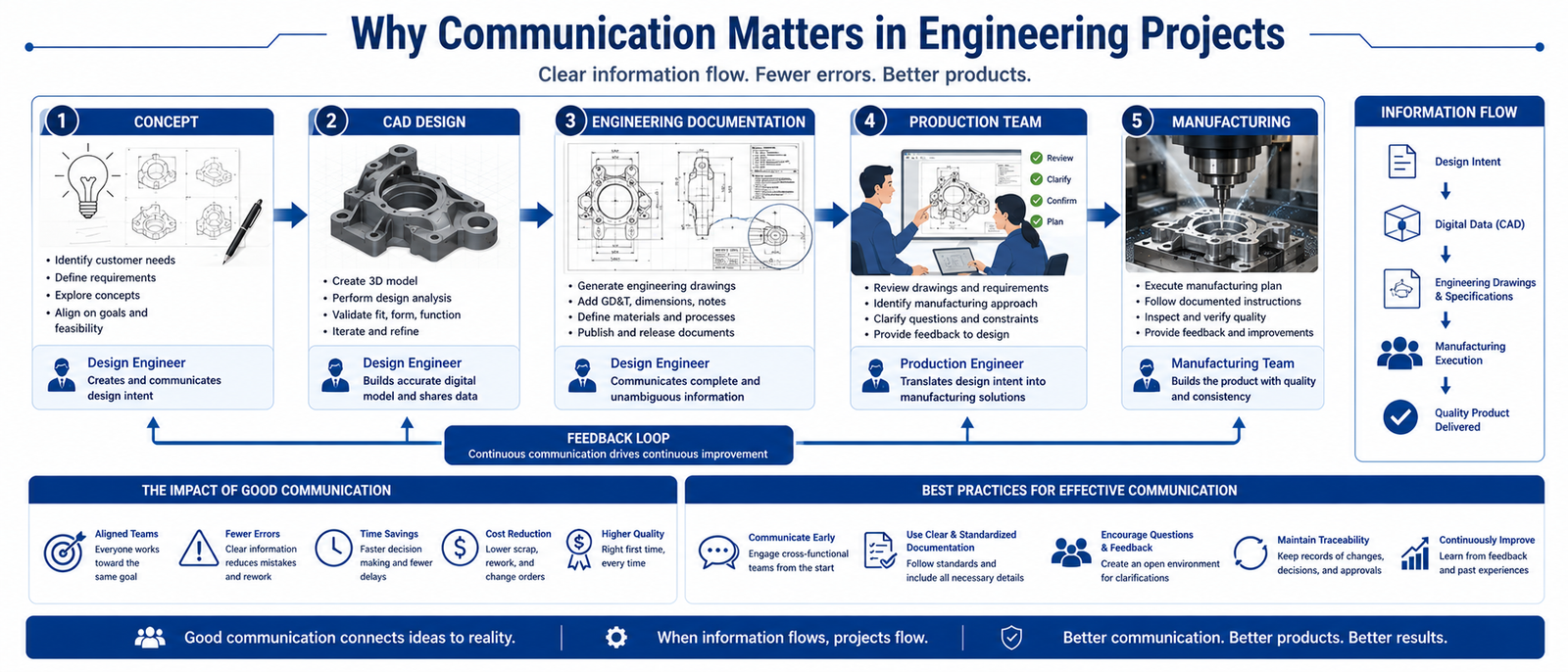
Design teams and production teams often have different priorities.
Design engineers focus on functionality, performance, calculations, and product requirements. Production teams focus on manufacturing efficiency, process capability, assembly, tooling, and execution.
If these teams are not aligned, problems quickly appear.
Even a technically correct design can create manufacturing challenges if important details are not communicated properly.
This is why successful engineering companies treat communication as an essential part of the product development process rather than an optional activity.
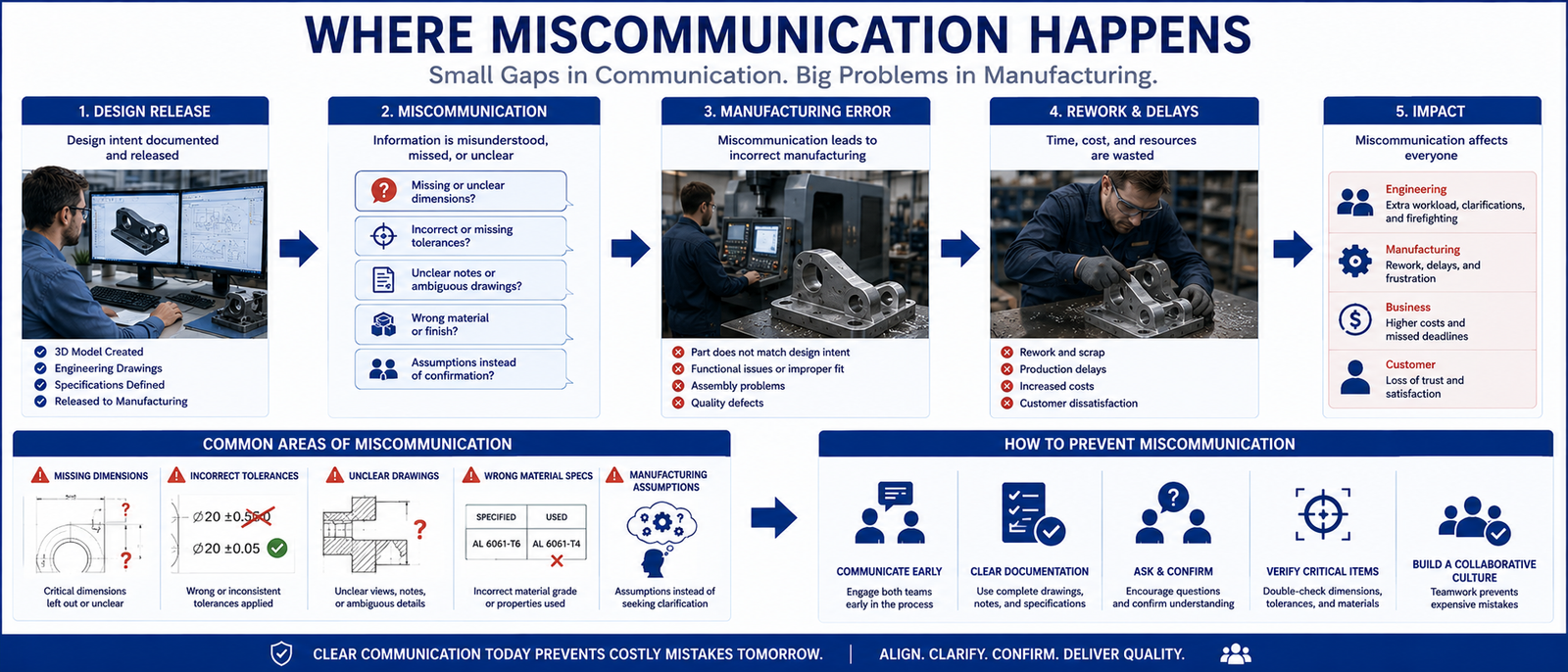
Most communication failures occur during the transition from design to manufacturing.
Production teams do not interpret design intent. They interpret the information provided to them.
If drawings are incomplete, tolerances are unclear, materials are not specified correctly, or manufacturing constraints are ignored, mistakes become more likely.
Common communication issues include:
These issues often result in production delays, increased costs, and unnecessary redesign work.
This is why design engineers must focus not only on creating designs but also on communicating them effectively.
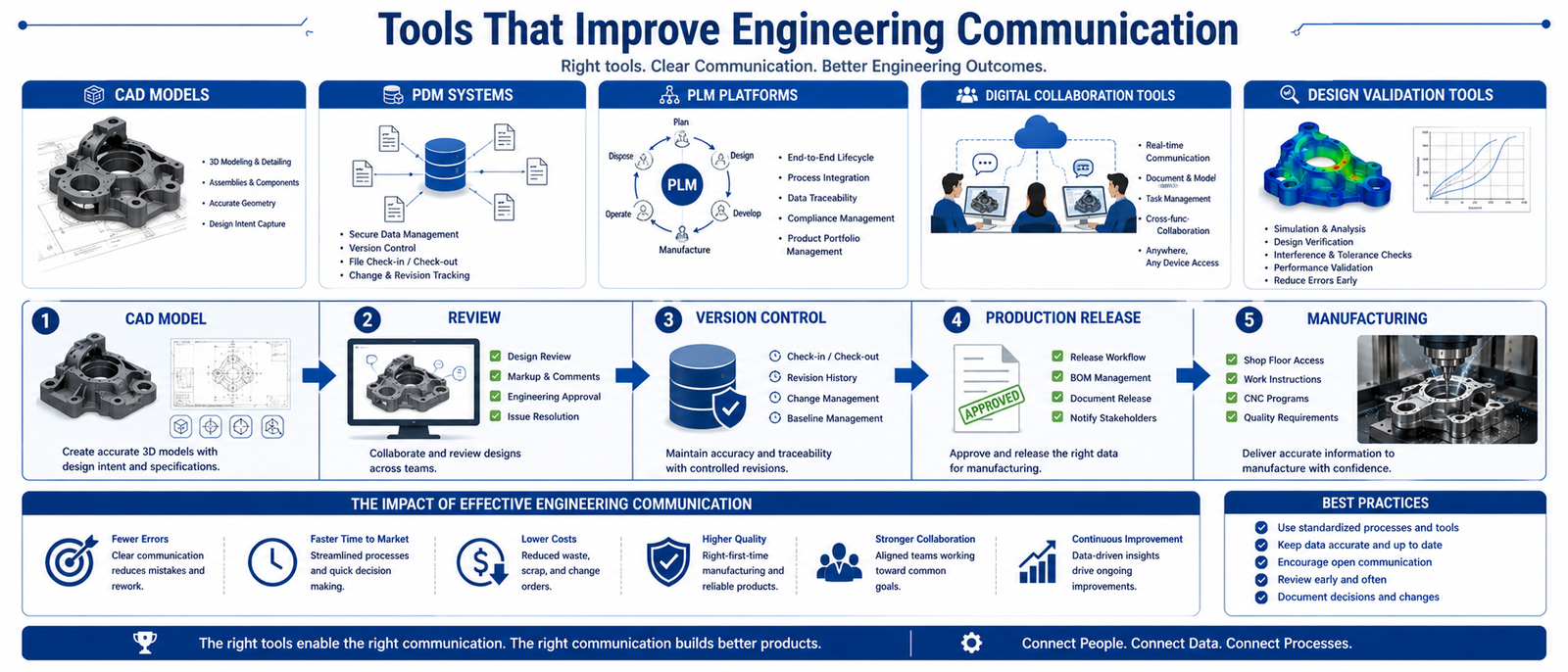
Today’s engineering companies use digital tools to improve collaboration and reduce misunderstandings.
CAD software provides 3D visualization that helps production teams better understand design intent.
PDM and PLM systems ensure everyone works from the latest version of a design and prevent outdated drawings from reaching production.
Simulation and validation tools help engineers verify designs before release.
These practices are part of How CAD Is Used in Real Companies: Industry Workflow Explained.
Modern engineering is becoming increasingly collaborative, making communication skills just as important as technical skills.
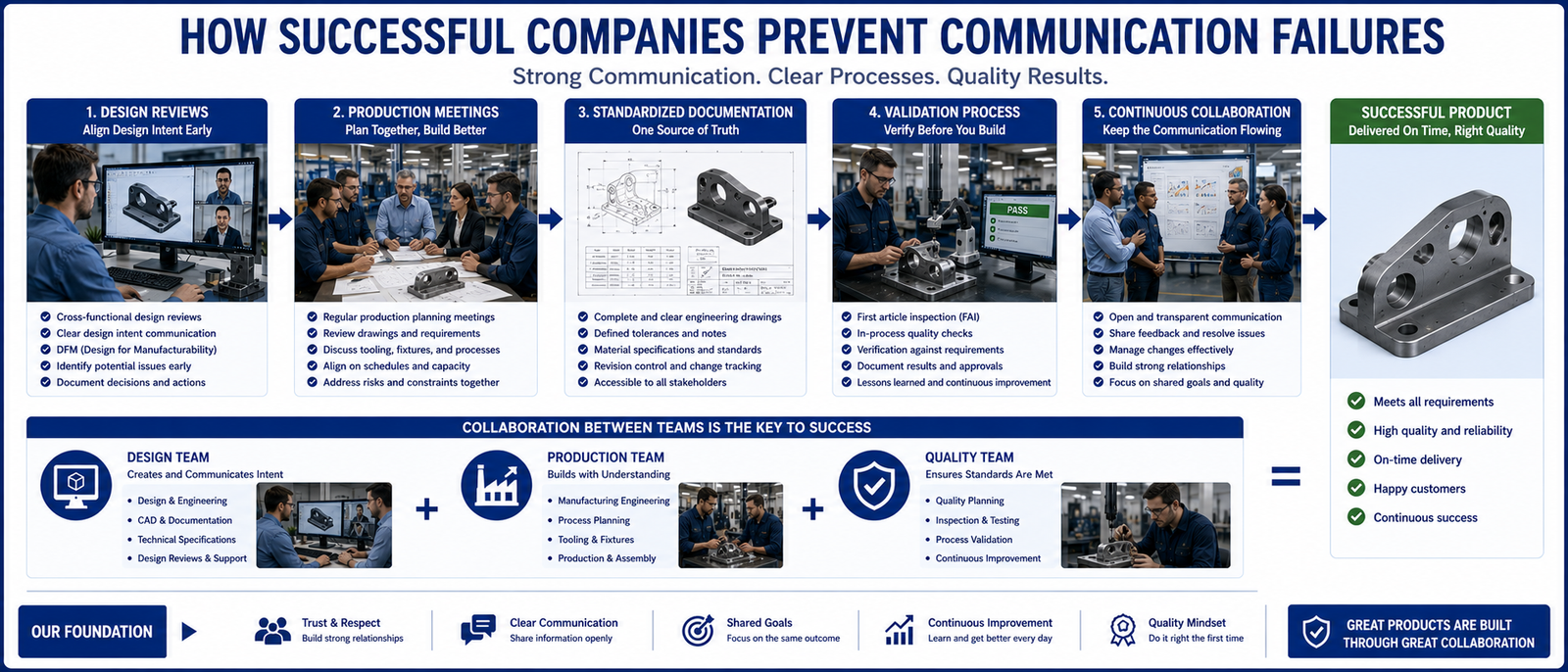
Successful engineering companies understand that communication cannot be left to chance.
They establish structured processes that include design reviews, manufacturing reviews, validation meetings, and approval workflows.
Standardized documentation helps ensure that everyone interprets information consistently.
This aligns with Standardization in Engineering Design.
Companies that invest in communication processes experience fewer manufacturing errors, reduced rework, and faster project completion.
Strong communication ultimately improves product quality and customer satisfaction.
Communication between design and production teams is not just a soft skill. It is a critical engineering skill that directly affects quality, cost, and project success.
Even the best CAD model can fail if manufacturing teams do not clearly understand design intent.
Successful engineers focus not only on technical accuracy but also on ensuring that information is communicated effectively throughout the product development process.
At 4Dimensions Infotech Pune, students learn more than software commands. They learn how real engineering teams collaborate, validate designs, and coordinate manufacturing activities.
Our training combines AutoCAD, SolidWorks, CATIA, engineering documentation, and real-world design workflows used in industry.
Whether you are searching for CAD Courses in Pune, a SolidWorks Course, a CATIA Course, or a complete Mechanical Design Course, understanding communication workflows will help you become industry-ready.
👉 Learn how real engineering teams collaborate to turn ideas into manufacturable products.
1. Why is communication important between design and production teams?
It ensures designs are correctly understood and manufactured without errors or delays.
2. What causes communication failures in engineering projects?
Unclear drawings, missing tolerances, incorrect specifications, and poor documentation are common causes.
3. How do design engineers communicate with production teams?
Through CAD models, engineering drawings, specifications, documentation, and review meetings.
4. What tools improve engineering communication?
CAD software, PDM systems, PLM platforms, simulation tools, and collaboration software.
5. Can poor communication increase project costs?
Yes. Misunderstandings often lead to rework, delays, material waste, and higher production costs.
6. Is communication considered an engineering skill?
Absolutely. Effective communication directly impacts manufacturability, quality, and project success.
© 2025 4Dimensions Infotech. All rights reserved. | Best Design Engineering Training Institute in Pune
Start your journey with the best design engineering training institute in Pune.