
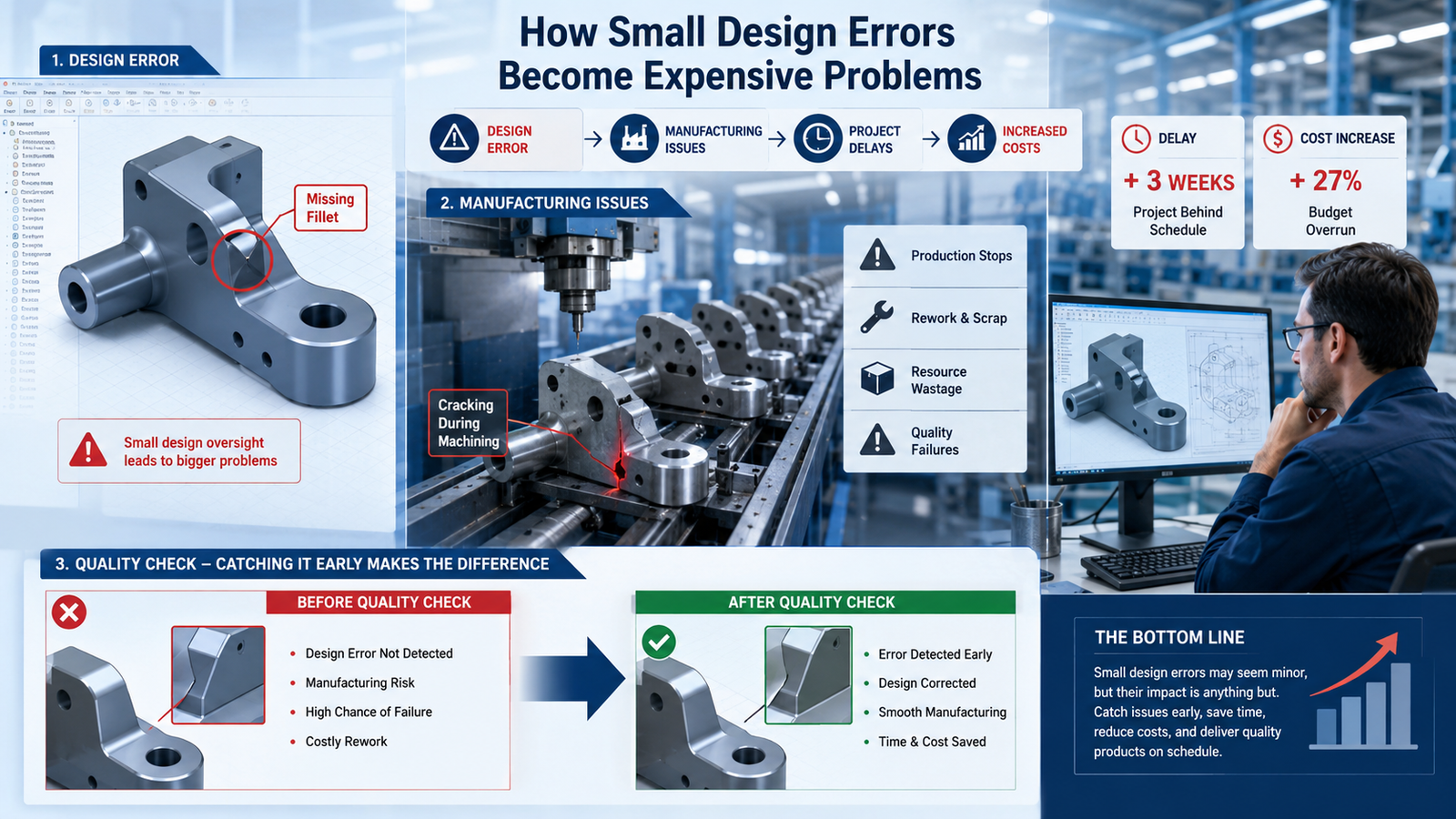
Most engineering failures do not begin with major mistakes. In many cases, they start with small design errors that go unnoticed during development.
A missing dimension, an incorrect tolerance, a poor material choice, or an assembly clearance issue may seem minor on a CAD model. However, once the product reaches manufacturing, these small mistakes can lead to delays, rework, increased costs, and even product failure.
This is why quality checks are an essential part of modern engineering design.
Whether engineers are creating mechanical components in SolidWorks, developing products using CATIA, preparing manufacturing drawings in AutoCAD, or designing structures in Revit, every design must be validated before production begins.
Understanding the Importance of Quality Checks in Engineering Design helps engineers create reliable products while avoiding costly mistakes later in the development process.
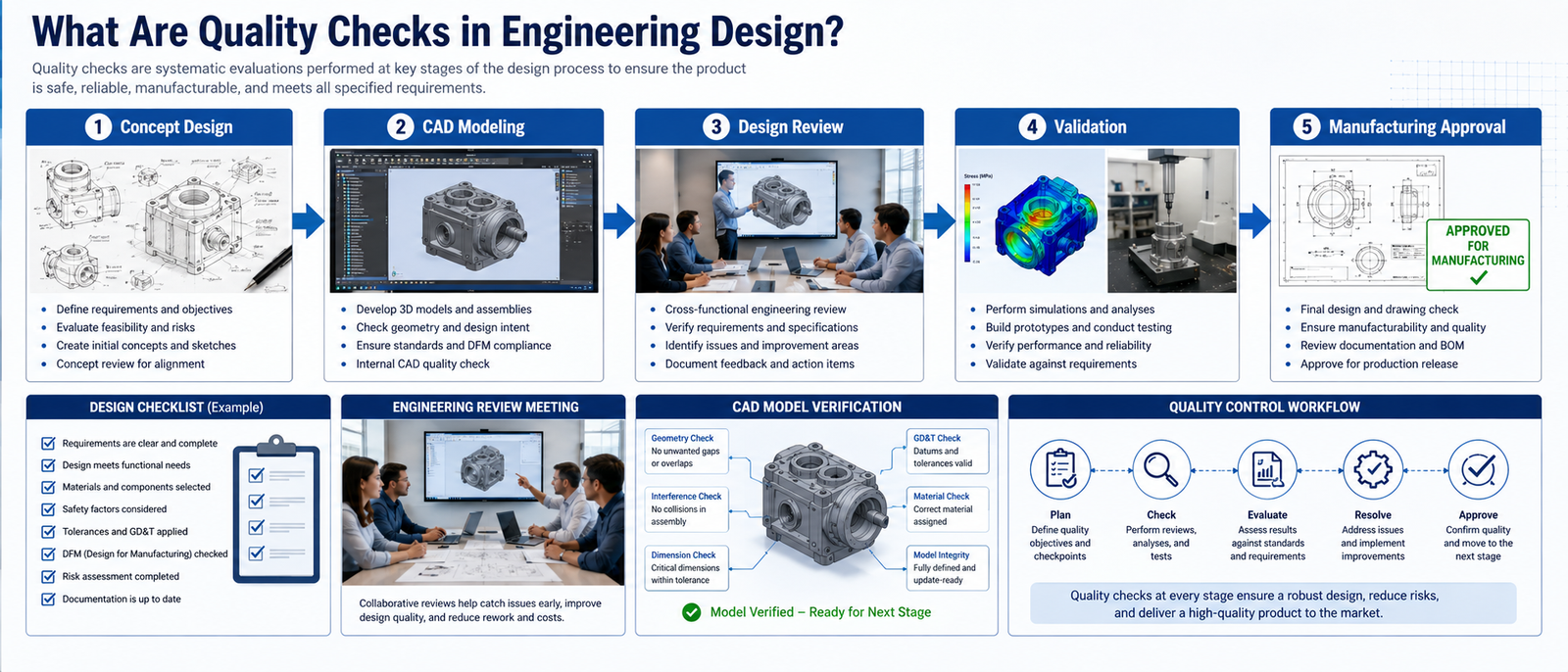
Quality checks are structured verification processes used throughout product development to ensure designs meet technical, manufacturing, safety, and performance requirements.
These checks help engineers identify mistakes before products reach production.
Instead of discovering issues during manufacturing or testing, engineers can correct them during the design stage when changes are faster and less expensive.
Quality checks are performed throughout the engineering workflow, from concept development and CAD modeling to simulation, documentation, and final design approval.
In modern industries, engineers trained through a Mechanical Design Course or CAD Training Institute in Pune are expected to understand both software tools and quality control processes.
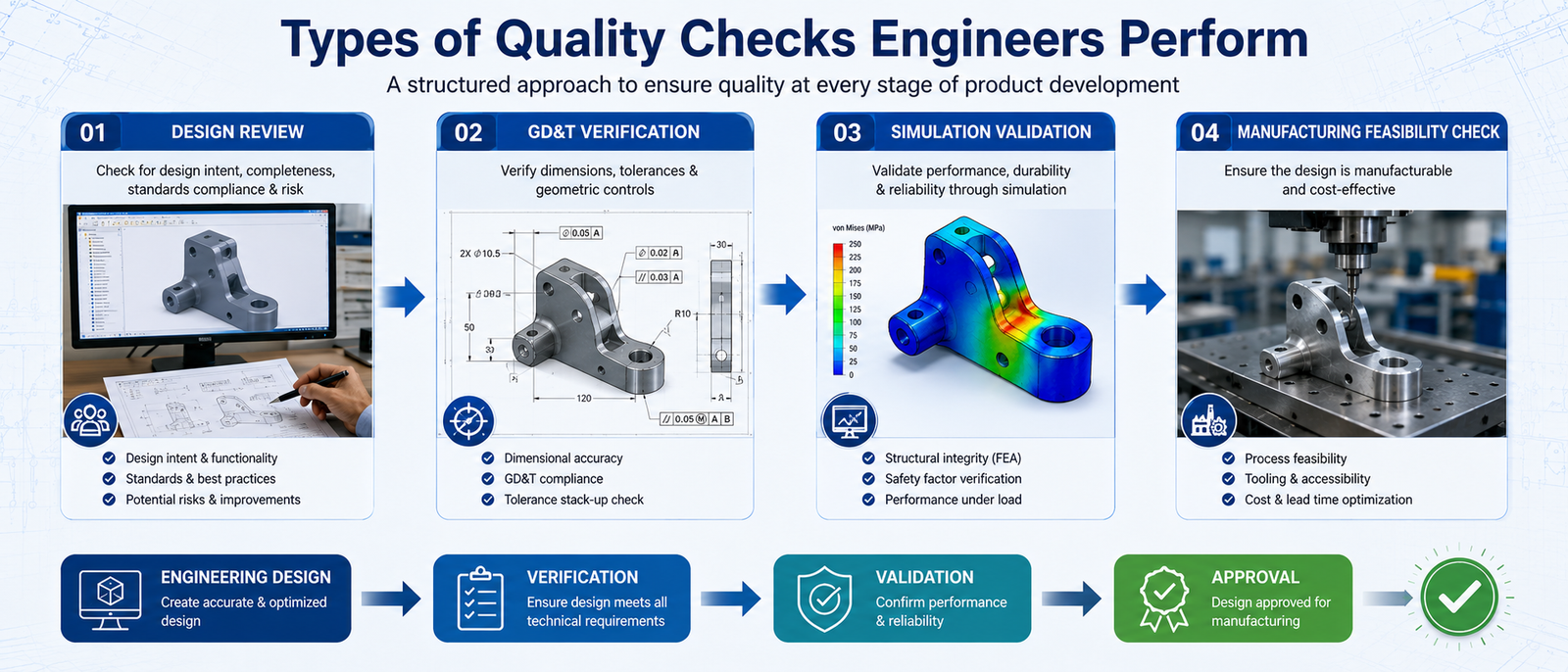
Design reviews allow engineering teams to evaluate concepts, identify risks, and verify whether design objectives have been achieved.
Engineers verify dimensions, tolerances, and fits to ensure proper assembly and manufacturing accuracy.
This process is closely related to GD&T in Engineering Design.
Modern CAE tools help engineers test products digitally before manufacturing.
This process is part of CAE in Engineering Workflows.
Engineers ensure the design can be manufactured efficiently, economically, and consistently.
This aligns with Design for Manufacturing (DFM).
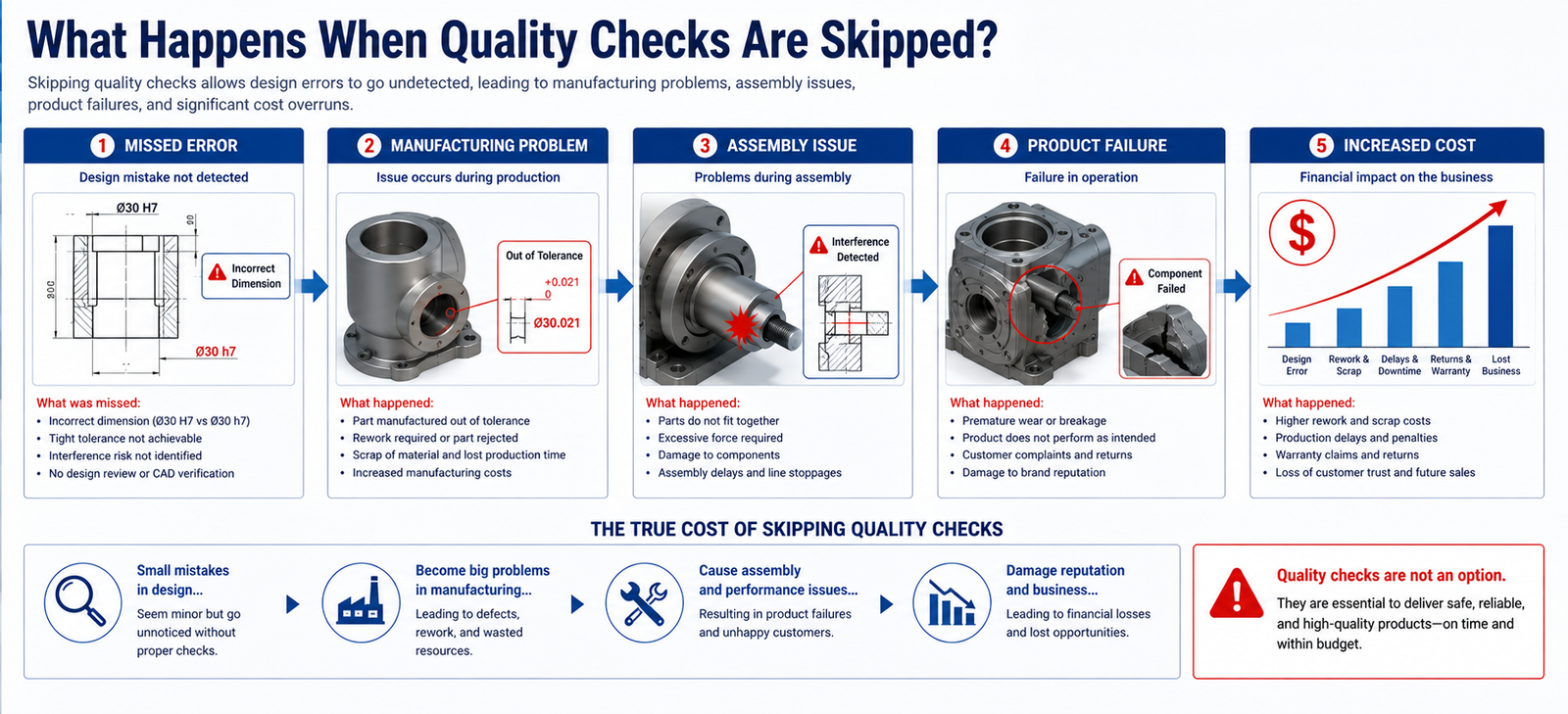
When quality checks are ignored, problems often remain hidden until manufacturing or product testing begins.
Incorrect dimensions can create assembly issues. Poor tolerance selection may cause fitment problems. Material selection mistakes can reduce durability and product life.
These issues often result in expensive redesigns, production delays, customer complaints, and reduced profitability.
In real companies, preventing mistakes is always less expensive than correcting them later.
This is one reason why quality assurance has become a critical skill for modern design engineers.
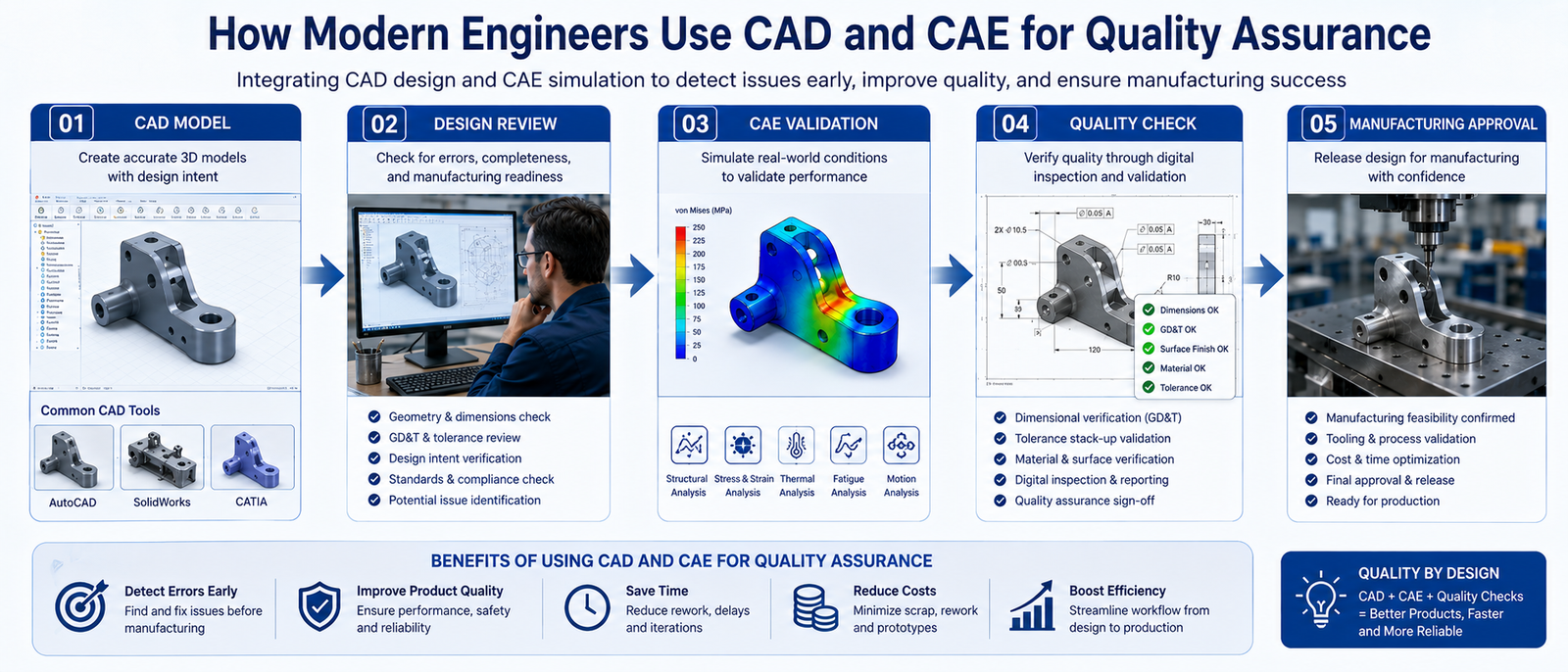
Today’s engineers use software such as AutoCAD, SolidWorks, CATIA, Creo, and ANSYS to improve design accuracy and automate many validation processes.
These tools help engineers detect interference, verify dimensions, perform simulations, and identify design risks before manufacturing begins.
However, software alone is not enough. Engineers must still understand design principles, manufacturing requirements, and quality standards to make effective decisions.
This combination of software skills and engineering knowledge is what makes engineers valuable in real-world projects.
Quality checks are not simply a final step before manufacturing. They are an essential part of the entire engineering design process.
By identifying errors early, engineers can improve reliability, reduce costs, avoid delays, and deliver higher-quality products.
As products become more complex, the ability to perform effective design validation and quality control becomes increasingly important.
At 4Dimensions Infotech Pune, students learn more than just CAD software. They learn real engineering workflows, design validation techniques, quality assurance processes, and industry-standard practices.
Whether you are searching for CAD Courses in Pune, a SolidWorks Course, a CATIA Course, or a complete Mechanical Design Course, practical projects help you build the skills companies expect.
👉 Develop precision and accuracy in your designs by learning industry-standard quality practices.
1. What are quality checks in engineering?
They are verification processes used to ensure designs meet technical and manufacturing requirements.
2. Why are quality checks important?
They reduce errors, improve reliability, and lower development costs.
3. What tools are used for quality checks?
CAD software, CAE tools, GD&T verification methods, and design review processes.
4. When should quality checks be performed?
Throughout the entire design process, from concept development to final approval.
5. Do quality checks improve product performance?
Yes. They help ensure products are reliable, manufacturable, and consistent in performance.
© 2025 4Dimensions Infotech. All rights reserved. | Best Design Engineering Training Institute in Pune
Start your journey with the best design engineering training institute in Pune.