
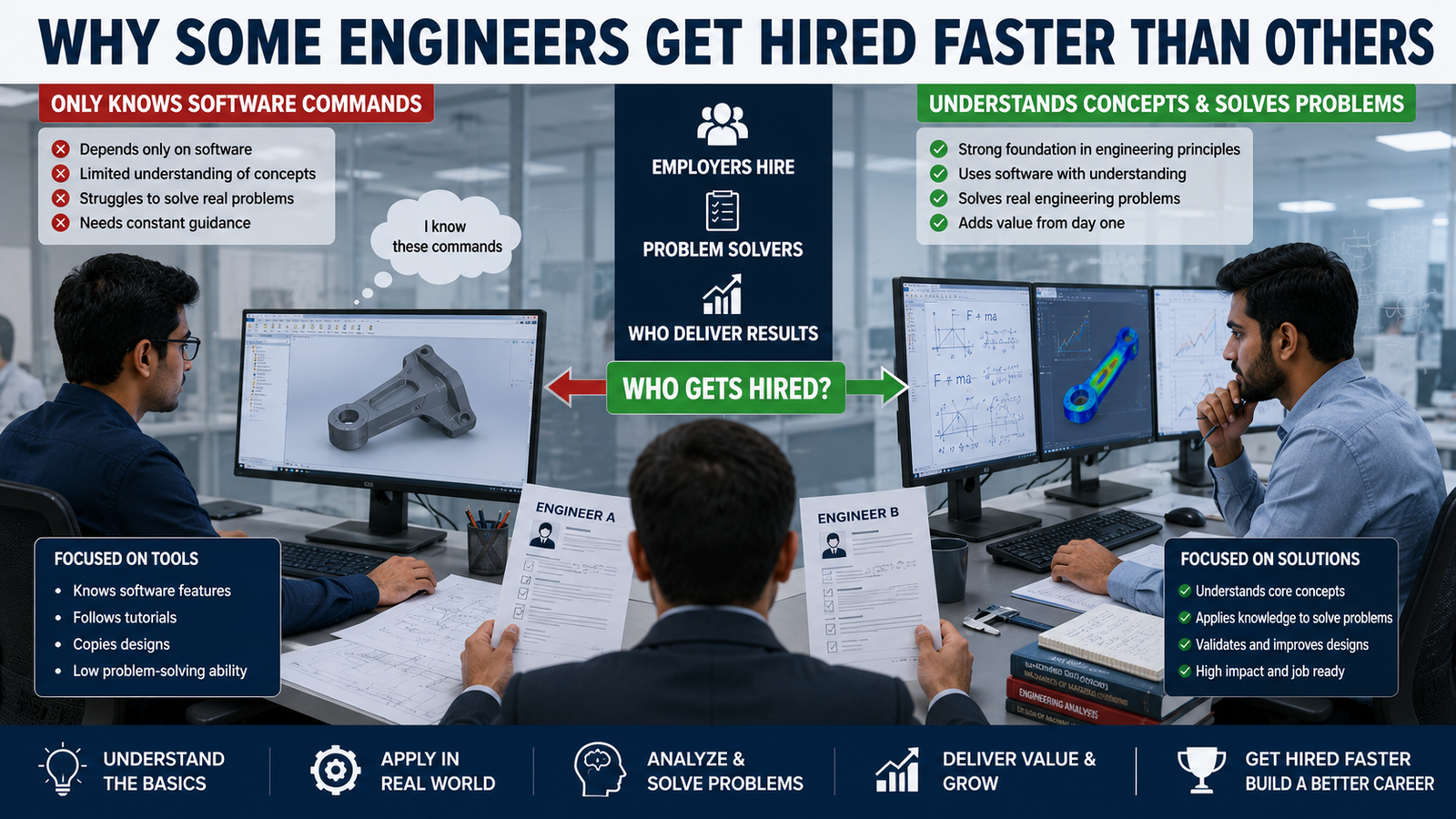
Every year, thousands of engineering students learn software such as AutoCAD, SolidWorks, CATIA, Revit, and Civil 3D hoping these skills will help them secure a job.
However, many of them are surprised when recruiters ask questions that have nothing to do with software commands.
Instead of asking where a button is located, interviewers often ask why a design failed, why a material was selected, or how a component behaves under load.
This is where many candidates struggle.
The reason is simple. Software helps engineers create designs, but engineering knowledge helps them make the right decisions.
Today, companies are looking for engineers who can combine both. They want professionals who understand engineering concepts and can apply them using modern software tools.
This is why understanding the balance between software skills and core engineering knowledge is essential for building a successful engineering career.
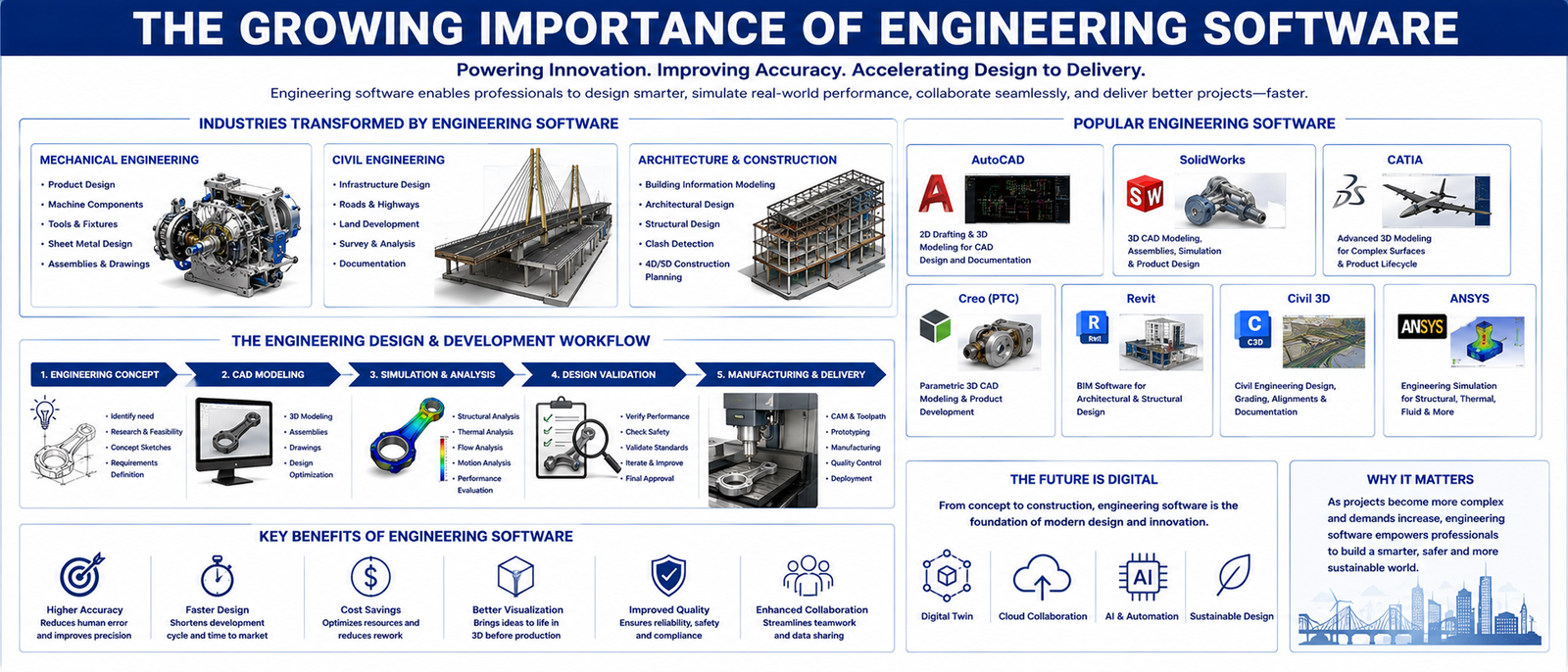
There is no doubt that software plays a major role in today’s engineering industry.
Companies use tools such as AutoCAD, SolidWorks, CATIA, Creo, Revit, Civil 3D, and ANSYS to design, analyze, and optimize products and projects.
Engineers who understand these tools can work faster, improve productivity, and collaborate more effectively with teams.
This is one reason why many students search for a Mechanical Design Course, CAD Software Course, or CAD Training Institute in Pune to improve their job opportunities.
Modern product development depends heavily on digital workflows. As explained in How CAD Is Used in Real Companies, software helps transform ideas into manufacturable products.
However, software is only a tool. The real value comes from the engineer using it.
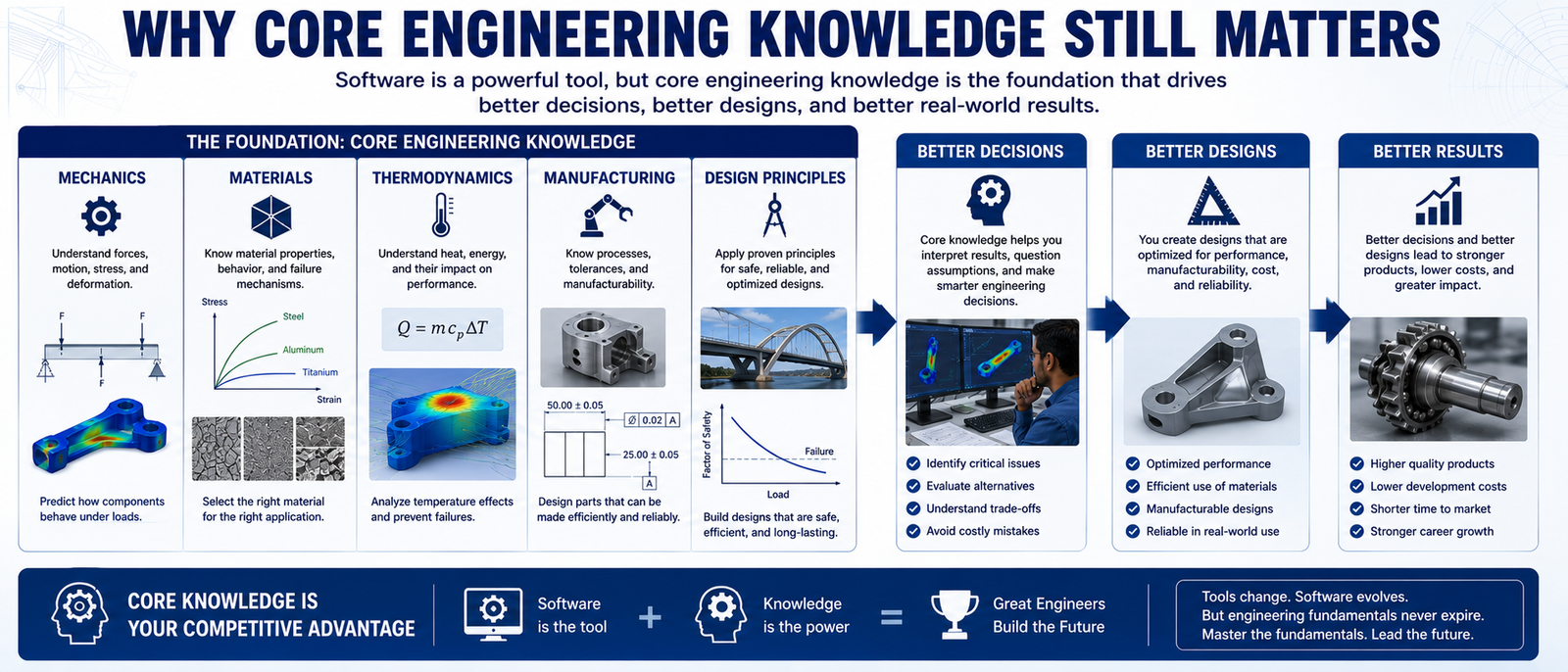
Software can generate designs, simulations, and reports, but it cannot replace engineering judgment.
Core engineering knowledge includes subjects such as mechanics, materials, manufacturing processes, thermodynamics, machine design, and engineering analysis.
These concepts help engineers understand why systems behave the way they do.
For example, software may indicate that a component is safe, but an engineer must still understand stress concentration, loading conditions, material properties, and manufacturing limitations before approving a design.
This is closely related to Stress Concentration in Mechanical Design, where engineering theory plays a critical role in decision-making.
Without strong fundamentals, engineers often become dependent on software outputs without fully understanding whether the results are correct.
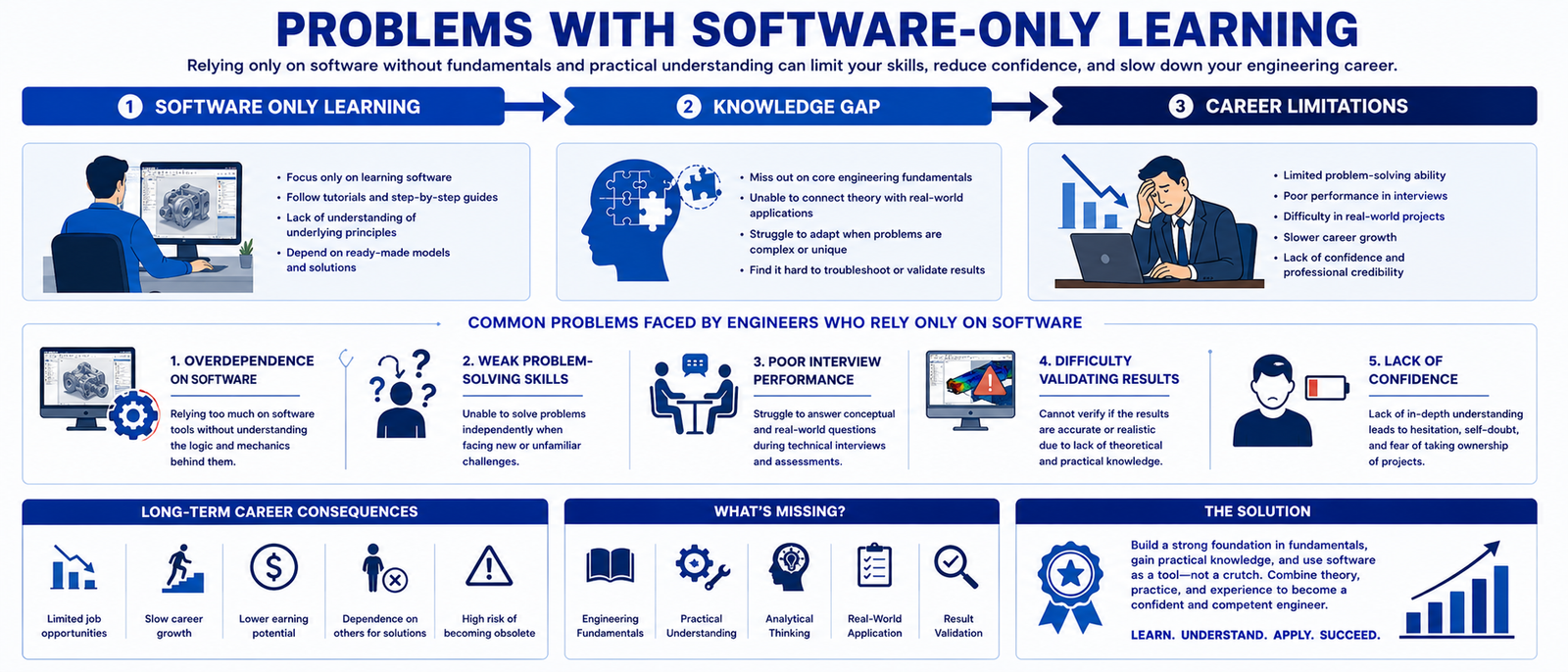
Many students focus entirely on learning software commands while neglecting engineering fundamentals.
Initially, this seems like a faster path to employment. However, the limitations quickly become visible during interviews and real projects.
Engineers who rely only on software often struggle to validate simulation results, troubleshoot design issues, and make confident engineering decisions.
Recruiters frequently test conceptual understanding because companies need problem solvers, not just software operators.
This is one reason why many candidates fail technical interviews despite completing multiple software courses.
The expectations of employers are explained in What Recruiters Actually Think When They See Your Resume.
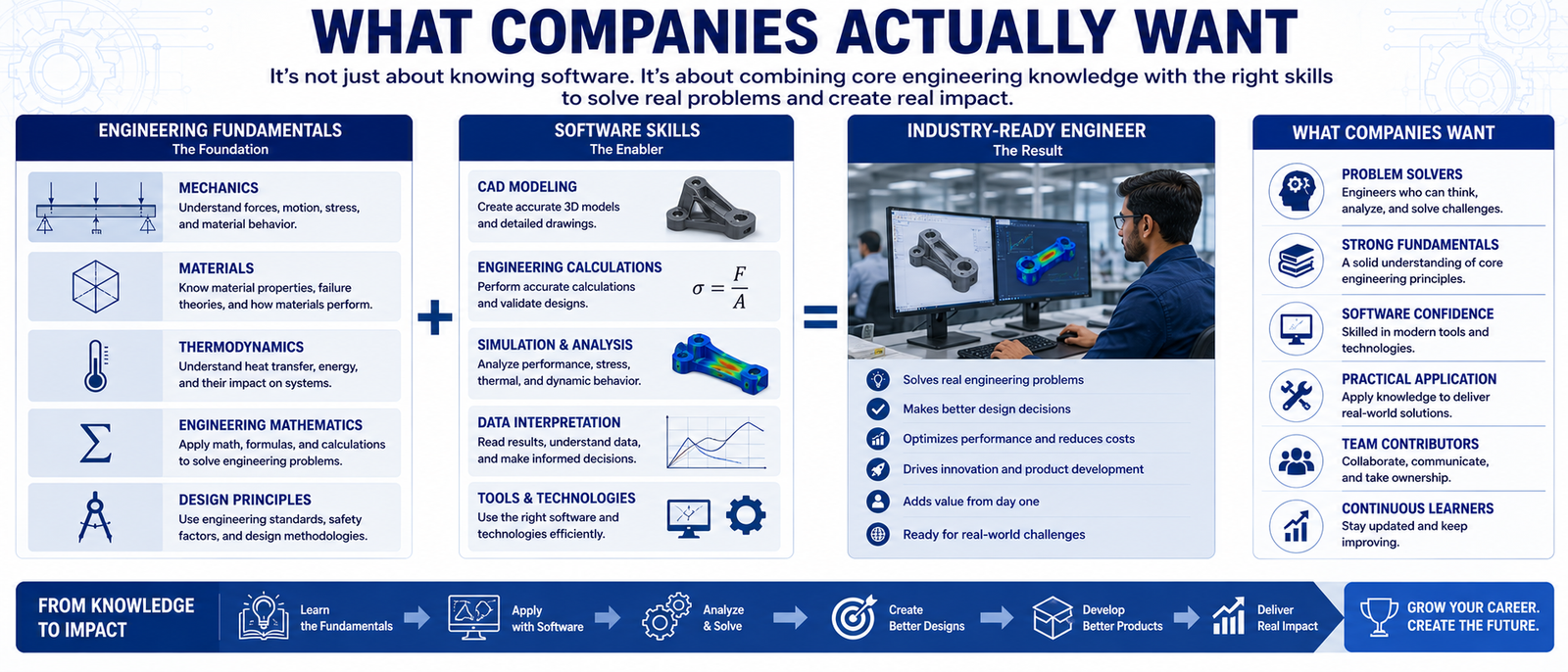
Successful engineers combine software proficiency with strong engineering fundamentals.
When engineers understand concepts and software together, they can create better designs, interpret simulation results correctly, solve problems faster, and contribute more effectively to projects.
This combination is what companies look for when hiring mechanical design engineers, CAD engineers, BIM engineers, and product development professionals.
Whether you are learning AutoCAD, SolidWorks, CATIA, Revit, or Civil 3D, software should always support engineering thinking rather than replace it.
Engineers who develop both skills become more confident, more employable, and better prepared for long-term career growth.
Software skills are important in modern engineering, but they are only part of the equation.
Core engineering knowledge provides the foundation needed to solve problems, validate results, and make effective design decisions.
The engineers who succeed in industry are those who combine both software expertise and strong fundamentals.
At 4Dimensions Infotech Pune, students learn more than just software commands.
Our training combines engineering fundamentals with industry-standard tools such as AutoCAD, SolidWorks, CATIA, Creo, Revit, and ANSYS.
Whether you are searching for CAD Courses in Pune, a SolidWorks Course, a CATIA Course, or a complete Mechanical Design Course, practical projects and core engineering knowledge help you become industry-ready.
👉 Contact 4Dimensions Infotech and build the complete engineering skill set companies actually want.
1. Is software enough to get an engineering job?
Software helps, but companies also expect strong engineering fundamentals and problem-solving ability.
2. Which software is most useful for mechanical engineers?
AutoCAD, SolidWorks, CATIA, Creo, and ANSYS are commonly used in industry.
3. Why do recruiters test engineering concepts?
They want to know whether candidates can solve real engineering problems, not just operate software.
4. What is more important, software or theory?
Both are equally important and work best when learned together.
5. How can I improve both skills?
Study engineering fundamentals while applying them through practical CAD, CAE, and design projects.
© 2025 4Dimensions Infotech. All rights reserved. | Best Design Engineering Training Institute in Pune
Start your journey with the best design engineering training institute in Pune.