
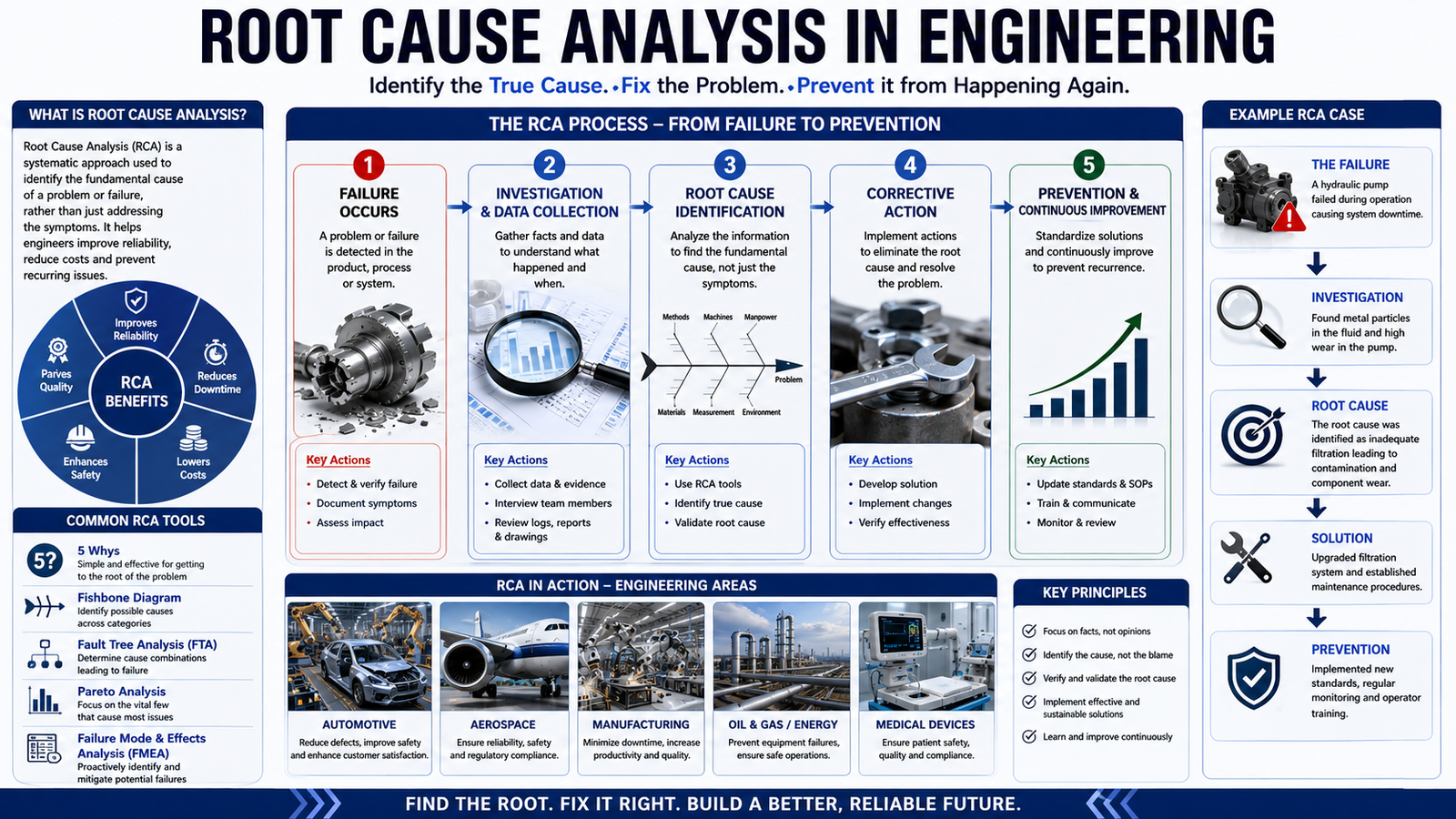
At 4Dimensions Infotech Pune, students pursuing a CAD Design Course, Mechanical Design Course, or Engineering Software Course quickly learn that creating a product is only one part of engineering. The real challenge begins when a product fails unexpectedly.
Engineering failures can lead to serious consequences including equipment breakdown, production delays, financial losses, safety hazards, and customer dissatisfaction. However, simply fixing the visible problem rarely prevents the issue from happening again.
This is where Root Cause Analysis in Engineering becomes extremely important.
Root Cause Analysis (RCA) is a structured engineering problem-solving process used to identify the actual reason behind a failure. Instead of treating symptoms, engineers investigate deeper to discover the source of the problem.
Whether engineers are working in automotive design, aerospace manufacturing, industrial machinery, or product development, Root Cause Analysis helps improve reliability, quality, and long-term performance.
Modern engineering organizations use RCA as part of quality control, product development, manufacturing improvement, and maintenance programs because preventing a failure is always more cost-effective than repeatedly fixing it.
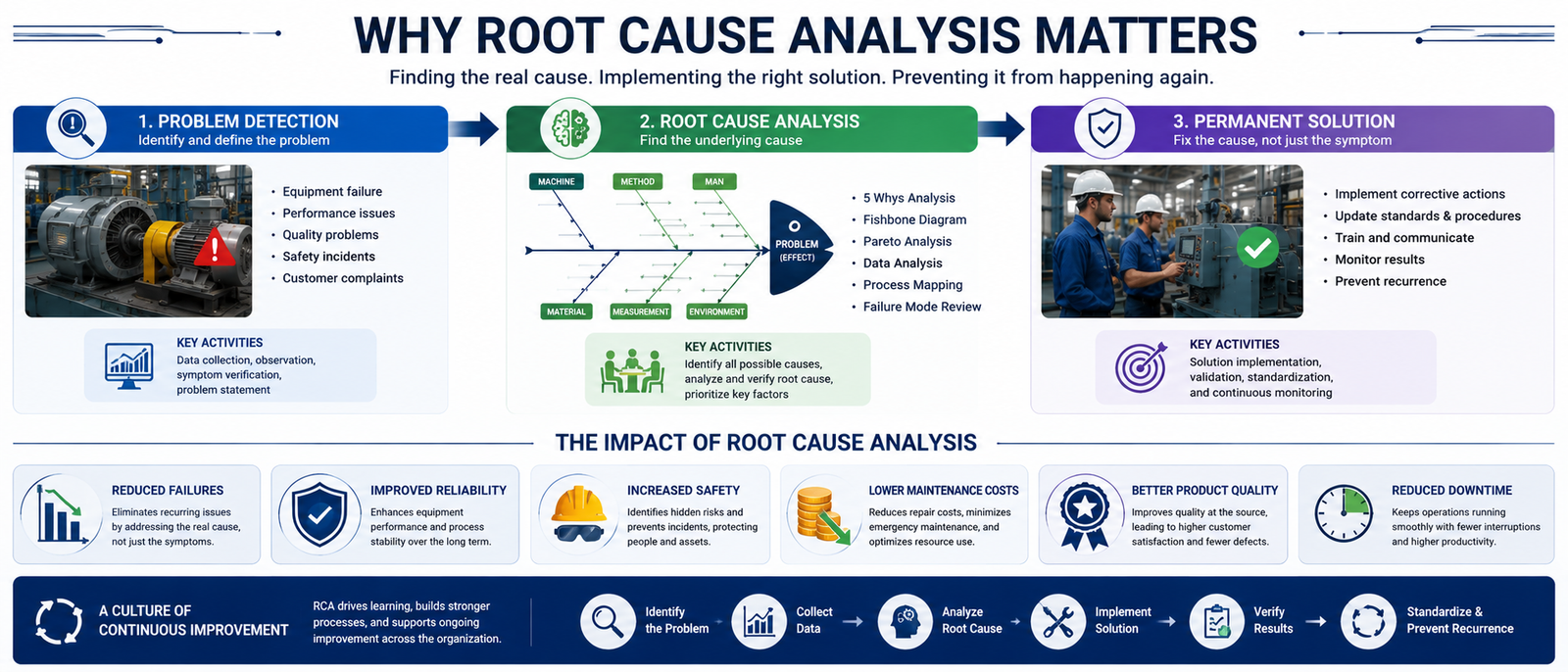
The primary goal of Root Cause Analysis in Engineering is to prevent repeated failures. When engineers only address symptoms, the same issue often returns, leading to additional costs and operational disruptions.
By identifying the true source of a problem, organizations can implement long-term corrective actions rather than temporary fixes.
Root Cause Analysis improves product reliability, enhances safety, reduces maintenance costs, and supports continuous improvement programs.
Many of these improvements are directly connected to concepts discussed in Design Validation Before Manufacturing, where engineers verify product performance before production begins.
Companies that actively use RCA often experience fewer warranty claims, lower failure rates, improved customer satisfaction, and more efficient manufacturing processes.
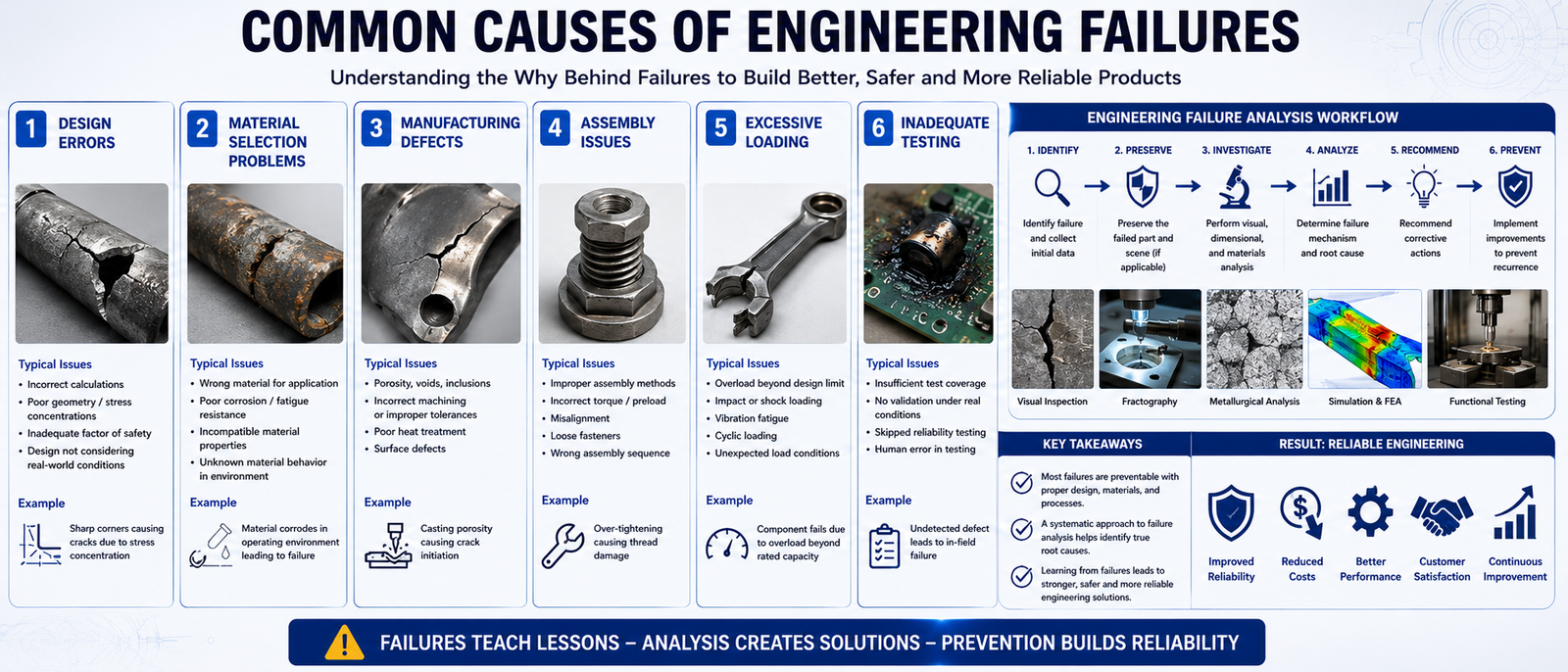
Engineering failures rarely occur because of a single factor. In most situations, multiple conditions contribute to a problem.
Some of the most common causes include:
For example, selecting the wrong material for a high-temperature environment may cause premature failure even if the overall design appears correct.
This is why material engineering plays such an important role in product development and relates directly to Material Selection in Mechanical Design.
Understanding these common failure sources helps engineers perform more effective Root Cause Analysis and create stronger products.
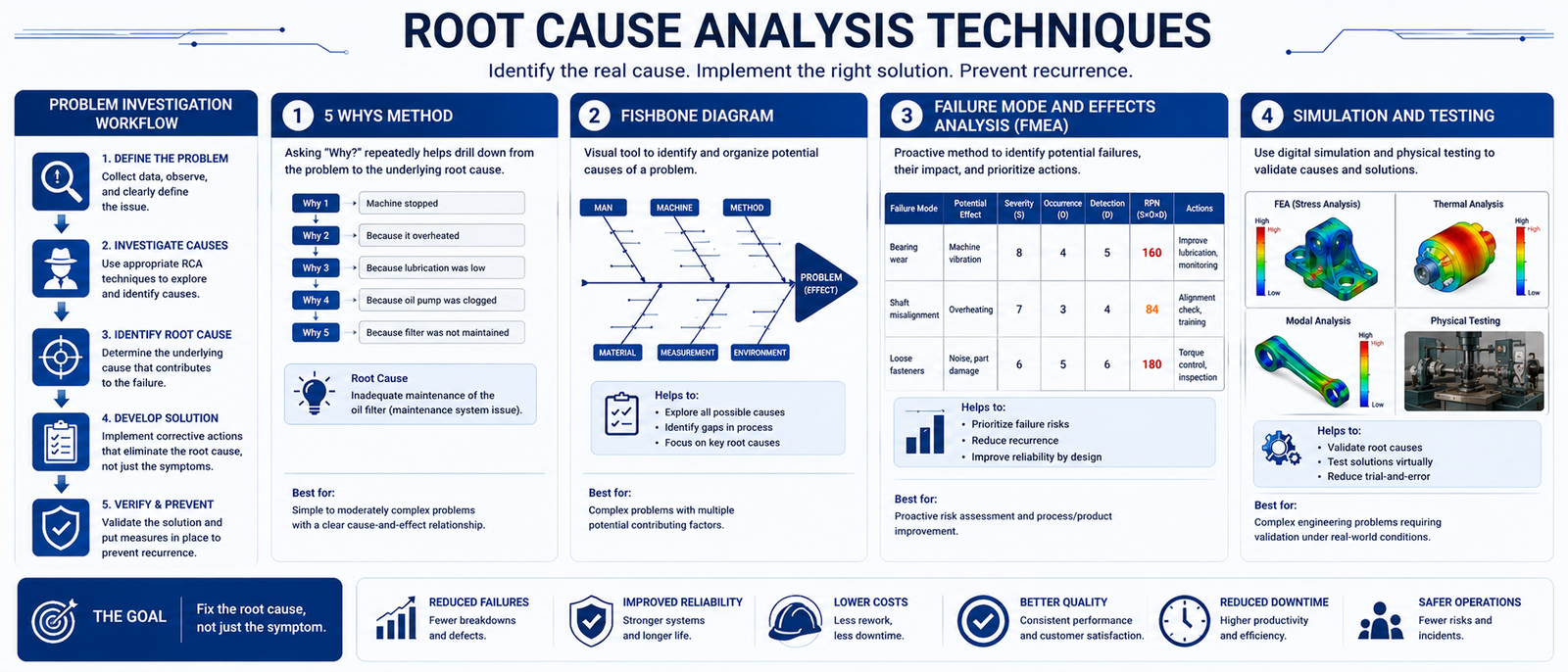
The 5 Whys technique involves repeatedly asking “Why?” until the actual root cause is discovered. Although simple, it is one of the most effective RCA methods used in manufacturing and engineering environments.
The Fishbone Diagram visually organizes possible causes of a problem. Engineers categorize factors such as design, materials, manufacturing processes, human factors, and environmental conditions.
FMEA helps engineers identify potential failure modes before failures occur. This proactive approach allows teams to reduce risk during product development.
Modern engineers frequently use CAE tools and simulation software to reproduce failures digitally. Engineers trained in a SolidWorks Course or Engineering Software Course often perform these analyses during product development.
This process closely aligns with Virtual Testing vs Physical Testing in Engineering Design.
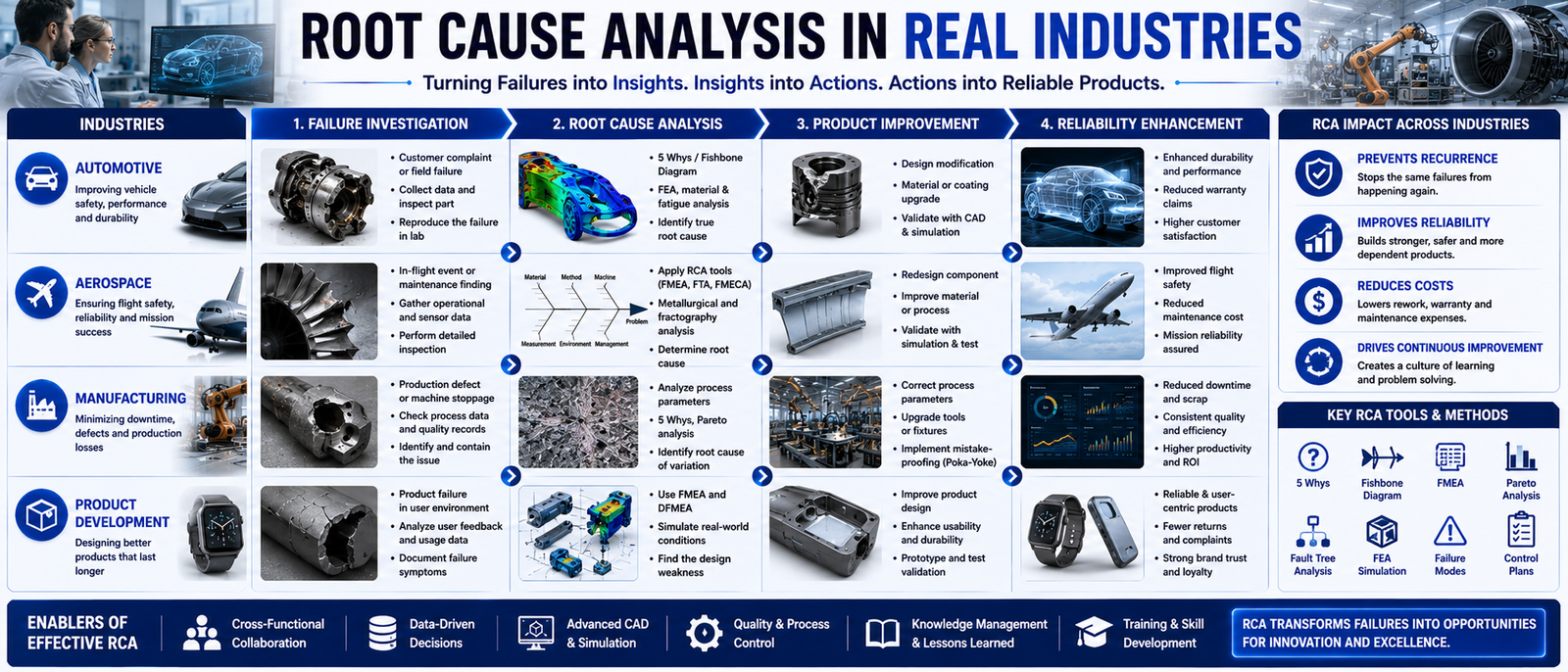
Root Cause Analysis in Engineering is one of the most valuable problem-solving techniques used in modern industries. Instead of simply fixing visible defects, engineers identify the actual source of a problem, helping organizations reduce repeated failures, improve product quality, lower production costs, and increase system reliability.
As engineering projects become more complex, professionals who can combine analytical thinking with practical CAD and CAE skills are becoming increasingly valuable. Understanding Root Cause Analysis prepares engineers to make better design decisions throughout the product development process.
Learning Root Cause Analysis is only the beginning. Today’s engineering companies expect professionals who can investigate failures, validate designs, and improve products using industry-standard software.
At 4Dimensions Infotech Pune, students work on real engineering projects that combine analytical thinking with practical CAD and CAE workflows used by manufacturing companies.
Whether you’re searching for an AutoCAD Course in Pune, a CAD Course in Pune, an AutoCAD Course Near Me, or a SolidWorks Course in Pune, project-based training helps you understand not only how to create engineering models but also how to identify problems, validate designs, and improve product performance.
Students gain hands-on experience with AutoCAD, SolidWorks, CATIA, Creo, engineering analysis, and real-world design workflows that prepare them for careers in mechanical design, product development, and manufacturing.
1. What is Root Cause Analysis in Engineering?
Root Cause Analysis (RCA) is a structured method used to identify the actual cause of engineering failures so permanent corrective actions can be implemented.
2. Why is Root Cause Analysis important for engineers?
It helps engineers eliminate recurring failures, improve product reliability, reduce maintenance costs, and enhance overall product quality.
3. Which tools are commonly used for Root Cause Analysis?
Engineers use techniques such as the 5 Whys, Fishbone Diagram, Failure Mode and Effects Analysis (FMEA), CAD model reviews, and CAE simulations.
4. Which industries use Root Cause Analysis?
Automotive, aerospace, manufacturing, industrial equipment, energy, and product development industries use RCA to improve quality and reliability.
5. Where can I learn Root Cause Analysis and practical CAD skills in Pune?
Students looking for an AutoCAD Course in Pune, CAD Course in Pune, or Mechanical Design Course in Pune should choose project-based training that combines engineering fundamentals with hands-on CAD and CAE experience.
© 2025 4Dimensions Infotech. All rights reserved. | Best Design Engineering Training Institute in Pune
Start your journey with the best design engineering training institute in Pune.