

At 4Dimensions Infotech Pune, students learning modern civil engineering workflows quickly realize that the construction industry is changing rapidly.
Today, companies no longer depend only on traditional drafting methods and isolated project planning systems.
Instead, modern construction industries increasingly rely on BIM workflows, intelligent digital coordination systems, and collaborative project management technologies.
Because of this shift, BIM skills for civil engineers have become one of the most important requirements in modern construction careers.
Construction companies working on commercial buildings, infrastructure projects, smart cities, industrial facilities, and urban development increasingly prefer engineers who already understand Revit BIM workflows, Civil 3D systems, and digital construction coordination.
Students learning through a BIM course in Pune, Revit course, Civil 3D training, or civil CAD course must understand how BIM workflows are transforming real construction projects.
This growing demand strongly connects with BIM in modern construction projects, where intelligent digital systems improve construction efficiency, coordination, and project execution.
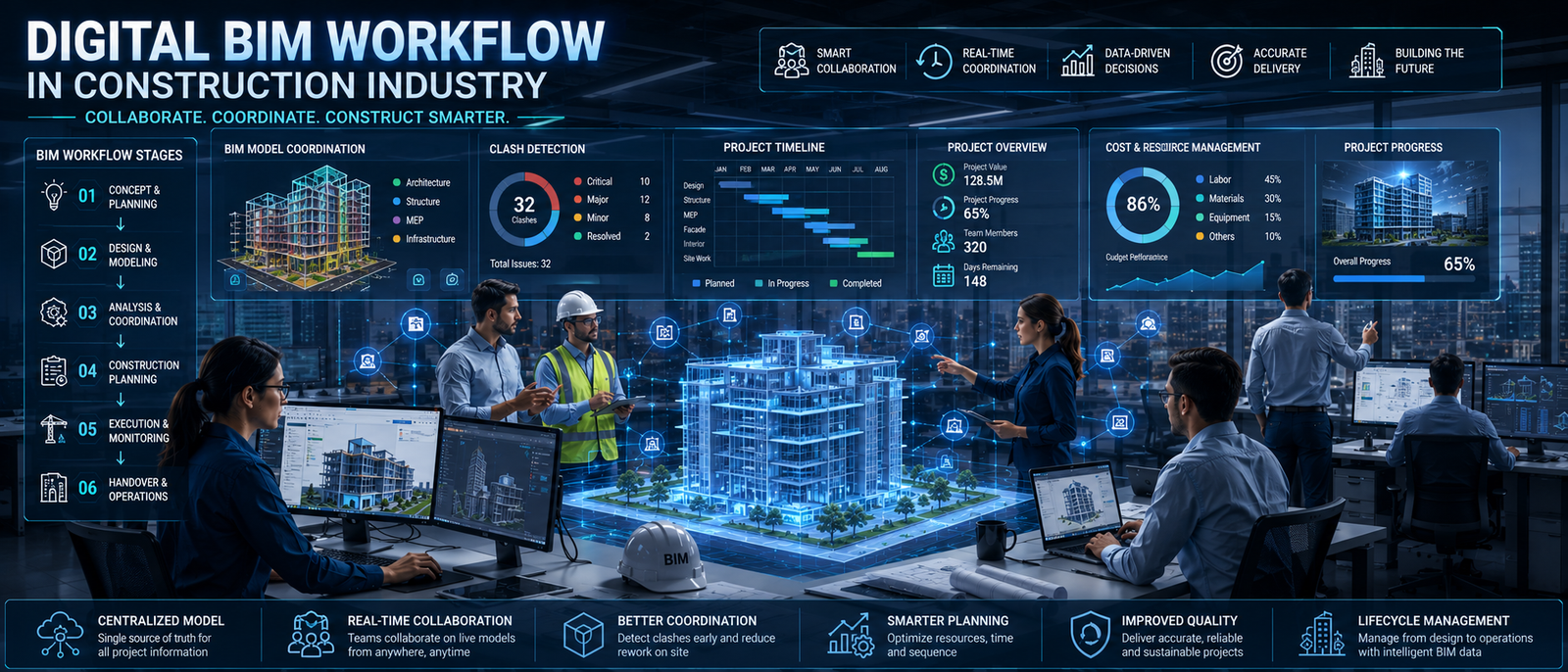
BIM stands for Building Information Modeling.
It is a modern digital workflow used for planning, designing, coordinating, constructing, and managing building projects.
Unlike traditional construction methods that depend on separate drawings and disconnected systems, BIM allows all project teams to work using one intelligent building model.
Because of this integrated workflow, engineers can collaborate more effectively and reduce construction errors significantly.
The BIM model contains:
This intelligent construction workflow is explained in detail in BIM in modern construction projects, where data-driven construction systems improve project coordination and efficiency.
The demand for BIM professionals is increasing rapidly across construction industries worldwide.
Today, many construction companies and infrastructure organizations require BIM workflows for large-scale projects.
Because of this, engineers without BIM skills may struggle to remain competitive in the evolving job market.
Modern construction industries increasingly hire professionals for roles such as:
This demand strongly aligns with automation and digital engineering jobs, where technology-driven engineering skills are becoming essential.

One of the biggest advantages of BIM is improved project visualization and understanding.
When engineers work with BIM tools like Revit and Civil 3D, they can visualize structures in detailed 3D environments before construction begins.
This helps teams:
Because BIM models contain complete building information, engineers gain a much deeper understanding of the entire construction lifecycle.
This visualization-driven approach improves project efficiency throughout the complete project lifecycle.
BIM tools automate many repetitive engineering tasks that traditionally required manual work.
Modern BIM systems can automatically generate:
Because of this automation, engineers can focus more on design optimization, planning, and problem-solving instead of repetitive drafting work.
This significantly improves productivity and construction workflow efficiency.
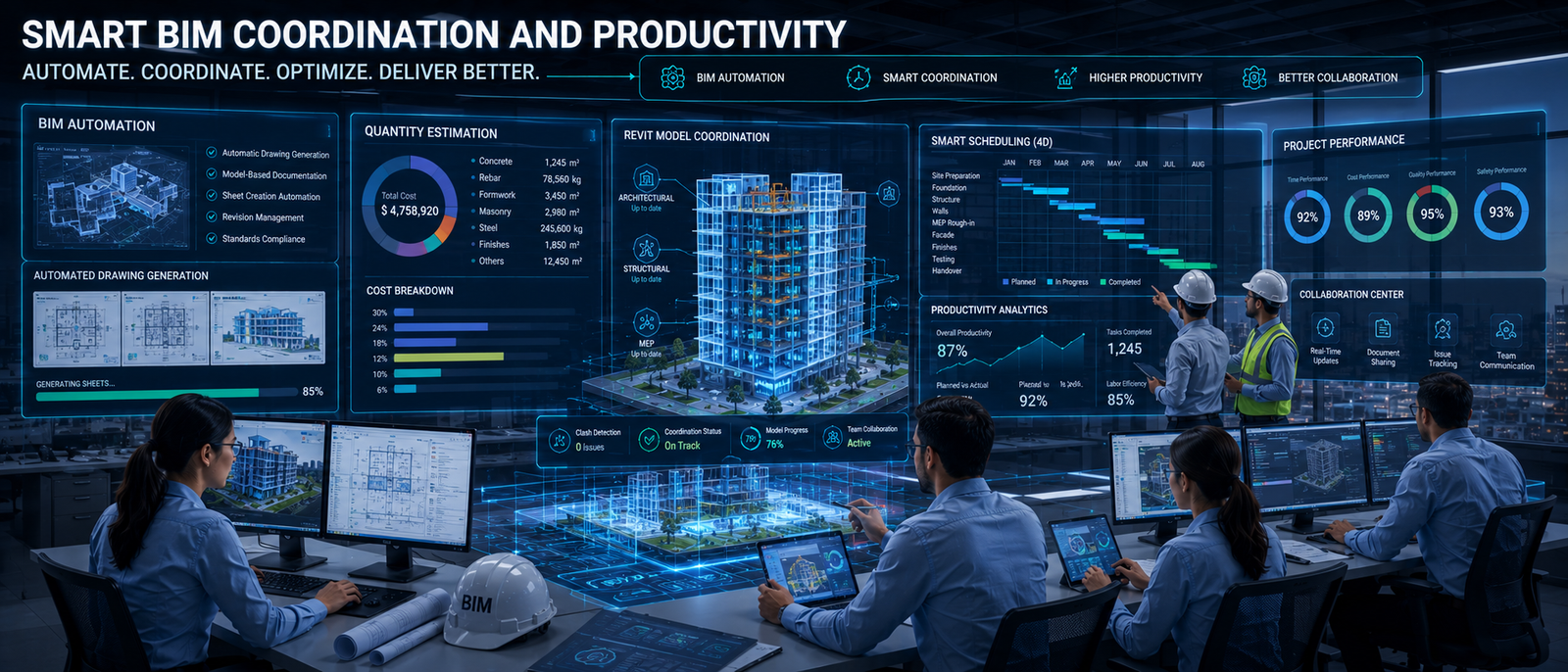
BIM workflows do not operate independently.
Modern civil engineering projects require engineers to work with multiple integrated software systems.
Today, BIM workflows commonly integrate with:
Because of this multi-software workflow, civil engineers must understand how different digital construction systems work together.
This integrated engineering environment strongly connects with civil engineering software used in 2026, where engineers increasingly depend on advanced digital tools.
BIM workflows are now used worldwide across infrastructure and construction industries.
Countries investing heavily in smart cities, commercial construction, metro systems, airports, highways, and urban infrastructure increasingly depend on BIM-driven workflows.
Because of this global demand, civil engineers with BIM skills can access strong career opportunities in both Indian and international construction industries.
Modern companies actively search for engineers who understand:
This growing demand helps engineers explore better job opportunities and career growth in modern construction industries.

As construction industries continue evolving digitally, BIM skills for civil engineers are becoming essential instead of optional.
Modern companies increasingly depend on BIM workflows, Revit coordination systems, and intelligent construction technologies to improve project efficiency and collaboration.
Because of this, engineers who understand BIM gain a major advantage in career growth, project opportunities, and long-term industry relevance.
Learning BIM, Revit, Civil 3D, and digital construction workflows is one of the smartest decisions civil engineering students can make in 2026.
Understanding BIM workflows becomes far more valuable when students apply these concepts through real-world construction projects and practical engineering systems.
Students gain practical exposure to Revit, AutoCAD, Civil 3D, and BIM-based construction workflows while building skills that match modern construction industry requirements.
1. Why are BIM skills important for civil engineers?
BIM improves project coordination, construction efficiency, and engineering accuracy.
2. Is BIM mandatory in modern construction projects?
Many construction companies now require BIM workflows for large infrastructure and building projects.
3. Which software is commonly used in BIM?
Revit, Civil 3D, Navisworks, and other BIM tools are widely used.
4. Does BIM improve job opportunities?
Yes. BIM skills significantly improve employability and career growth in construction industries.
5. Can beginners learn BIM workflows?
Yes. With proper practical training and BIM projects, beginners can learn BIM effectively.
© 2025 4Dimensions Infotech. All rights reserved. | Best Design Engineering Training Institute in Pune
Start your journey with the best design engineering training institute in Pune.