
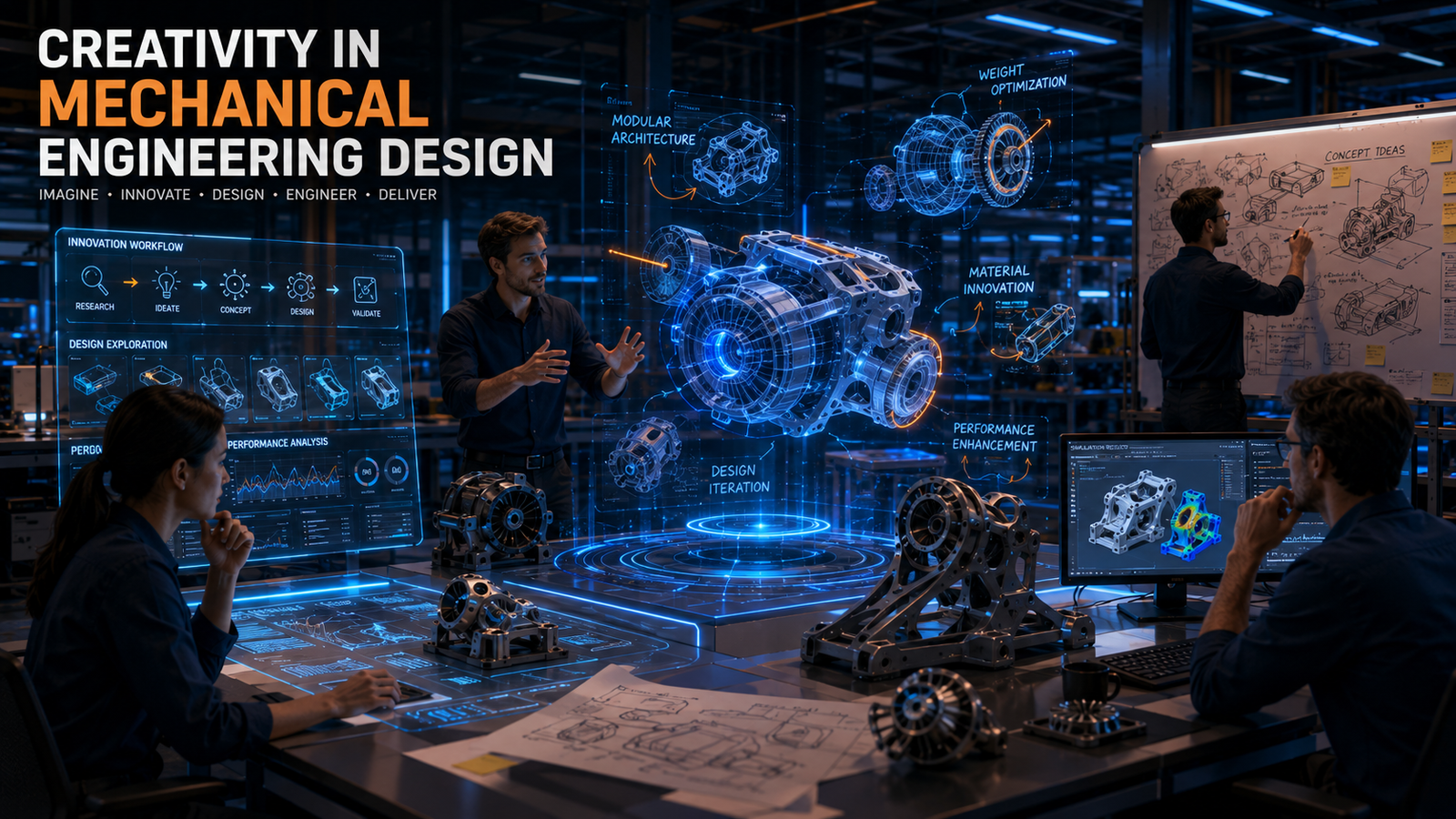
At 4Dimensions Infotech Pune, students learning modern product design quickly realize that mechanical engineering is not only about calculations, formulas, and technical analysis.
Modern engineering industries increasingly depend on engineers who can think creatively, solve complex problems, and develop smarter product solutions.
Because of this, creativity in mechanical engineering design has become one of the most valuable skills in modern product development.
Engineering creativity is what allows companies to build innovative products, improve existing systems, optimize performance, and create better user experiences.
Today, industries such as automotive engineering, aerospace design, industrial manufacturing, consumer product development, and smart engineering systems all rely heavily on creative engineering thinking.
Students learning through a CAD course in Pune, SolidWorks course, CATIA course, or engineering software course must understand how creativity directly influences real-world engineering workflows.
This engineering mindset also strongly connects with functional vs aesthetic design in engineering, where technical performance and design thinking work together to create successful products.
Creativity in engineering is not simply imagination or artistic thinking.
Instead, it is the ability to apply technical knowledge in innovative and effective ways.
Modern engineers combine logic, analysis, problem-solving, and creative thinking to design products that are both efficient and practical.
Creative engineering often involves:
Because of this, creativity becomes a major factor that separates average engineering solutions from highly innovative designs.

Modern engineering problems are becoming increasingly complex.
Because of this, standard solutions are not always enough.
Creative thinking helps engineers develop new approaches when traditional methods fail to deliver efficient results.
Modern industries now expect engineers to optimize products continuously instead of simply following predefined workflows.
Creative engineering allows companies to:
As engineering industries become more competitive, creativity becomes an important advantage during product development and industrial innovation.
Creativity is one of the biggest driving forces behind engineering innovation.
Modern products evolve through continuous experimentation, optimization, and redesign.
Engineers use creative thinking to improve:
This innovation-focused engineering process strongly connects with how companies improve existing products using engineering design, where continuous improvement creates better industrial solutions.
Because of this iterative innovation process, engineering products become more advanced over time.

Creative engineers approach problems from multiple perspectives instead of relying only on fixed methods.
When engineers face limitations related to cost, space, materials, performance, or manufacturing constraints, creative thinking helps them identify alternative solutions.
Instead of accepting engineering challenges as obstacles, creative engineers treat them as opportunities for improvement.
Because of this mindset, they can often discover simpler, faster, and more efficient engineering solutions.
Modern engineering companies highly value problem-solving abilities because industries constantly face changing technologies and evolving product requirements.
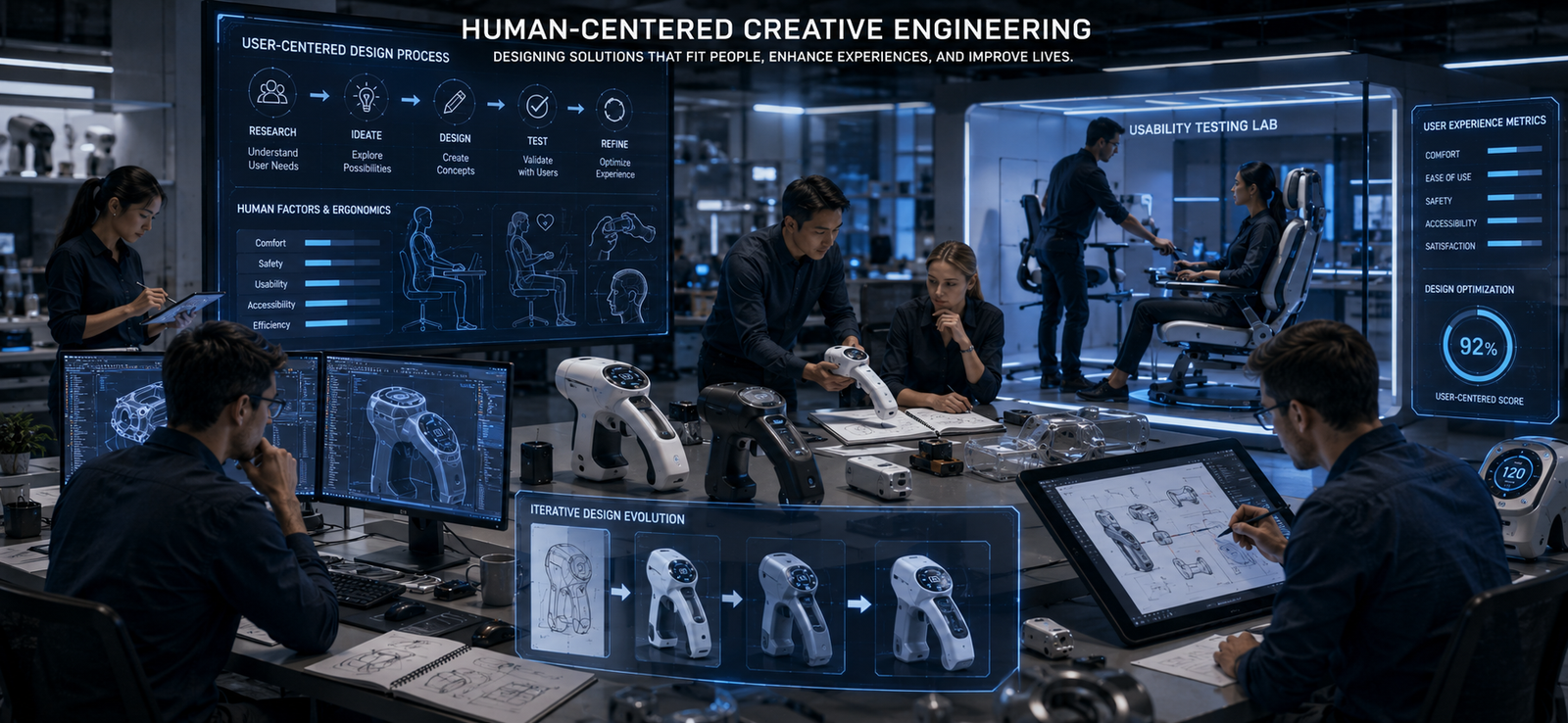
Creativity also plays a major role in improving product usability and user experience.
Modern products must not only function efficiently — they must also feel comfortable, intuitive, and practical for users.
Engineers use creative thinking to improve:
This engineering approach strongly connects with human-centered product design, where user needs become an important part of engineering decisions.
Because of this balance between creativity and engineering logic, products become more user-friendly and commercially successful.
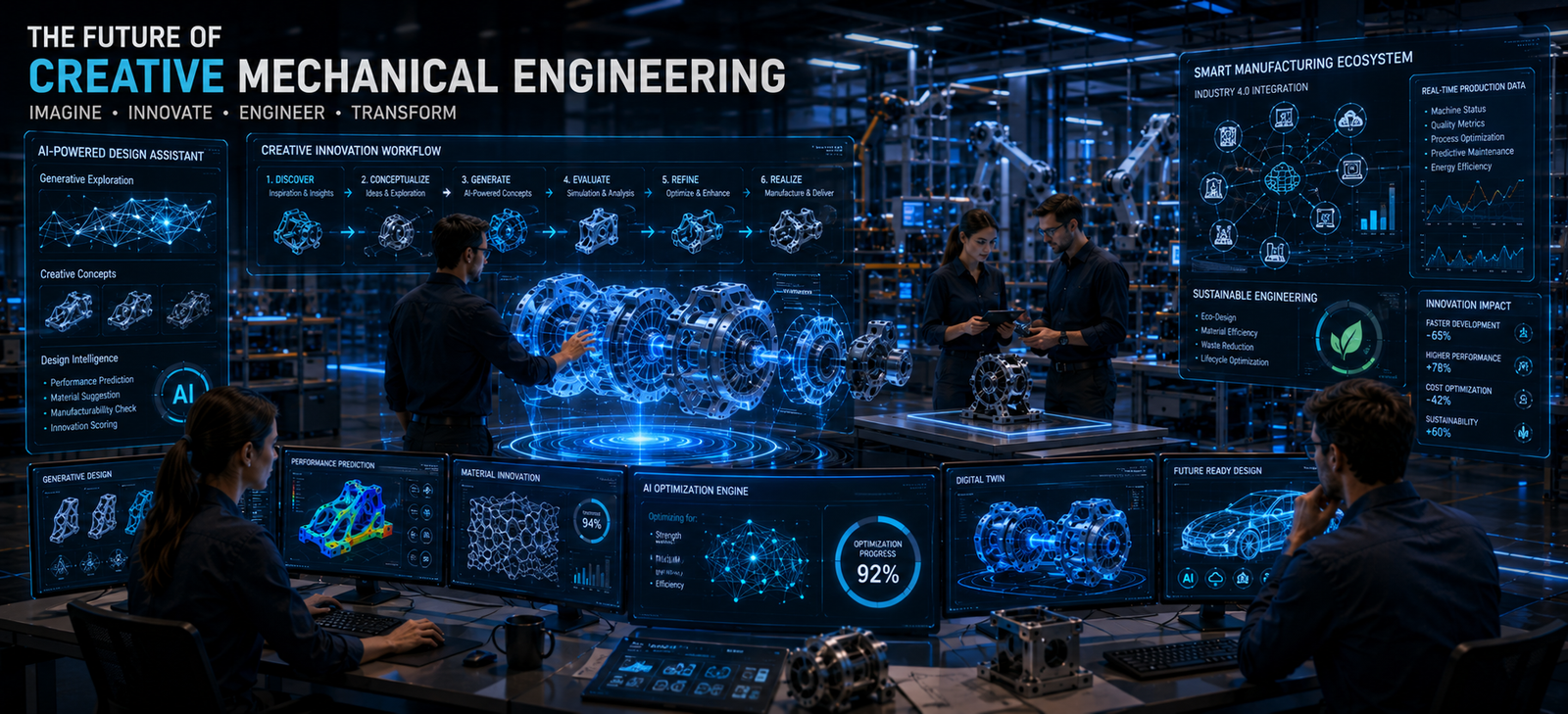
Modern engineering technologies increasingly require engineers to combine technical knowledge with creative problem-solving skills.
Today’s industrial environment depends heavily on automation, smart manufacturing, simulation systems, AI-assisted workflows, and advanced CAD technologies.
Because of this, engineers must continuously adapt and innovate.
This modern engineering environment strongly connects with Industry 4.0 and the role of design engineers, where engineering creativity becomes essential for future-ready product development.
Companies increasingly prefer engineers who can combine analytical thinking with innovation-driven design approaches.
Consider the design of modern smartphones or compact industrial machines.
Engineers must fit multiple high-performance systems into extremely limited space while maintaining efficiency, cooling performance, structural durability, and user comfort.
This requires creative engineering solutions involving:
Because of this creative engineering process, modern products become smaller, faster, smarter, and more efficient.
Creativity in mechanical engineering design is no longer optional in modern industries.
It helps engineers solve complex problems, improve product performance, support innovation, and create better user experiences.
Modern engineering companies increasingly depend on creative engineers who can combine technical knowledge with innovative thinking.
Because of this, engineers who develop both analytical and creative design skills gain a major advantage in product development, manufacturing, and industrial engineering careers.
Creativity improves when students work on real engineering problems using modern CAD tools, simulations, and practical design workflows.
Students gain hands-on experience with SolidWorks, CATIA, AutoCAD, Revit, and Civil 3D while learning how real engineering innovation happens inside modern industries.
1. Is creativity important in mechanical engineering?
Yes. Creativity helps engineers develop innovative, efficient, and user-friendly engineering solutions.
2. How do engineers use creativity?
Engineers use creativity to solve problems, optimize products, improve usability, and support innovation.
3. Can engineering creativity be learned?
Yes. Through project-based learning, problem-solving practice, and real engineering workflows, creativity can improve significantly.
4. Does creativity improve product design?
Yes. It improves efficiency, usability, performance, and product innovation.
5. Do companies value creative engineers?
Yes. Modern industries highly value engineers who can combine technical skills with creative thinking.
© 2025 4Dimensions Infotech. All rights reserved. | Best Design Engineering Training Institute in Pune
Start your journey with the best design engineering training institute in Pune.