
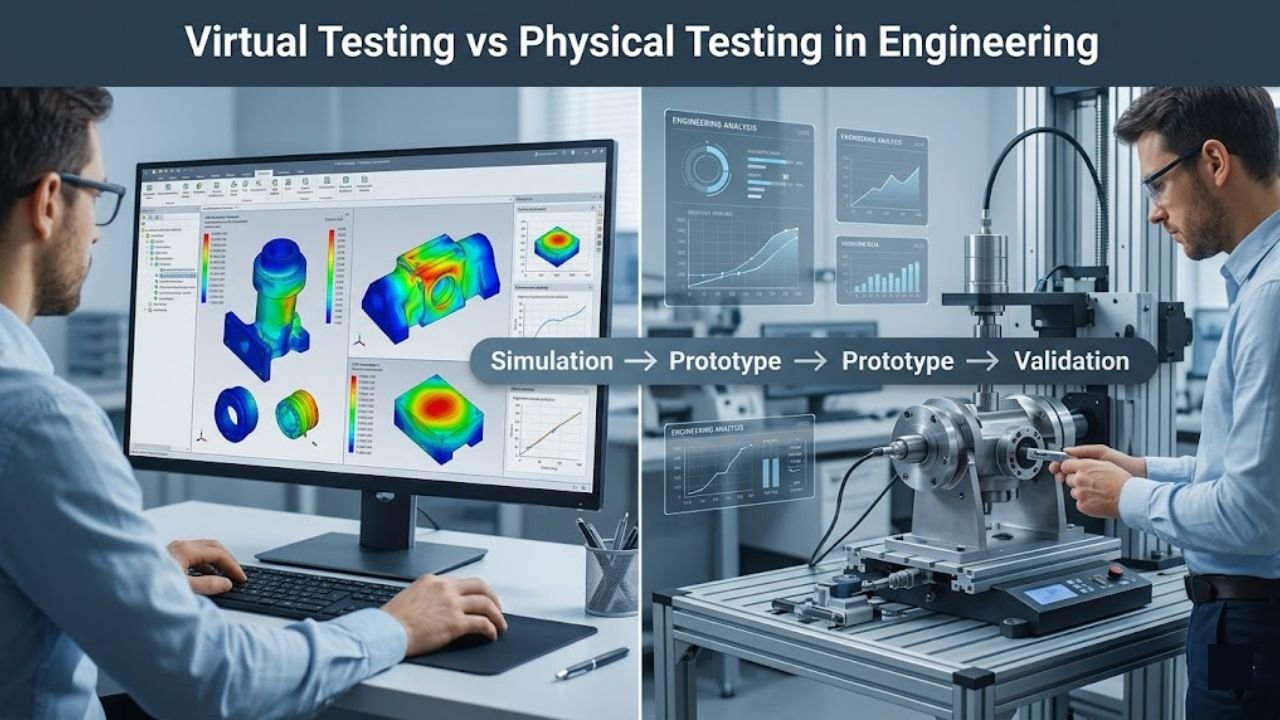
Testing is one of the most important stages in modern engineering design. Before any product reaches manufacturing or enters the market, engineers must ensure that it performs safely, efficiently, and reliably under real-world conditions.
In earlier years, companies relied mainly on physical testing methods where engineers created real prototypes and tested them manually. However, with the advancement of CAD software, simulation tools, and digital engineering workflows, virtual testing has become equally important in product development.
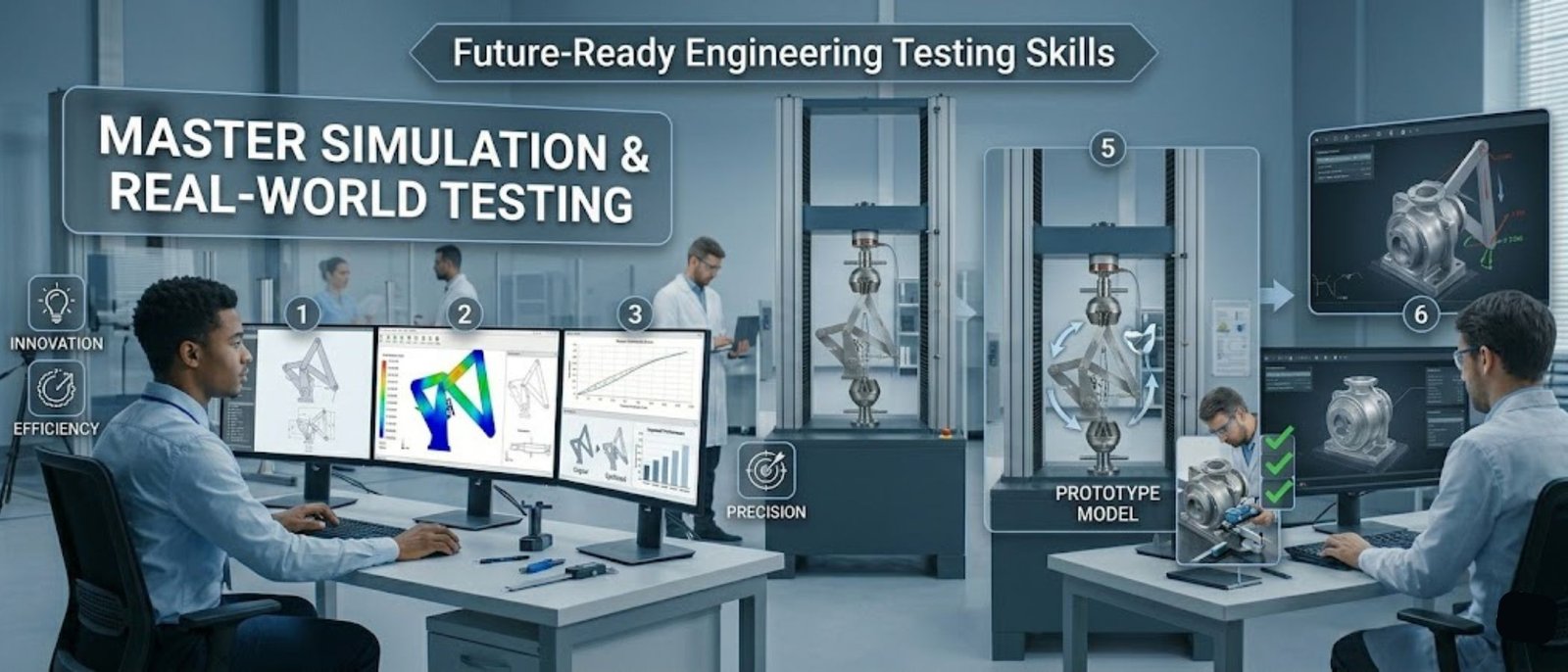
Today, modern industries combine both virtual and physical testing to improve design quality, reduce costs, and speed up product development cycles.
As engineering industries continue becoming more technology-driven, students learning through CAD design course programs and engineering software course training must understand how both testing methods work together in real engineering workflows.
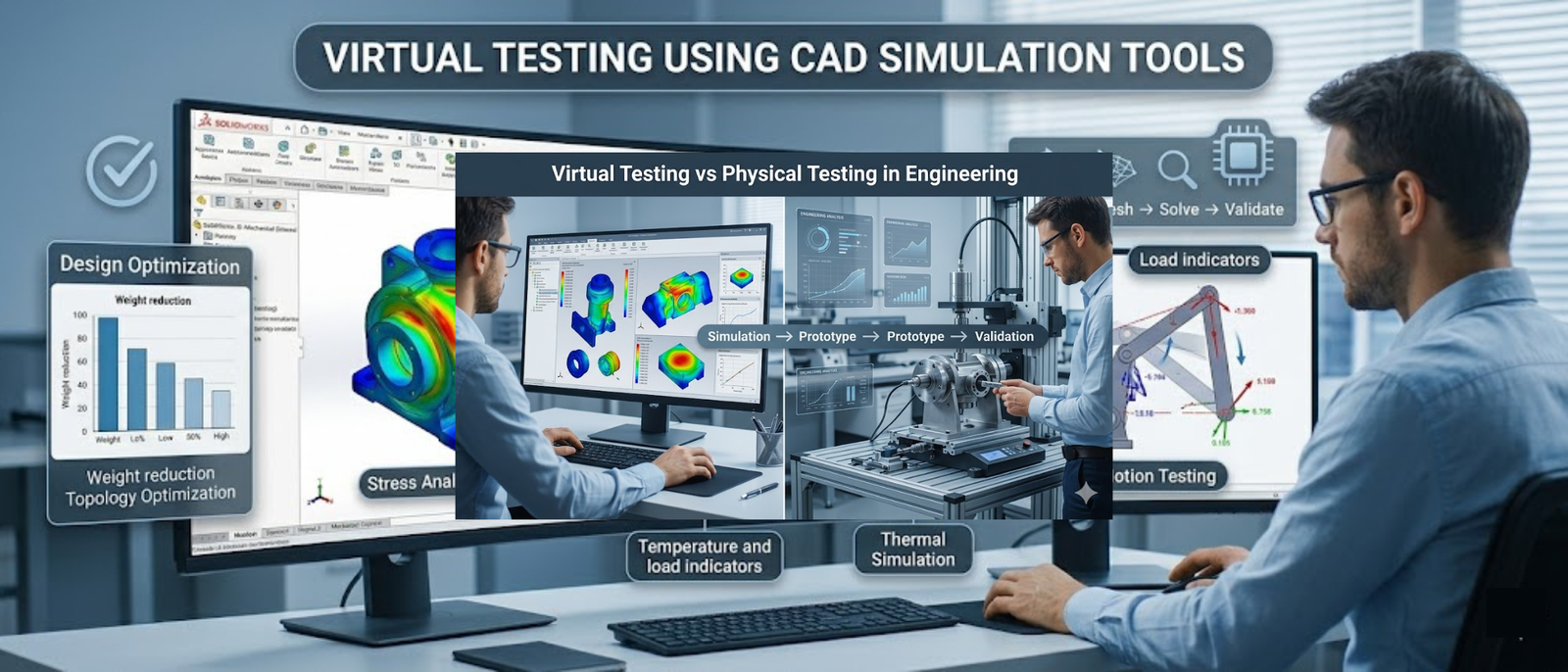
Virtual testing is the process of using simulation software to evaluate how a product or component behaves under different conditions digitally.
Instead of manufacturing a physical prototype immediately, engineers first create a 3D CAD model and test it using simulation tools.
These simulations help engineers analyze:
Modern CAD tools used in a solidworks course or CATIA course often include built-in simulation and analysis features that allow engineers to test designs virtually before manufacturing begins.
As a result, engineers can identify design problems early and improve product performance without wasting materials or production cost.
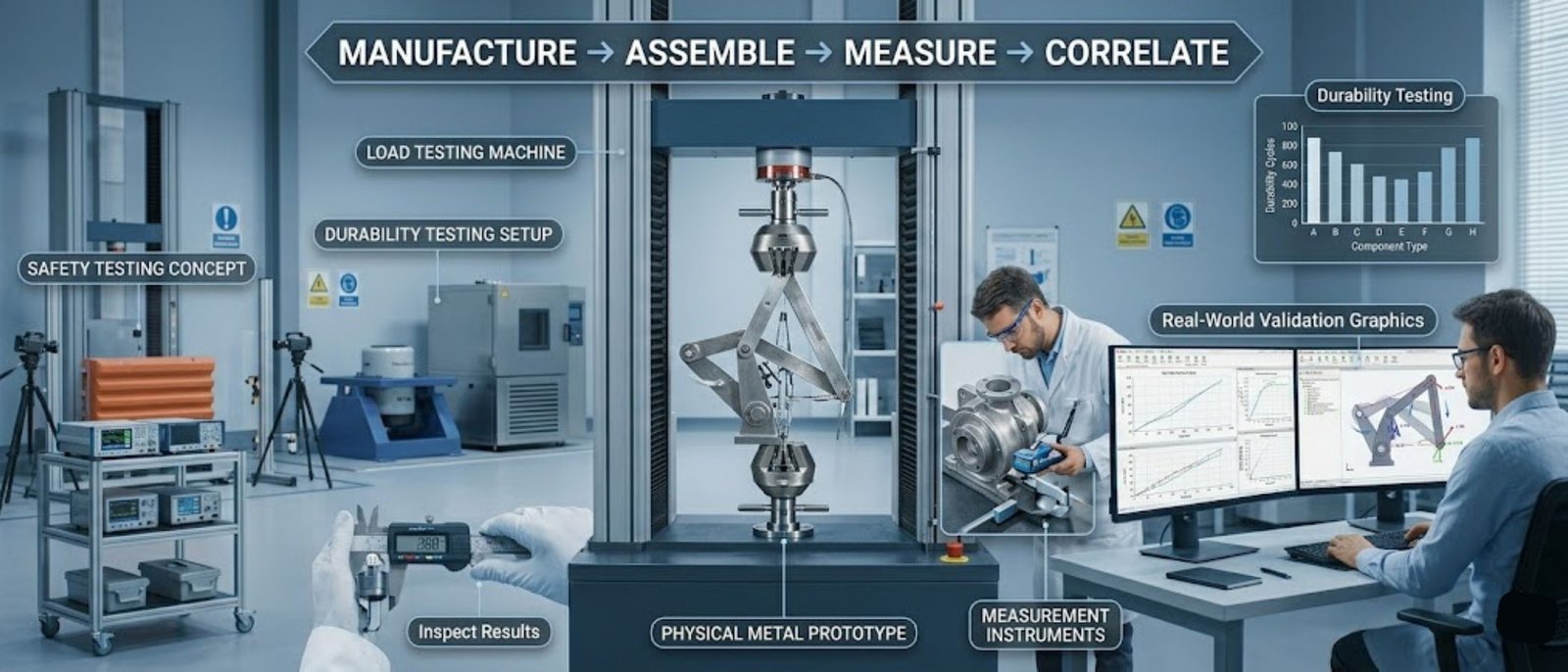
Physical testing involves creating a real prototype and testing it under actual operating conditions.
In this process, engineers manufacture a physical version of the product and evaluate its performance, durability, safety, and functionality through practical experiments.
Physical testing allows engineers to observe real-world behavior that may not always appear accurately in simulations.
This includes:
Because of this, physical testing remains an essential step in product validation and manufacturing approval.
Industries such as automotive, aerospace, consumer electronics, and industrial machinery rely heavily on physical testing before launching products into the market.
Although both methods aim to improve product quality and safety, virtual testing and physical testing work differently.
Virtual testing is faster and more cost-effective because it eliminates the need to manufacture multiple prototypes during early development stages.
Engineers can quickly test different design variations and optimize products using digital simulations.
On the other hand, physical testing requires real materials, manufacturing effort, testing equipment, and additional development time.
However, physical testing provides real-world performance data that simulation software may not always predict perfectly.
Therefore, virtual testing focuses more on design optimization and early-stage analysis, while physical testing focuses on final validation and real-world reliability.
Virtual testing offers several major advantages in modern engineering workflows.
One of the biggest benefits is speed. Engineers can run multiple simulations quickly and compare design variations efficiently.
This helps companies reduce product development time significantly.
Virtual testing also lowers manufacturing costs because fewer physical prototypes are required during early design stages.
Additional benefits include:
Engineers who learn simulation workflows through an engineering software course gain valuable practical skills that are increasingly important in modern industries.
Physical testing remains extremely valuable because it validates how products behave in real conditions.
Unlike simulations, physical testing allows engineers to observe practical factors such as material behavior, manufacturing imperfections, environmental exposure, and unexpected operational conditions.
This type of testing improves confidence before large-scale production begins.
Benefits of physical testing include:
Physical testing is especially important in industries where safety and reliability are critical, such as aerospace, automotive, and medical engineering.
Modern engineering does not treat virtual testing and physical testing as competing approaches.
Instead, industries combine both methods to achieve the best results.
First, engineers use virtual testing to identify and solve design issues early in development. This reduces design errors and improves efficiency.
Then, physical testing is used to validate the final optimized product under actual conditions.
This combined workflow helps companies:
As a result, understanding both testing methods has become an essential skill for modern engineers.
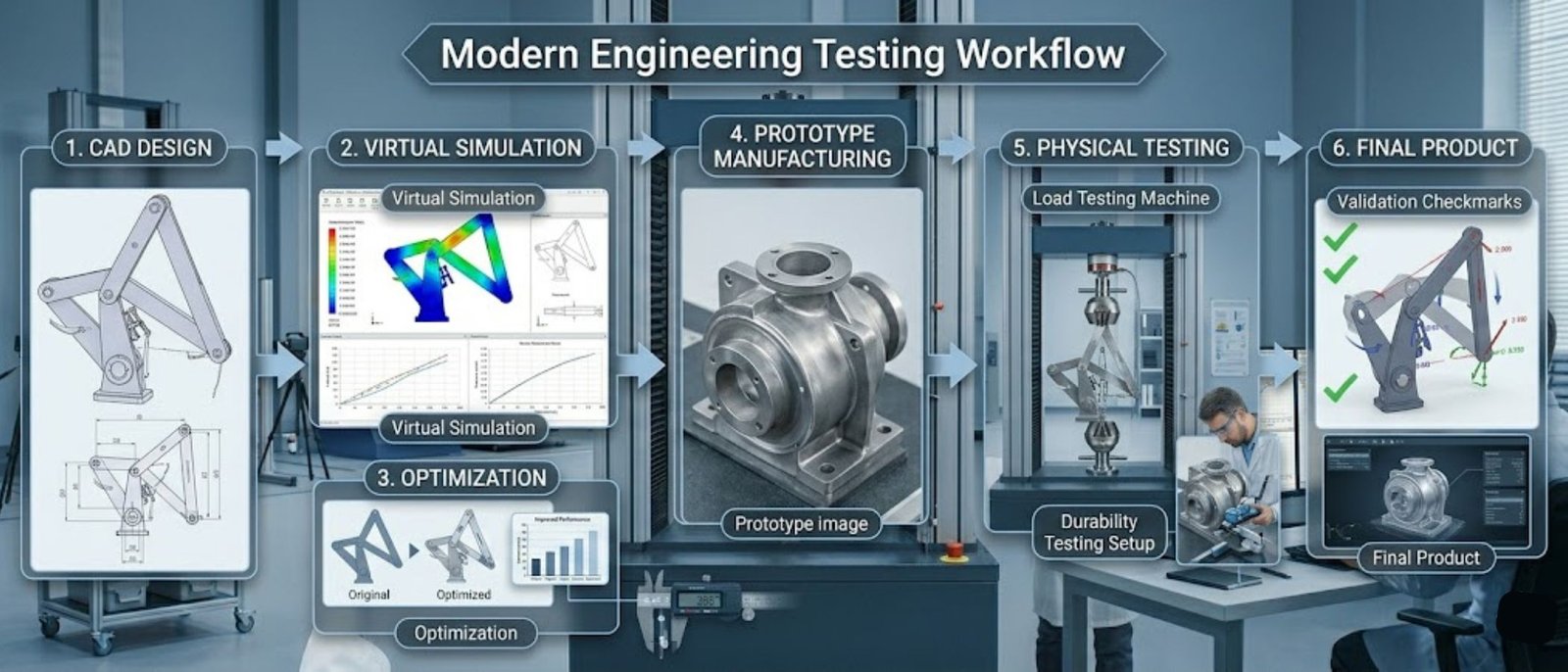
Consider the design of an automotive suspension component.
Engineers first simulate stress, vibration, and load conditions using CAD tools and simulation software.
After optimizing the design digitally, engineers manufacture a physical prototype and test it under real driving conditions.
This process helps ensure that the final product performs safely and reliably before entering production.
Therefore, virtual testing and physical testing work together to create safer and more efficient products.
Testing and validation skills are becoming increasingly valuable in engineering careers.
Companies today expect engineers to understand:
Students who understand testing concepts often gain stronger technical profiles during placements and interviews.
This is especially true in industries focused on product development, mechanical design, automotive engineering, aerospace systems, and industrial manufacturing.
Virtual testing and physical testing are both essential parts of modern engineering design and product development.
While virtual testing improves speed, efficiency, and cost optimization, physical testing ensures real-world reliability and safety.
Therefore, engineers who understand how to use both methods effectively gain a major advantage in modern industries.
As engineering workflows continue evolving, testing knowledge combined with CAD and simulation skills will become even more valuable in future engineering careers.
To succeed in engineering today, students must understand more than just CAD modeling.
They must also understand testing, validation, simulation, and product development workflows used in real industries.
Build skills that prepare you for real engineering challenges not just software operation.
1. What is virtual testing?
Virtual testing uses simulation software to analyze product performance digitally before manufacturing.
2. What is physical testing?
Physical testing involves evaluating real prototypes under actual operating conditions.
3. Which is better, virtual testing or physical testing?
Both are important because virtual testing improves efficiency while physical testing validates real-world reliability.
4. Which software is commonly used for virtual testing?
Tools like SolidWorks and CATIA include simulation and testing features.
5. Why is testing important in engineering design?
Testing helps engineers improve safety, performance, durability, and product reliability before production.
© 2025 4Dimensions Infotech. All rights reserved. | Best Design Engineering Training Institute in Pune
Start your journey with the best design engineering training institute in Pune.