
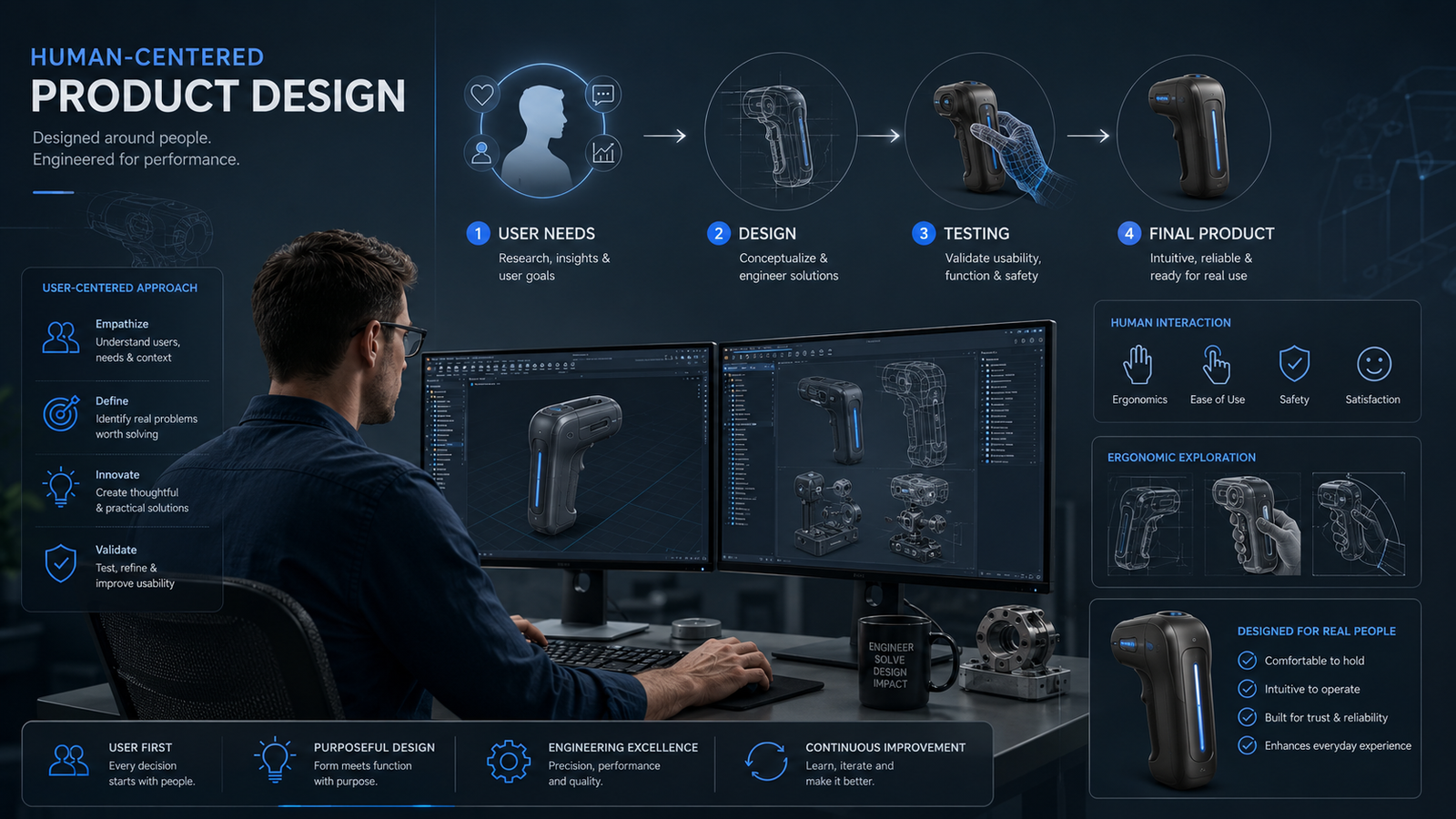
Modern engineering is no longer only about building products that function correctly. Today, industries focus equally on usability, user experience, comfort, and interaction.
This shift has completely changed how products are designed across industries like automotive, consumer electronics, industrial machinery, healthcare devices, and smart products.
As a result, engineers are now expected to think beyond technical performance and understand how real users interact with products in everyday life.
This approach is known as human-centered product design.
Because of this, human-centered design has become one of the most important concepts in modern product engineering and CAD-based workflows.
Human-centered product design is a design approach where engineers focus on the needs, behavior, usability, and comfort of users while developing products.
Instead of beginning only with technical specifications, engineers first understand how people will use the product, what problems users face, and how the product can create a smoother experience.
After understanding user behavior, engineers develop solutions that improve usability, accessibility, and interaction.
Therefore, this design process combines engineering logic, CAD modeling, ergonomics, and design thinking together.
Modern engineering industries no longer separate technical design from user experience because both directly affect product success.
Today’s customers have more product choices than ever before.
Because of this, users no longer judge products only based on performance. They also evaluate products based on comfort, simplicity, appearance, usability, and overall experience.
Even if a product is technically advanced, users may reject it if it feels confusing, uncomfortable, or difficult to use.
This is why companies invest heavily in user-focused product development.
Industries now want engineers who understand:
As a result, students learning through cad design course and engineering software course programs are now trained to think like problem-solvers instead of only software operators.
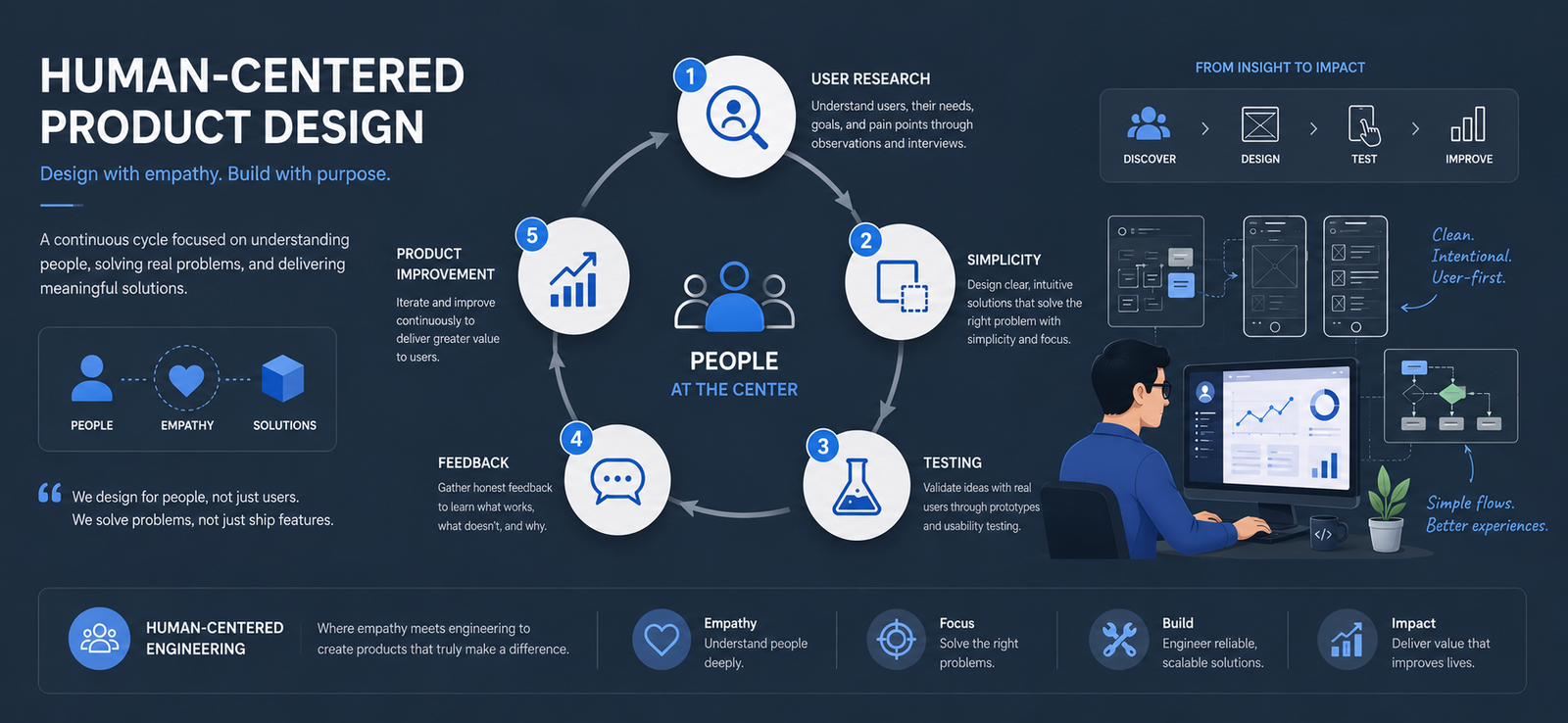
Human-centered product design follows several important principles that guide engineers during product development.
The first principle is understanding users through observation, research, and feedback. Engineers study how users interact with products and identify common difficulties.
The second principle is simplicity. A well-designed product should feel natural and easy to use without requiring excessive effort or explanation.
Another important principle is usability testing. Engineers continuously test designs, collect feedback, and improve the product before final manufacturing.
Finally, the goal is to create products that balance:
This approach is becoming increasingly important in industries focused on customer experience and innovation.
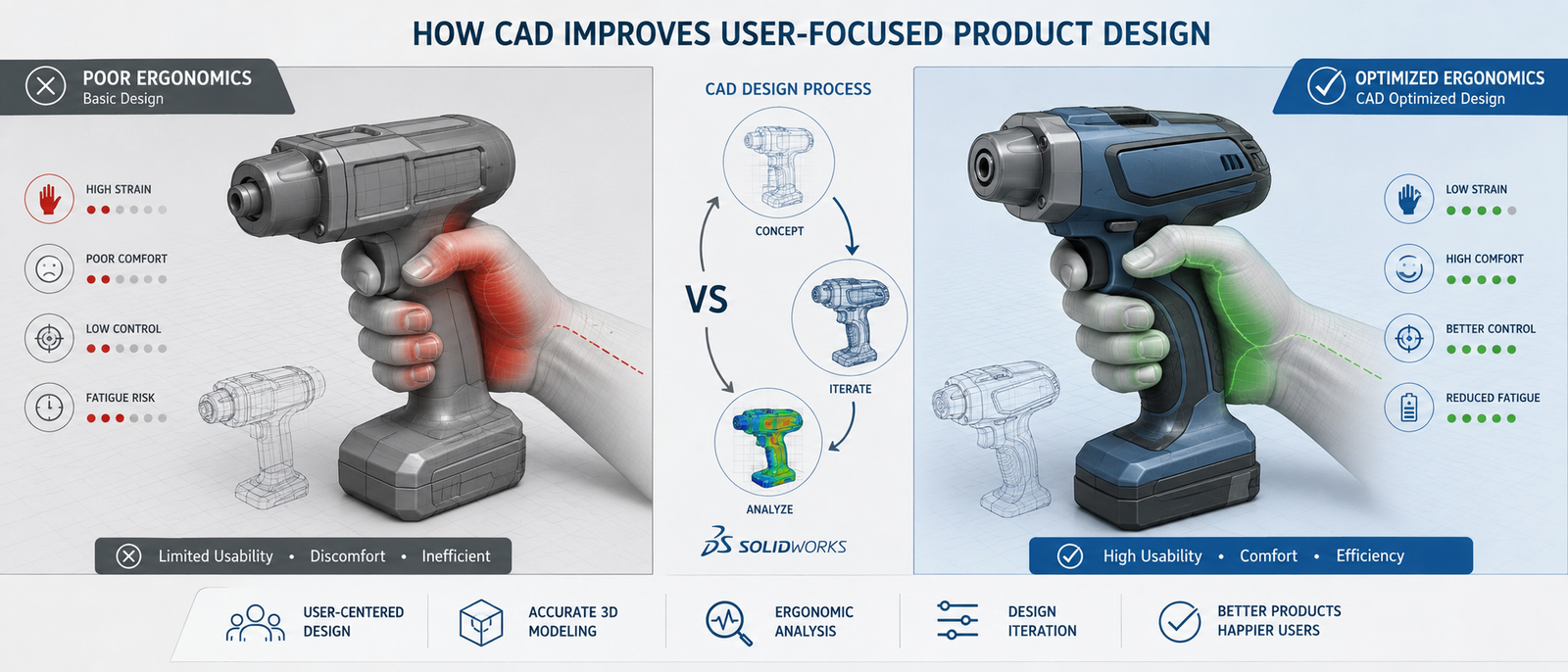
Modern CAD software plays a major role in creating user-friendly products.
Tools like SolidWorks, CATIA, and AutoCAD help engineers create accurate product models while also improving ergonomics and visual design.
These software tools allow engineers to:
As a result, engineers can identify design problems early before manufacturing begins.
Students who complete a solidworks course or CATIA course often gain hands-on experience in designing products that combine functionality with usability.
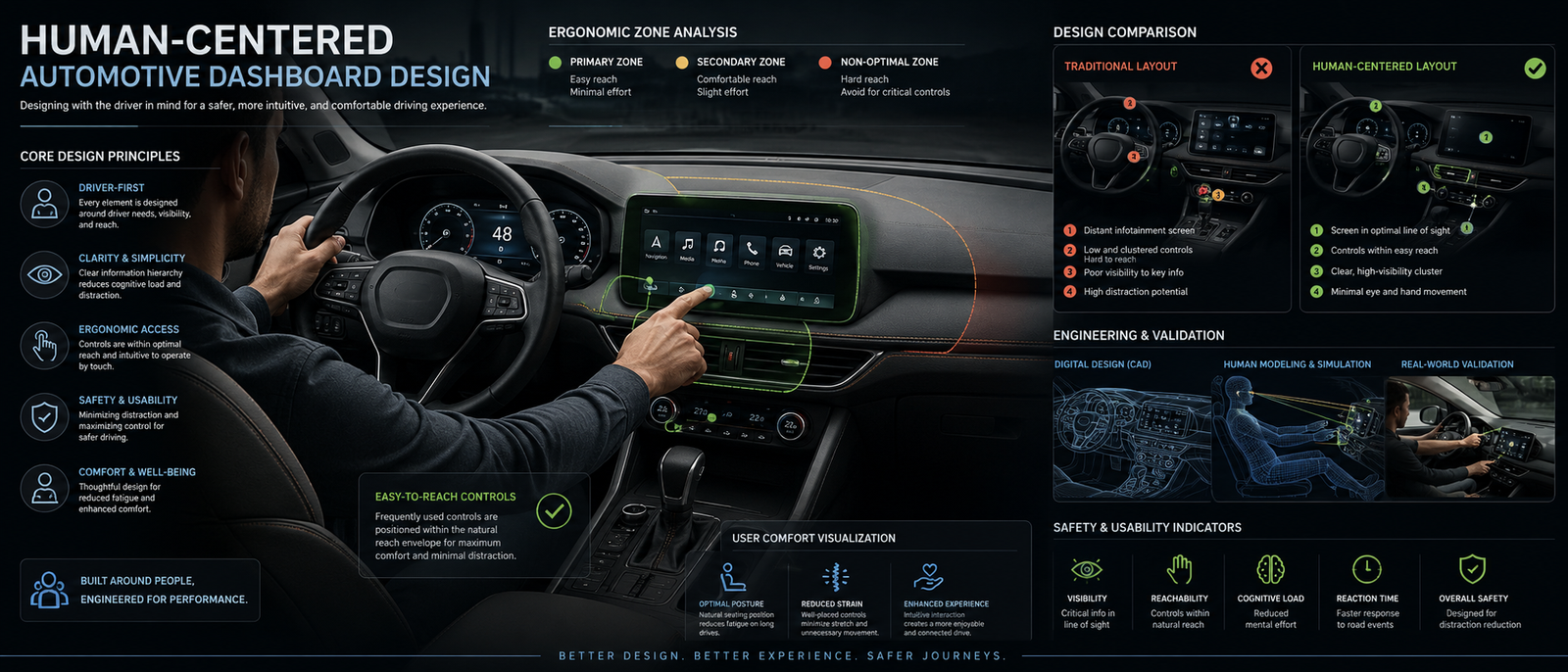
Consider the design of a modern car dashboard.
The dashboard must not only look visually attractive, but it must also allow drivers to operate controls quickly and safely while driving.
Buttons, displays, steering controls, and touch systems are carefully positioned to reduce distraction and improve accessibility.
Similarly, smartphone manufacturers design products that feel comfortable in hand while maintaining performance and aesthetics.
These products succeed because engineers combine technical performance with user experience.
Designing products around human behavior is not always simple.
Different users often have different expectations, habits, and preferences.
Therefore, engineers must analyze large amounts of feedback and make informed design decisions.
At the same time, they must balance:
This balance requires both technical engineering knowledge and creative problem-solving ability.
Engineers who develop these skills often gain strong advantages in industries focused on innovation and product development.
The engineering industry is rapidly evolving toward user-focused innovation.
Because of this, companies now expect engineers to contribute not only technically but also creatively during product development.
Engineers who understand user behavior can build products that:
This is why design thinking has become closely connected with CAD design, product engineering, and industrial workflows.
Students who understand both software tools and user-centered design principles often stand out during interviews and placements.
Learning software alone is no longer enough in modern engineering careers.
Students must understand how products are designed in real industries and how engineering decisions affect users.
Practical CAD training helps students:
This practical exposure helps engineers become more industry-ready and adaptable.
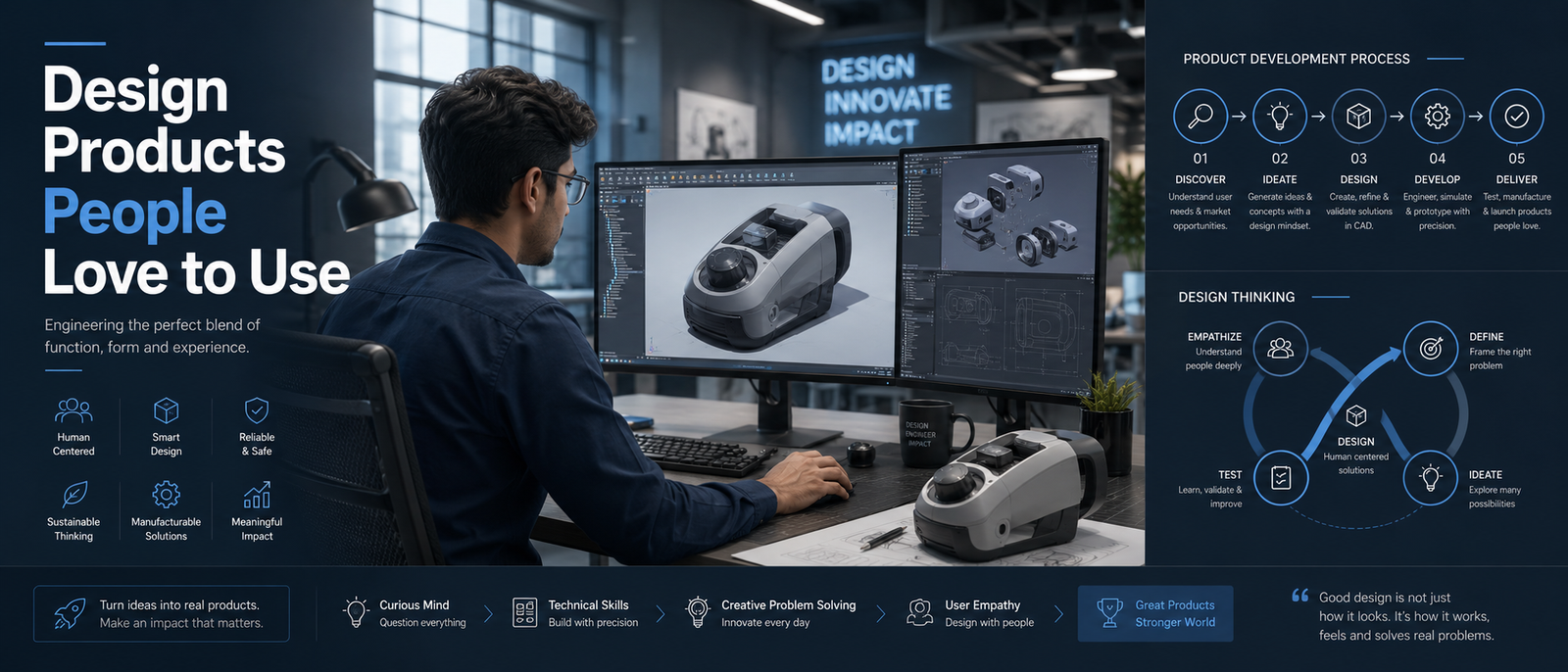
Human-centered product design is becoming one of the most important approaches in modern engineering.
Today, successful products are not only functional they are also intuitive, comfortable, visually appealing, and user-friendly.
As industries continue evolving, engineers who understand both technical systems and user experience will become increasingly valuable.
Therefore, learning design thinking alongside CAD and engineering workflows is essential for future-ready engineering careers.
Modern engineering is no longer just about creating products that work.
It is about building products that users enjoy using in real life.
Build skills that help you create products people connect with not just products that function.
1. What is human-centered product design?
It is a design approach focused on user needs, usability, comfort, and product experience.
2. Why is human-centered design important in engineering?
It improves usability, customer satisfaction, and overall product success.
3. Do engineers need design thinking skills?
Yes, modern engineers must understand both technical systems and user-focused design principles.
4. Which CAD tools are commonly used in product design?
SolidWorks, CATIA, AutoCAD, and other CAD tools are widely used for product development and design workflows.
5. Can students learn human-centered design through CAD training?
Yes, practical CAD training and real-world projects help students understand usability and product-focused engineering.
© 2025 4Dimensions Infotech. All rights reserved. | Best Design Engineering Training Institute in Pune
Start your journey with the best design engineering training institute in Pune.