
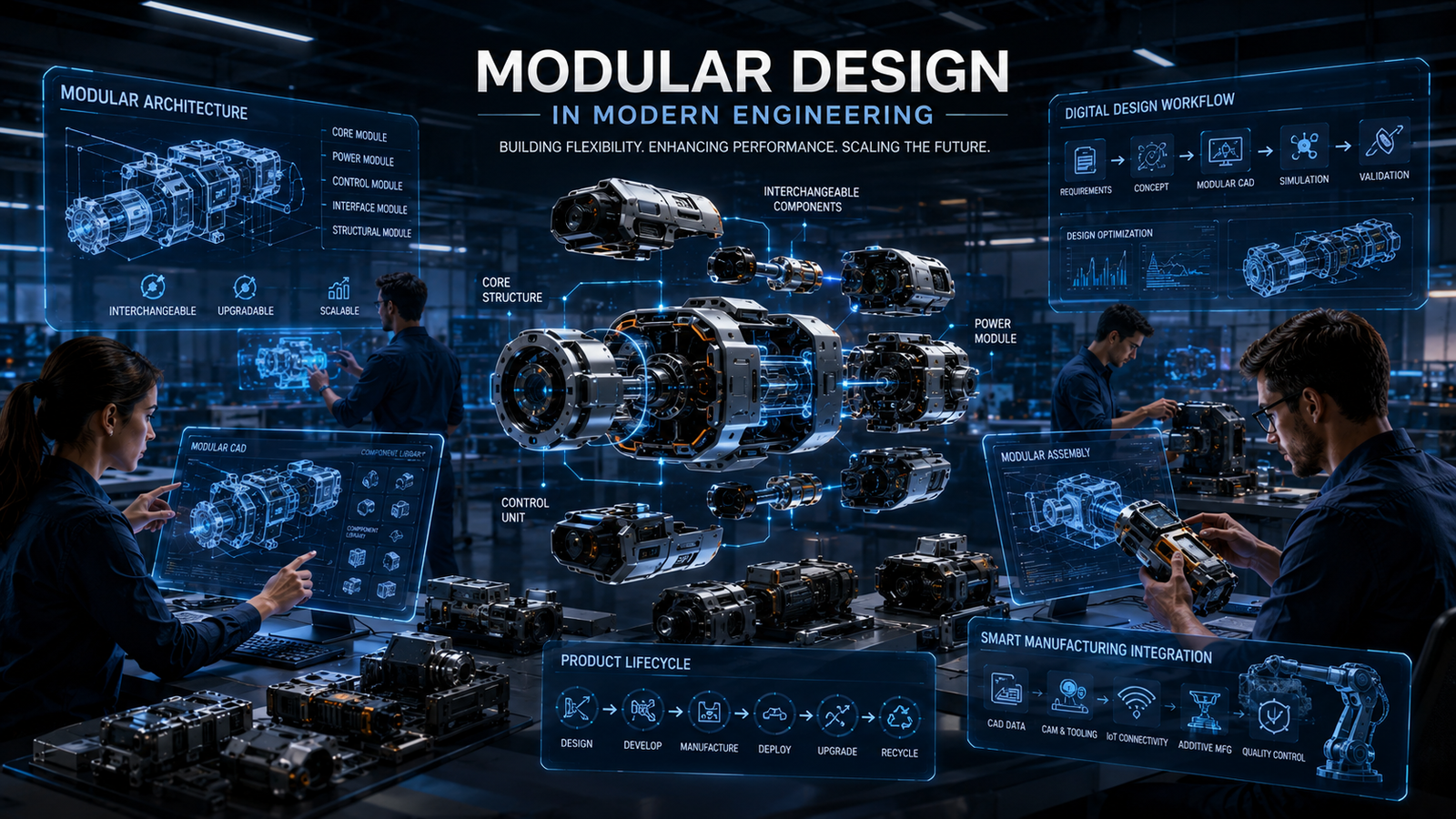
At 4Dimensions Infotech Pune, students learning modern CAD workflows quickly understand that engineering design is no longer limited to creating one large fixed product system.
Modern industries now prefer flexible engineering solutions that are easier to manufacture, maintain, upgrade, and optimize over time.
This is where modular design in mechanical engineering becomes extremely important.
Instead of designing products as one rigid structure, engineers divide products into smaller independent modules that work together efficiently.
Because of this approach, industries can improve product flexibility, reduce development cost, simplify maintenance, and speed up manufacturing workflows.
Today, modular engineering systems are widely used in automotive industries, industrial machinery, aerospace systems, smart manufacturing environments, and consumer product development.
Students learning through a CAD course in Pune, SolidWorks course, CATIA course, or mechanical design training program must understand how modular engineering systems are designed and optimized in real industries.
Modern modular product workflows also connect closely with concepts explained in how CAD-CAM works together in manufacturing, where different engineering processes integrate efficiently.
Modular design is an engineering approach where products are built using smaller independent modules instead of one permanently fixed structure.
Each module performs a specific function and can often be replaced, upgraded, repaired, or modified separately without redesigning the complete system.
This makes engineering systems more adaptable and easier to maintain.
Modern industries use modular engineering because it improves flexibility and allows faster product evolution.
For example, instead of redesigning an entire industrial machine, engineers can upgrade only the required subsystem or module.
Because of this, modular design significantly reduces development time and long-term operational cost.
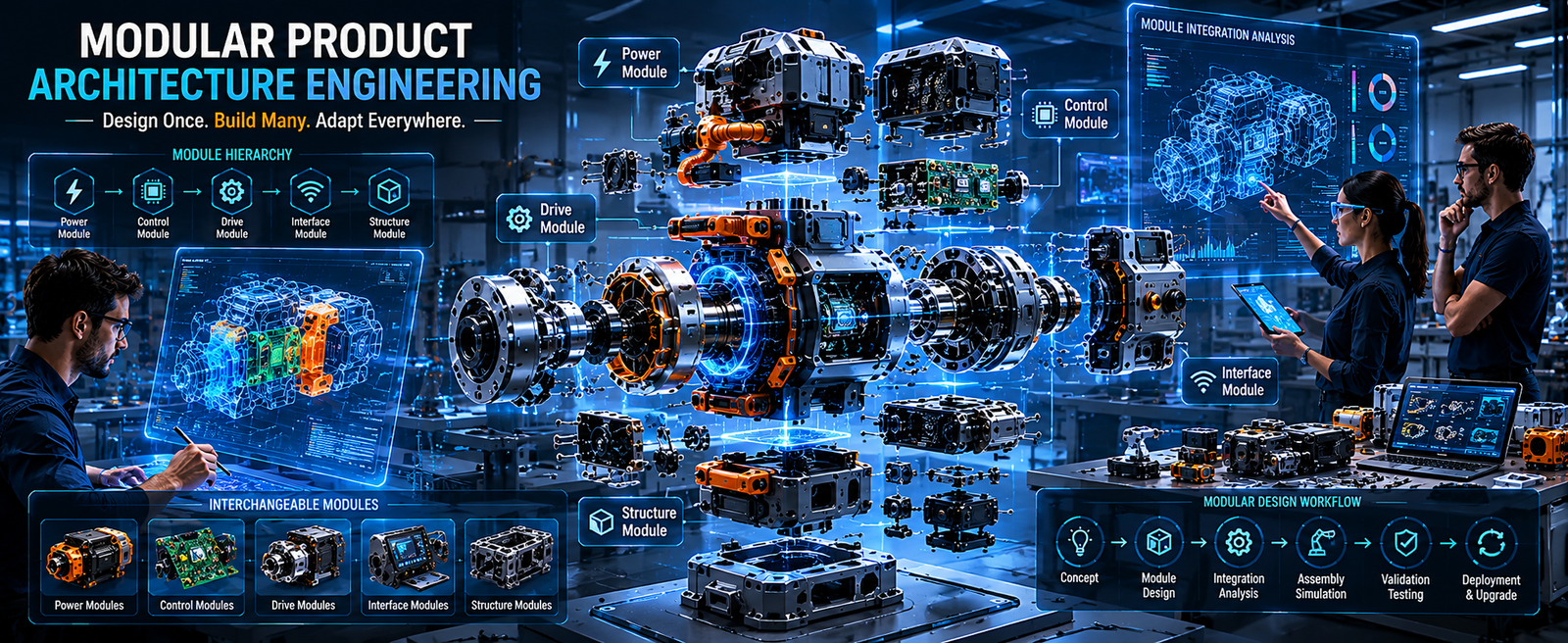
Modern industries constantly demand products that can adapt quickly to changing technologies and customer requirements.
Because of this, modular engineering systems have become extremely valuable.
One of the biggest advantages of modular design is flexibility.
Engineers can improve individual modules without redesigning the complete product structure.
This allows companies to:
Modern industries also prefer modular systems because they improve production efficiency and support faster product customization.
This approach is becoming increasingly important inside modern CAD design workflows and mechanical engineering industries in Pune.
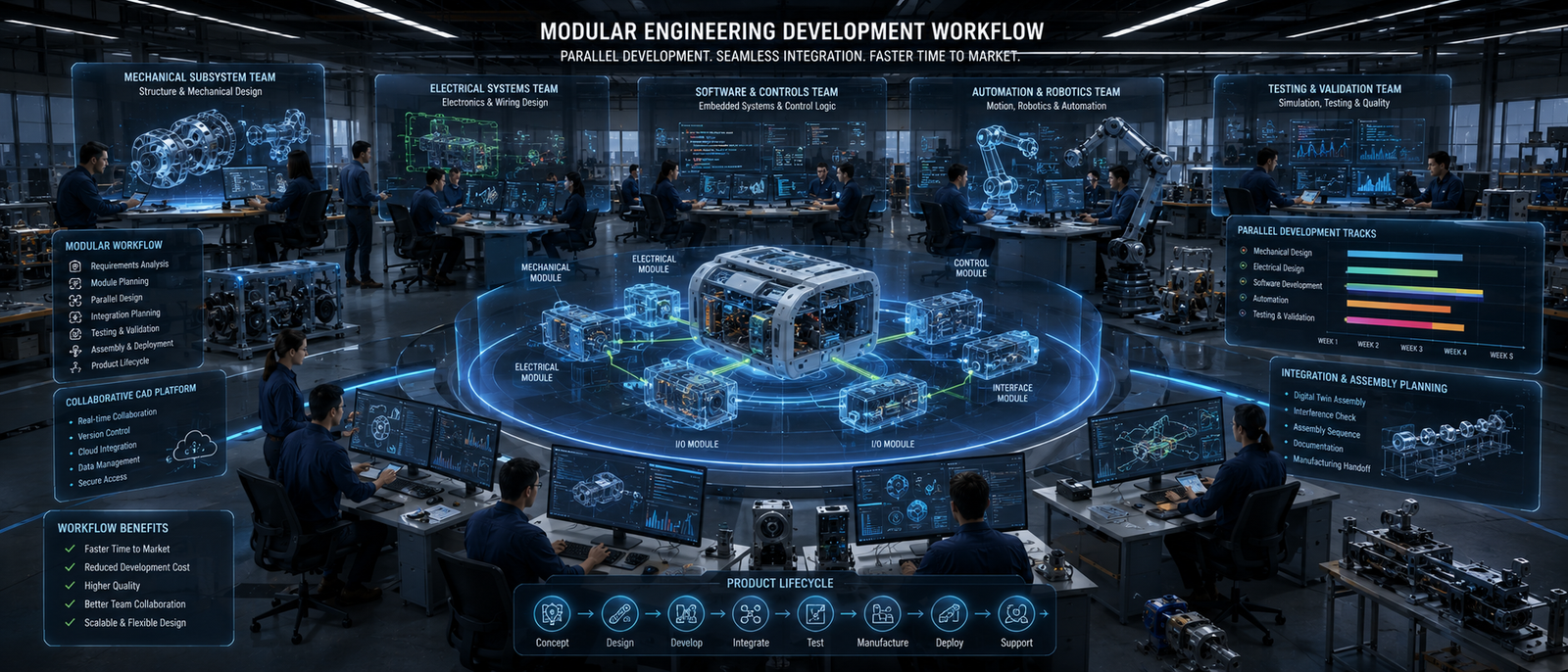
One major advantage of modular engineering is faster product development.
Instead of waiting for one complete product system to be finalized, engineers can work on multiple modules simultaneously.
This parallel workflow significantly reduces development time.
For example, one engineering team may work on structural components while another team develops automation systems or control modules independently.
This structured development approach strongly connects with the complete product design lifecycle, where engineering stages are optimized systematically.
Because of this workflow, industries can launch products faster while maintaining engineering quality and reliability.
Another major advantage of modular design is simplified maintenance.
In traditional systems, failure of one component may require replacement or repair of the entire assembly.
However, modular systems allow engineers to replace only the damaged or outdated module.
This reduces:
Industries also benefit because modular systems support continuous product improvement over time.
This workflow strongly connects with how engineering companies improve existing products, where products evolve through gradual upgrades instead of complete redesigns.
Because of this flexibility, modular systems remain useful for much longer operational lifecycles.
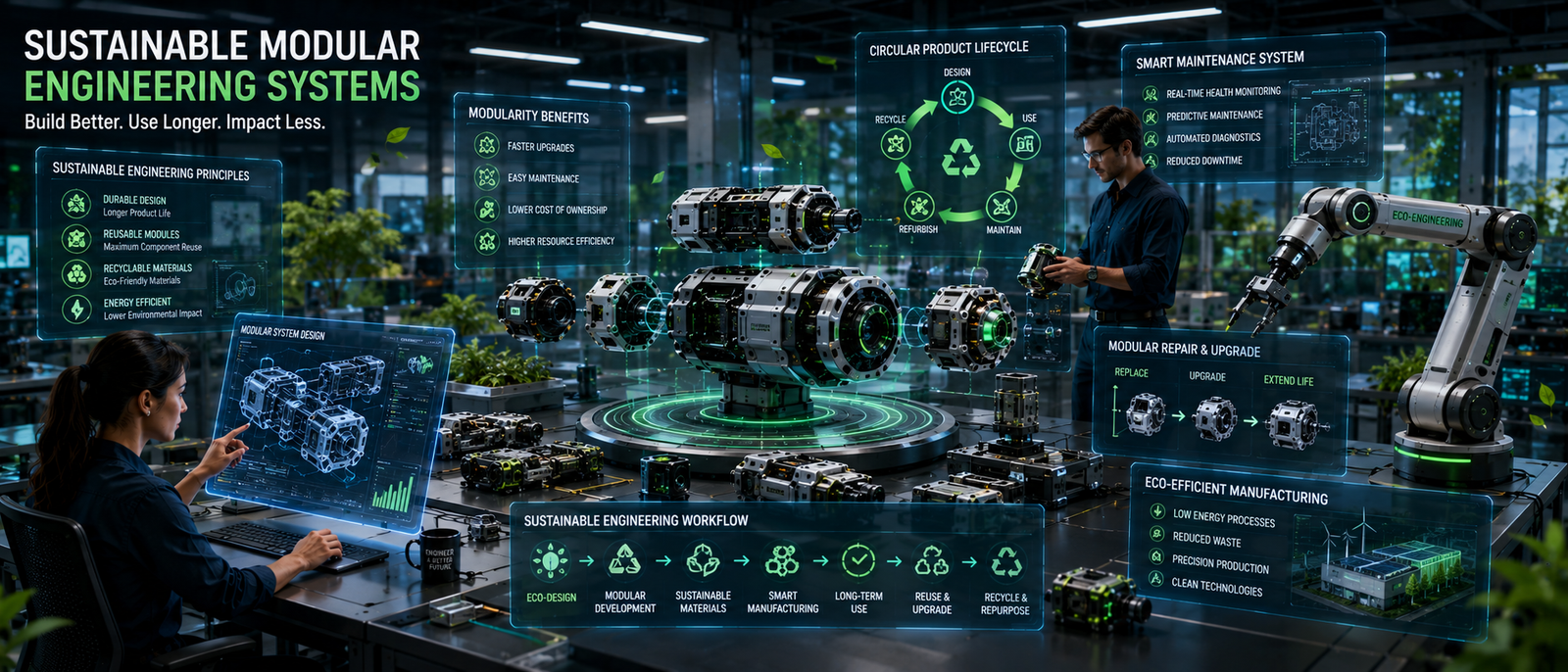
Modern engineering companies also use modular systems to improve design efficiency and support sustainable engineering practices.
Reusable modules reduce repetitive engineering work and help maintain consistent product quality across different product lines.
At the same time, modular systems reduce material waste because only required modules are replaced or upgraded.
This engineering approach strongly supports ideas explained in sustainable design in mechanical engineering.
As industries increasingly focus on environmental responsibility and long-term efficiency, modular engineering becomes even more valuable.
Consider a modern industrial machine or laptop system.
Instead of designing everything as one fixed unit, engineers divide the system into independent modules such as:
If one module becomes outdated or fails, engineers can replace or upgrade only that section.
Because of this, products remain operational for much longer while reducing maintenance cost and system downtime.
Although modular engineering offers many advantages, it also introduces important design challenges.
Engineers must ensure:
If modules are not designed carefully, system integration problems may reduce overall performance and reliability.
Because of this, modern engineers rely heavily on CAD software, simulation systems, and real-world testing workflows during modular product development.
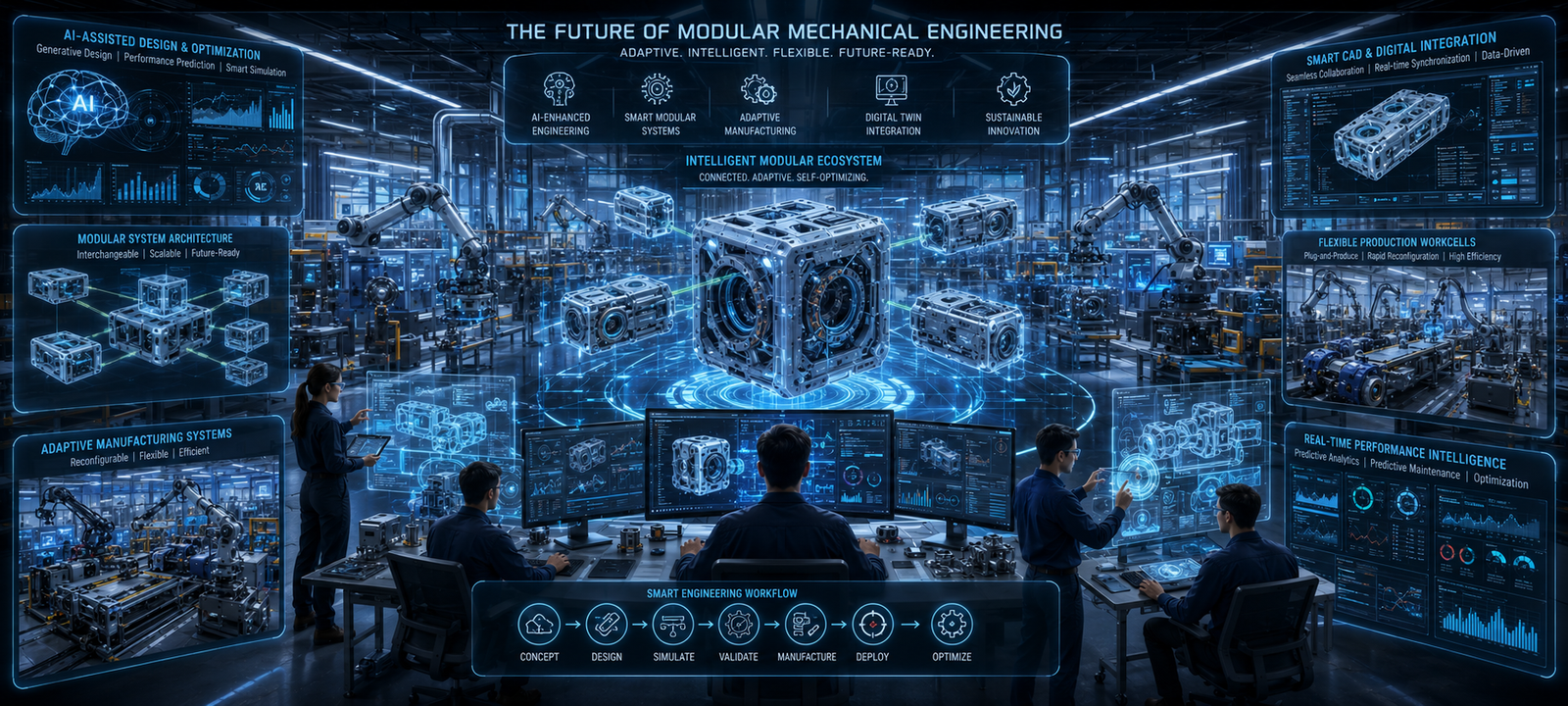
Modular design in mechanical engineering has transformed the way modern products are developed, manufactured, and maintained. Instead of redesigning entire systems, engineers can improve individual modules, making products more flexible, scalable, and cost-effective throughout their lifecycle.
From automotive systems and industrial machinery to consumer products and aerospace equipment, modular engineering enables faster product upgrades, simplified maintenance, improved manufacturing efficiency, and reduced development costs.
As industries continue adopting advanced manufacturing technologies and digital engineering workflows, professionals who understand modular product architecture, CAD assembly design, and system integration will remain highly valuable across mechanical design and product development roles.
Understanding modular engineering concepts becomes much easier when students apply them through real industrial projects using professional CAD software and engineering workflows.
At 4Dimensions Infotech Pune, students gain practical experience in modular assembly design, mechanical product development, CAD modeling, engineering simulations, and manufacturing-oriented design through project-based training.
Whether you’re looking for a Mechanical Design Course Pune, a SolidWorks Course in Pune, a CATIA Course Pune, or a CAD Course in Pune, practical learning helps you build the technical skills required to design modular products used in modern engineering industries.
Students work on real engineering projects using industry-standard software including SolidWorks, CATIA, AutoCAD, and Creo while learning the complete product development process followed by leading manufacturing companies.
1. What is modular design in mechanical engineering?
Modular design is an engineering approach where products are built using independent modules that can be assembled, replaced, upgraded, or maintained without redesigning the complete system.
2. Why is modular design important?
It improves manufacturing efficiency, simplifies maintenance, reduces development costs, supports future upgrades, and shortens product development time.
3. Which industries use modular product design?
Automotive, aerospace, industrial machinery, consumer electronics, robotics, and manufacturing industries widely use modular engineering concepts.
4. Which CAD software is commonly used for modular product design?
SolidWorks, CATIA, Creo, and AutoCAD are widely used for creating modular assemblies, mechanical products, and manufacturing-ready engineering designs.
5. Where can I learn modular product design and CAD skills in Pune?
Students looking for a Mechanical Design Course Pune, SolidWorks Course in Pune, CATIA Course Pune, or a CAD Course in Pune should choose project-based training that combines mechanical design concepts with practical CAD software and real industrial workflows.
© 2025 4Dimensions Infotech. All rights reserved. | Best Design Engineering Training Institute in Pune
Start your journey with the best design engineering training institute in Pune.