
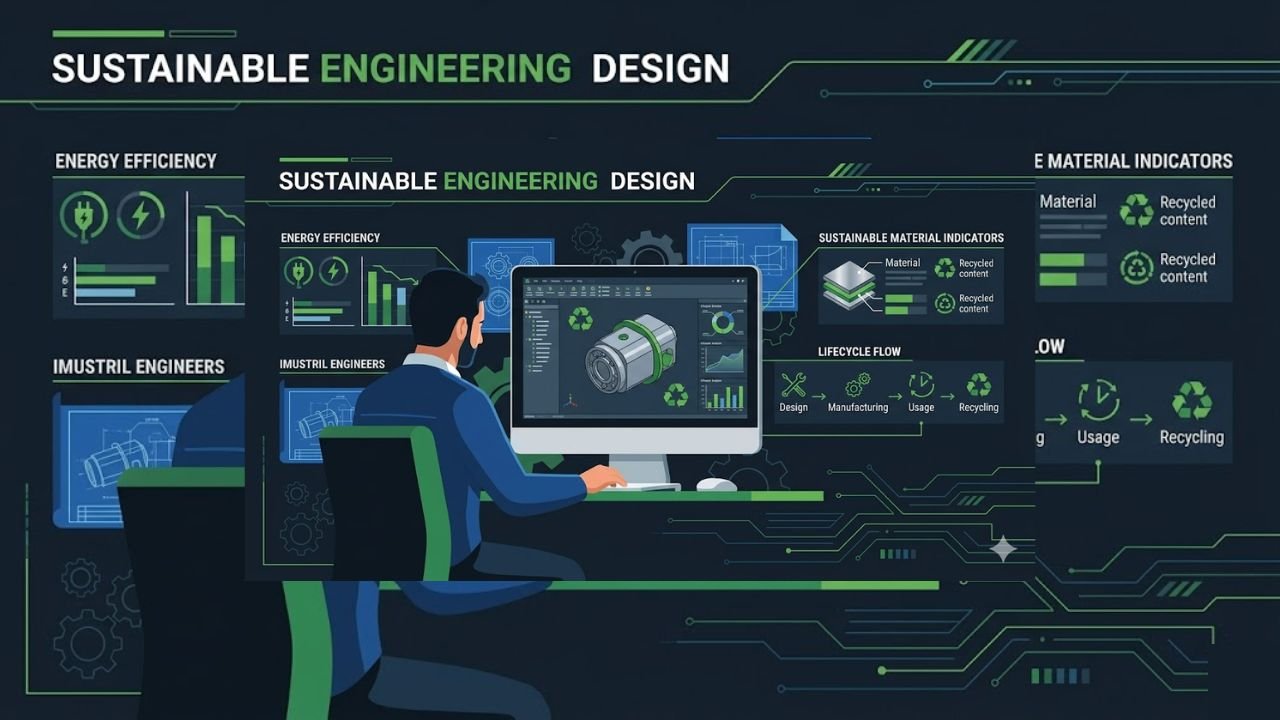
Sustainability is no longer just an environmental concern. Instead, it has become a core part of modern engineering design.
Today, industries expect engineers to create products that are not only efficient but also environmentally responsible.
As a result, sustainable design has become a major focus in mechanical engineering, automotive industries, product development, and manufacturing sectors.
Modern companies are actively searching for engineers who understand both technical performance and environmental responsibility. Because of this, students learning through a cad design course, engineering software course, or solidworks course are now expected to understand sustainable engineering concepts as well.
Sustainable design involves creating products and systems that reduce environmental impact throughout their entire lifecycle.
This includes reducing material waste, improving energy efficiency, lowering emissions, and designing products that last longer.
Instead of focusing only on performance and manufacturing speed, engineers now consider how a product affects the environment from production to disposal.
Therefore, sustainable engineering combines innovation, efficiency, and environmental responsibility into one design approach.
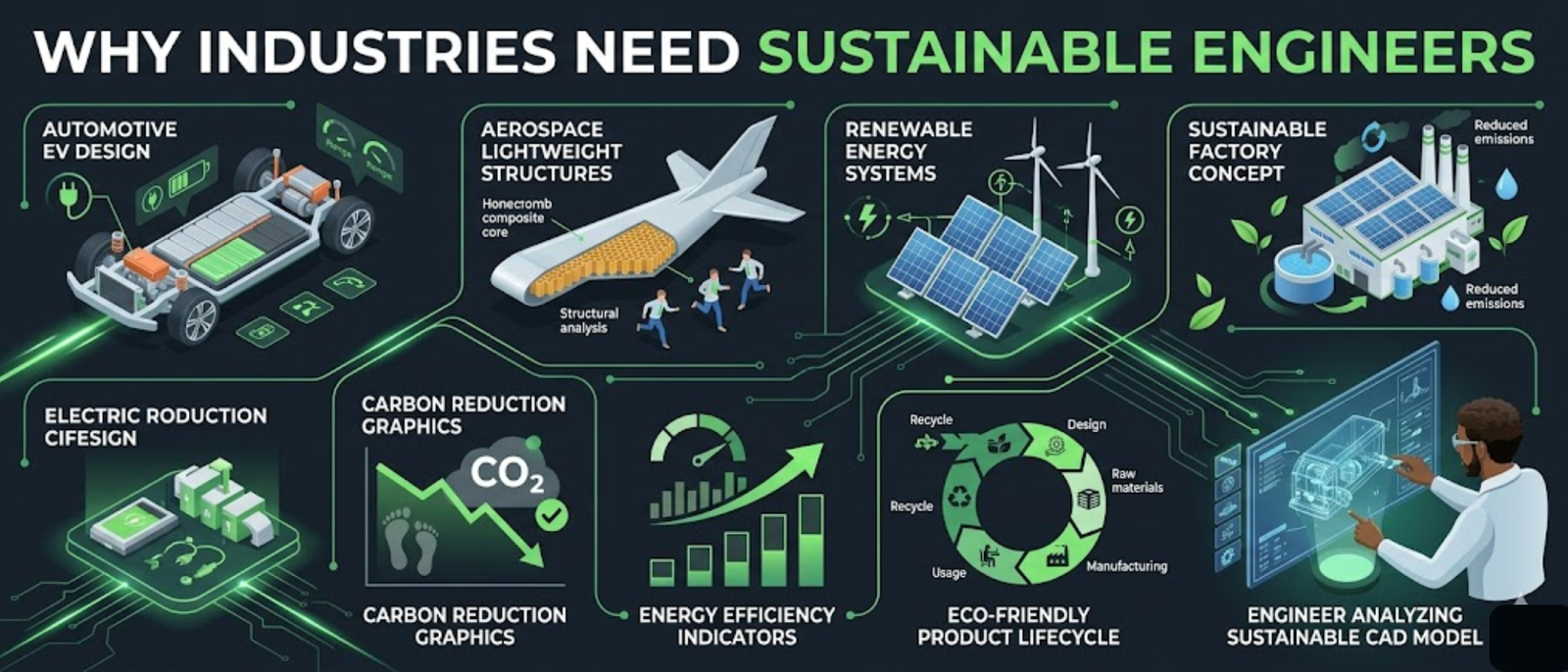
Industries today face increasing pressure to reduce carbon emissions, material waste, and resource consumption.
Because of this, companies are investing heavily in sustainable engineering practices and energy-efficient product development.
In addition, customers now prefer products that are environmentally friendly, lightweight, durable, and energy efficient.
This shift is especially visible in industries like automotive engineering, aerospace, consumer electronics, and industrial manufacturing.
For example, automotive companies are designing lighter vehicles to improve fuel efficiency, while electronics manufacturers are focusing on recyclable materials and low-energy systems.
Therefore, engineers who understand sustainability gain a strong advantage in the modern job market.
This is also why many students are now combining practical CAD skills with sustainable design thinking through structured training programs and real-world engineering projects.
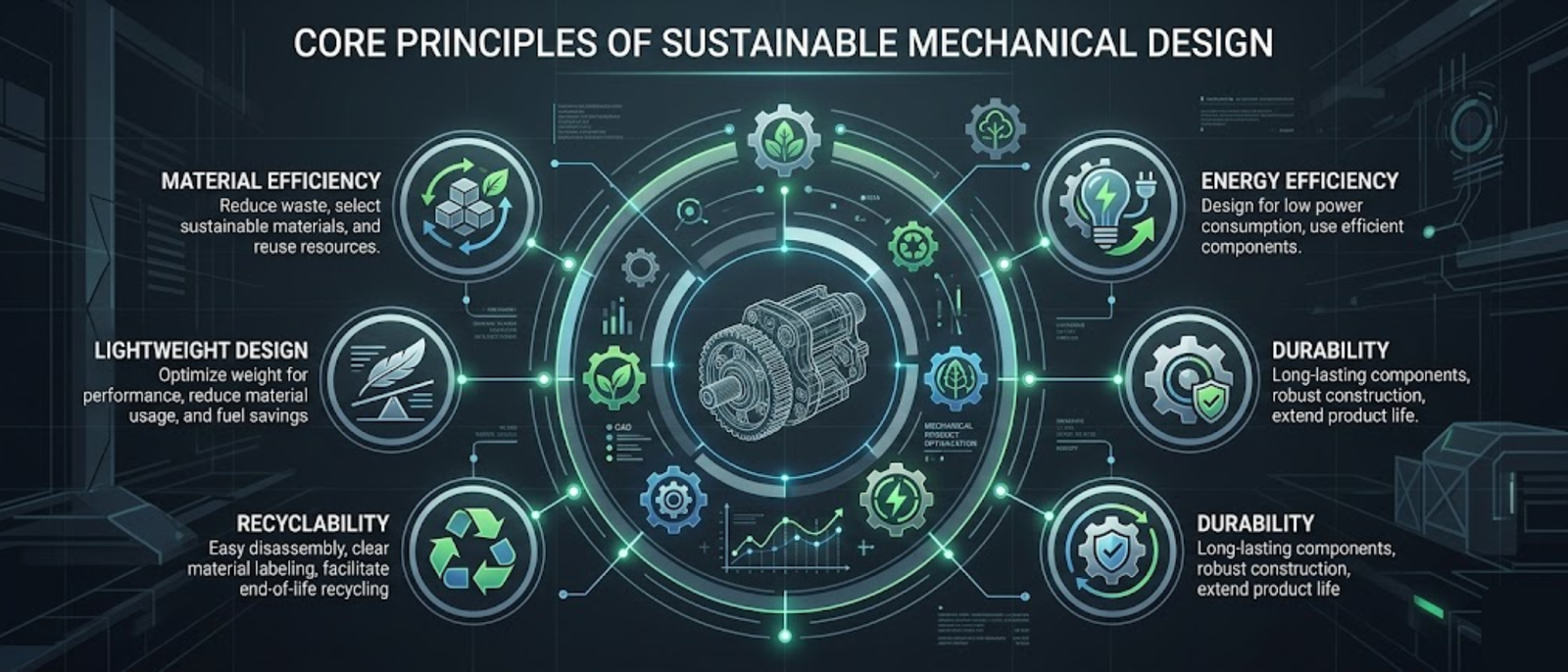
Sustainable engineering focuses on several important principles that help reduce environmental impact while improving product performance.
The first principle is efficient material usage. Engineers try to reduce unnecessary material consumption and minimize manufacturing waste.
The second principle is energy efficiency. Products are designed to consume less energy during operation without reducing performance.
Another important principle is durability. Long-lasting products reduce replacement frequency and lower overall environmental impact.
In addition, engineers focus on recyclability and reusability. Materials and components should be easy to recycle or reuse after the product lifecycle ends.
Modern engineering also emphasizes lightweight design strategies because reducing product weight often improves energy efficiency significantly.
These principles are now integrated into advanced CAD workflows used in industries worldwide.
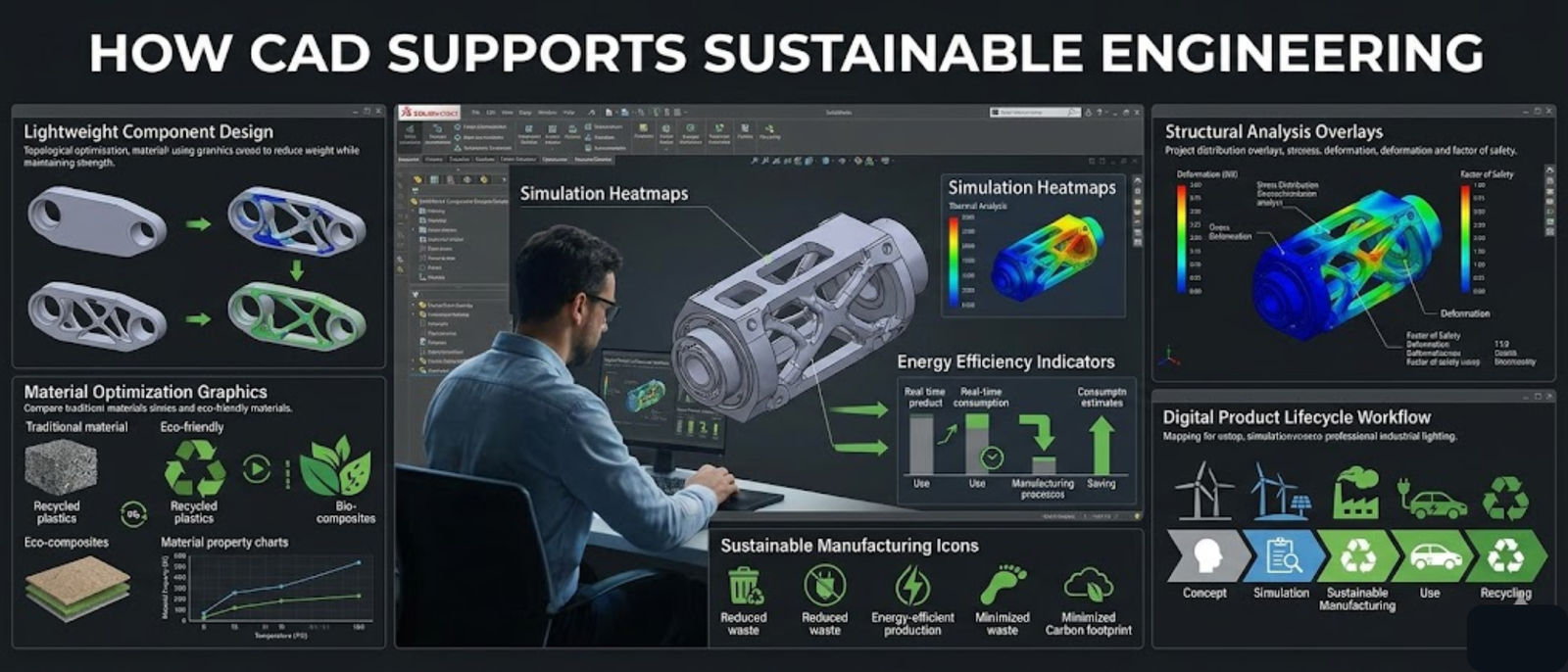
CAD tools play a major role in sustainable engineering workflows.
Engineers use software like SolidWorks, CATIA, and AutoCAD to optimize designs, reduce material usage, and improve structural efficiency.
Modern simulation tools allow engineers to test product performance digitally before manufacturing begins.
As a result, companies can reduce material waste, lower development costs, and improve product reliability.
Simulation features also help engineers analyze stress distribution, airflow, thermal efficiency, and structural performance during the design stage itself.
Students who complete a cad design course or engineering software course gain hands-on experience with these modern design workflows.
This practical exposure is becoming increasingly important because industries now expect engineers to understand both product performance and sustainability optimization.
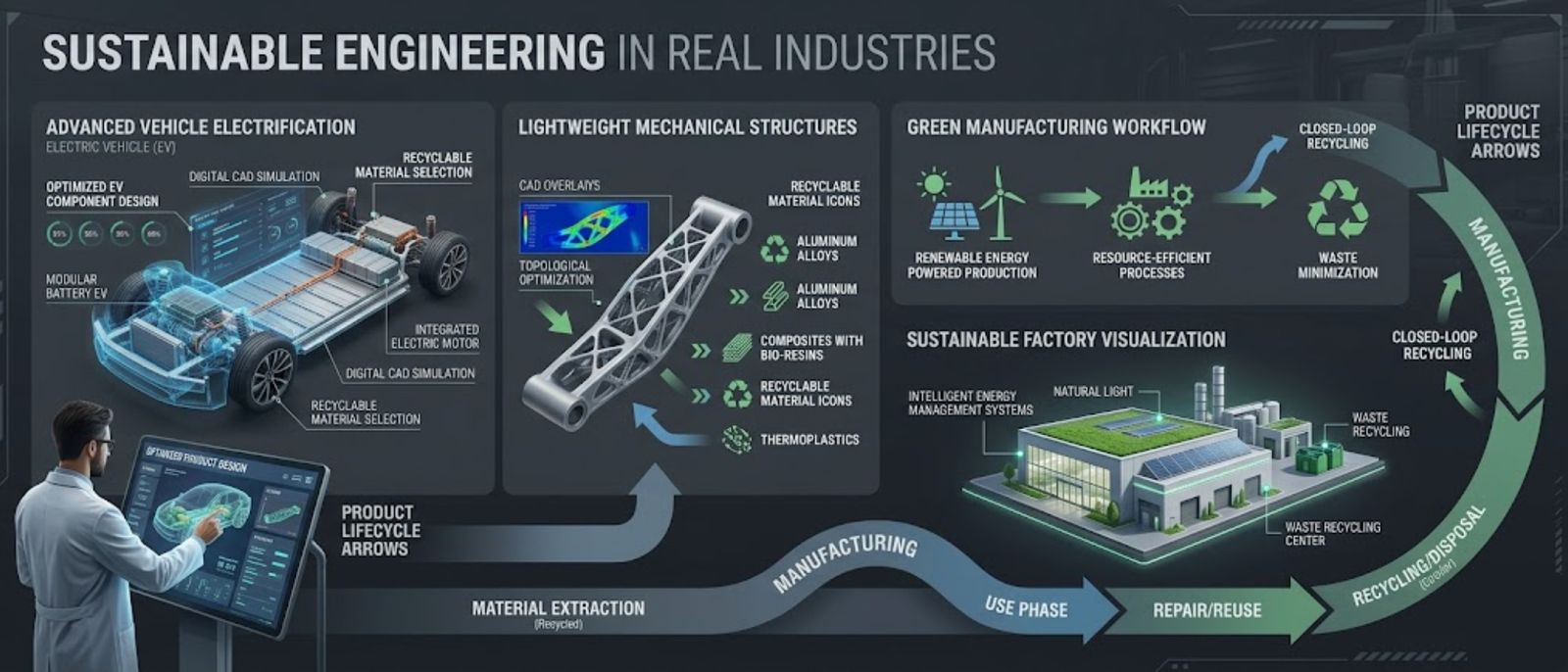
Consider the design of an electric vehicle component.
Engineers focus on reducing component weight to improve energy efficiency while maintaining structural strength and safety.
At the same time, they select materials that are recyclable, lightweight, and environmentally friendly.
Simulation tools help engineers optimize the design before production, reducing unnecessary material usage and improving manufacturing efficiency.
This combination of lightweight design, energy optimization, and smart material selection is one of the biggest reasons why sustainable engineering is becoming a major focus in modern industries.
Sustainable design is not always easy to achieve.
Engineers must balance cost, performance, durability, manufacturing complexity, and environmental impact at the same time.
In some cases, eco-friendly materials may be more expensive or difficult to manufacture.
However, with modern CAD tools, simulation workflows, and better engineering strategies, companies are gradually overcoming these challenges.
Sustainable design is shaping the future of mechanical engineering and product development.
It helps industries reduce environmental impact while improving product efficiency, durability, and long-term performance.
Therefore, engineers who understand sustainable engineering principles will play a major role in future industries.
Modern engineering is no longer only about creating products that work — it is about creating products that work responsibly.
To stay relevant in the evolving engineering industry, students must understand both technical design and sustainability-focused workflows.
Focus on building engineering skills that solve real problems while creating long-term positive impact.
1. What is sustainable design in engineering?
It is the process of designing products that reduce environmental impact while improving efficiency and durability.
2. Why is sustainability important in engineering?
It helps reduce waste, conserve resources, and create environmentally responsible products.
3. Which CAD tools support sustainable design?
CAD tools like SolidWorks, CATIA, and AutoCAD are widely used for sustainable engineering workflows.
4. Can students learn sustainable engineering?
Yes, students can learn sustainable design principles through practical CAD training and real-world engineering projects.
5. Is sustainable engineering the future?
Yes, sustainability is becoming one of the most important priorities in modern engineering industries.
© 2025 4Dimensions Infotech. All rights reserved. | Best Design Engineering Training Institute in Pune
Start your journey with the best design engineering training institute in Pune.