
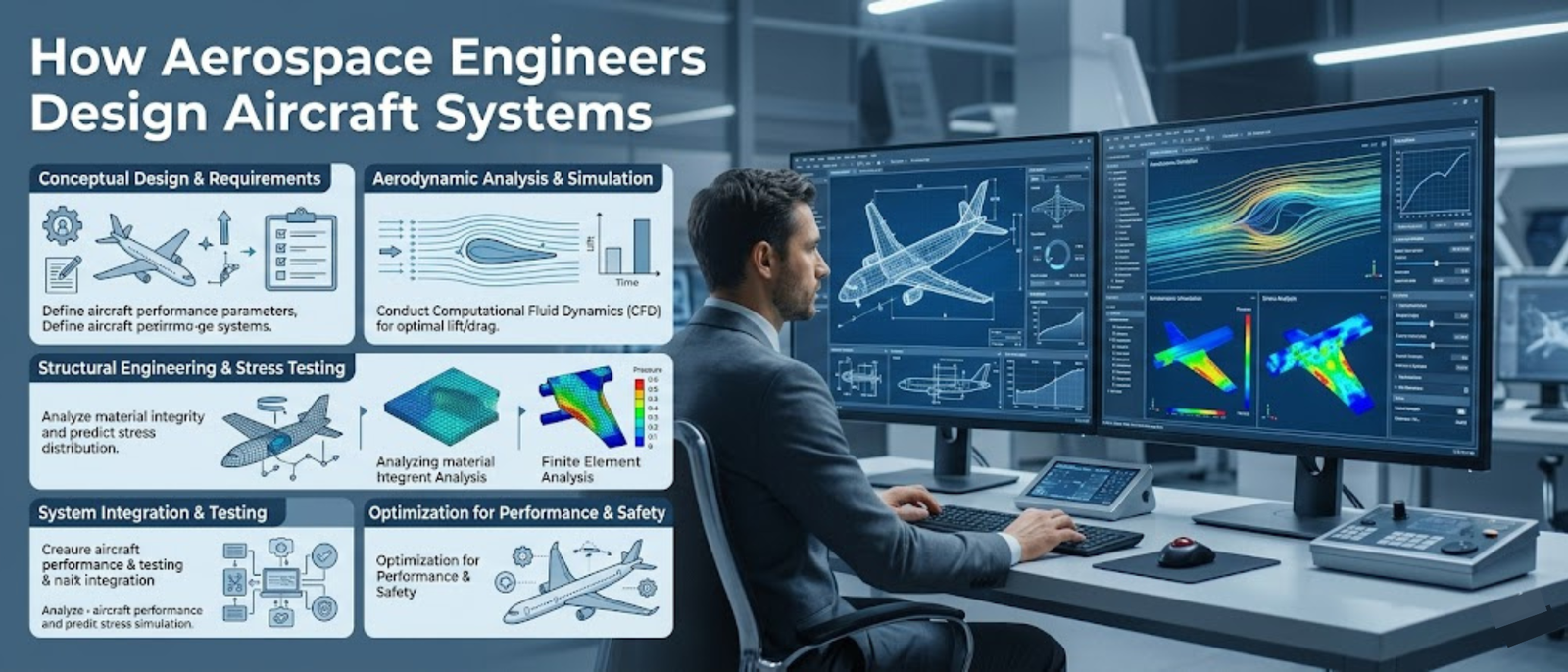
Aerospace engineering is one of the most advanced and precision-driven industries in the world. Unlike many other engineering sectors, even the smallest design error can create major safety risks. Because aircraft and spacecraft operate under extreme environmental conditions, every component must meet strict engineering standards before it is approved for real-world use.
This is why aerospace companies follow highly controlled design procedures during every stage of product development. From aircraft structures to engine systems and internal components, everything is designed using standardized engineering methods.
Modern aerospace companies also depend heavily on advanced CAD workflows, simulation systems, and digital engineering tools to maintain safety and accuracy throughout the design process.
Students exploring careers in aerospace engineering often begin with a cad design course, CATIA course, or engineering software course in Pune to understand how high-precision engineering industries actually function.
Aerospace engineering design standards are a structured set of technical guidelines, manufacturing procedures, safety regulations, and quality requirements used during the development of aerospace systems.
These standards help engineers ensure that aircraft, spacecraft, and aerospace components perform safely under real-world operating conditions.
Instead of depending on assumptions or trial-and-error methods, aerospace engineers follow predefined standards that guide:
These standards create consistency across aerospace manufacturing industries and reduce the chances of design failures.
Engineers working in aerospace industries must understand how to apply these standards during CAD modeling, simulations, product testing, and manufacturing workflows.
Safety is the foundation of aerospace engineering.
Aircraft operate under:
Because of these conditions, even a small design mistake can result in structural failure or operational risks.
Aerospace standards ensure that every part is designed, tested, and validated properly before production begins.
For example:
Without strict standards, maintaining reliability in aerospace systems would be nearly impossible.
This is why aerospace companies actively look for engineers who understand modern CAD workflows, simulation tools, and engineering validation systems.
Students learning through structured cad course programs and practical CAD projects gain better understanding of these industry expectations.
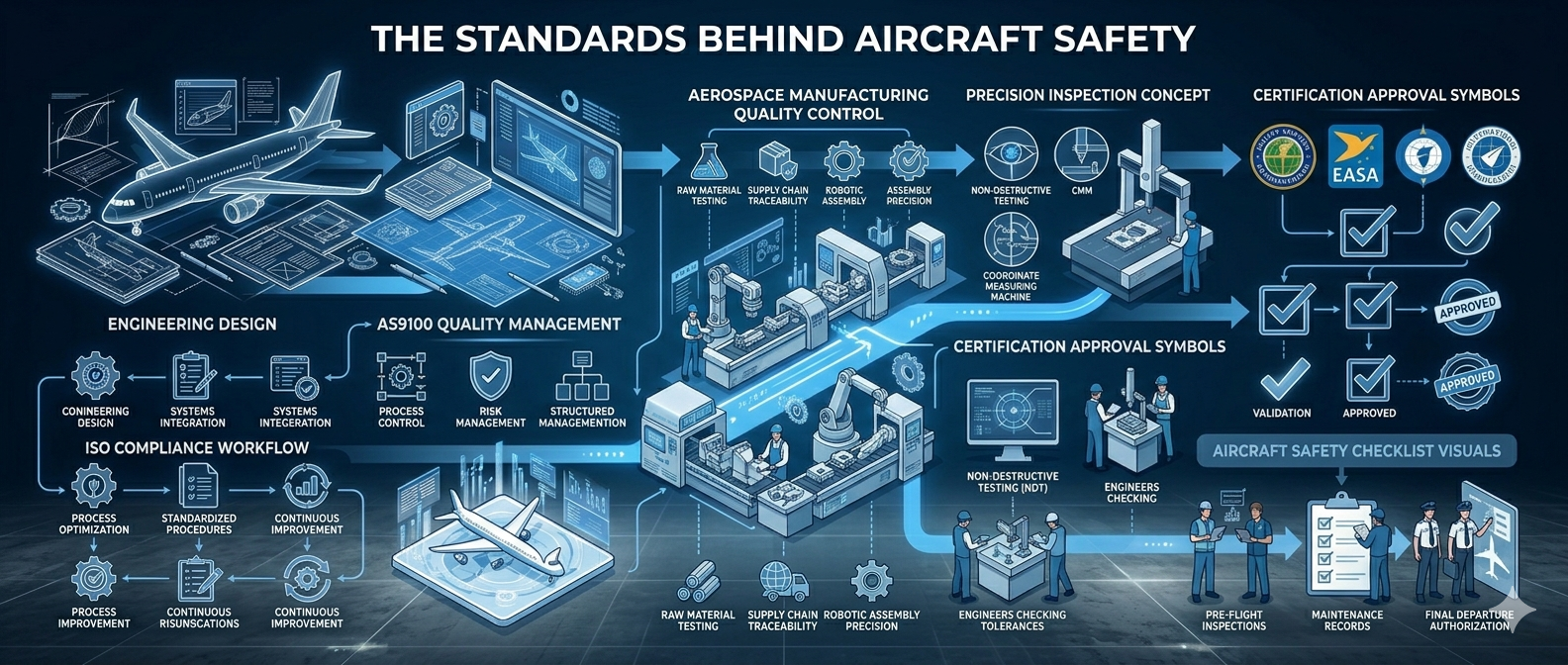
Several international standards guide aerospace design and manufacturing processes.
AS9100 is one of the most important quality management standards used in aerospace industries.
It focuses on:
Most aerospace manufacturers require suppliers and engineering teams to follow AS9100 compliance standards.
The Federal Aviation Administration (FAA) creates safety regulations for aircraft systems and operations.
FAA standards help ensure:
Aircraft cannot operate commercially unless they meet strict certification requirements.
ISO standards support manufacturing quality, engineering processes, and industrial workflow management.
These standards improve:
Together, these standards create a strong engineering framework for aerospace industries worldwide.
Modern aerospace engineering relies heavily on advanced CAD tools and simulation technologies.
Engineers use software like:
to create detailed aerospace models and test their performance digitally before manufacturing begins.
These tools allow engineers to:
As a result, engineers can improve existing products much faster while reducing development cost and time.
CATIA is especially popular in aerospace industries because it supports:
Students who complete a CATIA course or cad design course gain practical exposure to aerospace-level engineering workflows.
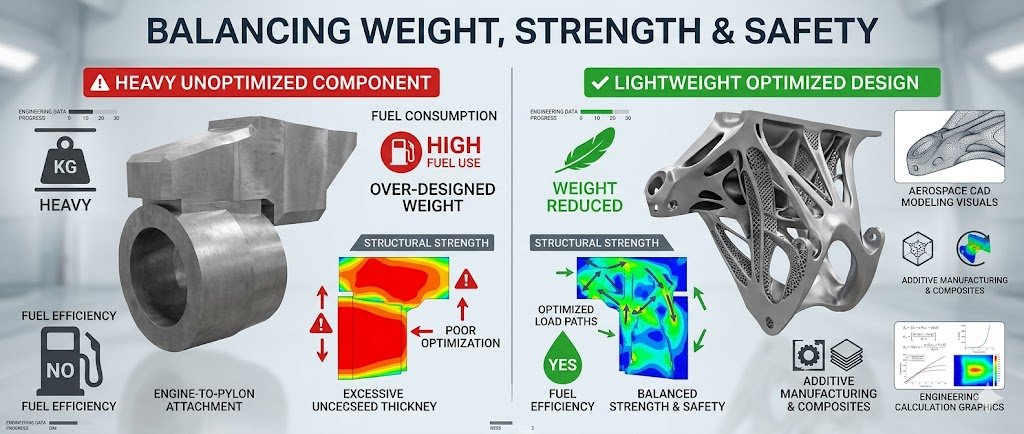
Aerospace engineering is extremely challenging because engineers must balance multiple design requirements at the same time.
For example:
At the same time, engineers must also:
This is where concepts like factor of safety in mechanical design become extremely important in aerospace product development.
Because of these challenges, aerospace engineering requires:
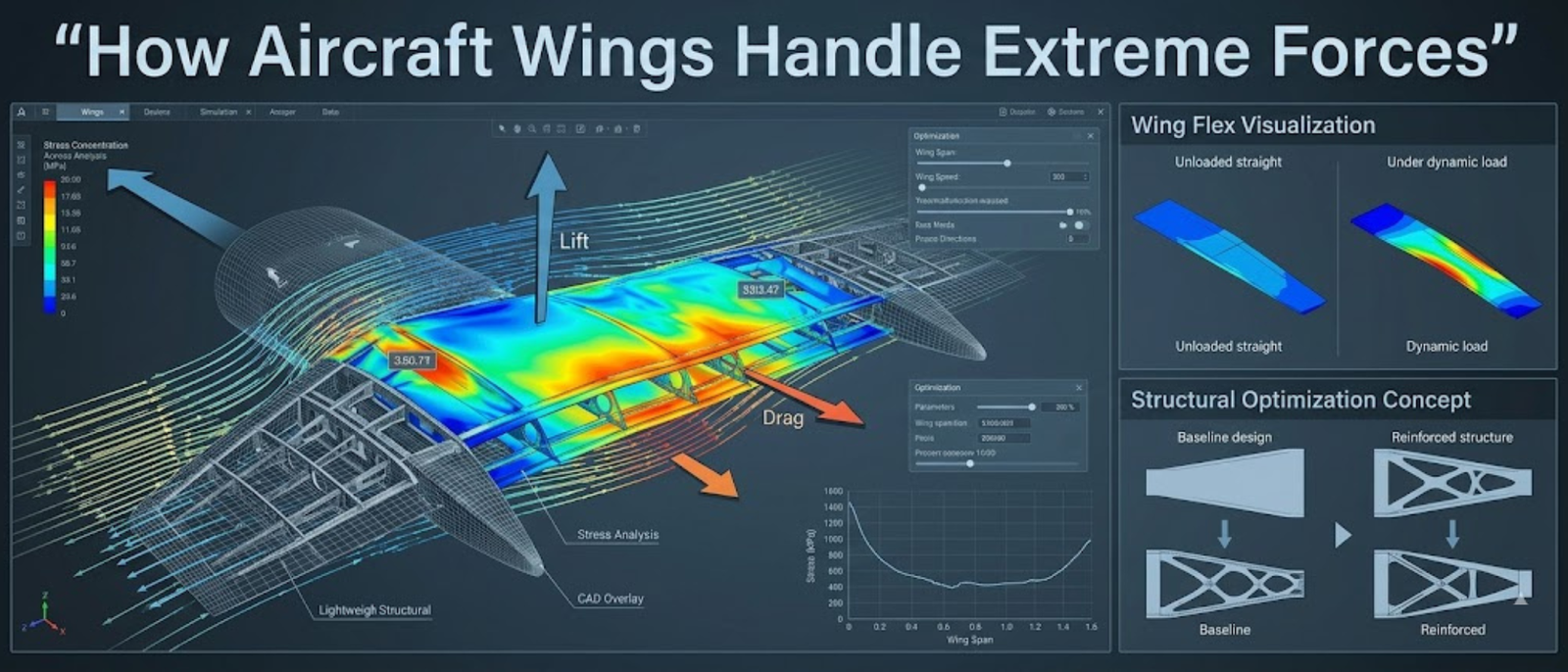
Consider the design of an aircraft wing.
The wing must:
To achieve this balance, aerospace engineers use:
Modern aerospace companies also apply lightweight design strategies in engineering to improve fuel efficiency while maintaining structural strength.
Without these systems and standards, safe aerospace engineering would not be possible.
Aerospace engineering develops some of the strongest technical problem-solving skills in the engineering industry.
Engineers working in aerospace gain experience in:
These skills are also highly valuable in:
Because of this, students with aerospace-level CAD and simulation skills often have strong long-term career opportunities.
Students interested in aerospace engineering should focus on developing strong fundamentals in:
A practical learning path usually includes:
Practical project experience is extremely important because aerospace companies value application skills more than theoretical software knowledge alone.
At 4Dimensions Infotech, students learn engineering design through practical industry-oriented workflows instead of only theoretical software learning.
Programs include:
Students also gain:
The goal is to prepare students for modern engineering industries where precision, standards, and technical accuracy matter the most.
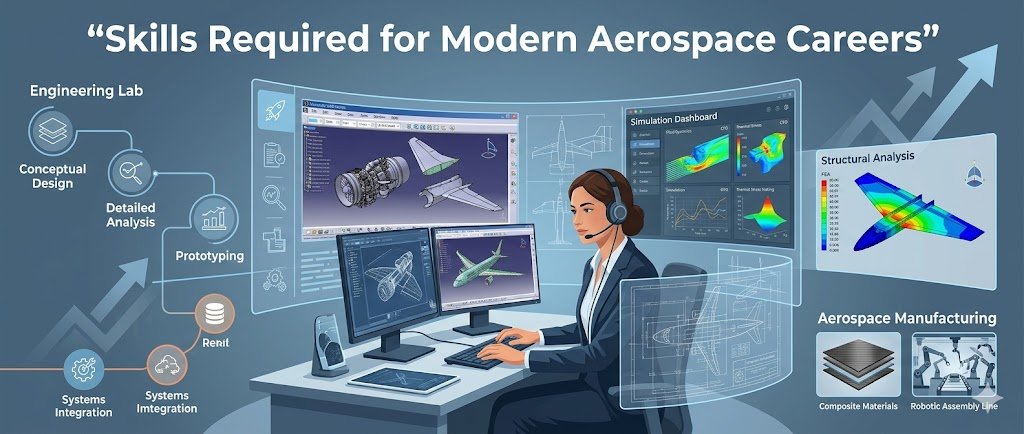
Aerospace engineering design standards are essential for ensuring safety, reliability, and performance in one of the most demanding engineering industries in the world.
Without these standards, designing reliable aircraft and aerospace systems would not be possible.
Modern aerospace engineering combines:
Students who understand these workflows and standards gain a strong advantage in high-precision engineering careers.
1. What are aerospace engineering design standards?
They are technical guidelines and safety regulations used to design reliable aerospace systems.
2. Why are aerospace standards important?
They ensure aircraft and aerospace systems perform safely under extreme conditions.
3. Which CAD software is used in aerospace engineering?
CATIA, SolidWorks, and advanced simulation software are commonly used.
4. What is AS9100?
AS9100 is a quality management standard specifically designed for aerospace industries.
5. Can students learn aerospace engineering design?
Yes, students can build aerospace-related CAD and simulation skills through structured practical training programs.
© 2025 4Dimensions Infotech. All rights reserved. | Best Design Engineering Training Institute in Pune
Start your journey with the best design engineering training institute in Pune.