Functional Design vs Aesthetic Design in Engineering

Functional Design vs Aesthetic Design in Engineering

In engineering and product development, every successful product is built around two major concepts functionality and aesthetics.

Some products are designed mainly for performance, durability, and efficiency, while others focus heavily on visual appeal and user experience. However, in modern industries, the most successful products are those that balance both perfectly.

Whether it is a car, smartphone, machine component, building structure, or consumer product, engineers and designers must carefully combine technical performance with attractive design presentation.

Today, industries expect engineers to understand both engineering logic and modern design thinking. That is why students learning through a cad design course, engineering software course, or mechanical design training program are increasingly exposed to both functional and aesthetic design principles.

At 4Dimensions Infotech in pune, students work on practical CAD projects that help them understand how real products are designed with both performance and visual appeal in mind.

What is Functional Design?

Functional design focuses on how effectively a product performs its intended purpose.

The primary goal of functional design is to ensure:

  • Efficiency
  • Durability
  • Safety
  • Reliability
  • Ease of use
  • Performance under real-world conditions

In engineering, functionality always comes first because a product that does not work properly cannot succeed regardless of appearance.

For example, in automotive engineering, functional design includes:

  • Engine performance
  • Structural strength
  • Brake systems
  • Aerodynamics
  • Mechanical reliability

Similarly, in civil engineering, functional design focuses on:

  • Structural stability
  • Load-bearing capacity
  • Safety standards
  • Infrastructure durability

Modern CAD tools help engineers analyze and improve these aspects before manufacturing begins.

Students learning through:

  • solidworks course
  • catia course
  • creo software course
  • cad software course

often spend significant time understanding functional modeling, simulations, and practical engineering workflows.

You can also explore:
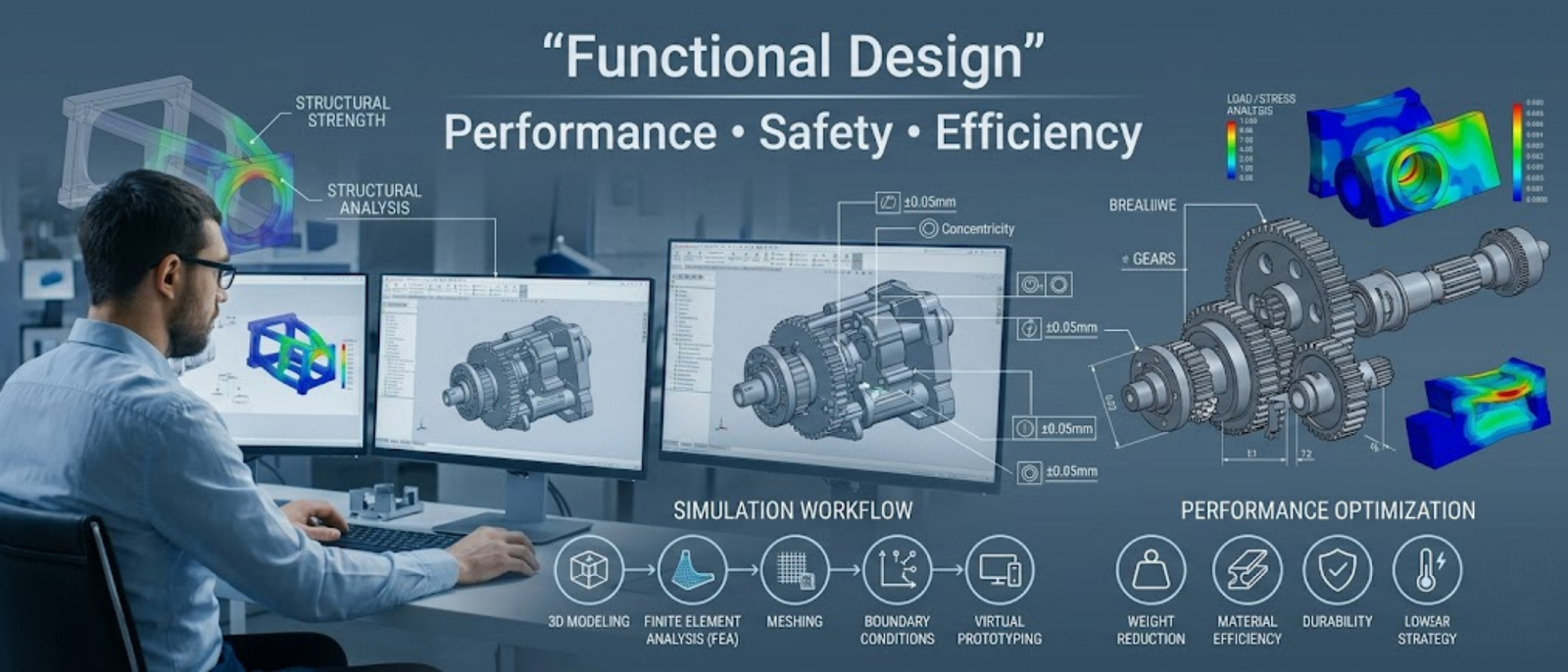
Functional Design Process in Mechanical Engineering

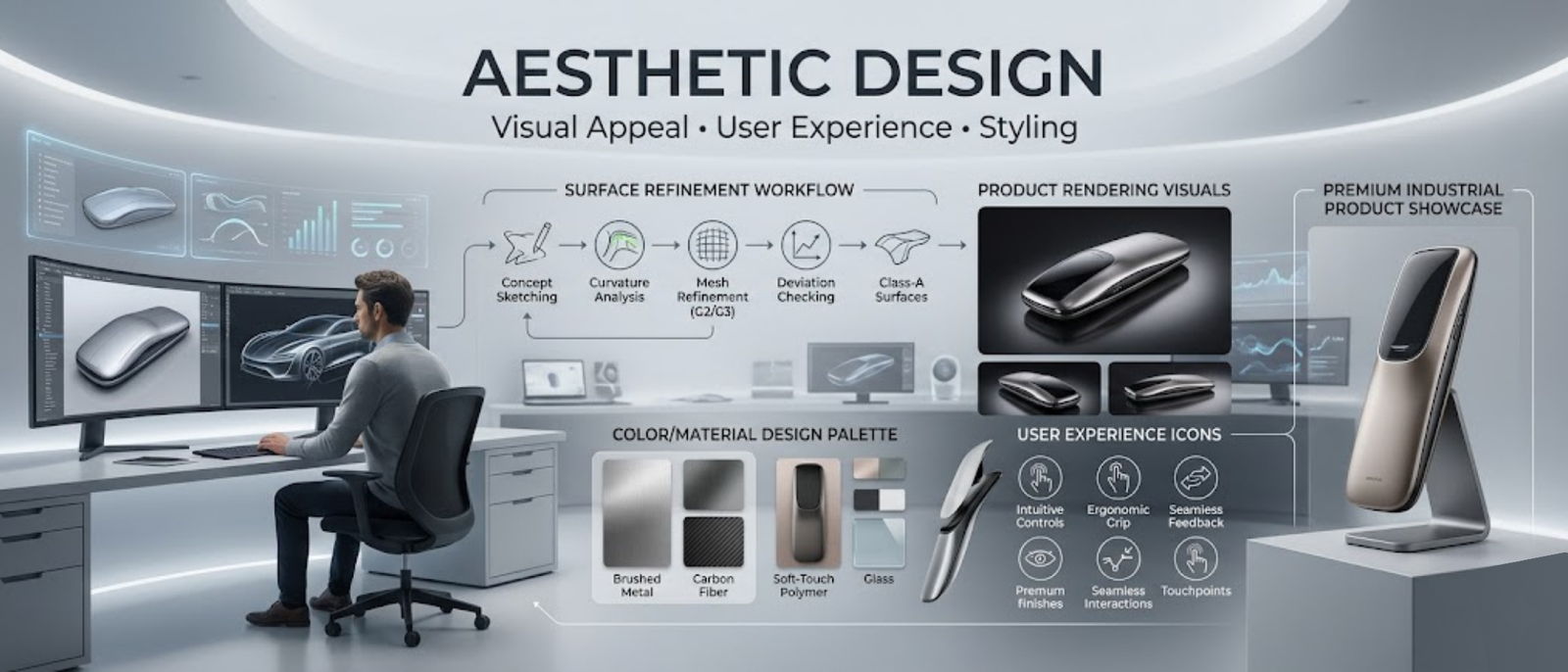
What is Aesthetic Design?

Aesthetic design focuses on the visual appearance, emotional appeal, and user experience of a product. It answers questions like:
  • Does the product look attractive?
  • Does it feel modern?
  • Does it create a strong user impression?
  • Does it match the brand image?
Even when two products perform similarly, users often prefer the one that looks more appealing and feels more refined. This is why aesthetic design plays a major role in:
  • Consumer electronics
  • Automotive interiors
  • Product packaging
  • Furniture design
  • Industrial product development
Modern industries no longer view aesthetics as optional. In highly competitive markets, visual presentation strongly influences customer decisions and brand value. Designers working with:
  • AutoCAD
  • SolidWorks
  • CATIA
  • surface modeling tools
often focus on creating cleaner shapes, better ergonomics, smoother surfaces, and visually balanced products. Advanced surface modeling inside CATIA is especially important in automotive and aerospace industries where appearance and aerodynamics both matter.
Aesthetic Product Design Using CAD Softw

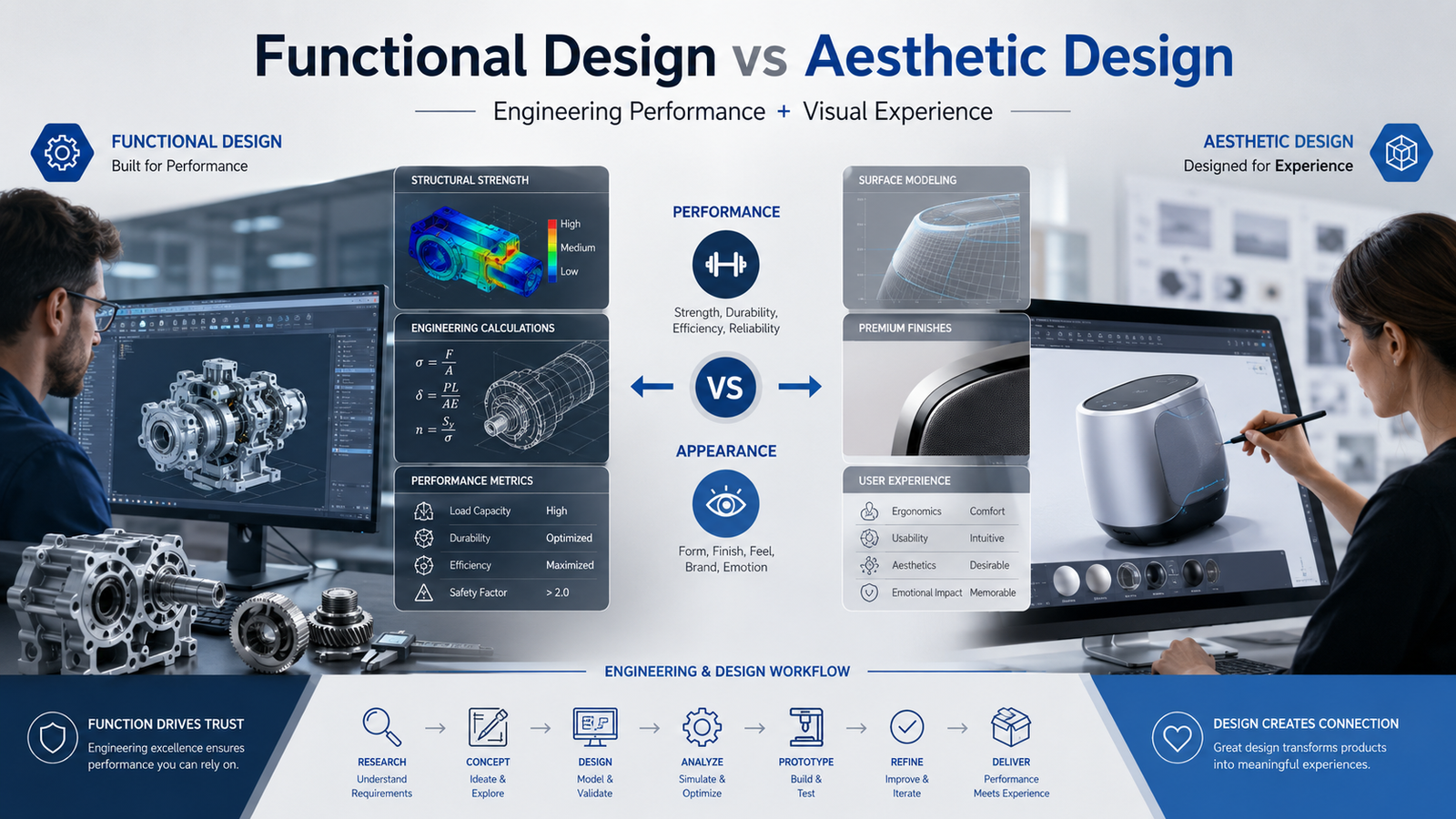
The Main Difference Between Functional and Aesthetic Design

The biggest difference between functional and aesthetic design is the purpose behind each approach. Functional design focuses on:
  • Engineering performance
  • Technical calculations
  • Strength and durability
  • Practical usability
  • System efficiency
Aesthetic design focuses on:
  • Visual appeal
  • User experience
  • Shape and styling
  • Surface finish
  • Emotional connection
In simple terms:
  • Functional design asks: “Does it work properly?”
  • Aesthetic design asks: “Does it look and feel good?”
However, modern engineering rarely treats them separately anymore. The most successful products combine both perfectly.

Why Modern Engineering Requires Both

In earlier industries, engineering mainly focused on performance and technical accuracy. Today, customer expectations are much higher. Users now expect products that:
  • Work efficiently
  • Look modern
  • Feel comfortable
  • Provide better user experiences
A machine may perform perfectly, but if the design feels outdated or uncomfortable, customers may still reject it. Similarly, a visually attractive product without reliability or functionality will also fail. Because of this, modern industries combine engineering logic with design thinking from the early stages of product development. This is one reason why skill-based CAD learning is becoming more valuable than traditional theory alone. You can also read:

Real-World Example of Functional and Aesthetic Design

A smartphone is one of the easiest examples to understand this balance. The internal systems such as:
  • Processor performance
  • Battery life
  • Thermal management
  • Signal strength
  • Structural durability
represent functional engineering design. At the same time:
  • Body shape
  • Screen appearance
  • Material finish
  • User interface
  • Color and styling
represent aesthetic design. Companies invest heavily in both because users expect products that are both powerful and visually attractive. The same concept applies to:
  • Cars
  • Consumer electronics
  • Industrial machinery
  • Furniture
  • Buildings and infrastructure

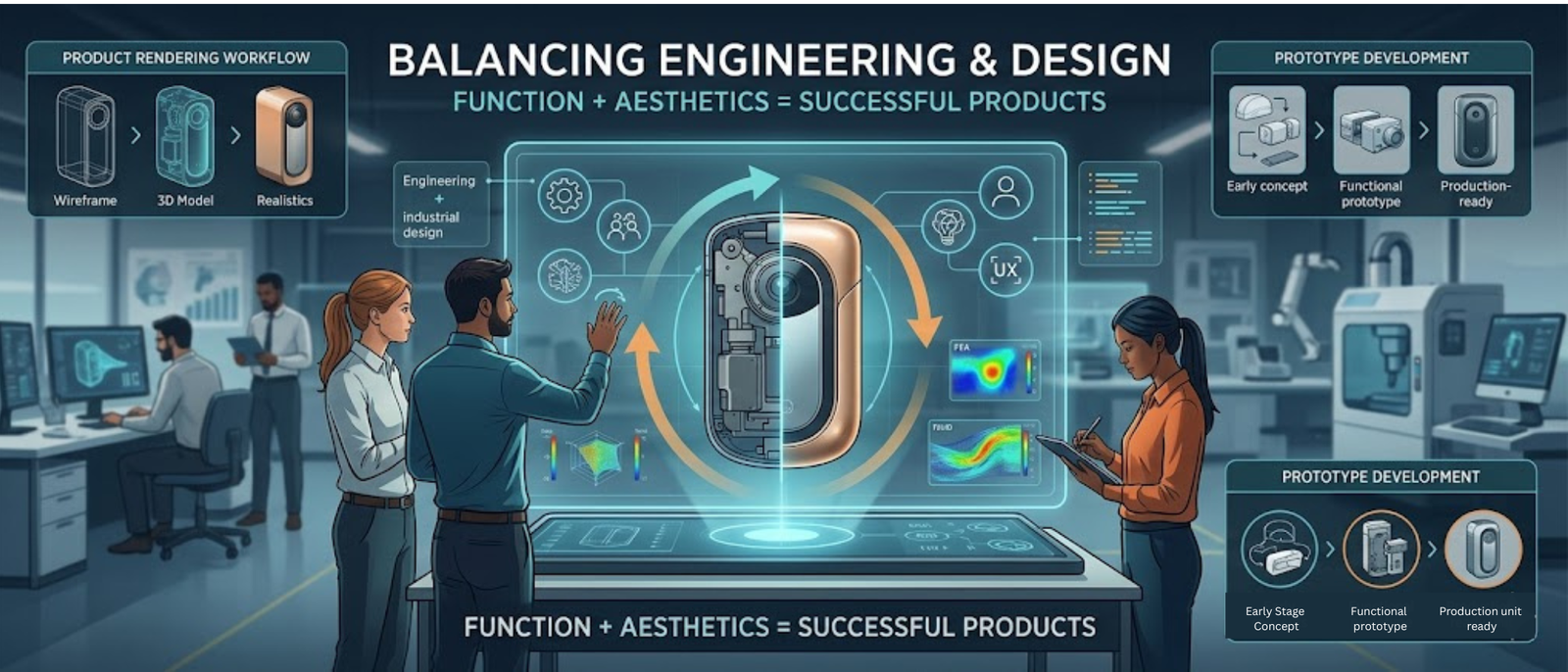
How Engineers Balance Both Design Approaches

Modern engineers use advanced CAD tools, simulations, prototyping systems, and design iterations to balance functionality and aesthetics together. Software like:
  • SolidWorks
  • CATIA
  • AutoCAD
  • Revit
helps engineers visualize products, analyze performance, improve ergonomics, and refine designs before production begins. For example:
  • Simulation tools help test functionality
  • Surface modeling tools improve aesthetics
  • Rendering tools improve product visualization
  • BIM systems improve building presentation and coordination
This integration is especially important in industries like:
  • Automotive engineering
  • Aerospace design
  • Architecture
  • Product manufacturing
  • Consumer product development
Balancing Functionality and Aesthetics in Product Design

Why Practical CAD Skills Matter

Modern engineering companies no longer want engineers who only understand software commands. Instead, industries prefer engineers who understand:
  • Real engineering workflows
  • Problem-solving
  • Design logic
  • User-focused thinking
  • Industry standards
This is why practical project experience has become extremely important. Students who work on real CAD projects often understand design thinking much better than students who only complete software tutorials. Helpful reads include:

Why Choose 4Dimensions Infotech?

At 4Dimensions Infotech, students are trained through practical CAD workflows that combine engineering functionality with modern design thinking. Training programs include:
  • AutoCAD training
  • SolidWorks course
  • CATIA training
  • Creo software course
  • CAD CAM CAE programs
Students also gain:
  • Hands-on project experience
  • Industry-oriented CAD workflows
  • Practical design exposure
  • Mechanical and product design understanding
  • Placement assistance support
The goal is to build engineers who can design products that are both technically strong and visually effective.
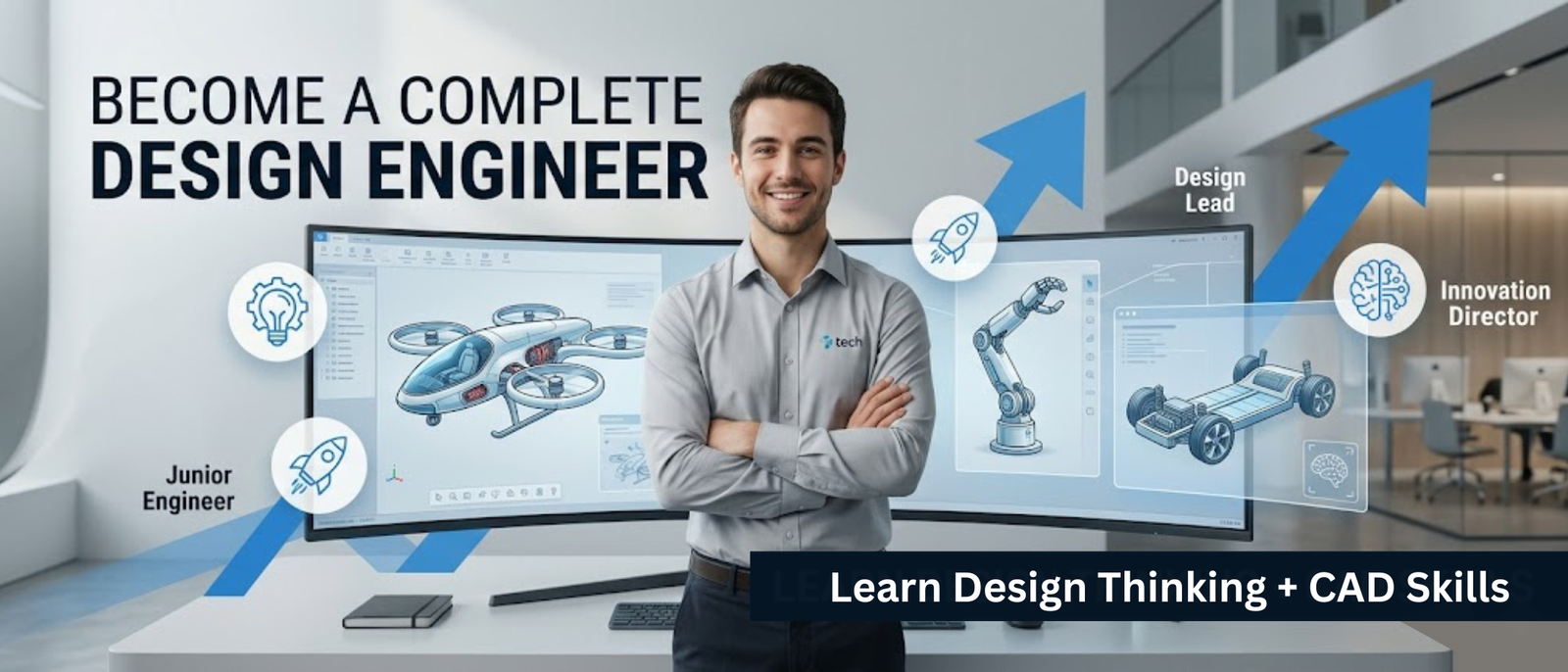
CAD Design Training for Future Engineers

Conclusion

Functional design and aesthetic design are not competing ideas.

They are two equally important parts of modern engineering and product development.

A product succeeds when it performs efficiently while also creating a strong user experience.

Engineers who understand both technical performance and design presentation are becoming increasingly valuable in industries focused on innovation, branding, and customer experience.

👉 Join 4Dimensions Infotech and build industry-ready CAD and product design skills through practical engineering training programs.

Frequently Asked Questions (FAQ)

1. What is functional design in engineering?

Functional design focuses on the performance, efficiency, reliability, and usability of a product.

2. What is aesthetic design?

Aesthetic design focuses on the visual appearance, styling, and user experience of a product.

3. Which is more important: function or aesthetics?

Both are equally important because successful products must perform well and also appeal to users visually.

4. Do engineers work on aesthetic design?

Yes, especially in industries like automotive, product design, consumer electronics, and industrial design.

5. Which CAD course helps with both functional and aesthetic design?

Software like AutoCAD course, SolidWorks course, CATIA course, and Revit course helps engineers balance technical performance with visual design.

Got Questions? Let’s Talk!

Start your journey with the best design engineering training institute in Pune.