
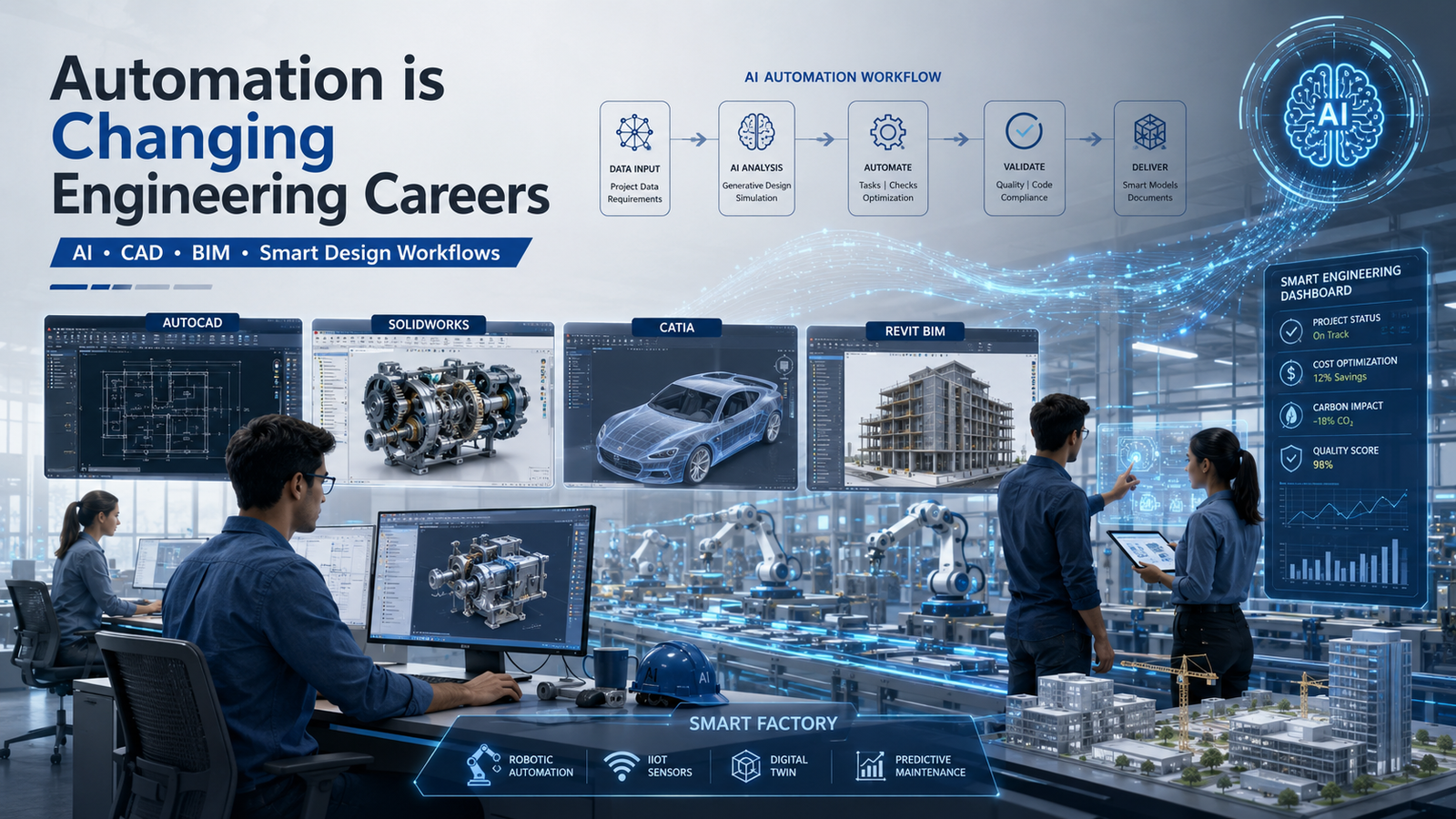
The engineering industry is evolving faster than ever before. Technologies like automation, artificial intelligence, smart manufacturing, and advanced CAD software are completely changing how engineers work in real companies.
Tasks that once required days of manual drafting and repetitive design work can now be completed in hours using intelligent engineering software systems. Modern companies are no longer searching only for engineers with theoretical knowledge. Instead, they want professionals who understand digital workflows, practical software applications, and modern engineering processes.
At 4Dimensions Infotech, students are increasingly focusing on practical CAD and automation-oriented skills because industries now expect engineers to work confidently with advanced tools and real-world project workflows.
If you are planning a future in mechanical design, civil engineering, product development, or BIM-based construction, understanding automation is no longer optional — it is essential.
In engineering, automation refers to the use of intelligent software systems and digital workflows to reduce repetitive manual work and improve design efficiency.
Earlier, engineers spent most of their time creating drawings manually, repeating similar operations, and updating designs one step at a time. Today, advanced CAD software can automate many of these tasks using smart modeling systems, parametric design, AI-supported suggestions, and simulation tools.
Modern engineering software can now:
This transformation is visible across industries using tools like AutoCAD, SolidWorks, CATIA, Revit, Civil 3D, and BIM-based workflows.
Students exploring a cad course or engineering software course must now understand that learning software alone is not enough. The industry expects engineers who can think logically, solve problems, and adapt to automation-driven workflows.
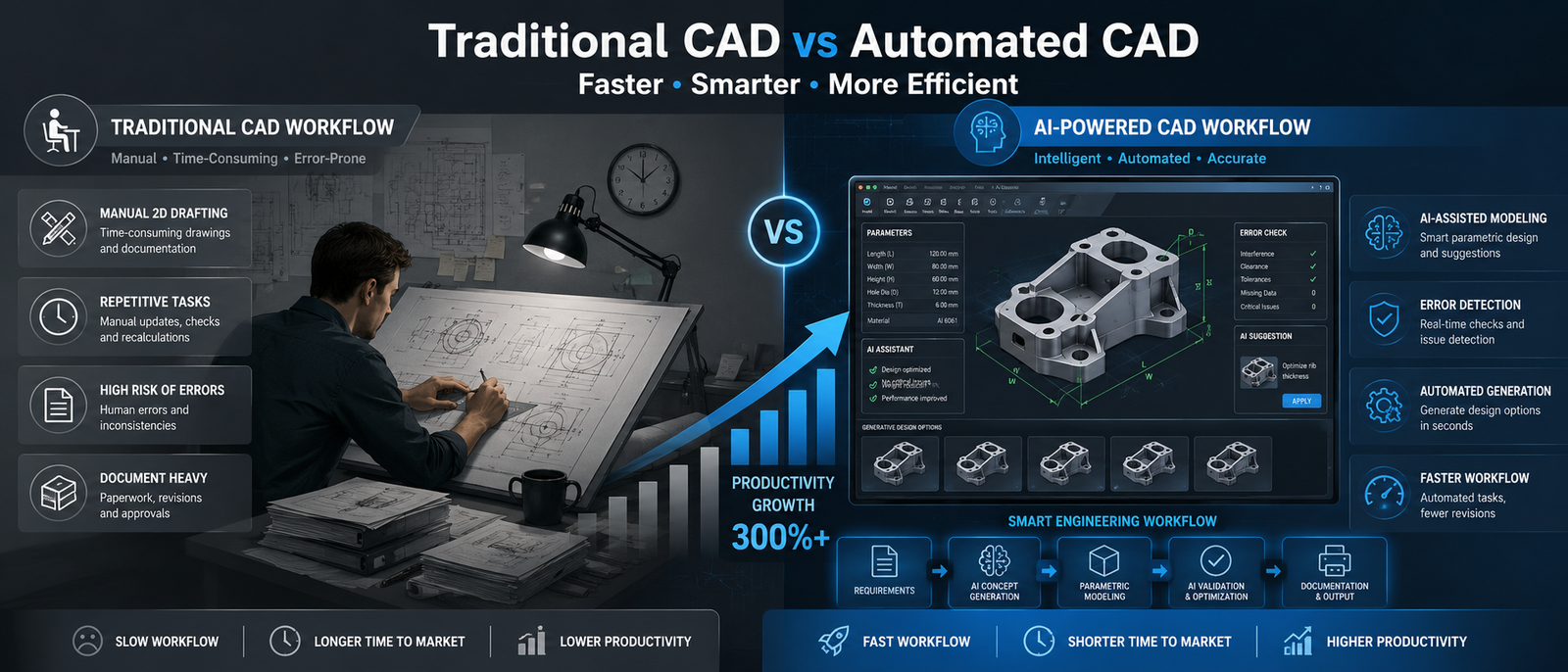
Traditional CAD work was heavily dependent on manual drafting and repetitive design processes. Engineers spent long hours modifying drawings, updating dimensions, and recreating similar models repeatedly.
Today, modern CAD systems have significantly reduced this manual workload.
Advanced software tools can automatically update assemblies, suggest optimized geometries, detect conflicts, and manage intelligent design relationships. Engineers now spend less time on repetitive tasks and more time focusing on innovation, design logic, and project problem-solving.
This shift is one reason why practical CAD learning has become extremely important.
Students who complete structured programs like:
gain better exposure to real engineering workflows used inside industries today.
Understanding how CAD tools work in actual companies is becoming more valuable than simply knowing software commands.
That is why many students are now exploring industry-focused learning through blogs like:
One of the biggest misconceptions students have is believing that automation will eliminate engineering jobs completely.
The reality is very different.
Automation is not removing engineers it is changing what engineers are expected to do.
Basic drafting roles are slowly becoming less important because software can now handle many repetitive tasks automatically. However, the demand for skilled engineers who understand advanced design systems, simulations, BIM workflows, and intelligent modeling is increasing rapidly.
Modern engineering roles now require:
Because of this shift, engineers who continuously upgrade their skills remain highly valuable.
This is especially true for students learning advanced tools through:
Automation is increasing the importance of skilled engineers — not reducing it.
As automation continues growing, software knowledge alone will no longer be enough to build a successful engineering career.
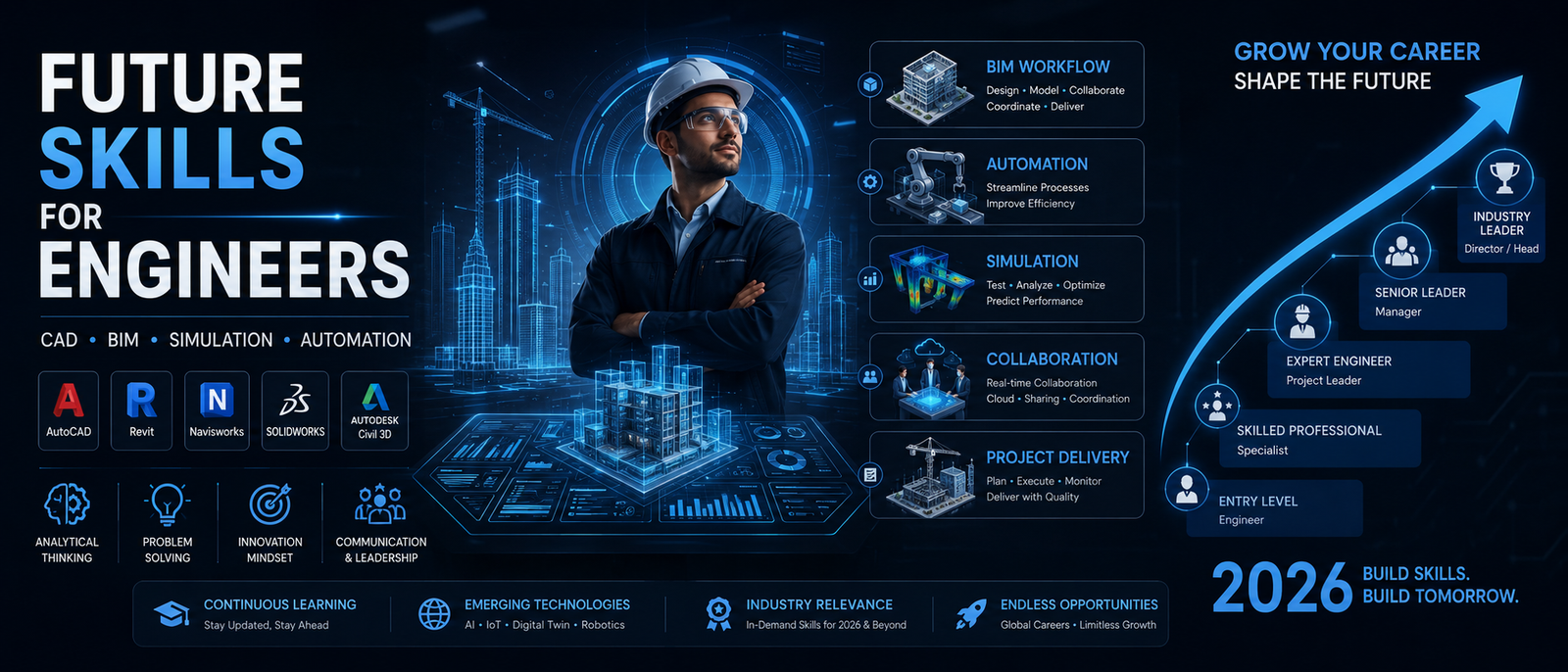
Future-ready engineers must focus on:
Companies increasingly prefer candidates who can solve practical engineering problems instead of students who only complete certificates.
This is why project-based learning has become extremely important.
Students who build strong portfolios and practical projects often perform much better during interviews.
You can also explore:
This is one of the most common fears among engineering students.
The answer is simple:
No, CAD jobs are not disappearing.
However, the nature of CAD jobs is evolving.
Earlier, CAD engineers mainly focused on drafting and drawing creation. Today, engineers are expected to work with:
The engineers who adapt to these new workflows will continue growing in their careers.
Those who rely only on outdated drafting methods may struggle in the future job market.
This is why learning modern tools and staying updated with industry trends is extremely important for engineering students in 2026.
The best way to prepare for automation-driven engineering careers is through practical learning and continuous skill improvement.
Students should start with strong CAD fundamentals and gradually move toward advanced workflows.
A recommended learning path includes:
Instead of focusing only on certificates, students should focus on becoming genuinely skilled engineers.
Many students also struggle with career confusion because they lack practical direction.
Helpful reads include:
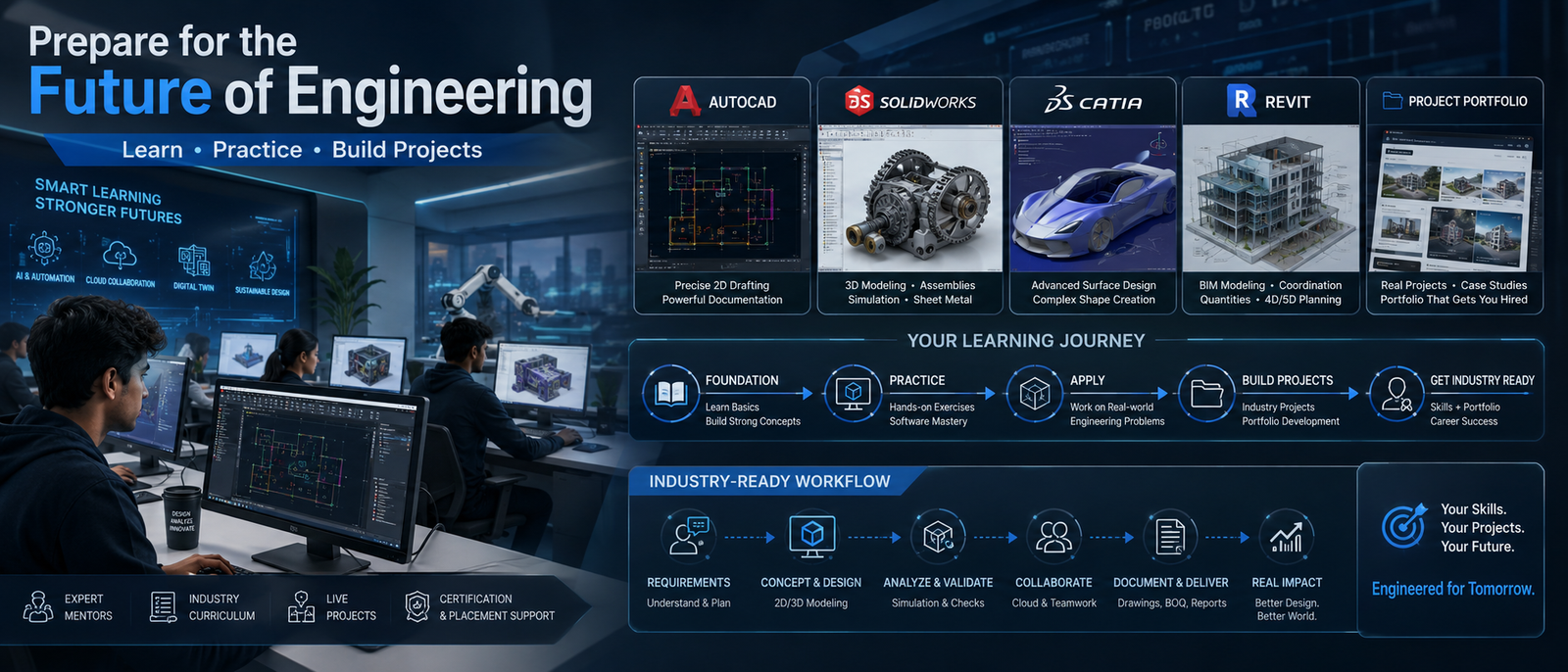
There is a huge difference between college-level learning and real industry expectations.
Many students know software names but struggle to apply them in real engineering situations.
This is why practical CAD training has become more valuable than traditional theoretical learning alone.
A good CAD institute helps students:
This practical exposure often becomes the biggest advantage during placements and job interviews.
Students searching for:
should focus on institutes that emphasize practical project work rather than only classroom theory.
At 4Dimensions Infotech, students learn through practical engineering workflows designed to match real industry requirements.
Programs include:
Students also gain:
The goal is not just software learning — it is creating engineers who can adapt confidently to the future of the industry.
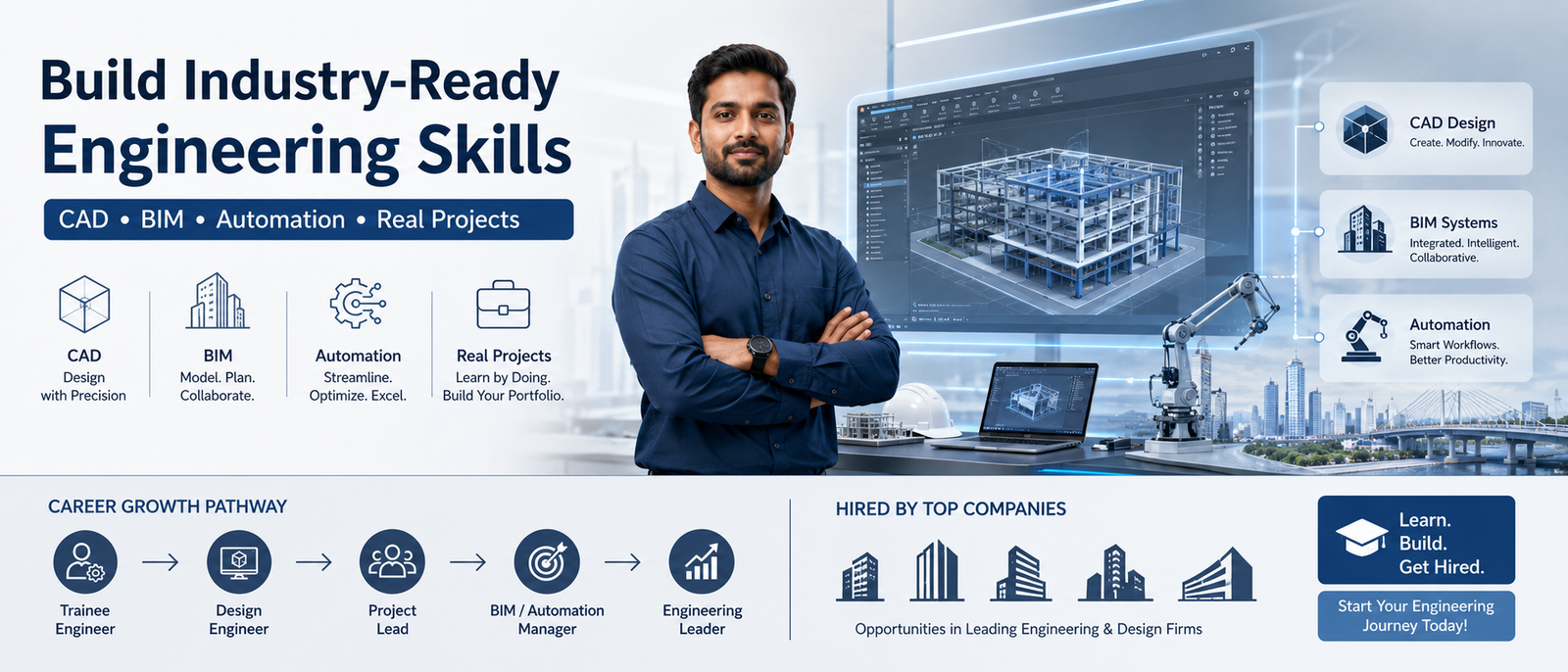
Automation is not a threat to engineering careers.
It is an opportunity for engineers to become more efficient, more creative, and more valuable.
The future belongs to engineers who continuously learn, adapt to modern workflows, and build practical industry-ready skills.
CAD, BIM, automation, and intelligent design systems are becoming the foundation of modern engineering careers.
Students who understand this shift early will always stay ahead in the industry.
1. Will automation replace CAD engineers?
No, automation will not replace engineers. It will reduce repetitive tasks and increase demand for skilled engineers who understand advanced workflows.
2. Which CAD skills are important for the future?
Skills in AutoCAD, SolidWorks, CATIA, Revit, Civil 3D, BIM workflows, and simulation tools are highly valuable for future engineering careers.
3. Is CAD still a good career in 2026?
Yes, CAD remains one of the strongest technical career options, especially for engineers with practical project experience and modern workflow knowledge.
4. How should students prepare for automation in engineering?
Students should focus on practical projects, real software workflows, advanced CAD tools, and continuous skill development.
5. Why is practical CAD training important?
Practical CAD training helps students understand real industry workflows, improve technical confidence, and become job-ready faster.
© 2025 4Dimensions Infotech. All rights reserved. | Best Design Engineering Training Institute in Pune
Start your journey with the best design engineering training institute in Pune.