
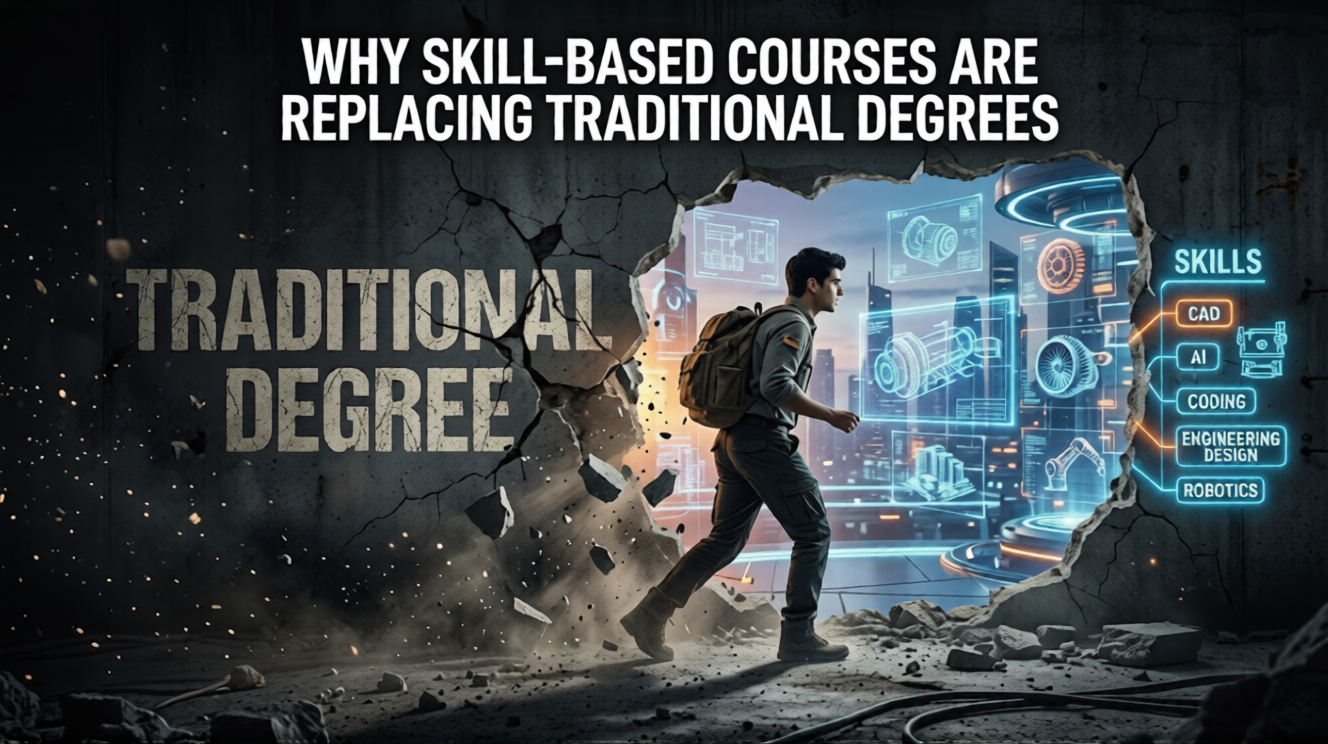
For years, students believed that a degree alone could build a successful career. However, that mindset is changing rapidly. Today, companies no longer focus only on certificates they look for practical skills that solve real problems.
As a result, more students are choosing industry-focused programs like CAD courses in Pune, automation training, and design software learning instead of relying only on traditional degrees.
If you are exploring practical training or planning to enroll in a CAD course, understanding this shift can help you make the right career decision.
Every year, thousands of students graduate. However, many still struggle to find jobs. The reason is simple most degrees focus on theory, while companies expect practical knowledge.
In fact, employers look for candidates who can apply skills in real-world situations. Therefore, students are now moving toward skill-based programs that match industry requirements.
Skill-based courses focus on hands-on learning instead of only theoretical knowledge. These programs train students using real tools and practical applications.
For example, students can learn 2D drafting, 3D modeling, product design, and manufacturing processes through industry-relevant software training. As a result, they become job-ready much faster.
Candidates with practical training can start working immediately. Therefore, companies do not need to spend extra time on basic training.
Skill-based courses focus on real-world applications. Because of this, candidates understand how work is actually done in industries.
When companies hire skilled candidates, they save both time and resources. As a result, they prefer applicants who already know industry tools.
Cities with strong industrial growth are seeing a rapid increase in demand for skilled professionals. Industries such as manufacturing, automotive, and construction require engineers who can work with modern tools.
Because of this demand, students are actively searching for practical training programs that help them get job-ready faster.
A degree provides theoretical knowledge and academic understanding. On the other hand, a skill-based course builds practical ability and hands-on experience.
Therefore, the best approach is to combine both. When you add practical training to your degree, you become a stronger candidate in interviews.
Many students delay skill development and believe they can learn everything after completing their degree. However, this approach often leads to missed opportunities.
As a result, they face low confidence, lack of experience, and increased competition. Instead, starting early gives you a major advantage.
Students who complete practical training programs often see faster career growth. They gain confidence, improve their skills, and perform better in interviews.
In addition, they tend to secure jobs more quickly and earn better starting salaries compared to those who rely only on theoretical knowledge.
Choosing the right program is important for long-term success. Therefore, you should focus on courses that offer practical learning and real-world exposure.
Look for programs that include hands-on projects, industry tools, and placement support. This ensures that you gain both knowledge and experience.
At 4Dimensions Infotech, students receive training that focuses on real industry requirements. The programs are designed to make students job-ready through practical learning.
You will gain hands-on experience, learn modern tools, and receive guidance from expert trainers. In addition, placement support helps you start your career with confidence.
Degrees are still important, but they are no longer enough on their own. In today’s competitive job market, practical skills play a key role in career success.
Therefore, the smartest approach is to combine your education with skill-based training. This will help you stand out and secure better opportunities.
👉 Join 4Dimensions Infotech and start building real, industry-ready skills today.
Skill-based courses are not a replacement for degrees. However, they add practical knowledge that helps you get job-ready faster.
Courses related to design, manufacturing, automation, and CAD tools are currently in high demand across industries.
Yes, you can learn online. However, practical training with hands-on projects gives better results and real experience.
Most skill-based programs take around 3 to 6 months, depending on the course level and depth.
Yes, skill-based careers offer strong growth, good salaries, and high demand across multiple industries.
© 2025 4Dimensions Infotech. All rights reserved. | Best Design Engineering Training Institute in Pune
Start your journey with the best design engineering training institute in Pune.