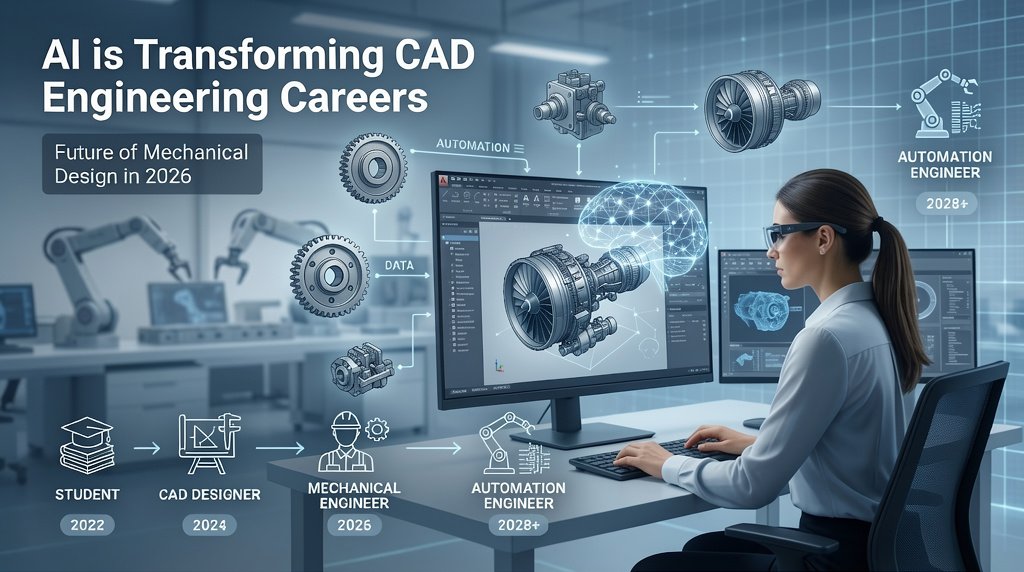
Artificial Intelligence is reshaping the engineering world, especially in design and manufacturing. Today, learning tools like AutoCAD, SolidWorks, and CATIA is no longer just about software skills it’s about adapting to an AI-driven engineering future.
At 4Dimensions Infotech, students are trained with modern industry workflows that combine CAD skills with real-world engineering applications, helping them stay relevant in evolving job markets.
AI is not replacing engineers it is making them more efficient and productive. Modern CAD systems now include automation, intelligent suggestions, and optimized design capabilities.
This means engineers who complete a structured CAD training course gain a strong advantage in the job market because they understand both design fundamentals and modern tools.
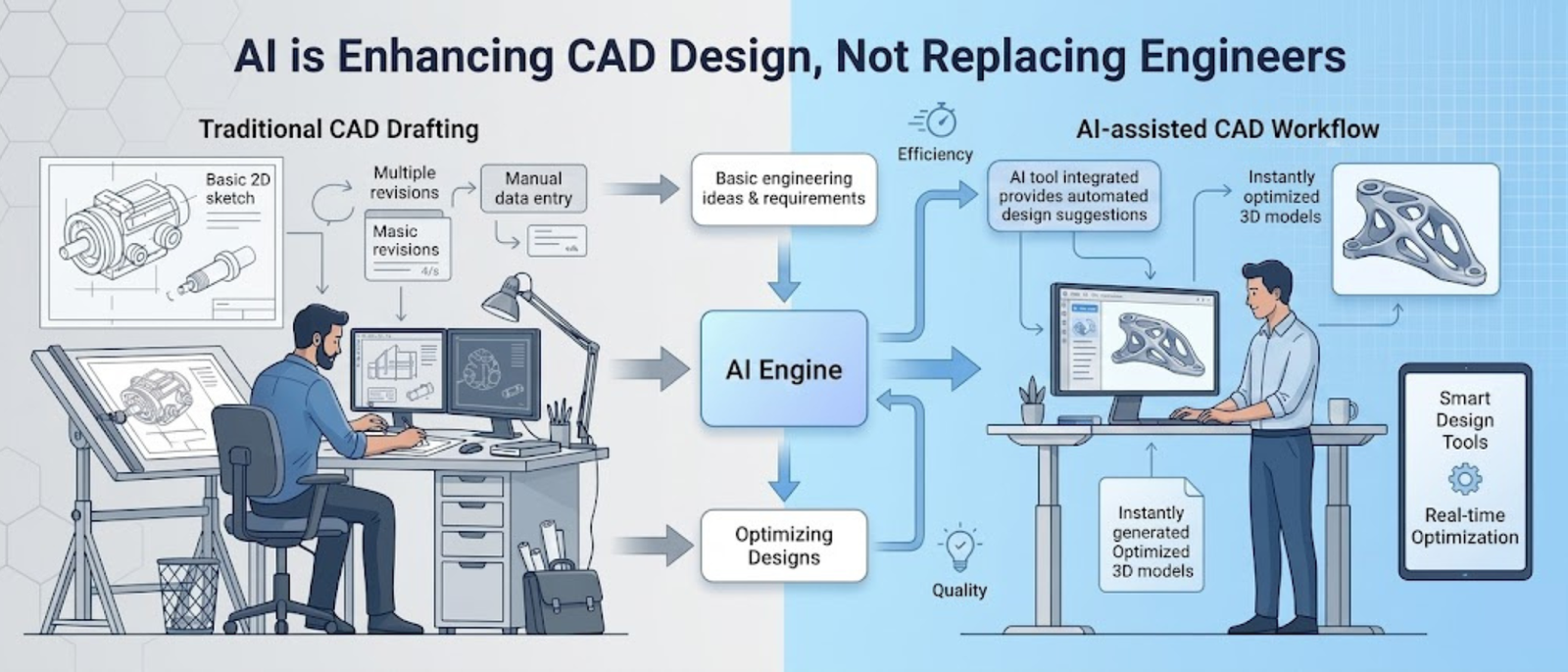
AI automates repetitive drafting and modeling tasks, allowing engineers to focus more on creativity and problem-solving.
Design tools can now suggest improvements, detect errors, and optimize materials, improving both speed and accuracy.
Basic drafting alone is not enough anymore. Engineers now need tools like:
AI connects design directly with production systems. This makes CAD CAM knowledge highly valuable for understanding complete product development workflows.
Automation and AI are closely linked. Engineers who combine CAD skills with automation knowledge are becoming more in demand across industries.
No AI does not reduce opportunities for skilled engineers. Instead, it removes repetitive tasks and increases demand for professionals who understand modern engineering tools.
Engineers who upgrade their skills with CAD software, design tools, and practical training will have “more opportunities, not fewer”.
To succeed in the modern engineering industry, you should focus on both fundamentals and advanced tools:
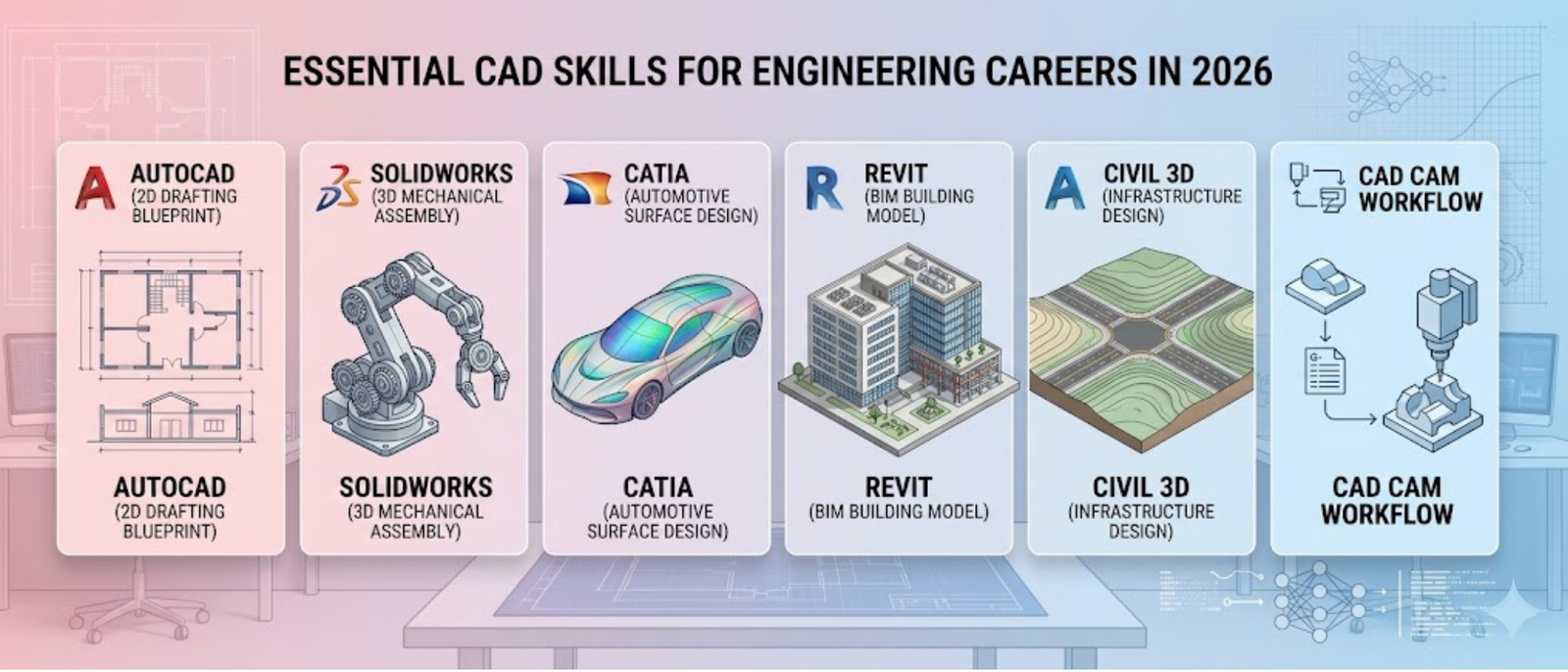
At 4Dimensions Infotech, students learn industry-oriented skills through practical training programs designed for real job roles.
Courses include AutoCAD Course for drafting, SolidWorks Course for mechanical design, CATIA Course for advanced modeling, CAD CAM Course in Pune for manufacturing, and automation courses for future-ready engineering careers.
With the right skills, mechanical and design engineers can build careers in multiple industries such as automotive, manufacturing, construction, and product design in Pune & other cities.
Popular roles include:
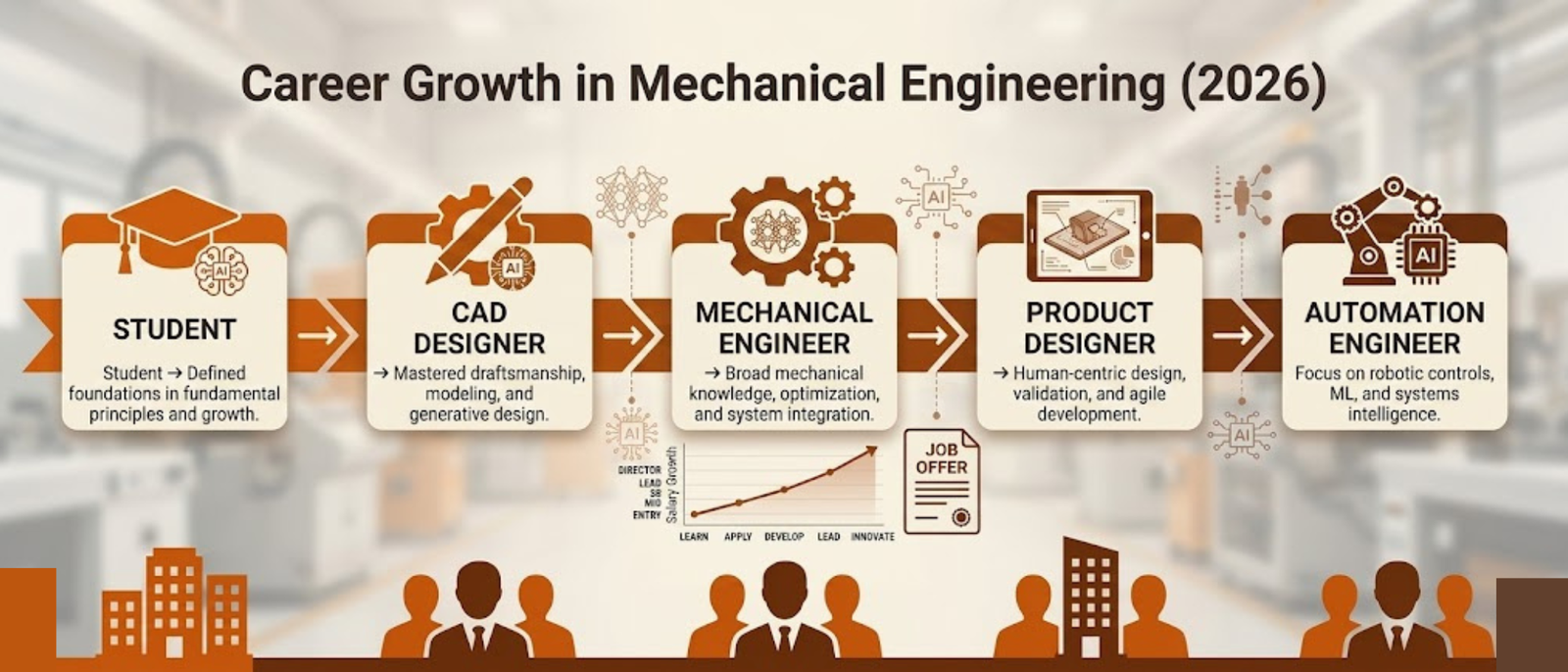
Freshers typically start between ₹2.5–₹4 LPA. With experience and advanced skills, engineers can earn ₹5–₹10 LPA or more, especially in automation and advanced design roles.
AI is not replacing engineers it is transforming how they work.
The future belongs to engineers who combine CAD skills with modern tools, automation knowledge, and practical experience.
👉 Start your journey with 4Dimensions Infotech and build a future-ready engineering career.
No, AI is supporting engineers by automating repetitive tasks and improving efficiency.
Start with AutoCAD course, then move to SolidWorks software course, CATIA course near you, and Revit course based on your career goals.
AI helps in automation, error detection, design optimization, and faster modeling workflows.
Yes, CAD training combined with practical skills can lead to roles like CAD Designer or Mechanical Engineer.
Yes, CAD remains highly relevant, especially when combined with AI and automation skills.
© 2025 4Dimensions Infotech. All rights reserved. | Best Design Engineering Training Institute in Pune
Start your journey with the best design engineering training institute in Pune.